
In the pursuit of sustainable energy solutions, the development of high-performance energy storage systems is paramount. Among these, lithium ion batteries have emerged as a cornerstone technology, powering everything from portable electronics to electric vehicles. The relentless demand for higher energy density and longer cycle life has driven extensive research into next-generation electrode materials. Silicon, with its exceptionally high theoretical specific capacity of approximately 4200 mAh/g, stands out as a highly promising anode material to replace conventional graphite in lithium ion batteries. However, its practical application is severely hampered by significant volume expansion during lithiation and delithiation, leading to particle pulverization, loss of electrical contact, and rapid capacity fade. To mitigate these issues, nanocomposite strategies, particularly combining silicon with carbonaceous materials, have shown great promise. In this study, we explore a novel, efficient one-step synthesis route using a direct current arc thermal plasma method to produce spherical silicon/carbon nanocomposites. This approach offers a rapid, scalable, and clean process for fabricating advanced anode materials. The integration of nanoscale silicon with carbon not only buffers the mechanical stress from volume changes but also enhances the overall electronic conductivity, thereby improving the electrochemical stability of the electrode in lithium ion batteries.
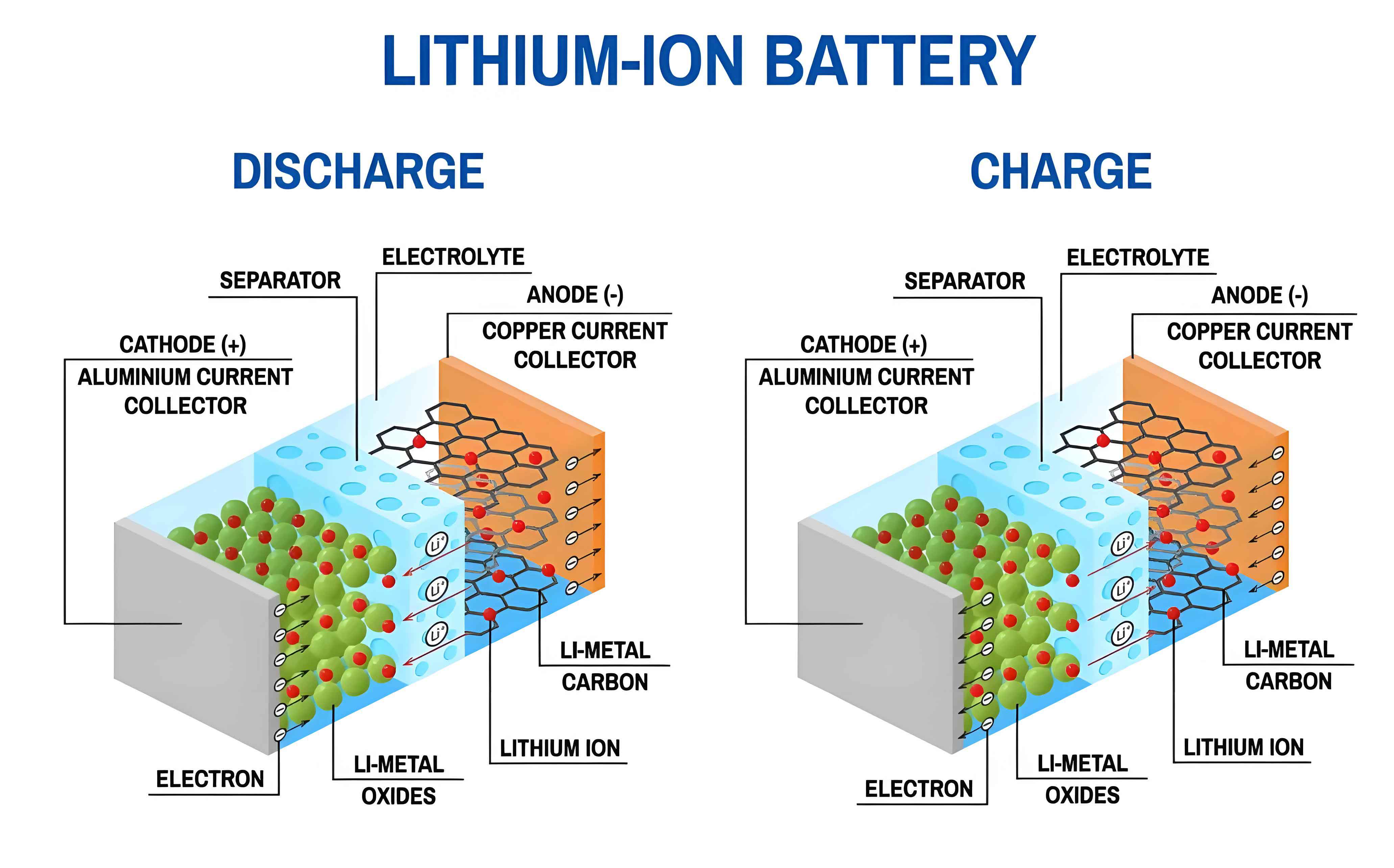
The fundamental challenge with silicon anodes in lithium ion batteries lies in the massive volume change (up to ~300%) associated with the alloying reaction: $$Si + xLi^+ + xe^- \leftrightarrow Li_xSi$$. This reaction, while providing high capacity, induces severe mechanical stresses. Nanostructuring silicon is a widely adopted strategy to alleviate these stresses, as smaller particles can better accommodate strain without fracturing. Furthermore, compositing with carbon materials—such as graphite, graphene, or amorphous carbon—creates a conductive and elastic matrix that confines silicon particles, maintains electrical percolation, and stabilizes the solid-electrolyte interphase (SEI). Traditional methods for producing silicon/carbon composites, like ball milling or chemical vapor deposition, often involve multiple steps, high energy consumption, or complex procedures. The thermal plasma method, characterized by extremely high temperatures (>10,000 K) and rapid quenching rates (10^5–10^6 K/s), enables instantaneous vaporization of precursor materials and subsequent condensation into fine, spherical nanoparticles. This process is continuous, solvent-free, and capable of handling various feedstocks, including industrial silicon waste, making it an attractive route for sustainable manufacturing of electrode materials for lithium ion batteries.
In our experimental setup, we utilized a custom-built direct current arc thermal plasma system. The core components include a DC power supply, a three-anode plasma torch, gas supply systems, a water-cooling unit, a powder feeder, a reaction chamber, and a product collection apparatus. The precursor materials consisted of silicon kerf waste from photovoltaic wafer slicing and commercial graphite powder. These were mixed in a specific mass ratio, homogenized with ethanol, dried, and sieved to obtain feed powders with median particle sizes of 2.6 µm, 6.5 µm, and 15.0 µm. The thermal plasma was generated using high-purity argon as the working, shielding, and carrier gas. Key operational parameters were optimized to ensure complete vaporization and controlled nucleation. The powder feeding rate was maintained at 2 g/min, and the plasma was operated at a power level of approximately 11.7 kW. The vaporized species were rapidly cooled in the tail flame, leading to the formation of nanoscale composite particles, which were subsequently collected in a filter bag. The as-prepared nanocomposites were then evaluated as anode materials for lithium ion batteries.
The formation mechanism of the nanocomposites in the thermal plasma plume involves several stages. Upon injection into the high-temperature zone, the precursor particles are almost instantaneously vaporized into atomic or molecular species of silicon and carbon. The rapid expansion and cooling of the plasma jet create a supersaturated environment, triggering homogeneous nucleation. The nucleation and growth kinetics can be described by classical nucleation theory. The rate of nucleation, $J$, is given by: $$J = A \exp\left(-\frac{\Delta G^*}{k_B T}\right)$$ where $A$ is a pre-exponential factor, $\Delta G^*$ is the critical Gibbs free energy for nucleus formation, $k_B$ is Boltzmann’s constant, and $T$ is the temperature. Due to the differing saturation vapor pressures of silicon and carbon, nucleation may occur at different zones within the cooling plume, resulting in a mixture of silicon and carbon nanoparticles rather than a core-shell structure. The extremely high quenching rate limits particle growth, yielding nanoscale spheres. The particle size distribution can be influenced by the initial feed size, as larger particles may require longer residence time for complete vaporization, affecting the supersaturation ratio and consequently the final particle size. The general relationship for the final particle diameter, $d_p$, can be approximated by considering the mass balance and growth time: $$d_p \propto \left( \frac{C_0}{\rho N} \right)^{1/3}$$ where $C_0$ is the initial vapor concentration, $\rho$ is the particle density, and $N$ is the number density of nuclei. The process parameters for our synthesis are summarized in Table 1.
| Operating Parameter | Set Value |
|---|---|
| Plasma Power (kW) | 11.7 |
| Working Gas Flow Rate (m³/h) | 5.8 |
| Shielding Gas Flow Rate (m³/h) | 1.8 |
| System Pressure (MPa) | 0.1 |
| Powder Feeding Rate (g/min) | 2.0 |
| Carrier Gas Flow Rate (m³/h) | 1.0 |
| Arc Current (A) | 130 |
| Arc Voltage (V) | 90 |
Morphological characterization of the synthesized products was performed using transmission electron microscopy (TEM) and scanning electron microscopy (SEM). The images revealed that the raw silicon kerf exhibited a flake-like morphology with micrometer-scale lateral dimensions and nanoscale thickness, while the raw mixture showed irregular micron-sized agglomerates. In contrast, the plasma-processed powders consisted of spherical nanoparticles with a tendency to form soft agglomerates due to high surface energy. The particle size distribution, measured via dynamic light scattering, indicated a log-normal distribution. The median particle diameters for the nanocomposites derived from the 2.6 µm, 6.5 µm, and 15.0 µm feed powders were 49.9 nm, 56.3 nm, and 68.9 nm, respectively. This trend confirms that finer feed powders lead to smaller product nanoparticles, as they vaporize more completely, creating a higher supersaturation ratio that promotes a greater number of nucleation events. The specific surface area, determined by nitrogen physisorption, decreased with increasing product particle size, as expected. The structural properties are summarized in Table 2.
| Sample Designation (Based on Feed Size) | Median Particle Size (nm) | BET Specific Surface Area (m²/g) | Average Pore Size (nm) | Total Pore Volume (cm³/g) |
|---|---|---|---|---|
| Nano-Si/C-2.6 | 49.9 | 152 | 3.4 | 0.25 |
| Nano-Si/C-6.5 | 56.3 | 146 | 3.4 | 0.21 |
| Nano-Si/C-15.0 | 68.9 | 125 | 3.2 | 0.18 |
Chemical state analysis via X-ray photoelectron spectroscopy (XPS) confirmed the presence of silicon, carbon, and oxygen on the nanoparticle surfaces. The high-resolution C 1s spectrum could be deconvoluted into peaks corresponding to C=C (sp² carbon at ~284.8 eV), C-C (sp³ carbon at ~286.3 eV), C-O (~288.2 eV), and C=O (~290.2 eV) bonds. The Si 2p spectrum showed components for elemental Si (Si⁰ at ~99.3 eV and ~98.6 eV) as well as oxidized silicon species (Si²⁺, Si³⁺, Si⁴⁺ at higher binding energies). The O 1s spectrum indicated the presence of Si-O and C-O bonds. The surface oxidation of silicon nanoparticles is inevitable due to their high reactivity and large surface area. However, the XPS analysis suggests the oxide layer is relatively thin (likely <10 nm), which is beneficial as excessive silicon oxide can reduce the overall capacity and Coulombic efficiency in lithium ion batteries. The composite nature ensures that the conductive carbon network facilitates electron transport, while the silicon oxide layer might contribute to some stability of the SEI.
The electrochemical performance of the silicon/carbon nanocomposites as anodes was evaluated in half-cell configurations against lithium metal. Electrodes were fabricated by mixing the active material, Super P carbon black, and sodium alginate binder in a 6:2:2 weight ratio. The slurry was cast onto copper foil and dried. Coin cells (CR2032) were assembled in an argon-filled glovebox using a lithium metal counter electrode, a polypropylene separator, and a standard electrolyte (1 M LiPF₆ in EC/DMC). Galvanostatic charge-discharge cycling, cyclic voltammetry, and rate capability tests were conducted. The cyclic voltammograms (CV) for the Nano-Si/C-2.6 electrode at a scan rate of 0.1 mV/s between 0.01 V and 2.00 V vs. Li⁺/Li showed typical features of silicon electrochemistry. In the first cathodic scan, a broad reduction peak around 1.1 V was observed, corresponding to electrolyte decomposition and the formation of the SEI layer. In subsequent cycles, this peak disappeared, indicating the establishment of a stable SEI. Distinct redox peaks emerged at around 0.19 V (cathodic) and 0.35/0.50 V (anodic), attributed to the lithiation (formation of LiₓSi alloys) and delithiation of silicon, respectively. The reaction can be represented as: $$Si + xLi^+ + xe^- \rightleftharpoons Li_xSi \quad (0 \leq x \leq 4.4)$$ The increasing peak currents with cycling suggested improved lithium ion diffusion kinetics, likely due to electrode activation and the stable composite structure.
Galvanostatic charge-discharge profiles provided quantitative capacity data. The first-cycle discharge (lithiation) capacities for the nanocomposite anodes at a current density of 200 mA/g were 1718 mAh/g, 1651 mAh/g, and 1343 mAh/g for Nano-Si/C-2.6, Nano-Si/C-6.5, and Nano-Si/C-15.0, respectively. In contrast, the raw silicon-carbon mixture electrode exhibited a higher initial discharge capacity of about 2321 mAh/g, but this is misleading as it includes significant irreversible capacity from SEI formation on the large, fractured silicon surfaces. The first-cycle Coulombic efficiencies (ICE) for the nanocomposites were 79.1%, 76.5%, and 74.5%, significantly higher than the 66.8% ICE of the raw mixture. The improved ICE is crucial for practical full-cell design in lithium ion batteries, as it minimizes the consumption of lithium ions from the cathode. The discharge capacity, $C_d$, can be related to the active material’s intrinsic capacity and the irreversible losses: $$C_d = C_{theoretical} \times \eta_{active} – C_{irreversible}$$ where $\eta_{active}$ is the fraction of electrochemically active material and $C_{irreversible}$ accounts for SEI formation and other side reactions. The nanocomposites, with their nanoscale dimensions and carbon matrix, reduce $C_{irreversible}$ by limiting excessive electrolyte decomposition.
The long-term cycling stability is a critical metric for lithium ion battery anodes. The cycling performance at 200 mA/g is summarized in Table 3 and depicted in Figure 1 (conceptual description). The raw mixture electrode suffered from catastrophic capacity fade, retaining only 274 mAh/g after 50 cycles. This is a direct consequence of the severe pulverization of the micron-sized silicon flakes and the continuous breakdown and reformation of the SEI. In stark contrast, the plasma-synthesized nanocomposites demonstrated markedly enhanced capacity retention. After 50 cycles, the Nano-Si/C-2.6, Nano-Si/C-6.5, and Nano-Si/C-15.0 electrodes retained capacities of 1005 mAh/g, 761 mAh/g, and 663 mAh/g, respectively. These values are well above the theoretical capacity of graphite (372 mAh/g), highlighting the successful retention of silicon’s high-capacity advantage. The capacity retention ratio, $R$, after $n$ cycles can be expressed as: $$R(n) = \frac{C_n}{C_1} \times 100\%$$ where $C_n$ is the discharge capacity at cycle $n$ and $C_1$ is the first-cycle discharge capacity. For Nano-Si/C-2.6, $R(50)$ is approximately 58.5%, which is commendable for a silicon-dominant anode. The spherical nanoparticle morphology and the intimate mixing with carbon provide effective stress relaxation and maintain electrical connectivity throughout cycling.
| Electrode Material | First Discharge Capacity (mAh/g) | First Charge Capacity (mAh/g) | Initial Coulombic Efficiency (%) | Discharge Capacity at 50th Cycle (mAh/g) | Capacity Retention after 50 Cycles (%) |
|---|---|---|---|---|---|
| Raw Si/C Mixture | ~2321 | ~1550 | 66.8 | 274 | 11.8 |
| Nano-Si/C-2.6 | 1718 | 1359 | 79.1 | 1005 | 58.5 |
| Nano-Si/C-6.5 | 1651 | 1263 | 76.5 | 761 | 46.1 |
| Nano-Si/C-15.0 | 1343 | 1001 | 74.5 | 663 | 49.4 |
Rate capability, which reflects the power performance of a lithium ion battery, was evaluated by subjecting the Nano-Si/C-2.6 electrode to progressively higher current densities from 100 mA/g to 2000 mA/g and then back to 100 mA/g. The electrode delivered discharge capacities of 1518 mAh/g at 100 mA/g, 1328 mAh/g at 200 mA/g, 1097 mAh/g at 500 mA/g, 894 mAh/g at 1000 mA/g, and 774 mAh/g at 2000 mA/g. When the current density was returned to 100 mA/g, the capacity recovered to 1414 mAh/g, demonstrating excellent reversibility and structural robustness. The capacity at high rates, $C_{rate}$, often follows a relationship with current density, $i$: $$C_{rate} = C_0 – k \cdot i^m$$ where $C_0$ is the low-rate capacity, and $k$ and $m$ are constants related to kinetic limitations. The relatively gentle decline in capacity with increasing current density indicates favorable lithium ion diffusion kinetics within the nanocomposite, attributable to the short diffusion lengths in nanoparticles and the percolating carbon network. This performance is competitive with silicon/carbon composites produced by more complex methods, underscoring the efficacy of the thermal plasma route.
The enhanced electrochemical performance can be mechanistically explained by considering the benefits of nanostructuring and compositing. Firstly, the nanoscale silicon particles reduce the absolute volume change and the diffusion path length for lithium ions, which mitigates mechanical fracture and improves rate capability. The diffusion time, $\tau$, is related to the diffusion coefficient, $D$, and particle radius, $r$, by: $$\tau \approx \frac{r^2}{D}$$ Thus, reducing $r$ from microns to nanometers decreases $\tau$ by several orders of magnitude. Secondly, the spherical shape of the plasma-synthesized particles promotes more uniform stress distribution during volume changes compared to irregular or flake-like morphologies. Thirdly, the carbon component, though physically mixed at the nanoscale rather than forming a core-shell, provides a conductive matrix that ensures electron transport to the silicon particles and buffers the volume expansion. The overall electrode integrity is preserved, leading to stable SEI formation and minimal capacity fade. This synergy is crucial for developing durable anodes for high-energy lithium ion batteries.
From a manufacturing perspective, the thermal plasma process offers significant advantages for scaling up the production of silicon-based anode materials. It is a dry, one-step process that can convert low-cost or waste silicon sources directly into functional nanocomposites. The process parameters, such as plasma power, gas flow rates, and feed rate, can be tuned to control product characteristics like particle size, composition, and crystallinity. For instance, introducing reactive gases like methane or hydrogen during synthesis could enable in-situ coating or doping of the nanoparticles. The energy efficiency of the process, while dependent on scale, is competitive with multi-step wet chemical methods when considering the total process time and lack of solvent recovery needs. Furthermore, the ability to operate at atmospheric pressure simplifies reactor design. As the demand for high-capacity lithium ion batteries grows, such scalable and versatile synthesis techniques will be vital for meeting material supply chains.
In conclusion, we have successfully demonstrated the one-step synthesis of spherical silicon/carbon nanocomposites using a direct current arc thermal plasma method. The process effectively transformed micron-sized silicon-carbon mixtures into nanoscale spherical particles with median diameters between 50 and 70 nm. When evaluated as anodes for lithium ion batteries, these nanocomposites exhibited substantially improved electrochemical performance compared to the raw precursor mixture. Specifically, they offered high reversible capacities (exceeding 1000 mAh/g after 50 cycles for the best sample), enhanced initial Coulombic efficiency, good cycling stability, and excellent rate capability. The improvement is attributed to the combined effects of nanoscale dimensions, spherical morphology, and the presence of a conductive carbon phase, which collectively alleviate the mechanical stresses from silicon volume changes and maintain electrical conductivity. This work highlights the thermal plasma method as a promising, scalable, and efficient route for producing advanced silicon-based anode materials, contributing to the development of next-generation lithium ion batteries with higher energy density and longer lifespan. Future work will focus on optimizing the carbon content and exploring in-situ carbon coating strategies during plasma synthesis to further enhance the performance and cycle life of these anodes in practical lithium ion battery configurations.
The pursuit of better materials for lithium ion batteries is an ongoing global endeavor. Innovations in synthesis methods like thermal plasma processing play a critical role in bridging the gap between laboratory discoveries and commercial applications. By enabling the production of high-performance nanocomposites from abundant or recycled silicon sources, this approach aligns with the goals of sustainable energy storage. As we continue to refine the process and deepen our understanding of the structure-property relationships in these materials, we move closer to realizing the full potential of silicon anodes, ultimately enabling lithium ion batteries that can power our vehicles and grid storage systems more efficiently and reliably for years to come.