
With the global push towards carbon neutrality and sustainable development, the transition to green energy sources has become imperative. In this context, electrochemical energy storage, particularly through li ion battery technology, plays a pivotal role in enabling renewable energy integration and powering electric vehicles. The rapid expansion of the electric vehicle market has led to a surge in li ion battery production, but simultaneously, it has accelerated the accumulation of spent li ion battery units. These end-of-life li ion battery packs pose significant environmental hazards if not handled properly, due to the leakage of electrolytes and heavy metals. Moreover, li ion battery cathode materials contain valuable metals like lithium, cobalt, nickel, and manganese, which are critical resources with supply chain vulnerabilities. Therefore, developing efficient and eco-friendly recycling methods for spent li ion battery components is not only an environmental necessity but also a strategic imperative for resource security. In this article, I will review the latest progress in recycling technologies, with a focus on mechanochemical approaches for recovering valuable metals from spent li ion battery cathode materials. I will analyze the limitations of traditional methods and delve into the advancements in mechanochemistry, offering insights into future directions for li ion battery recycling.
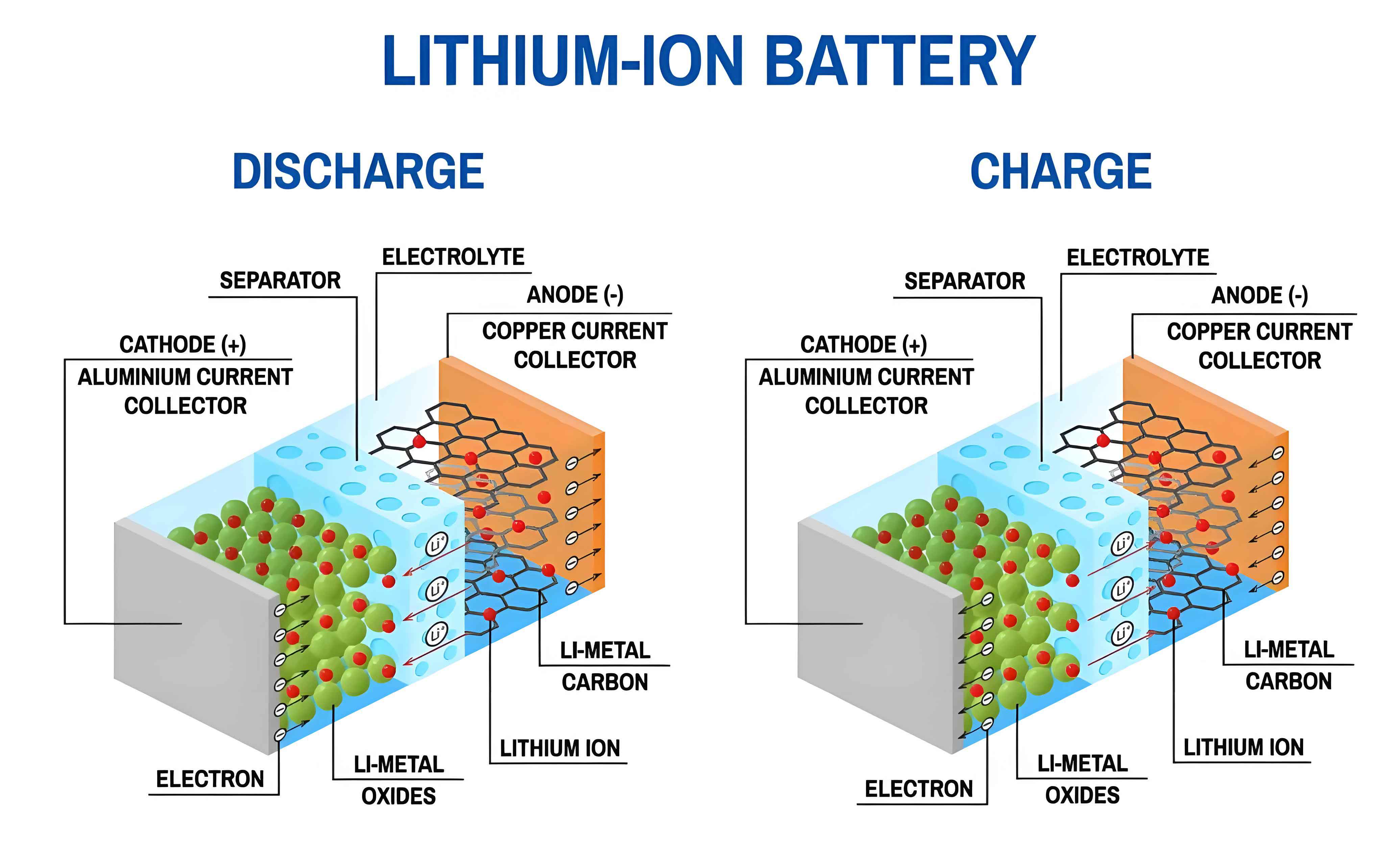
The widespread adoption of li ion battery systems in various applications, from portable electronics to grid storage, has resulted in a looming waste management challenge. A typical li ion battery consists of a cathode, anode, electrolyte, separator, and binder, each with specific chemical properties that can be harmful upon disposal. For instance, cathode materials often contain transition metal oxides, while electrolytes may include fluorinated compounds that generate toxic gases like HF. The economic value of metals in a spent li ion battery is substantial, but traditional disposal methods lead to resource depletion and environmental contamination. Hence, recycling spent li ion battery units is crucial for closing the material loop and supporting a circular economy. In this review, I will explore the evolution of recycling processes, emphasizing how mechanochemical methods can enhance the recovery of valuable metals from spent li ion battery cathodes, thereby addressing both environmental and economic concerns.
Before delving into mechanochemistry, it is essential to understand the broader landscape of li ion battery recycling technologies. Historically, two primary methods have dominated: pyrometallurgy and hydrometallurgy. Pyrometallurgy involves high-temperature smelting of spent li ion battery components to recover metals as alloys or slag. While this process is well-established and can handle large volumes, it suffers from high energy consumption, emission of hazardous gases, and limited selectivity for specific metals. For example, during smelting, organic materials like separators and binders combust, providing some energy but also releasing pollutants. The process often requires temperatures above 1000°C, making it energy-intensive. Moreover, lithium recovery in pyrometallurgy can be inefficient due to its volatility or incorporation into slag phases. To improve lithium extraction, additives like fluxes have been used, as seen in studies where binary eutectic salts such as Na2SO4-NaCl enhance lithium recovery from slag. The reaction can be represented as:
$$ \text{Li}_2\text{O} + \text{Na}_2\text{SO}_4 \rightarrow 2\text{Li}^+ + \text{SO}_4^{2-} + 2\text{Na}^+ $$
However, this approach still involves high temperatures and may not be cost-effective. Recent innovations, like microwave-assisted pyrometallurgy, have reduced energy demands by leveraging selective heating mechanisms. For instance, microwave radiation can target specific components in a spent li ion battery, lowering the required temperature and improving metal recovery. Despite these advances, pyrometallurgy often lacks the precision needed for high-purity metal recovery, necessitating additional refining steps.
In contrast, hydrometallurgy employs aqueous solutions to leach metals from spent li ion battery cathodes, offering higher selectivity and lower energy inputs. This process typically involves acid leaching with inorganic or organic acids, often combined with reducing agents to dissolve metal oxides. Common inorganic acids include sulfuric acid (H2SO4), hydrochloric acid (HCl), and nitric acid (HNO3), while organic acids like citric acid, malonic acid, and lactic acid are gaining popularity due to their milder environmental impact. The leaching efficiency depends on factors such as acid concentration, temperature, time, and the presence of reductants like H2O2 or glucose. For example, the leaching of lithium cobalt oxide (LiCoO2) from a spent li ion battery can be described by the following reaction with sulfuric acid and a reductant:
$$ 2\text{LiCoO}_2 + 3\text{H}_2\text{SO}_4 + \text{H}_2\text{O}_2 \rightarrow 2\text{CoSO}_4 + \text{Li}_2\text{SO}_4 + 4\text{H}_2\text{O} + \text{O}_2 $$
While hydrometallurgy achieves high metal recovery rates, it generates acidic wastewater and may require extensive purification steps, such as solvent extraction or precipitation, to separate individual metals. Additionally, the use of corrosive acids poses safety and equipment challenges. To mitigate these issues, researchers have explored greener leaching agents, but many still involve elevated temperatures or complex processes. Thus, there is a growing interest in alternative methods that minimize chemical usage and environmental footprint.
This is where mechanochemistry emerges as a promising avenue for spent li ion battery recycling. Mechanochemistry, or mechanical force-induced chemistry, utilizes mechanical energy to initiate chemical reactions, often through ball milling. The process involves grinding solid materials together, leading to particle size reduction, structural deformation, and increased reactivity. In the context of li ion battery recycling, mechanochemical pretreatment can disrupt the crystalline structure of cathode materials, making them more amenable to leaching or enabling direct solid-state reactions. The key advantages of mechanochemistry include reduced reagent consumption, lower temperatures, and enhanced reaction kinetics. For instance, ball milling a spent li ion battery cathode with a co-grinding agent can facilitate metal extraction without strong acids. The mechanical energy input can be quantified in terms of ball-to-powder ratio (BPR) and milling speed, which influence the extent of activation. The fundamental principle is that mechanical forces break chemical bonds, create fresh surfaces, and promote diffusion, as described by the following general equation for mechanochemical activation:
$$ \text{Cathode material} + \text{Co-grinding agent} \xrightarrow{\text{Mechanical force}} \text{Activated complex} \rightarrow \text{Soluble products} $$
To illustrate the versatility of mechanochemistry, I will now compare different recycling methods in a table, highlighting their characteristics and challenges specific to li ion battery recovery.
| Recycling Method | Key Process | Advantages | Disadvantages | Typical Metal Recovery Efficiency |
|---|---|---|---|---|
| Pyrometallurgy | High-temperature smelting | High throughput, simple operation | High energy use, gas emissions, low selectivity | Li: ~70-90%, Co: ~85-95% |
| Hydrometallurgy | Acid leaching with reductants | High selectivity, lower temperature | Chemical waste, corrosion issues | Li: ~90-99%, Co: ~90-99% |
| Mechanochemistry | Ball milling with co-grinding agents | Low chemical use, ambient conditions, enhanced kinetics | Equipment wear, scalability challenges | Li: ~95-100%, Co: ~95-100% |
As shown in the table, mechanochemistry offers competitive recovery efficiencies while addressing some drawbacks of traditional methods. Now, let’s delve deeper into the mechanochemical approach for recycling various cathode materials from spent li ion battery units. The most common cathode types include lithium iron phosphate (LFP), lithium cobalt oxide (LCO), lithium nickel manganese cobalt oxide (NCM), and lithium manganese oxide (LMO). Each has distinct structural properties that influence the recycling strategy.
For LFP cathodes, the olivine structure is thermally stable, making direct leaching difficult. Mechanochemical activation can break down this structure by ball milling LFP with oxidizing agents like ammonium persulfate ((NH4)2S2O8). During milling, the mechanical force combined with oxidative decomposition converts LFP into soluble lithium salts and insoluble iron phosphate. The reaction can be summarized as:
$$ \text{LiFePO}_4 + (\text{NH}_4)_2\text{S}_2\text{O}_8 \xrightarrow{\text{Ball milling}} \text{LiNH}_4\text{SO}_4 + \text{FePO}_4 $$
Subsequent water leaching recovers lithium as Li2SO4 after evaporation, while FePO4 remains as a residue that can be used for battery remanufacturing. This process achieves lithium recovery rates above 95% without acidic solutions, demonstrating the eco-friendliness of mechanochemistry for LFP recycling from spent li ion battery packs. Alternative co-grinding agents like sodium chloride (NaCl) have also been explored, where mechanical force induces isomorphic substitution of Li+ by Na+, leading to water-soluble lithium compounds. The efficiency of this method depends on milling parameters, which can be optimized for maximal lithium extraction.
For LCO cathodes, mechanochemical activation often involves reductive co-grinding agents to convert Co(III) to more soluble Co(II). For example, ball milling LCO with organic reductants like grape skin powder or EDTA in the presence of H2O2 enhances leaching in mild acids or even water. The mechanochemical process disrupts the layered structure of LCO, as evidenced by X-ray diffraction peak broadening, and facilitates electron transfer reactions. A typical reaction scheme is:
$$ \text{LiCoO}_2 + \text{Reductant} \xrightarrow{\text{Ball milling}} \text{Co}^{2+} + \text{Li}^+ + \text{Oxidized products} $$
Studies show that with optimal milling conditions (e.g., 400 rpm for 1 hour), lithium and cobalt recovery from spent li ion battery LCO cathodes can exceed 99%. Moreover, the use of biomass-derived reductants aligns with green chemistry principles, reducing the environmental impact of li ion battery recycling.
For NCM cathodes, which contain multiple valuable metals, mechanochemistry can be coupled with advanced oxidation processes. Ball milling NCM with persulfate salts and sucrose, for instance, generates free radicals that degrade the cathode structure and reduce metal ions, allowing efficient leaching in mild acidic media. The overall process can be represented as:
$$ \text{LiNi}_x\text{Co}_y\text{Mn}_z\text{O}_2 + \text{S}_2\text{O}_8^{2-} + \text{Sucrose} \xrightarrow{\text{Ball milling}} \text{Metal sulfates} + \text{CO}_2 + \text{H}_2\text{O} $$
This approach achieves high recovery rates for lithium, nickel, cobalt, and manganese (often above 95% each) from spent li ion battery NCM cathodes, with minimal chemical usage. Additionally, mechanochemical treatment can enable direct regeneration of NCM materials by incorporating doping elements during milling, followed by thermal annealing to restore electrochemical performance.
For LMO cathodes, mechanochemistry aids in both metal recovery and material regeneration. Ball milling spent LMO with manganese and carbon sources can repair structural defects caused by Jahn-Teller distortion, yielding revived cathode materials with improved cycle life. Alternatively, mechanochemical activation with ammonium sulfate followed by molten salt treatment selectively extracts lithium as Li2SO4, while manganese forms insoluble oxides for separation. The reaction for lithium extraction can be expressed as:
$$ 2\text{LiMn}_2\text{O}_4 + 3(\text{NH}_4)_2\text{SO}_4 \xrightarrow{\text{Ball milling}} 2\text{Li}_2\text{SO}_4 + 4\text{MnO} + 3\text{N}_2 + 6\text{H}_2\text{O} $$
These examples underscore the adaptability of mechanochemistry to different cathode chemistries in spent li ion battery recycling. To provide a comprehensive overview, I have compiled a table summarizing recent studies on mechanochemical recovery of valuable metals from various cathode materials.
| Cathode Material | Co-grinding Agent | Milling Conditions | Leaching/Recovery Method | Metal Recovery Efficiency | Key Products |
|---|---|---|---|---|---|
| LFP | (NH4)2S2O8 | 5 h, 350 rpm, BPR 30:1 | Water leaching | Li: 95.3%, Fe: <1.5% | Li2SO4, FePO4 |
| LFP | NaCl | 6 h, 500 rpm, BPR 20:1 | Water leaching with Na2CO3 precipitation | Li: ~99%, Fe: ~94% | Li2CO3, NaFePO4 |
| LCO | Grape skin powder | 1 h, 400 rpm, BPR 15:1 | 0.15 M citric acid leaching | Li: 99.33%, Co: 98.87% | Li2CO3, Co3O4 |
| LCO | EDTA | 4 h, 600 rpm, BPR 80:1 | Water leaching | Li: 99%, Co: 98% | Li2CO3, Co complexes |
| NCM | (NH4)2S2O8 + Sucrose | 2 h, 500 rpm, BPR 25:1 | Mild acid leaching (pH 2) | Li, Ni, Co, Mn: >95% each | Mixed metal sulfates |
| NCM | Li2CO3 | 4 h, 500 rpm, BPR 20:1 | Solid-state sintering (800°C) | Material regeneration | Regenerated NCM cathode |
| LMO | MnO2 + Graphite | 10 h, 360 rpm, BPR 30:1 | Direct regeneration | Electrochemical performance recovery | Revived LMO cathode |
| Mixed cathodes | Deep eutectic solvent (ChCl-FA) | 2 h, 300 rpm, BPR 15:1 | Selective leaching at 80°C | Li: 97.6%, Ni: 74.7%, Co: 81.2%, Mn: 75.1% | Separated metal salts |
The table illustrates the diverse applications of mechanochemistry in spent li ion battery recycling, often achieving near-complete metal recovery under mild conditions. Furthermore, the integration of mechanochemistry with other techniques, such as hydrometallurgy or pyrolysis, can enhance overall process efficiency. For instance, mechanochemical pretreatment can reduce the acid concentration required in subsequent leaching steps, minimizing waste generation. The underlying mechanisms involve both physical and chemical transformations: particle size reduction increases surface area, while mechanical force induces defect formation and polymorphic transitions. These changes can be quantified using parameters like specific surface area and crystallinity index, which correlate with leaching efficiency. In many cases, the mechanochemical reaction follows solid-state kinetics, where the rate is controlled by diffusion or interface reactions. For example, the activation energy for lithium extraction from ball-milled LFP can be modeled using the Johnson-Mehl-Avrami-Kolmogorov equation:
$$ \alpha = 1 – \exp(-k t^n) $$
where $\alpha$ is the fraction reacted, $k$ is the rate constant, $t$ is time, and $n$ is the Avrami exponent. Such models help optimize milling parameters for maximal recovery from spent li ion battery materials.
Despite the promise, mechanochemical recycling of li ion battery cathodes faces challenges. Equipment wear due to abrasive materials can introduce contamination, and scaling up from laboratory ball mills to industrial-scale operations requires careful engineering. Additionally, the selectivity for specific metals in mixed cathode streams needs improvement, as spent li ion battery packs often contain a blend of cathode types. Future research should focus on developing robust co-grinding agents that are low-cost and environmentally benign, as well as designing continuous mechanochemical processes. The synergy between mechanochemistry and digital technologies, such as machine learning for process optimization, could further advance li ion battery recycling. Moreover, life cycle assessment studies are needed to validate the environmental benefits of mechanochemical methods compared to traditional approaches.
In conclusion, the recycling of spent li ion battery cathode materials is critical for sustainable resource management and environmental protection. While pyrometallurgy and hydrometallurgy have been widely used, mechanochemistry offers a greener alternative with high efficiency and low chemical consumption. By leveraging mechanical force to activate cathode materials, this method enables selective recovery of valuable metals like lithium, cobalt, nickel, and manganese from various spent li ion battery cathodes, including LFP, LCO, NCM, and LMO. The integration of mechanochemical pretreatment with leaching or regeneration processes holds great potential for commercializing eco-friendly li ion battery recycling. As the demand for li ion battery continues to grow, advancing mechanochemical technologies will be key to closing the loop on battery materials, reducing reliance on virgin resources, and mitigating environmental impacts. I believe that continued innovation in this field will pave the way for a circular economy in the li ion battery industry, supporting global sustainability goals.