
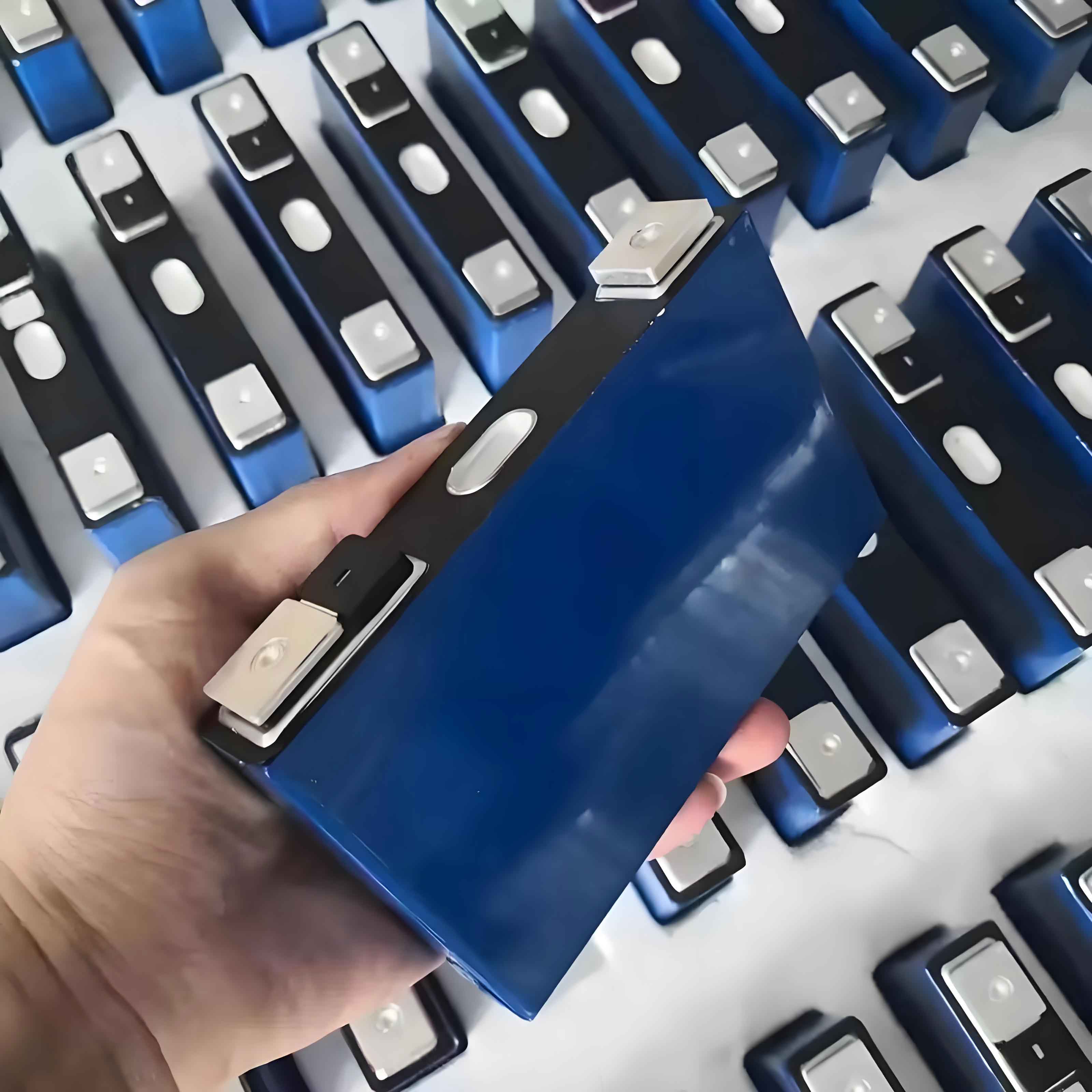
This study investigates the aging characteristics of a 48V lithium iron phosphate (LiFePO4) battery pack designed for mild hybrid electric vehicles (MHEVs). Using a 37 Ah LiFePO4 pouch cell with a nominal voltage of 3.2 V, a 15-series battery pack (48V/37Ah) was assembled and subjected to accelerated lifecycle testing under simulated World Harmonized Light Vehicle Test Procedure (WLTP) conditions. Key parameters including capacity fade and DC internal resistance (DCR) were systematically analyzed.
Experimental Methodology
1. Battery Configuration: The LiFePO4 battery pack comprised 15 cells connected in series, achieving a nominal voltage of 48 V. Each cell exhibited dimensions of 322.0 mm × 145.0 mm × 11.2 mm.
2. WLTP Power Profile Extraction: Vehicle-level WLTP testing generated power demand/supply profiles for the 48V system. Energy recuperation efficiency (η) was calculated as:
$$
\eta = \frac{E_{\text{regen}}}{E_{\text{discharge}}} \times 100\%
$$
where \( E_{\text{regen}} = 2,244 \) Ah (regenerative energy) and \( E_{\text{discharge}} = 5,763 \) Ah (discharge energy), yielding η = 38.9%.
3. Performance Characterization:
| Test Parameter | Conditions | Protocol |
|---|---|---|
| Capacity | 25°C, 1.0C rate | CC-CV charge (52V→54V), CC discharge to 28V |
| DCR | 25°C, 200A pulse | 10s charge/discharge at SOC = 25%, 50%, 85% |
| Aging | 50°C, WLTP profile | 14,400 cycles (equivalent to 334,800 km) |
Results and Analysis
1. Initial Capacity Verification: Three consecutive charge-discharge cycles confirmed stable performance:
| Cycle | Charge Capacity (Ah) | Discharge Capacity (Ah) |
|---|---|---|
| 1 | 40.34 | 37.55 |
| 2 | 40.37 | 37.57 |
| 3 | 40.35 | 37.40 |
The LiFePO4 battery pack demonstrated >37 Ah discharge capacity, exceeding design specifications.
2. DCR Progression: DC resistance exhibited SOC-dependent behavior:
$$
R_{\text{charge}} = \frac{\Delta V_{\text{charge}}}{200}, \quad R_{\text{discharge}} = \frac{\Delta V_{\text{discharge}}}{200}
$$
| SOC | Charge DCR (mΩ) | Discharge DCR (mΩ) |
|---|---|---|
| 25% | 10.531 | 11.502 |
| 50% | 10.570 | 11.540 |
| 85% | 12.120 | 12.201 |
3. Aging Characteristics: Accelerated WLTP cycling at 50°C revealed linear degradation trends:
| Cycles | Capacity Retention (%) | DCR Increase (%) |
|---|---|---|
| 0 | 100 | 0 |
| 1,200 | 98.1 | 1.2 |
| 14,400 | 89.6 | 5.2 |
The capacity fade rate followed Arrhenius-type kinetics:
$$
Q_{\text{loss}} = A \cdot e^{(-E_a/RT)} \cdot t^n
$$
where \( E_a \) = activation energy, \( T \) = absolute temperature, and \( n \) = time exponent.
Technical Implications
For LiFePO4 battery systems in 48V MHEV applications:
- Thermal management below 50°C reduces SEI growth rate
- DCR increase <8% ensures sustained power capability
- Capacity retention >80% aligns with automotive EOL criteria
Conclusion
The 48V LiFePO4 battery pack demonstrated 89.6% capacity retention after 334,800 km equivalent aging, confirming suitability for mild hybrid systems. DCR growth of 5.2% maintains operational viability within vehicle voltage thresholds. This work establishes a framework for predicting LiFePO4 battery lifetime under realistic micro-hybrid operating conditions.