
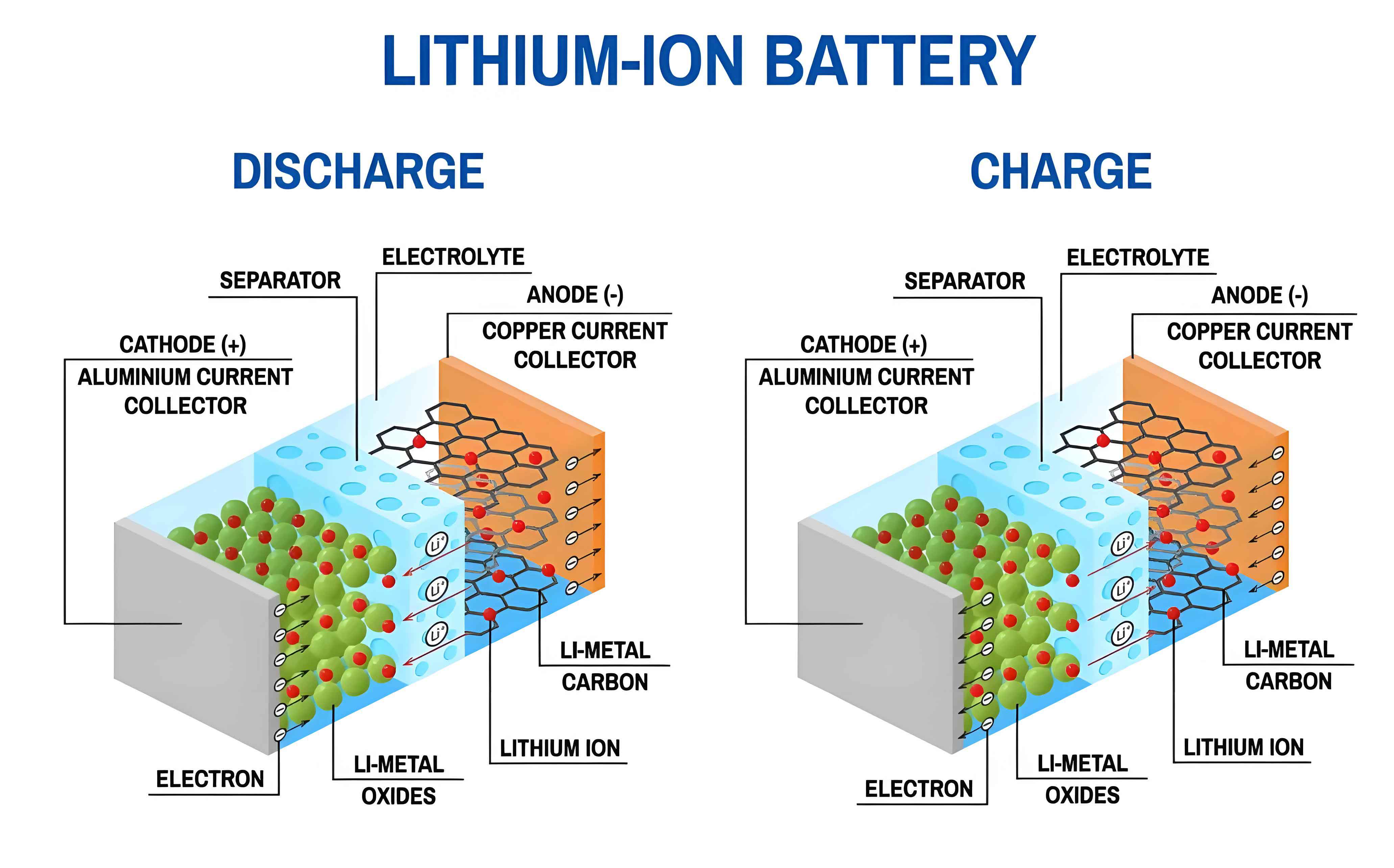
The ever-growing demand for electric vehicles and grid-scale energy storage systems continuously pushes the boundaries of performance requirements for lithium-ion batteries. Key metrics such as energy density, power capability (rate performance), and long-term cycle life are under constant scrutiny for improvement. Central to achieving these goals are advancements in electrode materials. However, state-of-the-art high-capacity cathodes like LiNi0.8Co0.1Mn0.1O2 (NCM811) and silicon-based anodes suffer from intrinsic instabilities that lead to rapid capacity fade, limiting their practical application. Surface modification via metal oxide coatings has emerged as a powerful strategy to mitigate these issues. This article presents a comprehensive study on the use of a novel, environmentally benign alumina sol, synthesized via a hydrothermal process, for the surface modification of both NCM811 cathode and graphite/silicon oxide (G/SiO) anode materials. The developed impregnation-coating method offers significant advantages over conventional techniques and leads to markedly improved electrochemical performance in li ion battery cells.
High-nickel layered oxides like NCM811 are attractive cathode materials for li ion battery applications due to their high specific capacity. Nevertheless, they are plagued by challenges including interfacial side reactions with the electrolyte, transition metal dissolution, and structural degradation during cycling, especially at high voltages. Similarly, silicon-based anodes, while offering a much higher theoretical capacity than graphite, undergo severe volume changes (>300%) during lithiation/delithiation. This leads to particle pulverization, loss of electrical contact, and continuous consumption of electrolyte to repair the solid-electrolyte interphase (SEI), resulting in poor cycle life. Applying a conformal, nanoscale coating of a stable metal oxide like Al2O3 can act as a physical barrier, protecting the active material from direct contact with the corrosive electrolyte and improving structural integrity.
Common coating methods include atomic layer deposition (ALD), wet-chemical precipitation, dry mixing, and salt impregnation. Each has drawbacks: ALD is expensive and difficult to scale; precipitation requires careful pH control and generates by-products; dry mixing often yields non-uniform coatings; and nitrate salt impregnation produces harmful NOx gases during thermal decomposition. The alumina sol-based route described herein addresses these shortcomings. It utilizes pseudoboehmite (AlOOH) as a low-cost precursor, which is peptized with a minimal amount of nitric acid and hydrothermally treated to form a stable, low-acid-content sol. This method virtually eliminates NOx emissions (reduction >99% compared to nitrate routes), produces no chemical by-products, is more cost-effective than organoaluminum precursors, and provides superior coating homogeneity compared to dry mixing, making it highly suitable for industrial-scale production of advanced li ion battery materials.
Synthesis and Characterization of Alumina Sol and Modified Electrodes
The alumina sol was synthesized by hydrothermally treating a dispersion of pseudoboehmite in deionized water with a small amount of nitric acid (H+/Al molar ratio = 0.03) at 160°C for 2 hours. The resulting sol was characterized to have a boehmite (γ-AlOOH) phase, with primary plate-like particles of 10-20 nm that form aggregated sol clusters with an average hydrodynamic size of approximately 85 nm. This nanoscale, aqueous-based sol is ideal for achieving uniform surface coverage on electrode particles.
The surface modification process was straightforward. For the NCM811 cathode material, the alumina sol was diluted with ethanol, mixed with the cathode powder, dried, and subsequently calcined at 500°C in air. For the G/SiO anode material, the sol was diluted with water, mixed with the anode powder, dried, and annealed at 600°C under an argon atmosphere. The mass fraction of alumina coating was varied systematically from 0.1% to 1.5% for the cathode and 0.1% to 0.9% for the anode to identify the optimal loading.
Material characterization confirmed the success of the coating process without altering the bulk structure. X-ray diffraction (XRD) patterns of the modified NCM811 materials retained the characteristic layered structure (R-3m space group) with clear splitting of the (006)/(012) and (018)/(110) peak pairs, indicating well-ordered crystallinity. The lattice parameters and key peak intensity ratios, summarized in Table 1, show that the coating process did not induce significant cation mixing or structural disorder.
| Sample | a (Å) | c (Å) | c/a ratio | I(003)/I(104) |
|---|---|---|---|---|
| Pristine NCM811 | 2.872 | 14.194 | 4.942 | 1.786 |
| 0.3% Al2O3-NCM811 | 2.872 | 14.200 | 4.944 | 1.846 |
| 1.0% Al2O3-NCM811 | 2.872 | 14.203 | 4.945 | 1.814 |
Scanning and transmission electron microscopy (SEM/TEM) revealed the morphological changes. While pristine NCM811 particles had a smooth surface, the coated samples showed a layer of nanoparticles adhering to the surface, with coverage becoming more complete at higher alumina loadings. Energy-dispersive X-ray spectroscopy (EDS) mapping uniformly detected aluminum across the modified particles, confirming a homogeneous coating. For the G/SiO anode, TEM images distinctly showed a ~50 nm thick, fluffy amorphous layer surrounding the composite particles after modification, which is attributed to the alumina coating formed from the sol particles.
Electrochemical Performance of Modified Cathodes in Li-ion Battery
The electrochemical performance of the alumina-coated NCM811 cathodes was evaluated in half-cells against lithium metal. The cycling stability at 1C rate (1C = ~180 mA g-1) and rate capability across various current densities were critically assessed. The results unequivocally demonstrate the benefit of the alumina sol coating.
Cycle Stability: As presented in Table 2, the optimal alumina content for the NCM811 cathode was found to be 0.3 wt%. This sample delivered an initial discharge capacity of 183.2 mAh g-1 and retained 151.0 mAh g-1 after 100 cycles, corresponding to a capacity retention of 82.45%. In stark contrast, the pristine NCM811 cathode retained only 75.61% of its initial capacity under identical conditions. Both insufficient coating (0.1%) and excessive coating (≥1.0%) led to inferior performance. A thin, optimal coating protects the interface without significantly hindering lithium-ion transport, whereas a thick insulating layer increases impedance.
| Sample | 1st Discharge Capacity (mAh g-1) | 100th Discharge Capacity (mAh g-1) | Capacity Retention (%) |
|---|---|---|---|
| Pristine NCM811 | 163.4 | 123.6 | 75.61 |
| 0.1% Al2O3-NCM811 | 183.7 | 146.9 | 79.94 |
| 0.3% Al2O3-NCM811 | 183.2 | 151.0 | 82.45 |
| 0.5% Al2O3-NCM811 | 177.7 | 141.1 | 79.36 |
| 1.0% Al2O3-NCM811 | 169.6 | 125.9 | 74.23 |
Rate Capability: The rate performance of the li ion battery with modified cathodes was significantly enhanced, particularly at high discharge rates. While all cells showed similar capacities at 0.1C, the 0.3% Al2O3-NCM811 cathode maintained a much higher capacity at 5C compared to the pristine material. This indicates that the alumina coating effectively suppresses impedance growth at high current densities, likely by stabilizing the cathode-electrolyte interface.
Electrochemical Impedance Spectroscopy (EIS): EIS analysis after 10 cycles provided insights into the interfacial resistance. The Nyquist plots were fitted using an equivalent circuit model accounting for electrolyte resistance (Rs), SEI/film resistance (Rsf), charge transfer resistance (Rct), and Warburg diffusion (W). The 0.3% Al2O3-NCM811 sample exhibited the lowest total interfacial resistance (Rsf + Rct ≈ 107.3 Ω), which is consistent with its superior cycling and rate performance. The alumina layer appears to mitigate side reactions, leading to a more stable and less resistive interface. The charge transfer resistance can be related to the exchange current density (i0) via the formula:
$$ i_0 = \frac{RT}{nFR_{ct}} $$
where R is the gas constant, T is temperature, n is the number of electrons transferred, and F is Faraday’s constant. A lower Rct implies a higher i0, signifying faster electrode kinetics, which corroborates the improved rate performance.
Electrochemical Performance of Modified Anodes in Li-ion Battery
The G/SiO anode materials coated with alumina sol were tested in half-cell configuration against lithium metal. The cycling tests were conducted at 0.1C rate after initial activation. The impact of the coating on the stability of this high-volume-change material was profound.
Cycle Stability: As shown in Table 3, the optimal alumina loading for the G/SiO anode was 0.7 wt%. This optimized anode delivered a remarkable capacity retention of 93.45% after 45 cycles, compared to 87.22% for the pristine anode. The coated anode maintained a discharge capacity of 385.1 mAh g-1 at the 45th cycle, significantly higher than the 360.6 mAh g-1 of the unmodified anode. The coating effectively buffers the mechanical stress from silicon expansion/contraction and reduces excessive SEI formation, leading to better capacity retention in the li ion battery.
| Sample | 1st Discharge Capacity (mAh g-1) | 45th Discharge Capacity (mAh g-1) | Capacity Retention (%) |
|---|---|---|---|
| Pristine G/SiO | 413.4 | 360.6 | 87.22 |
| 0.5% Al2O3-G/SiO | 413.4 | 368.5 | 89.13 |
| 0.7% Al2O3-G/SiO | 412.0 | 385.1 | 93.45 |
| 0.9% Al2O3-G/SiO | 408.8 | 356.7 | 87.27 |
Rate Capability and Impedance: The modified anode also showed improved rate capability. EIS analysis revealed that the 0.7% Al2O3-G/SiO anode had lower SEI resistance (Rsf = 2.01 Ω vs. 3.22 Ω) and charge transfer resistance (Rct = 18.24 Ω vs. 21.35 Ω) compared to the pristine anode. This reduction in interfacial resistance facilitates faster lithium-ion diffusion and electron transfer, contributing to the enhanced cycling stability and rate performance. The formation of a stable artificial SEI (the alumina layer) prior to cycling reduces the consumption of active lithium and electrolyte components, which is a common failure mode in silicon-based li ion battery anodes.
Mechanistic Insights into Performance Enhancement
The significant improvement in the performance of the li ion battery components can be attributed to multiple synergistic functions of the nanoscale alumina coating derived from the sol:
1. Scavenging of Hydrofluoric Acid (HF): LiPF6-based electrolytes are prone to hydrolysis, generating trace amounts of HF, which is highly corrosive to electrode materials. The alumina coating acts as a sacrificial layer, reacting with HF to form stable aluminum fluoride (AlF3).
$$ \text{LiPF}_6 \rightarrow \text{LiF} + \text{PF}_5 $$
$$ \text{PF}_5 + \text{H}_2\text{O} \rightarrow \text{POF}_3 + 2\text{HF} $$
$$ \text{Al}_2\text{O}_3 + 6\text{HF} \rightarrow 2\text{AlF}_3 + 3\text{H}_2\text{O} $$
This reaction protects the underlying active material (both NCM811 and Si) from acid attack, suppressing transition metal dissolution from the cathode and excessive SEI growth on the anode.
2. Physical Barrier and Structural Stabilizer: The conformal Al2O3 layer serves as a physical barrier, minimizing direct contact between the active material and the electrolyte. This reduces parasitic oxidative/reductive decomposition of the electrolyte at the electrode surfaces. For the NCM811 cathode, this mitigates oxygen loss and phase transitions at high voltage. For the G/SiO anode, the mechanically robust coating constrains particle volume expansion, reduces pulverization, and may also suppress the growth of lithium dendrites by promoting uniform lithium-ion flux.
3. Formation of an Artificial, Ion-Conductive SEI: While Al2O3 itself is an electronic insulator, it can react with lithium species during initial cycles to form a lithium-aluminum-oxide (Li-Al-O) layer. This layer is believed to be ionically conductive, facilitating Li+ transport while remaining electronically insulating. This artificial interphase is more stable and uniform than the naturally formed SEI, leading to lower and more stable interfacial resistance over many cycles in a li ion battery.
The capacity retention (CR) improvement can be conceptually summarized as a function of the coating’s efficacy in reducing degradation factors:
$$ CR \propto \frac{1}{[HF] + \sigma_{stress} + \Delta R_{interface}} $$
where [HF] is the concentration of corrosive species at the interface, $\sigma_{stress}$ is the mechanical stress from volume changes, and $\Delta R_{interface}$ is the increase in interfacial resistance over time. The alumina coating effectively reduces all three terms.
Conclusion
This study successfully demonstrates a scalable, environmentally friendly, and highly effective alumina sol-based surface modification strategy for both cathode and anode materials in lithium-ion batteries. The hydrothermal synthesis of a low-acid, nanoscale boehmite sol provides an ideal coating precursor. The simple impregnation-coating process successfully applies a uniform, protective alumina layer onto commercial NCM811 and G/SiO particles without altering their bulk structure.
The electrochemical results are compelling. An optimal coating of 0.3 wt% Al2O3 on NCM811 significantly enhances cycling stability (82.45% retention vs. 75.61% for pristine after 100 cycles at 1C) and rate capability. Similarly, a 0.7 wt% Al2O3 coating on G/SiO anode dramatically improves capacity retention (93.45% vs. 87.22% after 45 cycles at 0.1C). The performance gains are attributed to the multifunctional role of the coating: scavenging HF, providing a stable physical barrier, and forming a favorable ion-conductive interface.
This alumina sol coating method presents a superior alternative to conventional techniques, offering a compelling combination of effectiveness, simplicity, low environmental impact, and scalability. It holds significant promise for the industrial manufacturing of next-generation, high-performance, and long-life li ion battery electrodes, accelerating the adoption of electric vehicles and renewable energy storage systems.