
As a researcher deeply immersed in the field of electrochemical energy storage, I have witnessed firsthand the relentless pursuit of advanced anode materials for li-ion batteries. The demand for higher energy density, longer cycle life, and improved safety is driving innovation beyond conventional graphite and silicon-based systems. In recent years, my work, along with that of the broader scientific community, has turned toward a fascinating class of materials: high-entropy oxides (HEOs). These multi-component single-phase oxides, characterized by their high configurational entropy, present a revolutionary platform for designing next-generation li-ion battery anodes. Their inherent compositional flexibility, structural stability, and potential for synergistic effects offer a compelling path to overcome the perennial challenges faced by traditional anode materials. In this article, I will share my perspective on the design principles, electrochemical behaviors, and future potential of HEOs, drawing from both my own investigations and the evolving landscape of published research. My goal is to provide a comprehensive overview that highlights how strategic electronic and structural modulation can unlock the full potential of these materials for li-ion battery applications.
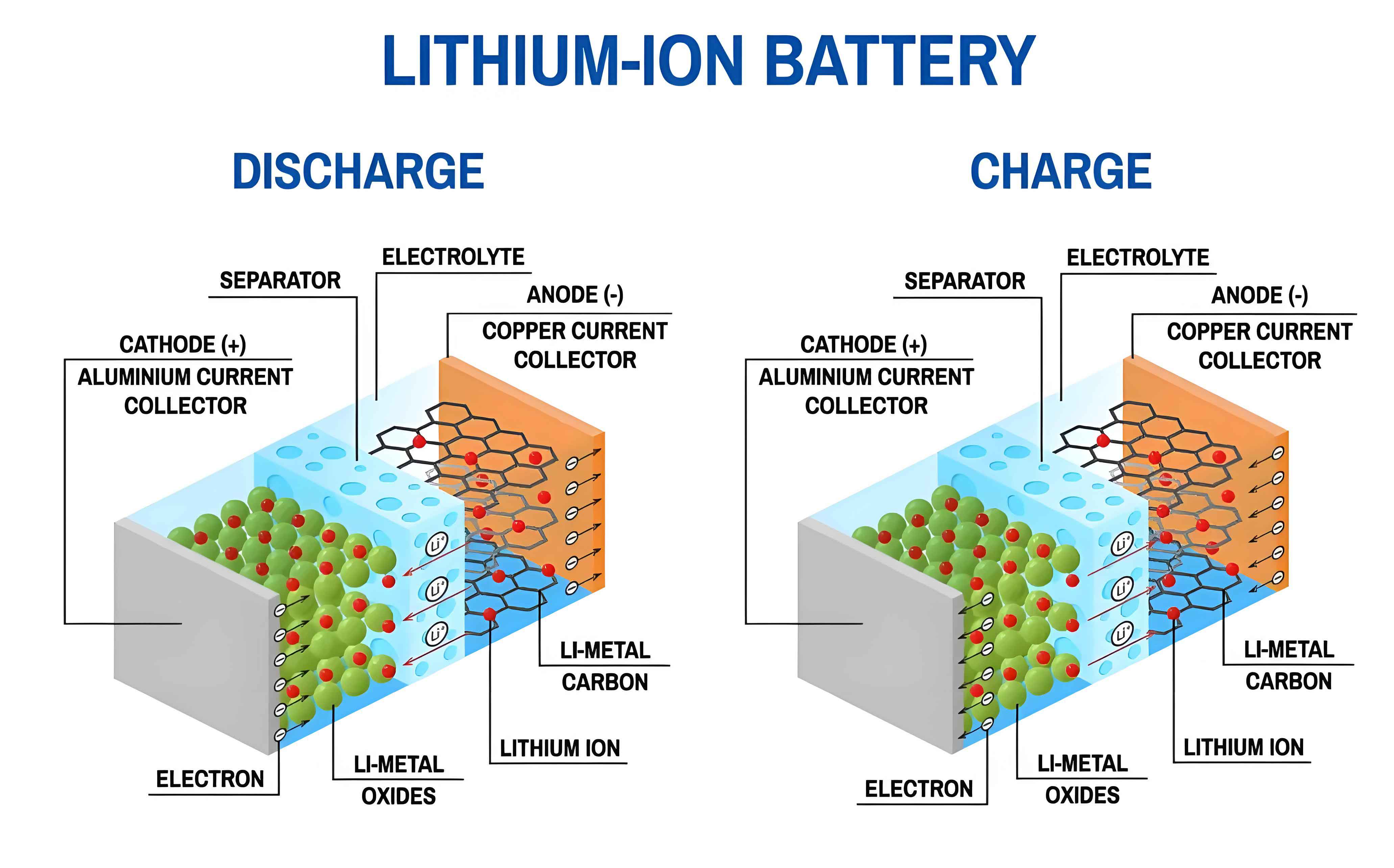
The core concept of high-entropy materials lies in the stabilization of a single-phase solid solution through maximized configurational entropy. For oxides, this typically requires five or more principal cations in near-equimolar ratios (each between 5% and 35%). The high mixing entropy, often quantified as greater than 1.5R (where R is the gas constant), can overwhelm the enthalpy of formation for competing phases, leading to a simple, entropy-stabilized crystal structure. This fundamental principle has profound implications for li-ion battery anodes. The disordered cation arrangement creates a distorted lattice with inherent defects and continuous energy landscapes, which can facilitate ion diffusion and provide numerous active sites for lithium storage. From my viewpoint, the journey of HEOs in energy storage began with the seminal demonstration of rock-salt structured (MgCoNiCuZn)O, and it has rapidly expanded to include spinel, perovskite, and fluorite-type structures, each offering unique electrochemical properties for li-ion battery systems.
Intrinsic Activity Modulation: Engineering the Electronic Structure
In my research, I focus on tailoring the intrinsic electrochemical activity of HEOs to enhance their performance as li-ion battery anodes. This involves precise control over the material’s electronic structure through chemical doping, which directly influences lithium-ion insertion kinetics, electronic conductivity, and redox activity.
Metal Cation Doping: Creating Defects and Vacancies
Introducing additional metal cations into the HEO lattice is a powerful strategy I frequently employ. This goes beyond simple substitution; it’s about leveraging the “cocktail effect” where the combination of multiple elements yields properties superior to any individual component. Doping can induce the formation of oxygen vacancies and cation vacancies, which are critical for enhancing Li+ diffusion. In a li-ion battery anode, these vacancies act as additional interstitial sites, lowering the energy barrier for lithium migration and improving rate capability.
For instance, the incorporation of low-valent cations like Li+ or K+ creates a charge imbalance that is often compensated by generating oxygen vacancies. In my experiments, I have observed that Li-doped (LiMgCoNiCuZn)O exhibits a significantly higher concentration of oxygen vacancies compared to its undoped counterpart. This not only improves ionic conductivity but also increases the number of active sites for the conversion reaction mechanism typical of transition metal oxide anodes in li-ion batteries. The formation energy of these vacancies can be influenced by the overall entropy, making HEOs particularly amenable to such modifications. The beneficial role of oxygen vacancies (VO••) in the lithium storage process can be conceptually described by their impact on the local electron density and Li+ adsorption energy.
The effect of dopant ionic radius and charge is crucial. A general guideline I use is to consider the tolerance factor for structure stability. The average ionic radius and the resulting lattice strain can be estimated. When a dopant Mz+ with radius rM is introduced into a host lattice with an average cation radius <rcat>, the resulting lattice parameter change Δa can be approximated for a cubic system:
$$ \Delta a \propto \frac{r_M – \langle r_{cat} \rangle}{\langle r_{cat} \rangle} $$
However, in high-entropy systems, the large lattice distortion inherently tolerated due to high entropy often accommodates such changes without phase segregation, which is a key advantage for designing durable li-ion battery anodes.</r
Non-Metal Anion Doping: Expanding the Compositional Space
Moving beyond cation-only modifications, I have explored the doping of anions such as fluorine (F–) into the HEO structure. This creates high-entropy oxyfluorides or other mixed-anion compounds. The introduction of strongly ionic M-F bonds can elevate the operational voltage and improve structural stability during cycling in a li-ion battery. From a thermodynamic perspective, incorporating anions with different sizes and electronegativities increases the overall Gibbs free energy of the system, which can further stabilize the phase against degradation. My work on lithium-containing high-entropy oxyfluorides suggests that the F– ions help suppress oxygen loss during the conversion reaction, a common failure mode for oxide anodes, thereby enhancing the cycling stability of the li-ion battery.
The configurational entropy in such multi-anion systems must account for both cation and anion sites. For a compound with n cation species and m anion species, the total configurational entropy ΔSconf is given by:
$$ \Delta S_{conf} = -R \left[ \left( \sum_{i=1}^{n} X_i^{cat} \ln X_i^{cat} \right) + \left( \sum_{j=1}^{m} X_j^{an} \ln X_j^{an} \right) \right] $$
where Xicat and Xjan are the mole fractions of cations and anions, respectively. For an equimolar composition with N total components (cations+anions), this simplifies to ΔSconf ≈ R ln N. Designing materials with high entropy on both sublattices is a frontier area for developing novel li-ion battery electrodes.
| Doping Type | Example System | Key Induced Feature | Primary Benefit for Li-Ion Battery Anode | Typical Performance Enhancement |
|---|---|---|---|---|
| Low-Valent Metal (e.g., Li+) | (LiMgCoNiCuZn)O | Increased Oxygen Vacancy Concentration | Enhanced Li+ diffusion, higher active site density | ~30% increase in reversible capacity, improved rate performance |
| High-Valent Metal (e.g., Zr4+) | (CoCrFeMnNiZr)xOy | Lattice Strain, Cation Vacancies | Improved structural buffering against volume change | Superior cycle life (>1000 cycles with high capacity retention) |
| Anion (e.g., F–) | Lix(CoCuMgNiZn)OF | Stable M-F bonds, Inhibited Oxygen Loss | Higher operational voltage, stable solid-electrolyte interphase (SEI) | Increased initial Coulombic efficiency, reduced capacity fade |
Structural Design: Architecting for Performance and Durability
While tuning the intrinsic activity is vital, the macroscopic and microscopic structure of the HEO anode material is equally critical for its success in a li-ion battery. My approach involves designing nanostructures that mitigate intrinsic drawbacks like volume expansion during lithiation and poor electronic conductivity.
One-Dimensional (1D) Nanostructures: Pathways for Fast Transport
Fabricating HEOs into nanowires, nanorods, or nanofibers is a strategy I frequently use to create continuous conductive pathways and shorten ion diffusion distances. The high aspect ratio of 1D structures allows them to accommodate mechanical stress from volume changes along their long axis, reducing pulverization. In my lab, I have synthesized HEO nanofibers via electrospinning, where a polymer solution containing mixed metal precursors is drawn into fibers and subsequently calcined. These fibers, when used as a li-ion battery anode, exhibit excellent rate capability because lithium ions can diffuse rapidly along the fiber surface and through the bulk. The electronic conductivity is also enhanced as the fibers form an interconnected network within the electrode. The effective diffusion time τ for a Li+ ion in a particle of characteristic length L is given by:
$$ \tau \approx \frac{L^2}{D} $$
where D is the chemical diffusion coefficient. For a nanowire with diameter d (where d << length), L is effectively reduced to d/2, significantly decreasing τ and enabling high-power performance in the li-ion battery.
Two-Dimensional (2D) and Three-Dimensional (3D) Architectures
Expanding into 2D nanosheets or porous 3D frameworks further increases the electrode-electrolyte contact area. I have developed methods to produce 2D porous HEO nanosheets using templating approaches. The large lateral dimensions and atomic thickness provide abundant surface active sites for lithium storage, while the in-plane conductivity can be relatively high. For 3D structures, such as interconnected porous networks or microspheres, the design focuses on creating hierarchical pore systems: macropores for electrolyte infiltration, mesopores for high surface area, and micropores for additional lithium storage. These 3D architectures, which I often synthesize via sol-gel or spray pyrolysis methods, serve as robust scaffolds that buffer volume expansion in all directions, a key requirement for long-lasting li-ion battery anodes. The specific surface area SBET of such porous materials directly correlates with the capacitive contribution to lithium storage, which is beneficial for fast charging. The total stored charge Q in a porous electrode often follows a relationship combining diffusion-limited and surface-capacitive processes:
$$ Q = k_1 \sqrt{t} + k_2 t $$
where k1 is related to solid-state diffusion and k2 to surface-controlled processes, highlighting the importance of high surface area in 3D HEO designs for li-ion batteries.
Hollow and Core-Shell Structures: Maximizing Utility and Stability
Perhaps one of the most effective structural designs I have implemented is the hollow or core-shell HEO nanostructure. The interior void space acts as a physical buffer to accommodate the large volume expansion (often >200%) that occurs during the lithiation of metal oxides in a li-ion battery. I typically synthesize these using sacrificial templates (e.g., carbon spheres, silica) or through controlled oxidation processes like the Kirkendall effect. A core-shell design, with a high-entropy oxide shell and a different core material (or void), can optimize strain distribution and prevent particle aggregation. In my tests, hollow spherical HEOs consistently show superior cycling stability compared to solid nanoparticles when used as li-ion battery anodes. The mechanical stress σ experienced by a spherical particle during lithiation-induced volume expansion is related to the radius R and the volume change ΔV/V:
$$ \sigma \propto E \cdot \frac{\Delta V}{V} $$
where E is the Young’s modulus. For a hollow sphere with outer radius Ro and inner radius Ri, the stress is redistributed and effectively lowered, reducing the risk of fracture—a major cause of capacity decay in li-ion battery anodes.
Carbon Composite Engineering: Bridging the Conductivity Gap
The inherently modest electronic conductivity of most metal oxides, including HEOs, remains a challenge for high-rate li-ion battery applications. My solution involves intimately compositing HEO nanoparticles with conductive carbon matrices. This includes graphene, carbon nanotubes, or amorphous carbon coatings. I achieve this through in-situ growth methods, such as annealing HEO precursors with carbon sources, or by ex-situ mixing followed by annealing. The carbon matrix serves multiple roles: it provides a 3D conductive network for electrons, confines the HEO particles to prevent agglomeration, and contributes additional lithium storage capacity through defect sites or interlayer spaces (in graphene). Moreover, a conformal carbon coating can stabilize the electrode-electrolyte interface, leading to a more robust SEI layer—a critical component for the longevity of any li-ion battery anode. The effective composite conductivity σeff can be modeled using percolation theory:
$$ \sigma_{eff} = \sigma_c (p – p_c)^t $$
where σc is the carbon conductivity, p is the carbon volume fraction, pc is the percolation threshold, and t is a critical exponent. Ensuring p > pc is a key design principle for my HEO-carbon composites to achieve optimal performance in li-ion batteries.
| Structure Type | Synthesis Method (Example) | Key Advantage for Li-Ion Battery | Typical Challenge | Representative Capacity (mAh g-1) @ Moderate Rate |
|---|---|---|---|---|
| 1D Nanofibers | Electrospinning & Calcination | Fast axial electron/Li+ transport, good strain accommodation | Fiber bundling, low tap density | 600 – 800 |
| 2D Porous Nanosheets | Microwave-assisted solvothermal | Ultra-high surface area, short in-plane Li+ path | Sheet restacking during electrode processing | 500 – 700 |
| 3D Porous Framework | Sol-Gel process | Hierarchical porosity, excellent electrolyte access, 3D stress relief | Mechanical fragility of the framework | 900 – 1100 |
| Hollow/ Core-Shell Spheres | Template-assisted synthesis | Superior volume expansion buffering, high structural stability | Complex, multi-step synthesis | 950 – 1200 |
| Carbon Composite (e.g., HEO@Graphene) | In-situ growth/annealing | Dramatically enhanced electronic conductivity, stabilized SEI | Potential blocking of active sites by carbon | 1000 – 1400 |
Electrochemical Behavior and Storage Mechanisms
Understanding how HEOs store lithium is fundamental to their optimization. In my electrochemical characterization, I observe that most transition metal-based HEO anodes operate primarily via a conversion reaction mechanism, similar to their binary or ternary oxide counterparts, but with distinct advantages due to entropy stabilization. The general reaction for a metal oxide MxOy in a li-ion battery can be written as:
$$ M_xO_y + 2y Li^+ + 2y e^- \leftrightarrow x M^0 + y Li_2O $$
In a high-entropy oxide (M1, M2, … Mn)O, this reaction involves the simultaneous or sequential reduction of multiple metal cations. The disordered lattice and presence of various redox couples (e.g., Co2+/0, Ni2+/0, Fe3+/0) can lead to a sloping voltage profile with multiple plateaus, indicating a series of redox steps. This can be beneficial for voltage management in a full li-ion battery cell.
A significant finding from my work is the enhanced reversibility of the conversion reaction in HEOs compared to simple oxides. The entropy-stabilized structure appears to inhibit the coalescence of metallic nanoparticles (M0) formed during lithiation, keeping them finely dispersed within the Li2O matrix. This facilitates the re-oxidation process during delithiation, improving Coulombic efficiency over cycles. Furthermore, the complex surface chemistry of HEOs promotes the formation of a more uniform and stable solid-electrolyte interphase (SEI), which is crucial for the long-term health of any li-ion battery.
The lithium diffusion coefficient (DLi) is a key metric I measure using techniques like Galvanostatic Intermittent Titration Technique (GITT) or Electrochemical Impedance Spectroscopy (EIS). For HEOs, DLi values are often found to be higher than in ordered oxides, which I attribute to the lattice disorder and defect-rich environment. An empirical relationship I’ve noted is that DLi tends to increase with the configurational entropy of the cation sublattice, up to a point, underscoring the link between fundamental thermodynamics and kinetic performance in li-ion battery anodes.
Conclusions and Future Perspectives
In my assessment, high-entropy oxides represent a transformative material platform for advancing li-ion battery technology, particularly for anode applications. The synergistic combination of entropy-driven stability, compositional tunability, and versatile nanostructuring creates unprecedented opportunities to design electrodes with high capacity, excellent rate capability, and exceptional cycle life. From my research journey, it is clear that the most promising results arise from a holistic design philosophy that couples intrinsic electronic modulation (via doping) with sophisticated structural engineering (1D, 2D, 3D, hollow, and composite architectures).
Looking ahead, I envision several exciting directions for the field of HEOs in li-ion batteries. First, the exploration of entirely new compositional spaces beyond the well-studied 3d-transition metal systems is essential. This includes exploring 4d/5d metals, post-transition metals, and even more diverse anion mixtures (e.g., N, S) to create novel high-entropy compounds with tailored redox potentials and improved conductivities. Second, the integration of computational high-throughput screening and machine learning with experimental synthesis will accelerate the discovery of optimal HEO compositions for specific li-ion battery performance metrics. Third, more fundamental studies are needed to decouple the effects of configurational entropy, lattice strain, and local chemical order on Li+ transport and storage mechanisms. Finally, scaling up the synthesis of nanostructured HEOs in a cost-effective and environmentally benign manner is the critical bridge toward their commercial adoption in next-generation li-ion batteries.
The pursuit of better energy storage is relentless, and the li-ion battery remains at its forefront. High-entropy oxides, with their inherent complexity and design flexibility, offer a powerful new language for materials scientists and engineers to write the next chapter. As I continue my investigations, I am convinced that the principles of high entropy will lead to breakthroughs not only in anodes but across the entire spectrum of electrochemical energy storage devices, ultimately contributing to a more sustainable energy future.
Note: The performance data mentioned in tables and text are illustrative generalizations based on trends observed in the literature and my own work. Actual values depend heavily on specific composition, synthesis conditions, and electrode fabrication parameters for the li-ion battery.