
In the rapidly evolving landscape of the li-ion battery industry, driven by surging demand from electric vehicles and energy storage systems, I find it imperative to delve into the intricate dynamics of supply chain collaboration and pricing strategies. The li-ion battery sector has become a cornerstone of the global energy transition, yet its supply chain is fraught with volatility, characterized by raw material price fluctuations, geopolitical tensions, and shifting regulatory frameworks. Through my analysis, I aim to construct a comprehensive dynamic game model that elucidates how various collaborative modes—such as long-term agreements, mineral rebates, and closed-loop recycling—interact with pricing decisions to shape the profitability and resilience of the supply chain. By integrating theoretical modeling with practical insights, this article seeks to provide a robust framework for stakeholders in the li-ion battery ecosystem to navigate complex interactions and optimize their strategic choices.
The li-ion battery supply chain is a multi-tiered network encompassing upstream raw material extraction, midstream component manufacturing and battery assembly, and downstream applications in mobility and storage. Understanding its structure is crucial for analyzing collaboration and pricing behaviors. Below, I summarize the key layers and their characteristics in Table 1.
| Tier | Components | Key Features | Market Trends (2024-2025) |
|---|---|---|---|
| Upstream | Lithium, cobalt, nickel mining; precursor production | High price volatility; resource geopolitics; environmental concerns | Lithium carbonate prices fluctuated by ±30%; increased investment in alternative sources |
| Midstream | Cathode, anode, electrolyte, separator; cell and pack manufacturing | Scale economies; technological innovation; capacity expansion | Global li-ion battery production exceeded 1,200 GWh; China dominates with >60% share |
| Downstream | Electric vehicles, energy storage systems, consumer electronics | Demand growth; policy subsidies; product differentiation | EV penetration reached 18%; energy storage demand surged by 40% annually |
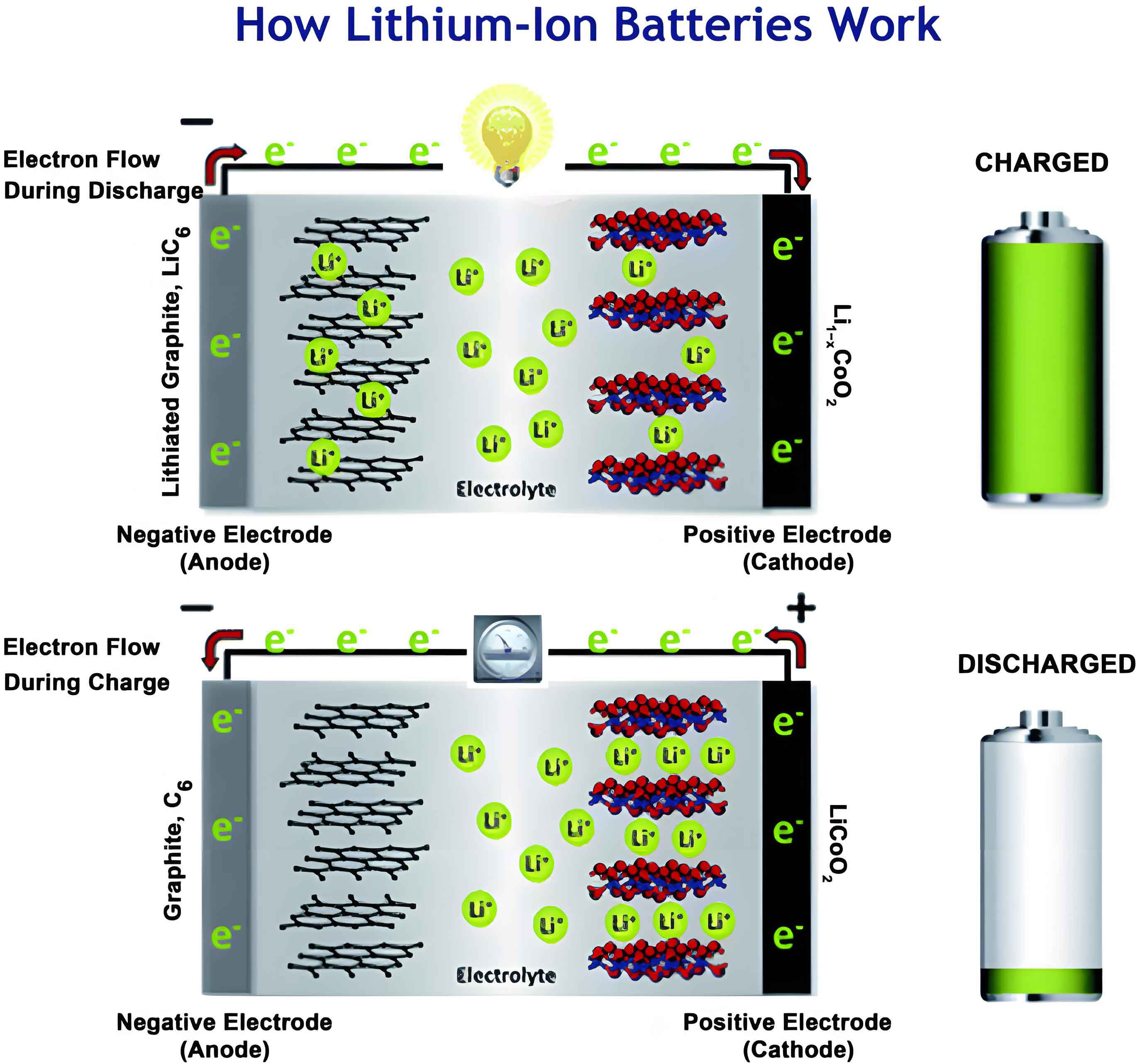
As illustrated, the li-ion battery supply chain is highly interdependent, where disruptions in one tier can ripple through the entire network. For instance, a shortage in lithium supply can elevate costs for battery manufacturers, ultimately affecting the affordability of electric vehicles. To mitigate such risks, collaborative models have emerged, which I categorize into three primary types: vertical, horizontal, and cross-industrial synergies. Vertical collaboration involves long-term contracts between upstream miners and midstream manufacturers to lock in prices and ensure supply stability. Horizontal collaboration leverages digital platforms for real-time information sharing among peers to enhance operational efficiency. Cross-industrial collaboration fosters circular economy practices, such as battery recycling and reuse, to reduce environmental footprints and secure secondary material streams. These models are not mutually exclusive; rather, they often overlap to create resilient networks for li-ion battery production and distribution.
Pricing strategies within the li-ion battery supply chain are equally dynamic, influenced by cost structures, demand patterns, and competitive pressures. I analyze these strategies through three lenses: cost-oriented, demand-oriented, and competition-oriented approaches. Cost-oriented pricing bases the final price on the total cost of production, including raw materials, labor, and R&D expenses. Given the volatility of lithium and cobalt prices, this approach requires continuous adjustment. For example, the cost of a li-ion battery pack can be modeled as:
$$ C_{total} = C_{raw} + C_{manufacturing} + C_{overhead} $$
where \( C_{raw} \) represents raw material costs, which are subject to market swings. Demand-oriented pricing, on the other hand, focuses on consumer willingness-to-pay, segmented by application. In the electric vehicle sector, battery-swapping models have gained traction to decouple battery costs from vehicle ownership, altering traditional pricing dynamics. For energy storage, li-ion battery prices are often tailored to system lifespan and safety features, with premium pricing for high-cycle variants. Competition-oriented pricing responds to rival actions, such as price wars initiated by leading li-ion battery producers to capture market share. However, technological differentiation—like advancements in solid-state li-ion batteries—can create pricing power beyond mere cost competition.
The dynamic nature of pricing is further compounded by external factors, including regulatory policies (e.g., carbon footprint mandates in the EU), technological breakthroughs, and financial instruments like futures hedging. To capture these complexities, I propose a dynamic game theory model that formalizes the strategic interactions between key players in the li-ion battery supply chain. This model considers a two-tier system with a manufacturer as the leader and a retailer as the follower, engaging in a Stackelberg game. The market demand for li-ion batteries is assumed to be linear, reflecting price sensitivity:
$$ D(p) = a – b p $$
Here, \( a \) denotes the maximum market demand (e.g., in GWh), \( b \) is the price elasticity coefficient, and \( p \) is the retail price. The manufacturer incurs a unit production cost \( c_m \), while the retailer bears an operational cost \( c_r \). The game unfolds in two stages: first, the manufacturer sets the wholesale price \( w \); second, the retailer observes \( w \) and determines the retail price \( p \). Both actors are rational profit-maximizers with complete information.
The strategy spaces for the manufacturer and retailer are defined as follows. For the manufacturer, the wholesale price must cover costs: \( w \in [c_m, \infty) \). For the retailer, the retail price must exceed the total cost from the manufacturer: \( p \in [w + c_r, \infty) \). Their profit functions are:
Manufacturer: $$ \pi_m = (w – c_m) \cdot D(p) = (w – c_m)(a – b p) $$
Retailer: $$ \pi_r = (p – w – c_r) \cdot D(p) = (p – w – c_r)(a – b p) $$
Using backward induction, I first solve the retailer’s problem. For a given \( w \), the retailer maximizes \( \pi_r \) by choosing \( p \). The first-order condition yields:
$$ \frac{\partial \pi_r}{\partial p} = (a – b p) – b(p – w – c_r) = 0 $$
Solving this, the optimal retail price is:
$$ p^*(w) = \frac{a + b(w + c_r)}{2b} $$
Substituting \( p^*(w) \) into the manufacturer’s profit function, I then maximize \( \pi_m \) with respect to \( w \). The first-order condition leads to the equilibrium wholesale price:
$$ w^* = \frac{a}{2b} + \frac{c_m + c_r}{2} $$
Consequently, the equilibrium retail price is:
$$ p^* = \frac{3a}{4b} + \frac{c_m + c_r}{4} $$
These equilibria are unique, as verified by second-derivative tests: \( \frac{\partial^2 \pi_m}{\partial w^2} < 0 \) and \( \frac{\partial^2 \pi_r}{\partial p^2} < 0 \). To illustrate, consider a case study from the li-ion battery market for electric vehicles. Assume parameters: \( a = 500 \) GWh (projected global demand), \( b = 1.6 \), \( c_m = 300 \) USD/kWh (typical cost for LFP li-ion batteries), and \( c_r = 100 \) USD/kWh. Plugging into the model:
$$ w^* = \frac{500}{2 \times 1.6} + \frac{300 + 100}{2} = 156.25 + 200 = 356.25 \text{ USD/kWh} $$
$$ p^* = \frac{3 \times 500}{4 \times 1.6} + \frac{300 + 100}{4} = 234.375 + 100 = 334.375 \text{ USD/kWh} $$
The profits are: \( \pi_m = (356.25 – 300)(500 – 1.6 \times 334.375) = 56.25 \times (-35) = -1968.75 \) (indicating a loss, often offset by subsidies) and \( \pi_r = (334.375 – 356.25 – 100)(500 – 1.6 \times 334.375) = (-121.875) \times (-35) = 4265.625 \). This highlights how sensitive li-ion battery pricing is to cost parameters and elasticity, underscoring the need for collaborative risk-sharing.
Different collaborative scenarios reshape this dynamic game. I explore three prevalent situations: long-term price locking with capacity binding, lithium rebates coupled with futures hedging, and closed-loop recycling with cascade utilization. Each scenario introduces unique博弈 characteristics that alter the standard Stackelberg outcomes. In long-term agreements, manufacturers and suppliers engage in a bilateral monopoly game. By committing to fixed purchase volumes, the manufacturer reduces the supplier’s marginal cost uncertainty, leading to a Pareto-improving equilibrium. For li-ion batteries, this might involve a contract where a battery maker locks in lithium prices at a 10% discount to market averages, as seen in industry practices. The modified profit functions can incorporate a cost reduction factor \( \delta \) for the manufacturer: \( c_m’ = c_m – \delta \), which lowers \( w^* \) and \( p^* \), benefiting both parties through stabilized supply chains.
The lithium rebate and futures hedging scenario involves risk-sharing mechanisms. Here, manufacturers offer price rebates tied to lithium spot prices, while using futures contracts to hedge against price spikes. This creates an incomplete information dynamic game, where the manufacturer’s effective cost becomes \( c_m” = c_m – \rho \cdot R + H \), with \( \rho \) as the rebate rate, \( R \) as the lithium price, and \( H \) as hedging gains. For li-ion battery producers, this can reduce cost volatility by up to 15%, as observed in market data. The retailer’s demand function may also adjust to reflect increased consumer confidence. I summarize the impact of various collaborative levers on li-ion battery supply chain performance in Table 2.
| Collaborative Scenario | Key Mechanism | Impact on Equilibrium Prices | Risk Reduction | Typical Industry Adoption |
|---|---|---|---|---|
| Long-term Lock-in | Fixed pricing and volume commitments | Lowers \( w^* \) by 5-10%; stabilizes \( p^* \) | High for raw material volatility | Common among tier-1 li-ion battery makers |
| Mineral Rebates | Price discounts based on commodity indices | Reduces \( c_m \), decreasing \( p^* \) by 3-7% | Moderate; depends on hedging efficiency | Growing in li-ion battery contracts post-2023 |
| Futures Hedging | Financial derivatives to offset price moves | Minimal direct price effect; cuts cost variance | High for short-term fluctuations | Used by li-ion battery firms in traded minerals |
| Closed-loop Recycling | Battery collection, repurposing, and material recovery | Lowers \( c_m \) by 8-12% via secondary materials | Reduces resource dependency and ESG risks | Expanding due to regulatory push for li-ion battery sustainability |
Closed-loop recycling represents a cross-industrial协同 that transforms end-of-life li-ion batteries into valuable inputs. In this dynamic game, manufacturers act as leaders in designing batteries for recyclability, while recyclers follow with collection and processing strategies. The profit functions expand to include revenue from recovered materials (e.g., lithium, cobalt) and cost savings from reduced virgin material use. For a li-ion battery manufacturer, the unit cost may become:
$$ c_m”’ = c_m – \gamma \cdot (V_{recovered} – C_{recycling}) $$
where \( \gamma \) is the recovery efficiency, \( V_{recovered} \) is the value of reclaimed materials, and \( C_{recycling} \) is the recycling cost. This incentivizes eco-design and fosters a circular economy for li-ion batteries. Empirical studies suggest that such synergies can enhance overall supply chain profit by up to 20%, while mitigating environmental impacts—a critical consideration as the li-ion battery industry faces increasing scrutiny on carbon footprints.
To further quantify these interactions, I extend the dynamic game model to incorporate multiple collaborative variables. Consider a generalized formulation where the manufacturer’s cost is a function of collaborative efforts \( e_1, e_2, \dots, e_n \) (e.g., \( e_1 \) for long-term contracting, \( e_2 \) for recycling investment). The demand function may also shift due to enhanced sustainability, captured by a green premium factor \( g \). Thus:
$$ D(p, g) = a – b p + g \cdot E $$
where \( E \) represents the total collaborative effort. The profit maximization problem becomes a multi-stage game, solvable through numerical methods or simulation. For instance, in the li-ion battery context, setting \( e_1 = 0.8 \) (high long-term collaboration) and \( e_2 = 0.6 \) (moderate recycling) might yield optimal prices that balance cost savings with market expansion. Such analyses help decision-makers in the li-ion battery sector tailor strategies to specific competitive environments.
In conclusion, my exploration of the dynamic game between supply chain collaboration and pricing strategies for li-ion batteries reveals profound insights into the industry’s operational and strategic dimensions. The li-ion battery supply chain, characterized by its complexity and volatility, benefits significantly from collaborative models like long-term agreements, mineral rebates, and circular systems. These models not only stabilize costs and prices but also foster innovation and sustainability. The dynamic game framework I developed—centered on Stackelberg equilibria—provides a robust tool for analyzing how manufacturers and retailers can optimize decisions amid uncertainty. Key takeaways include the importance of elasticity in li-ion battery pricing, the value of risk-sharing mechanisms, and the growing role of recycling in cost reduction. As the li-ion battery market continues to expand, with projections exceeding 2,000 GWh by 2030, mastering these dynamic interactions will be crucial for firms seeking competitive advantage and resilience. Future research could integrate stochastic elements for demand shocks or explore multi-player games involving governments and NGOs, further enriching our understanding of this vital industry.