
As a researcher in the field of electrochemical energy storage, I have dedicated significant effort to exploring innovative materials for solid-state batteries. The transition from traditional liquid electrolytes to solid-state electrolytes represents a paradigm shift, driven by the demand for safer, more reliable, and higher-energy-density power sources. In this article, I will delve into my investigations into natural mineral-based solid electrolytes and their integration into various solid-state battery systems, emphasizing performance metrics, structural insights, and practical applications. The solid-state battery, with its inherent leak-proof and corrosion-resistant properties, is poised to revolutionize portable electronics and beyond.
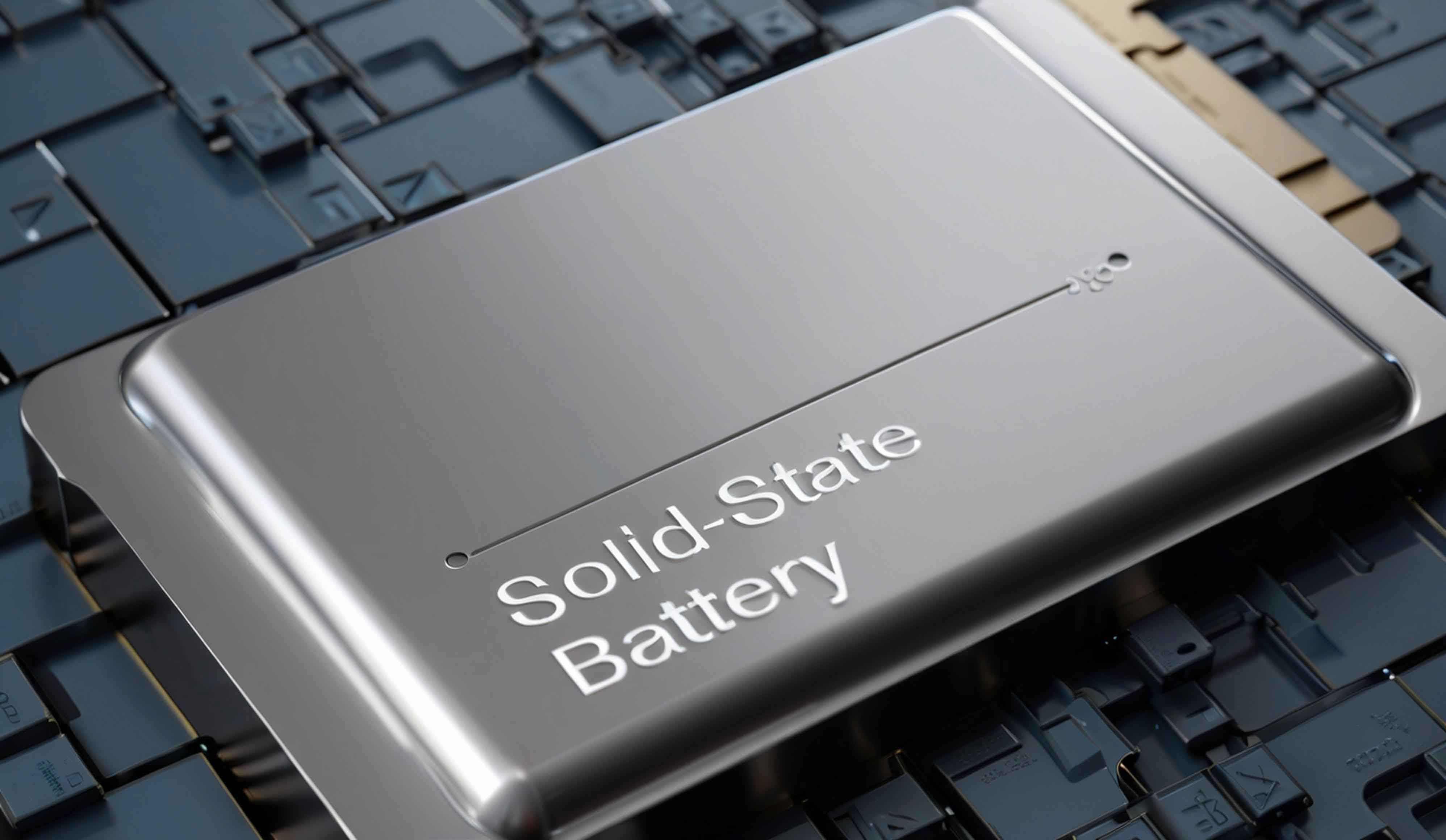
The core innovation lies in utilizing abundant natural minerals—specifically montmorillonite, attapulgite, mordenite, and kaolin—as the foundation for solid electrolytes. These materials, after purification and chemical modification, exhibit high ionic conductivity and low electronic conductivity, making them ideal for solid-state battery designs. My work has focused on fabricating and testing cells such as Zn/MnO2, Mg/MnO2, and Mg/CuO, with dimensions of Ø6.8×2.6 mm and discharge capacities ranging from 9 to 10 mAh. The cathode active material utilization reached 42%, underscoring the efficiency of these systems. Throughout this discussion, the term “solid-state battery” will be frequently highlighted to reinforce its centrality in modern energy storage solutions.
To understand the significance of these solid-state batteries, it is essential to grasp the fundamentals of solid electrolytes. The ionic conductivity, denoted as $\sigma_i$, is a critical parameter defined by the Nernst-Einstein relation: $$\sigma_i = \frac{n q^2 D}{k_B T}$$ where $n$ is the charge carrier concentration, $q$ is the charge, $D$ is the diffusion coefficient, $k_B$ is Boltzmann’s constant, and $T$ is the temperature. For the minerals studied, the ionic conductivity falls within the range of $10^{-3}$ to $10^{-4}$ S·cm−1, while the electronic conductivity is kept below 1% of the total conductivity to minimize self-discharge. The apparent activation energy $E_a$, derived from the Arrhenius equation $$\sigma = \sigma_0 \exp\left(-\frac{E_a}{k_B T}\right)$$, is less than 0.5 eV, indicating favorable ion transport at room temperature. These properties are summarized in Table 1, which compares different mineral-based electrolytes.
| Material | Ionic Conductivity (S·cm−1) | Electronic Conductivity (S·cm−1) | Activation Energy (eV) | Primary Ions |
|---|---|---|---|---|
| Montmorillonite | $1.0 \times 10^{-3}$ | $5.0 \times 10^{-8}$ | 0.13 | Zn2+, Mg2+ |
| Attapulgite | $1.0 \times 10^{-3}$ | $1.5 \times 10^{-6}$ | 0.27 | Mg2+, Zn2+ |
| Kaolin | $1.0 \times 10^{-4}$ | $3.0 \times 10^{-8}$ | 0.23 | Zn2+ |
| Mordenite | $1.0 \times 10^{-4}$ | $8.0 \times 10^{-7}$ | 0.30 | Zn2+ |
The structural attributes of these silicate minerals are pivotal to their performance. Montmorillonite and kaolin possess layered structures composed of silicon-oxygen (Si–O) tetrahedra and aluminum-oxygen (Al–O) octahedra, while attapulgite features a layer-chain configuration. Mordenite, a zeolite, has a framework structure with three-dimensional ion channels. In all cases, isomorphous substitution within the tetrahedral and octahedral sites generates excess negative charge, attracting cations like Zn2+ and Mg2+ into interlayer spaces. This creates a network of pathways for ion migration, as described by the diffusion equation: $$\frac{\partial C}{\partial t} = D \nabla^2 C$$ where $C$ is the ion concentration. The low electronic conductivity arises from the wide bandgap of these insulators, typically exceeding 5 eV, ensuring that electron transport is negligible compared to ion motion. This balance is crucial for the solid-state battery to function efficiently without short-circuiting.
In fabricating solid-state batteries, I employed a process involving purification, chemical modification, and thermal treatment at 80°C. The powdered electrolyte was compressed under 3.9×10⁸ Pa into discs of Ø6.0×1.2 mm for testing. The cell assembly followed a sandwich structure: anode | solid electrolyte | cathode. For the anode, zinc foil or magnesium alloy (with additives like Al, Mn, and Zn to mitigate corrosion) was used. The cathode consisted of manganese dioxide (MnO2), copper oxide (CuO), or other active materials. The overall cell reaction for a Zn/MnO2 solid-state battery can be expressed as: $$xZn + MnO_2 \rightarrow Zn_xMnO_2$$ This insertion mechanism, where Zn2+ ions integrate into the MnO2 lattice, was confirmed through X-ray diffraction (XRD) analysis showing peak shifts and lattice expansion without new phase formation. Similarly, for Mg-based systems: $$xMg + MnO_2 \rightarrow Mg_xMnO_2$$ The theoretical capacity $C_{th}$ is calculated using Faraday’s law: $$C_{th} = \frac{nF}{M} \times m$$ where $n$ is the number of electrons transferred, $F$ is Faraday’s constant (96485 C/mol), $M$ is the molar mass, and $m$ is the mass of active material. For MnO2, with $n=1$ per MnO2 unit, the theoretical capacity is approximately 308 mAh/g, but practical utilization in these solid-state batteries is around 42% due to kinetic limitations.
Performance evaluation of various solid-state battery configurations revealed promising results. Discharge tests were conducted under constant resistive loads, and key metrics are compiled in Table 2. The solid-state battery design ensures stable operation across a temperature range of -25°C to +40°C, with capacity retention exceeding 90% at extremes, attributed to the low activation energy of the electrolyte. The open-circuit voltage (OCV) for Zn/MnO2 cells is about 1.75 V, while Mg/MnO2 cells reach 2.15 V, though voltage regulation is necessary for specific applications like quartz watches.
| Battery Type | Open-Circuit Voltage (V) | Discharge Capacity (mAh) | Specific Energy (Wh/kg) | Cathode Utilization (%) | Load (kΩ) |
|---|---|---|---|---|---|
| Zn/Montmorillonite/MnO2 | 1.75 | 10.0 | 666 | 42 | 100 |
| Mg/Montmorillonite/MnO2 | 2.15 | 9.3 | 552 | 40 | 100 |
| Mg/Montmorillonite/CuO | 1.70 | 9.5 | — | 38 | 100 |
| Mg/Montmorillonite/V2O5 | 2.04 | 8.0 | — | 35 | 100 |
| Mg/Montmorillonite/CuCl | 2.08 | 8.5 | — | 37 | 100 |
The discharge curves for Zn/MnO2 and Mg/MnO2 solid-state batteries under a 100 kΩ load are nearly identical, indicating similar kinetic profiles. The capacity fade over time is minimal; after one year of storage, capacity loss is less than 1%, thanks to the negligible electronic conductivity that prevents self-discharge. This longevity is a hallmark of advanced solid-state battery technology. Temperature dependence studies show that the electromotive force (EMF) temperature coefficient for Zn/MnO2 cells is in the range of -0.0003 to -0.00038 V/°C, derived from the relation: $$\frac{dE}{dT} = \frac{\Delta S}{nF}$$ where $\Delta S$ is the entropy change of the cell reaction. This low coefficient ensures reliable performance in diverse climates, making solid-state batteries suitable for global applications.
Further exploration into other mineral electrolytes, such as attapulgite, kaolin, and mordenite, yielded comparable results. For instance, attapulgite-based Mg/MnO2 solid-state batteries exhibited discharge capacities of 9.5 mAh under 100 kΩ, with curves mirroring those of montmorillonite-based cells. The universal insertion mechanism facilitates ion transport regardless of the mineral type, as long as the ionic conductivity meets the threshold of $10^{-4}$ S·cm−1. The solid-state battery’s resilience is further demonstrated in cyclic tests for Mg/V2O5 cells, which endured 15 charge-discharge cycles with minimal degradation, rivaling secondary alkaline batteries. This cyclability stems from the reversible intercalation reaction: $$Mg^{2+} + V_2O_5 \rightleftharpoons Mg_xV_2O_5$$ where the solid electrolyte maintains structural integrity against volume changes.
In practical applications, solid-state batteries have been integrated into pointer-style quartz watches, where their low self-discharge and stable voltage output are critical. The average operating current for such watches is 1.2–2.6 µA, which aligns well with the discharge characteristics of these cells. For Mg/MnO2 solid-state batteries, the voltage was controlled to 1.9 V using chemically modified MnO2 to prevent overvoltage issues, resulting in a working plateau of 1.6–1.7 V. This adaptation highlights the versatility of solid-state battery designs for consumer electronics. The absence of liquid components eliminates leakage risks, enhancing device longevity and safety—a key advantage over conventional batteries.
Looking ahead, the potential of natural mineral-based solid electrolytes is vast. The abundance and low cost of materials like montmorillonite and attapulgite pave the way for scalable manufacturing of solid-state batteries. Future research should focus on optimizing ionic conductivity through nanostructuring or doping, as described by the effective medium theory: $$\sigma_{\text{eff}} = \sigma_m \phi_m + \sigma_i \phi_i$$ where $\sigma_m$ and $\sigma_i$ are conductivities of the matrix and inclusions, and $\phi$ are volume fractions. Additionally, exploring hybrid systems combining multiple minerals could yield synergistic effects. The solid-state battery paradigm also extends to high-energy applications, such as electric vehicles, where safety and energy density are paramount. By leveraging computational models like density functional theory (DFT), we can predict ion migration barriers: $$E_a = E_{\text{transition}} – E_{\text{initial}}$$ and guide material selection.
In conclusion, my work demonstrates that natural minerals are viable candidates for solid electrolytes in solid-state batteries. These systems offer compelling advantages: high ionic conductivity, low electronic conductivity, excellent temperature stability, and long shelf life. The successful deployment in quartz watches is just the beginning; with continued innovation, solid-state batteries could power a wide array of technologies, from medical implants to grid storage. The journey toward more efficient and sustainable energy storage is ongoing, and the solid-state battery stands at its forefront, promising a future where power sources are both reliable and environmentally benign. As I refine these materials and designs, the goal remains to push the boundaries of what a solid-state battery can achieve, driving progress in the ever-evolving landscape of electrochemistry.