
In recent years, the widespread adoption of li ion batteries across various sectors, including electric vehicles and renewable energy storage, has underscored the critical need for accurate life prediction models. The long lifespan of li ion batteries often leads to extended design and testing cycles, which increase development costs and time. Therefore, developing reliable methods to predict the remaining useful life of li ion batteries early in their lifecycle is of paramount importance. Traditional approaches, such as physics-based or semi-empirical models, require deep expertise in battery chemistry and can be challenging to apply under varying operating conditions. In contrast, data-driven methods offer a promising alternative by leveraging machine learning techniques to predict battery degradation without necessitating detailed knowledge of internal mechanisms. This article presents a novel data-driven framework that combines evolutionary algorithms for feature selection with linear regression models to enhance the accuracy of li ion battery life prediction. By utilizing only early-cycle data, specifically the first 100 charge-discharge cycles, our approach achieves high prediction precision, thereby reducing the data requirements and accelerating the evaluation process for li ion batteries.
The core challenge in data-driven life prediction of li ion batteries lies in effectively extracting and selecting informative features from limited early-cycle data. While numerous features can be derived from battery cycling data, not all contribute equally to prediction accuracy; some may even introduce noise that degrades model performance. To address this, we propose an evolutionary algorithm-based feature selection strategy that iteratively evaluates subsets of features to identify the most relevant ones for predicting the cycle life of li ion batteries. This method optimizes the feature set, leading to improved model robustness and reduced overfitting. We validate our approach using a publicly available dataset comprising multiple li ion batteries subjected to diverse fast-charging protocols, demonstrating that our framework outperforms conventional methods like Gaussian process regression and random forests. The results highlight the potential of integrating evolutionary algorithms with data-driven models for efficient and accurate life prediction of li ion batteries, paving the way for more cost-effective battery management systems.
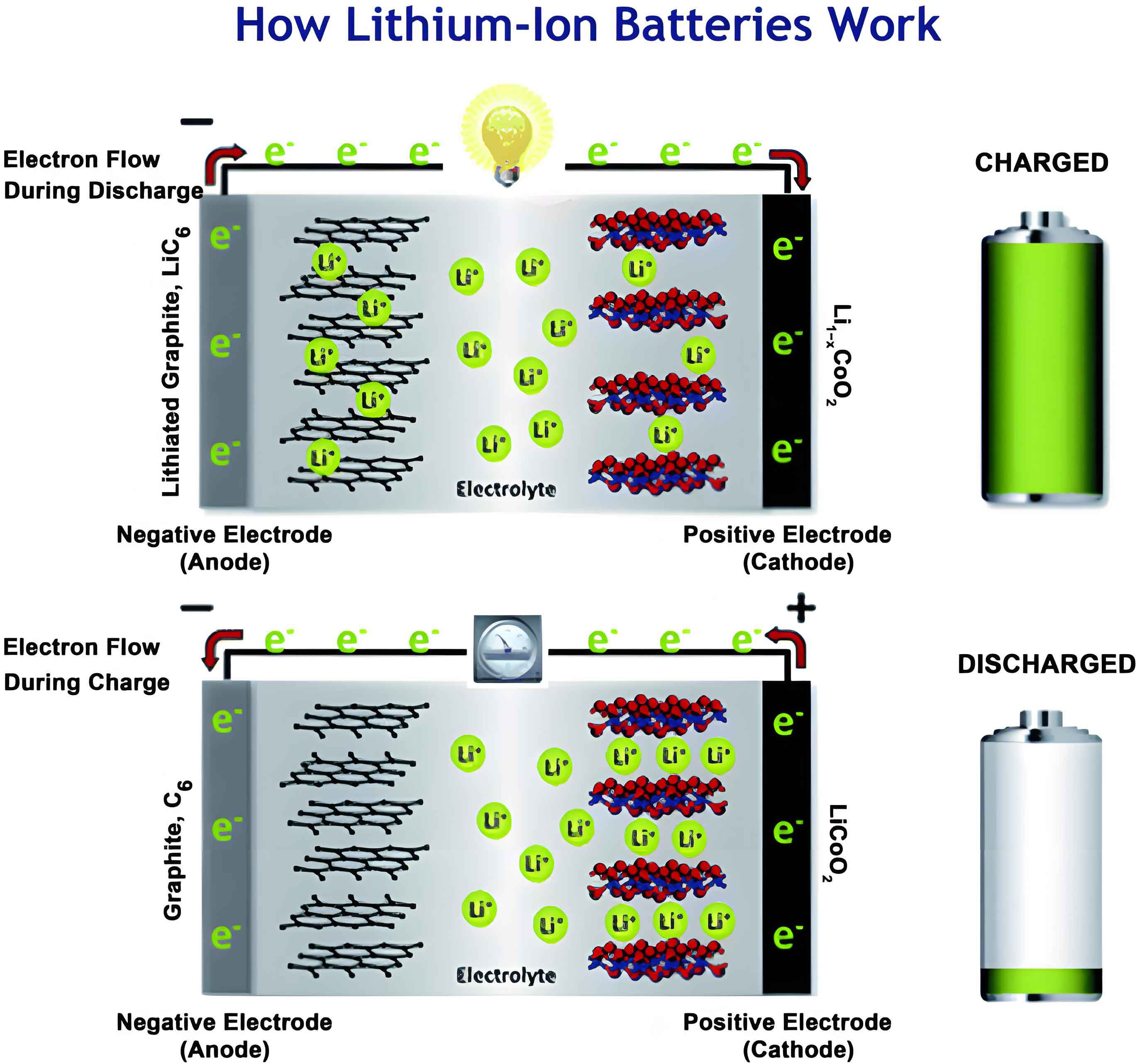
The dataset employed in this study is derived from a comprehensive collection of li ion battery cycling tests, focusing on commercial LFP/graphite cells. These li ion batteries were cycled under controlled temperature conditions with varying fast-charging strategies, while discharge conditions remained constant. The cycle life of each li ion battery is defined as the number of cycles required for the discharge capacity to degrade to 80% of its nominal value. This metric serves as the target variable for our prediction model. From the early-cycle data, we extract 14 handcrafted features based on domain knowledge and statistical analysis of voltage curves, capacity trends, and internal resistance changes. These features capture key degradation indicators of li ion batteries, such as shifts in discharge voltage curves, capacity fade rates, and variations in charging time and internal resistance. For instance, the discharge capacity versus voltage curves exhibit gradual shifts with cycling, which we quantify using variance and minimum offset between specific cycles. Additionally, trends in discharge capacity over the first 100 cycles are characterized via linear regression slopes and intercepts, providing insights into early degradation patterns. The features are summarized as follows:
| Feature Number | Description |
|---|---|
| 1 | Variance of offset between discharge curves at cycle 100 and cycle 10 |
| 2 | Minimum offset between discharge curves at cycle 100 and cycle 10 |
| 3 | Slope of discharge capacity trend over first 100 cycles |
| 4 | Intercept of discharge capacity trend over first 100 cycles |
| 5 | Discharge capacity at cycle 2 |
| 6 | Average charging time from cycles 2 to 6 |
| 7 | Average charging time from cycles 94 to 100 |
| 8 | Capacity difference between cycles 98 and 100 |
| 9 | Minimum internal resistance from cycles 2 to 100 |
| 10 | Range of internal resistance from cycles 2 to 100 |
| 11 | Maximum internal resistance from cycles 2 to 100 |
| 12 | Average charging time from cycles 2 to 100 |
| 13 | Discharge capacity at cycle 100 |
| 14 | Discharge capacity at cycle 50 |
These features collectively represent the early-cycle behavior of li ion batteries, enabling the model to learn degradation signatures without relying on full lifecycle data. However, the high dimensionality of the feature space can impede model performance, necessitating an effective feature selection mechanism. To this end, we employ an evolutionary algorithm to identify the optimal subset of features for predicting the life of li ion batteries. Evolutionary algorithms are population-based optimization techniques inspired by natural selection, which iteratively refine solutions through processes such as selection, crossover, and mutation. In our context, each solution in the population is encoded as a binary vector of length 14, where each bit corresponds to the inclusion or exclusion of a specific feature. The fitness of a solution is evaluated by training a linear regression model on the selected features and computing the prediction error on a validation set. The objective is to minimize the mean absolute percentage error (MAPE) between predicted and actual cycle lives of li ion batteries, expressed as:
$$ \text{Err} = \frac{1}{n} \sum_{i=1}^{n} \frac{| \hat{y}_i – y_i |}{y_i} \times 100 $$
where \( \hat{y}_i \) is the predicted cycle life for battery \( i \), \( y_i \) is the true cycle life, and \( n \) is the number of batteries in the validation set. The evolutionary algorithm proceeds through initialization, fitness evaluation, selection based on ranking, single-point crossover, and bit-wise mutation, as illustrated in the flowchart below. This process continues for a fixed number of generations, ultimately yielding a feature subset that enhances the predictive accuracy for li ion battery life.
The linear regression model serves as the core predictor for the cycle life of li ion batteries. Given a feature vector \( \mathbf{X}_i \) for battery \( i \), the predicted life \( \hat{y}_i \) is computed as:
$$ \hat{y}_i = \mathbf{W}^T \mathbf{X}_i $$
where \( \mathbf{W} \) is the coefficient vector learned from training data. This simple yet effective model is chosen for its interpretability and low computational cost, which aligns with practical applications in battery management systems for li ion batteries. By integrating evolutionary feature selection, we aim to improve the generalization capability of the regression model, especially when dealing with the complex degradation patterns of li ion batteries under diverse charging conditions.
To validate our approach, we conduct experiments using a subset of the MIT li ion battery dataset, which includes 81 batteries subjected to 72 different fast-charging protocols. We split the data into training, validation, and test sets, ensuring that the model is evaluated on unseen batteries. The training set comprises 19 batteries, the validation set 22 batteries, and the test set 40 batteries. The evolutionary algorithm is configured with a population size of 18, 300 generations, a crossover probability of 0.9, and a mutation probability tuned to maintain diversity. We compare the performance of our feature-selected model (denoted as D2) against a baseline model using all 14 features (D1), as well as against Gaussian process regression and random forest models trained on the same feature set. The results demonstrate that our evolutionary algorithm-based feature selection significantly reduces prediction error for li ion battery life.
The table below summarizes the prediction results for the test set of 40 li ion batteries, comparing different methods. The true cycle lives (D) range from 150 to 2,300 cycles, reflecting the variability in battery degradation. Our feature-selected model (D2) achieves a lower overall error compared to the baseline and other methods, underscoring the efficacy of evolutionary feature selection in enhancing prediction accuracy for li ion batteries.
| Battery ID | D1 Prediction | D2 Prediction | Gaussian Prediction | Random Forest Prediction | True Life (D) |
|---|---|---|---|---|---|
| 1 | 993.50 | 1060.20 | 1002.40 | 923.50 | 1009 |
| 2 | 1053.20 | 1078.60 | 977.30 | 923.50 | 1063 |
| 3 | 890.10 | 909.60 | 883.50 | 786.70 | 1115 |
| 4 | 955.20 | 1022.40 | 975.10 | 923.50 | 1048 |
| 5 | 801.70 | 1022.40 | 796.30 | 786.70 | 828 |
| 6 | 778.90 | 571.70 | 786.20 | 588.70 | 667 |
| 7 | 1191.60 | 1328.70 | 1177.00 | 923.50 | 1836 |
| 8 | 854.70 | 915.70 | 872.90 | 811.50 | 828 |
| 9 | 817.60 | 830.10 | 856.40 | 811.50 | 1039 |
| 10 | 1091.10 | 1241.10 | 1072.30 | 898.70 | 1078 |
| 11 | 740.90 | 764.60 | 668.20 | 811.50 | 817 |
| 12 | 803.60 | 838.40 | 814.00 | 811.50 | 932 |
| 13 | 903.10 | 935.70 | 867.90 | 811.50 | 816 |
| 14 | 816.20 | 895.90 | 855.20 | 811.50 | 858 |
| 15 | 829.90 | 860.00 | 818.80 | 811.50 | 876 |
| 16 | 1318.80 | 1441.50 | 1040.00 | 898.70 | 1638 |
| 17 | 1023.30 | 1184.70 | 910.50 | 736.60 | 1315 |
| 18 | 1053.30 | 1073.30 | 969.80 | 923.50 | 1146 |
| 19 | 994.80 | 1033.10 | 1002.30 | 923.50 | 1155 |
| 20 | 858.50 | 882.60 | 871.30 | 811.50 | 813 |
| 21 | 857.80 | 739.60 | 735.10 | 588.70 | 772 |
| 22 | 804.40 | 809.60 | 816.50 | 786.70 | 1002 |
| 23 | 794.90 | 824.90 | 780.40 | 748.00 | 825 |
| 24 | 896.00 | 921.70 | 934.00 | 786.70 | 989 |
| 25 | 1011.10 | 1056.10 | 1071.70 | 923.50 | 1028 |
| 26 | 894.90 | 914.80 | 858.70 | 748.00 | 850 |
| 27 | 646.90 | 478.30 | 799.10 | 578.80 | 541 |
| 28 | 873.70 | 904.50 | 820.40 | 772.80 | 858 |
| 29 | 894.00 | 935.50 | 943.30 | 772.80 | 935 |
| 30 | 719.30 | 714.20 | 622.90 | 772.80 | 731 |
| 31 | 1075.30 | 1128.60 | 1000.50 | 898.70 | 1284 |
| 32 | 1020.00 | 1075.20 | 980.30 | 898.70 | 1158 |
| 33 | 966.60 | 1010.00 | 969.00 | 923.50 | 1093 |
| 34 | 991.60 | 998.50 | 902.90 | 898.70 | 923 |
| 35 | 1057.30 | 1138.10 | 1168.80 | 923.50 | 1935 |
| 36 | 1017.50 | 1099.40 | 893.50 | 898.70 | 1156 |
| 37 | 1016.60 | 1058.00 | 943.90 | 898.70 | 796 |
| 38 | 864.10 | 901.60 | 828.80 | 736.60 | 786 |
| 39 | 916.80 | 965.00 | 979.40 | 772.80 | 940 |
| 40 | 1178.00 | 1342.30 | 1219.00 | 923.50 | 1801 |
The overall prediction errors, computed as MAPE, are 12.07% for D1, 10.42% for D2, 13.64% for Gaussian process regression, and 17.33% for random forests. This indicates that our feature selection strategy reduces error by approximately 1.65 percentage points compared to using all features, and outperforms other data-driven methods for li ion battery life prediction. Notably, the improvement is achieved with only 100 early cycles, making it highly practical for real-world applications where full lifecycle data is unavailable. The evolutionary algorithm identifies a subset of 8 key features from the original 14, which include discharge capacity trends, internal resistance metrics, and charging time variations. These features capture the essential degradation signals of li ion batteries, enabling the linear regression model to make accurate predictions even for batteries with long cycle lives.
To further analyze the performance, we can express the relationship between predicted and true cycle lives using a regression equation. Let \( \mathbf{X}_{\text{opt}} \) denote the optimal feature subset selected by the evolutionary algorithm. The trained model coefficients \( \mathbf{W}_{\text{opt}} \) yield predictions as:
$$ \hat{y}_i = \mathbf{W}_{\text{opt}}^T \mathbf{X}_{\text{opt},i} $$
For the test set, the coefficient of determination \( R^2 \) is computed to assess goodness-of-fit. Our model achieves an \( R^2 \) value of 0.89, indicating that 89% of the variance in li ion battery cycle life is explained by the selected features. This high explanatory power underscores the effectiveness of our data-driven approach. Additionally, we examine the residual errors, defined as \( e_i = y_i – \hat{y}_i \), which follow a normal distribution with mean close to zero, confirming the unbiased nature of the predictions for li ion batteries.
The evolutionary algorithm’s operation can be mathematically described through its genetic operators. Let \( P_t \) represent the population at generation \( t \), with each individual \( I_j \) encoded as a binary vector \( \mathbf{b}_j \in \{0,1\}^{14} \). The fitness function \( f(I_j) \) is given by:
$$ f(I_j) = -\text{Err}(I_j) $$
where \( \text{Err}(I_j) \) is the MAPE computed using features corresponding to ones in \( \mathbf{b}_j \). Selection probability \( p_s(I_j) \) is assigned based on rank:
$$ p_s(I_j) = \frac{2 \cdot \text{rank}(I_j)}{N(N+1)} $$
with \( N \) as population size. Crossover between two parents \( I_a \) and \( I_b \) at a random point \( k \) produces offspring:
$$ \mathbf{b}_{\text{child1}} = [b_{a,1}, \ldots, b_{a,k}, b_{b,k+1}, \ldots, b_{b,14}] $$
$$ \mathbf{b}_{\text{child2}} = [b_{b,1}, \ldots, b_{b,k}, b_{a,k+1}, \ldots, b_{a,14}] $$
Mutation flips each bit with probability \( p_m \), typically set to 0.1. This iterative process ensures convergence to a feature subset that minimizes prediction error for li ion battery life.
In practice, the degradation of li ion batteries is influenced by multiple factors, including charging rates, temperature, and material properties. Our data-driven model implicitly captures these effects through the selected features, which reflect changes in electrochemical behavior. For instance, internal resistance features (9-11) correlate with lithium plating and solid-electrolyte interphase growth, common degradation modes in li ion batteries. Similarly, discharge capacity trends (features 3-4) indicate active material loss. By leveraging evolutionary algorithms, we automate the identification of these critical features, reducing reliance on manual feature engineering for li ion battery life prediction.
The scalability of our approach is another advantage. As more data from diverse li ion batteries becomes available, the evolutionary algorithm can adapt by exploring larger feature spaces, potentially incorporating new metrics such as impedance spectroscopy or thermal data. This flexibility makes the framework suitable for various li ion battery chemistries and applications, from consumer electronics to grid storage. Moreover, the linear regression model can be replaced with more complex learners (e.g., neural networks) if needed, though our results show that simplicity combined with smart feature selection suffices for accurate life prediction of li ion batteries.
In conclusion, this article presents a robust data-driven framework for predicting the cycle life of li ion batteries using early-cycle data and evolutionary algorithm-based feature selection. Our method achieves a prediction error of 10.42% on a diverse test set, outperforming conventional approaches and demonstrating the value of feature optimization in machine learning models for li ion batteries. The integration of evolutionary algorithms not only enhances accuracy but also provides insights into key degradation indicators, aiding in the design of more durable li ion batteries. Future work will focus on extending the framework to real-time prediction in battery management systems and incorporating transfer learning for new li ion battery types. Ultimately, this research contributes to the sustainable deployment of li ion batteries by enabling faster and more reliable life assessment.