
The evolution towards a decarbonized energy landscape has catalyzed unprecedented growth in the energy storage sector. Among the plethora of storage technologies, the li ion battery stands out due to its high energy density, scalability, and operational flexibility, making it the cornerstone of modern portable electronics, electric vehicles, and grid-scale storage solutions. As the market demands batteries with higher energy density and longer lifespan, particularly for large-format storage applications, every component within the cell comes under scrutiny for optimization. One such critical, yet often overlooked, component is the polymeric binder. The binder’s primary role is to mechanically integrate the active material particles and conductive additives, ensuring electrical connectivity and structural integrity of the electrode coating on the current collector. However, its influence extends far beyond mere adhesion; it directly impacts ionic and electronic transport, electrode polarization, and long-term cycling stability.
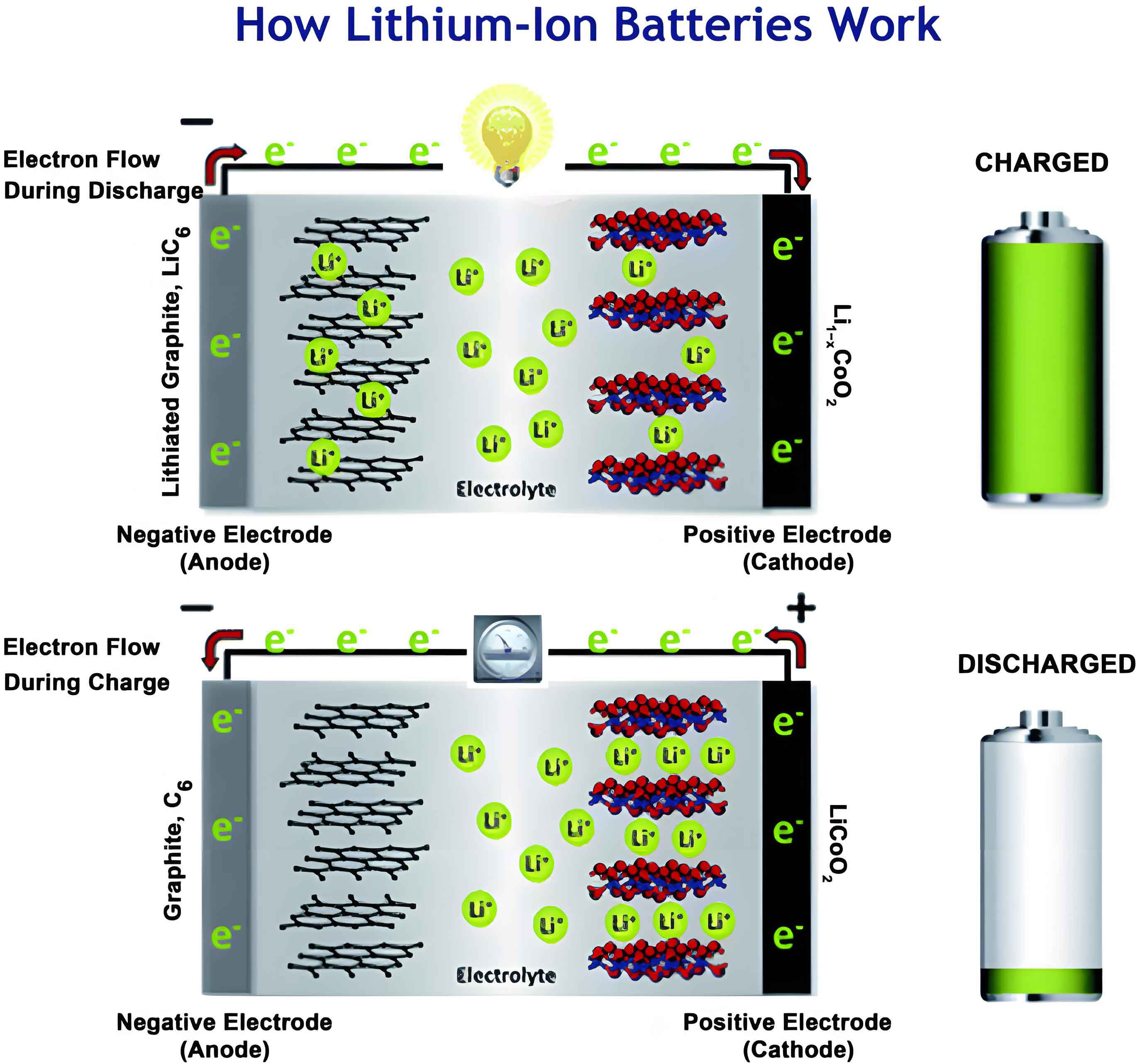
In the commercial production of li ion battery anodes, a blend of styrene-butadiene rubber (SBR) and sodium carboxymethyl cellulose (CMC) has been the industry standard for aqueous processing. SBR provides excellent elasticity and adhesion, while CMC acts as a thickener and dispersant. However, this system faces limitations when pushing for higher electrode loadings (thicker coatings) required for energy-dense cells. Increasing the SBR content to boost adhesion often leads to undesirable electrode thickness rebound and degraded performance. Consequently, the search for next-generation aqueous binders with superior intrinsic adhesive properties and additional functionalities is a key research frontier. Promising candidates include polymers rich in polar functional groups, such as polyacrylic acid (PAA), polyacrylonitrile (PAN), and their copolymers or lithiated derivatives. These materials can offer stronger binding via multiple interaction sites (e.g., hydrogen bonding, polar interactions) and may contribute to the formation of a more stable solid electrolyte interphase (SEI).
In this article, I will delve into the performance implications of altering the negative electrode binder architecture in a li ion battery. The analysis is centered on comparing three distinct binder systems applied to a graphite-based anode within a commercial pouch cell format: the conventional SBR+CMC system, a hybrid system combining a novel lithium polyacrylonitrile-polyacrylate (PAN/PAA-Li) copolymer with CMC, and a system relying solely on the PAN/PAA-Li copolymer. The evaluation spans from fundamental material characterization and electrode-level properties to comprehensive full-cell electrochemical testing under various conditions.
Material Characteristics and Electrode Properties
The foundational difference between the conventional and novel binders lies in their chemical structure. Fourier-transform infrared (FT-IR) spectroscopy reveals the distinct functional groups present. The SBR spectrum is dominated by signatures from the styrene (aromatic C=C, C-C) and butadiene (C-H) segments, indicating a primarily hydrocarbon-based, non-polar backbone. In stark contrast, the PAN/PAA-Li copolymer exhibits prominent peaks corresponding to polar nitrile (–C≡N), carbonyl (C=O from –COOLi), and amine (N–H) functionalities. This rich chemistry is pivotal, as these polar groups can engage in strong interactions with both the graphite surface (which has some oxygenated sites) and the copper current collector, potentially offering superior adhesive strength compared to the van der Waals forces predominant in SBR.
This hypothesis is confirmed by 180° peel adhesion tests on the fabricated anode coatings. The adhesive strength, a direct measure of the binder’s ability to hold the electrode composite together, shows a clear trend. The data is best summarized in the table below:
| Binder System | Peel Strength (N) | Electrode Bulk Resistance (Ω·cm) | Electrode Interface Resistance (Ω·cm²) |
|---|---|---|---|
| SBR + CMC | 0.38 | 0.089 | 0.004 |
| PAN/PAA-Li + CMC | 0.44 | 0.103 | 0.006 |
| PAN/PAA-Li | 0.46 | 0.127 | 0.005 |
The PAN/PAA-Li-only system achieves the highest peel strength, approximately 21% greater than the SBR+CMC baseline. The hybrid system shows an intermediate value. This confirms that the polar groups in PAN/PAA-Li significantly enhance the cohesive and adhesive forces within the electrode. However, this benefit comes with a trade-off in electrical conductivity. The same table shows that both the bulk and interface electrical resistances of the electrode increase with the incorporation of PAN/PAA-Li. This can be attributed to the more uniform, film-forming nature of the chain-like PAN/PAA-Li polymer, which may create a more resistive coating on the graphite and conductive carbon particles compared to the particulate SBR, potentially hindering electron transport. The interfacial resistance also increases, suggesting a different interaction at the active material/binder/electrolyte interface.
This electrode-level phenomenon directly translates to the full li ion battery impedance. Electrochemical Impedance Spectroscopy (EIS) on the assembled cells reveals a consistent ohmic resistance (RΩ, from electrolytes, separators, etc.) but a significant divergence in the charge transfer resistance (Rct), represented by the diameter of the high-frequency semicircle. The cell with the SBR+CMC anode exhibits the smallest semicircle, indicating the most facile charge transfer kinetics. The cell with the PAN/PAA-Li+CMC anode shows a larger semicircle, and the cell with the PAN/PAA-Li-only anode displays the largest Rct. This trend aligns perfectly with the electrode resistance measurements and foreshadows impacts on rate capability and voltage polarization during operation.
Full-Cell Electrochemical Performance Analysis
The initial formation and grading of the li ion battery cells reveal the first set of performance trade-offs. The key metrics are compared below:
| Cell Designation | Initial Discharge Capacity (mAh) | Initial Coulombic Efficiency (ICE, %) | Charge Voltage Plateau (V) | Discharge Voltage Plateau (V) | Voltage Hysteresis (ΔV) |
|---|---|---|---|---|---|
| LB-A (SBR+CMC) | 2823.3 | 93.60 | 3.382 | 3.218 | 0.164 |
| LB-B (PAN/PAA-Li+CMC) | 2836.2 | 93.93 | 3.394 | 3.208 | 0.186 |
| LB-C (PAN/PAA-Li) | 2842.3 | 94.20 | 3.396 | 3.207 | 0.189 |
The cells employing the PAN/PAA-Li binder, especially the LB-C variant, show a clear advantage in initial capacity and ICE. The capacity increase (~0.67% for LB-C) and the 0.6% higher ICE are likely due to the “pre-lithiated” nature of the PAN/PAA-Li copolymer, which can donate active lithium ions to compensate for irreversible capacity loss during the first cycle. This is a valuable feature for enhancing the energy density of a li ion battery. However, the increased electrode and charge transfer resistance manifest as a higher voltage polarization. The voltage hysteresis (difference between charge and discharge plateaus) is larger for the PAN/PAA-Li systems, indicating greater internal opposition to current flow, which reduces energy efficiency.
Stability Under Thermal and Cycling Stress
The long-term reliability of a li ion battery is paramount for storage applications. High-temperature storage tests (60°C, 28 days at full charge) provide accelerated insights into chemical and structural stability.
A critical finding is the effect on cell swelling. The thickness expansion of the cell after storage follows the order: LB-A (1.72%) > LB-B (1.36%) > LB-C (1.26%). The superior mechanical adhesion of the PAN/PAA-Li binder, as previously measured, effectively constrains the dimensional expansion of the graphite anode during prolonged high-temperature storage, leading to better physical stability of the electrode stack.
The capacity retention after storage, both the residual capacity immediately after storage and the recoverable capacity after a full re-conditioning cycle, showed minor improvements for the PAN/PAA-Li systems. However, the direct current internal resistance (DCIR) measurements tell a more nuanced story. While all cells experienced DCIR growth during storage—a common phenomenon due to SEI growth and electrolyte decomposition—the absolute DCIR values remained higher for the PAN/PAA-Li-based cells, consistent with the EIS data. The growth rate, however, was similar across all systems. This suggests that while the PAN/PAA-Li binder does not exacerbate degradation kinetics, it starts from a higher baseline resistance.
Cycle life testing at different temperatures further elucidates the binder’s role. At an elevated temperature of 45°C, the capacity fade over 600 cycles was slightly mitigated in the cells with PAN/PAA-Li binders. The capacity retention was 92.1% for LB-A, 92.7% for LB-B, and 92.8% for LB-C. The enhanced high-temperature cycling stability can be attributed to the stronger adhesion maintaining electrode integrity and potentially to a more stable electrode/electrolyte interface formed in the presence of the polar polymer. In contrast, SBR is known to swell more significantly in electrolyte at high temperatures, which can disrupt conductive networks and accelerate capacity fade.
The room-temperature (25°C) cycling results presented an anomaly—an initial capacity rise before fade, often associated with the gradual activation of the LFP cathode. After 600 cycles, the capacity retention was 102.5% for LB-A, 101.8% for LB-B, and 99.3% for LB-C. The slightly lower final retention for the PAN/PAA-Li systems at room temperature may be linked to their higher impedance, which could become a more dominant fading mechanism under milder thermal conditions where binder swelling is less of an issue.
Low-Temperature Performance and Rate Capability Implications
The performance of a li ion battery under low-temperature conditions is critically dependent on ionic and charge transfer kinetics, which are severely hampered as temperature drops. The discharge capacity retention at various temperatures, normalized to the 25°C performance, reveals a clear pattern. While the PAN/PAA-Li cells showed a marginal advantage at high temperatures (60°C, 45°C), their performance deteriorated more significantly in sub-ambient conditions.
The defining issue is the discharge voltage profile. At -10°C, the average discharge voltage plateau for the SBR+CMC cell (LB-A) was 2.744 V. For the PAN/PAA-Li-only cell (LB-C), it dropped to 2.673 V, a loss of over 70 mV. This substantial voltage sag translates directly to lower energy output and power in cold environments. This phenomenon can be modeled by considering the overpotential (η) during discharge, which is more pronounced at higher currents and lower temperatures. The total cell overpotential can be expressed as a function of the resistances:
$$
η_{total} = I \cdot (R_{Ω} + R_{ct})
$$
Where \(I\) is the discharge current. Since \(R_{ct}\) follows an Arrhenius-type relationship with temperature \(T\),
$$
R_{ct} \propto \exp\left(\frac{E_a}{k_B T}\right)
$$
where \(E_a\) is the activation energy for the charge transfer process and \(k_B\) is the Boltzmann constant. The higher room-temperature \(R_{ct}\) values for the PAN/PAA-Li cells imply that the impedance “penalty” is exponentially amplified as the temperature decreases, leading to the dramatically lower voltage plateau observed. This is a critical drawback for li ion battery applications that must operate reliably in cold climates.
Synthesis and Future Directions for Binder Optimization
The comprehensive evaluation of these three binder architectures within a commercial li ion battery format paints a detailed picture of complex trade-offs. The novel PAN/PAA-Li copolymer undeniably delivers on its promise of superior mechanical adhesion, which yields tangible benefits: reduced electrode swelling under high-temperature storage and slightly improved high-temperature cycle life. Its pre-lithiation capability is another intrinsic advantage, boosting initial capacity and efficiency—a key metric for energy density.
However, the primary cost of these benefits is increased electrical and charge transfer impedance. This manifests as higher DCIR, greater voltage hysteresis during operation, and most critically, significantly degraded low-temperature discharge performance. The hybrid system (PAN/PAA-Li+CMC) generally offered a middle-ground performance, mitigating some of the extremes of the pure PAN/PAA-Li system.
The conclusion is that the PAN/PAA-Li binder system presents a viable, high-performance alternative to the traditional SBR+CMC system, particularly for li ion battery applications where high-temperature stability and maximum initial capacity are prioritized over wide-temperature operation. For its successful commercialization, especially in versatile energy storage, the impedance issue must be addressed. Future research and formulation work should focus on:
- Dosage Optimization: Systematically reducing the loading of PAN/PAA-Li to find the minimum amount required for adequate adhesion, thereby minimizing its resistive coating effect.
- Conductive Composite Design: Engineering the conductive additive network (e.g., using more graphitic carbon or single-walled carbon nanotubes) to compensate for the increased resistivity introduced by the binder.
- Binder Molecular Engineering: Modifying the copolymer composition (PAN/PAA ratio) or molecular weight to fine-tune the balance between adhesion strength, flexibility, and ionic/electronic conductivity.
- Electrolyte Co-Engineering: Formulating electrolytes with additives that specifically promote lower impedance SEI formation on electrodes using polar binders like PAN/PAA-Li.
In essence, the development of next-generation binders is not a standalone endeavor but a integral part of the holistic design of advanced electrode composites. The quest is to find or engineer a polymeric component that provides robust mechanical integrity without becoming an electrochemical bottleneck, thereby unlocking the full potential of high-energy-density electrodes in the modern li ion battery.