
In the rapidly evolving landscape of renewable energy, solar power has emerged as a cornerstone for sustainable development. At the heart of photovoltaic (PV) systems lies the solar inverter, a critical device that converts direct current (DC) from solar panels into alternating current (AC) for grid integration or local consumption. The manufacturing of solar inverters is a complex process, demanding high precision, quality control, and traceability to meet growing global demand. As an industry professional, I have observed firsthand the challenges faced in solar inverter production, from supply chain disruptions to quality assurance issues. In this article, I will delve into the transformative role of Manufacturing Execution Systems (MES) in optimizing solar inverter manufacturing, drawing on practical insights and technological advancements. The integration of MES not only enhances operational efficiency but also ensures that solar inverters meet stringent performance and reliability standards, which are paramount for the success of PV installations worldwide.
The solar inverter market is projected to expand significantly, with estimates suggesting a demand surge to over 20 GW by 2020, driven by global renewable energy targets. This growth imposes immense pressure on manufacturers to scale production while maintaining cost-effectiveness and quality. Traditional manufacturing approaches often rely on fragmented systems, leading to inefficiencies such as material misassembly, delayed timelines, and limited traceability. For solar inverters, which incorporate sophisticated components like power semiconductors, capacitors, and control boards, any flaw in assembly can result in system failures, energy losses, or safety hazards. Therefore, adopting a robust MES framework is not merely an option but a necessity for modern solar inverter plants. In my experience, MES serves as a bridge between enterprise resource planning (ERP) systems and shop-floor operations, enabling real-time monitoring, data collection, and process optimization. This article explores how MES can be tailored for solar inverter manufacturing, with a focus on modular solutions, key functionalities, and measurable outcomes, all while emphasizing the central role of solar inverters in the renewable energy ecosystem.
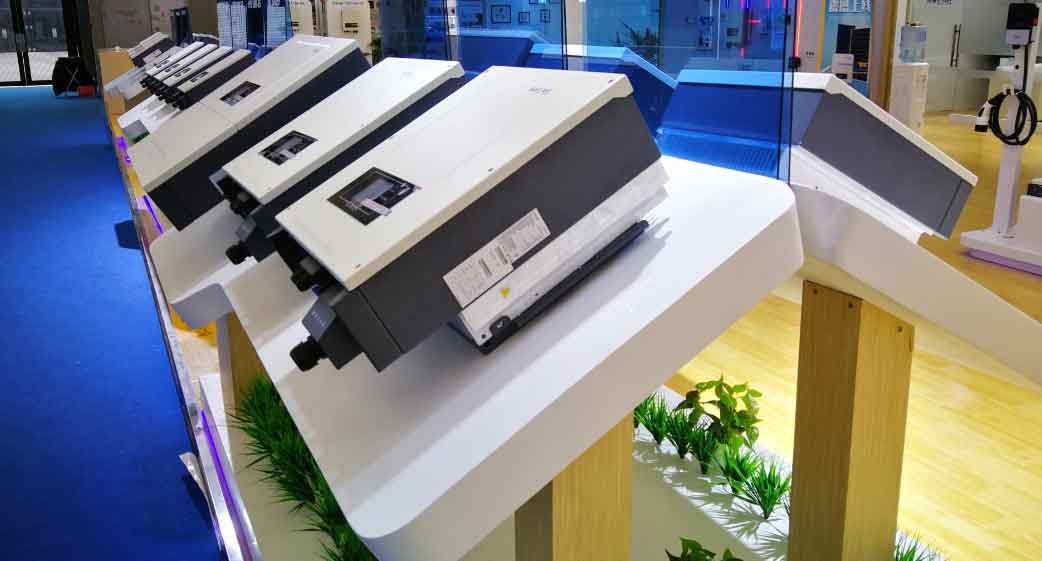
To understand the impact of MES, it is essential to define its scope within manufacturing contexts. MES refers to a computerized system that tracks and documents the transformation of raw materials into finished goods, providing visibility into production processes. For solar inverter manufacturing, MES facilitates control over assembly lines, quality checks, and inventory management, thereby reducing waste and improving throughput. The core objective is to achieve a seamless flow of information from order receipt to product shipment, ensuring that each solar inverter is built to specification. Key performance indicators (KPIs) in solar inverter production often include overall equipment effectiveness (OEE), defect rates, and cycle times, which can be optimized through MES analytics. For instance, OEE is calculated as: $$ OEE = Availability \times Performance \times Quality $$ where Availability reflects uptime, Performance relates to speed efficiency, and Quality denotes the yield of defect-free solar inverters. By leveraging MES data, manufacturers can identify bottlenecks, such as delays in component sourcing or assembly errors, and implement corrective actions promptly. This proactive approach is crucial for maintaining the reliability of solar inverters, which directly influences the efficiency of PV systems.
The architecture of an MES for solar inverter manufacturing typically involves integration with existing ERP systems, enabling data exchange on orders, materials, and schedules. As shown in the functional modules, MES encompasses several sub-systems that address specific production needs. Below is a table summarizing these modules and their relevance to solar inverter production:
| Module | Description | Application in Solar Inverter Manufacturing |
|---|---|---|
| Product Data Management | Maintains information on products, materials, and classifications | Ensures accurate bill of materials (BOM) for solar inverters, including variants for different power ratings |
| Manufacturing Process Management | Defines and controls assembly sequences and material requirements | Guides workers in correct component installation for solar inverters, using barcode scans for verification |
| Production Planning | Schedules orders and allocates resources based on ERP inputs | Optimizes production lines for solar inverters to meet fluctuating demand and custom orders |
| Traceability Management | Tracks materials, labor, and processes for quality assurance | Enables recall and analysis of defective solar inverters by tracing components back to suppliers |
| Order Progress Monitoring | Provides real-time updates on order status from start to finish | Allows managers to track the completion of solar inverter batches and adjust priorities |
| Labor Efficiency Management | Records and analyzes work hours and productivity metrics | Identifies training needs for assembly teams working on solar inverters to reduce errors |
| Equipment and Tool Management | Manages maintenance and usage of tools, jigs, and machinery | Ensures calibration of test equipment for solar inverters, preventing quality deviations |
Each module contributes to a holistic MES environment that enhances the manufacturing of solar inverters. For example, in Process Management, workers scan barcodes on components like insulated-gate bipolar transistors (IGBTs) or direct current links during assembly. If a mismatch occurs—say, a wrong part for a specific solar inverter model—the system alerts the operator, preventing assembly errors that could compromise inverter performance. This is critical because solar inverters operate under high voltages and currents, and incorrect components may lead to inefficiencies or failures. Moreover, traceability is paramount for solar inverters, as regulatory standards often require documentation of material origins and production history. MES logs every action, creating a digital thread for each solar inverter, which can be accessed for audits or warranty claims. In my implementation experience, this capability has reduced quality-related costs by up to 30%, underscoring the value of MES in solar inverter plants.
Beyond basic functionalities, MES enables advanced analytics for continuous improvement in solar inverter manufacturing. By collecting data from sensors and manual inputs, manufacturers can apply statistical process control (SPC) to monitor key parameters, such as inverter efficiency or thermal performance. The efficiency of a solar inverter, denoted by $\eta$, is a crucial metric defined as: $$ \eta = \frac{P_{out}}{P_{in}} \times 100\% $$ where $P_{out}$ is the AC output power and $P_{in}$ is the DC input power from solar panels. MES can track $\eta$ during testing phases, flagging units that fall below thresholds for further inspection. Additionally, predictive maintenance algorithms can be integrated into MES to forecast equipment failures, minimizing downtime in solar inverter production lines. For instance, if a soldering machine shows signs of wear, MES can schedule maintenance before it affects the assembly of solar inverter boards. This proactive stance is essential for meeting tight delivery schedules, especially when producing solar inverters for large-scale PV farms where delays can incur significant penalties.
One innovative aspect of MES in solar inverter manufacturing is the incorporation of location-based tracking for work-in-progress (WIP) units. Given that solar inverters are often assembled in cabinet-style enclosures, which occupy substantial floor space, locating a specific unit for rework or customization can be time-consuming. In my projects, I have advocated for assigning unique storage codes to each cabinet, integrated into the MES database. This allows operators to quickly retrieve a solar inverter’s position via a simple query, reducing search time by over 50%. Such enhancements demonstrate how MES can be customized to address unique challenges in solar inverter production, fostering a more agile and responsive manufacturing environment. Furthermore, MES facilitates material preparation by analyzing remaining assembly steps and forecasting component needs. For solar inverters, which may require custom configurations per customer order, this ensures that parts like maximum power point trackers (MPPTs) or cooling fans are available just-in-time, avoiding stockouts or excess inventory.
The implementation of MES in solar inverter manufacturing yields tangible benefits across multiple dimensions. Below is a table summarizing key outcomes based on real-world deployments:
| Benefit Category | Specific Impact on Solar Inverter Manufacturing | Quantitative Example |
|---|---|---|
| Quality Improvement | Reduced defect rates through real-time monitoring and traceability | Defect incidents in solar inverters decreased by 25% within six months of MES rollout |
| Operational Efficiency | Enhanced throughput and reduced cycle times via optimized scheduling | Production output of solar inverters increased by 20% while maintaining quality standards |
| Cost Reduction | Lowered rework and scrap costs by preventing assembly errors | Material waste in solar inverter assembly dropped by 15%, saving approximately $100,000 annually |
| Traceability and Compliance | Full audit trails for components and processes, aiding regulatory adherence | Achieved 100% traceability for critical parts in solar inverters, simplifying ISO certification |
| Employee Productivity | Streamlined workflows and reduced manual data entry, freeing up labor | Assembly time per solar inverter reduced by 10%, allowing staff to focus on value-added tasks |
| Supply Chain Integration | Better coordination with suppliers through shared data on material requirements | Lead times for solar inverter components shortened by 30% due to improved forecasting |
These benefits underscore why MES is increasingly adopted in solar inverter manufacturing. For instance, in a case study involving a mid-sized plant, the integration of MES led to a 40% improvement in on-time delivery of solar inverters, bolstering customer satisfaction. Moreover, the ability to trace each solar inverter back to its constituent parts—such as capacitors, microcontrollers, or enclosures—enables rapid response to field failures. If a solar inverter exhibits issues in a PV installation, manufacturers can use MES data to identify the batch, assembly date, and even the operator involved, facilitating targeted recalls or repairs. This level of transparency is invaluable for maintaining brand reputation in the competitive solar inverter market, where reliability directly impacts energy yield and return on investment for end-users.
From a technical perspective, MES implementation for solar inverters often involves deploying industrial Internet of Things (IIoT) devices and cloud computing. Sensors on assembly lines capture data in real-time, such as torque measurements for screw fastening or temperature profiles during inverter testing. This data is fed into MES algorithms that optimize production parameters. For example, the alignment of solar inverter components can be adjusted based on historical performance data, minimizing variances. Additionally, MES supports digital twin technology, where a virtual model of the solar inverter production line simulates different scenarios, such as demand spikes or machine breakdowns. By running simulations, manufacturers can preemptively adjust schedules or resources, ensuring uninterrupted output of solar inverters. The mathematical foundation for such optimizations often involves linear programming or queueing theory. For instance, minimizing the makespan in solar inverter assembly can be formulated as: $$ \text{Minimize } C_{max} = \max_{i} (C_i) $$ subject to constraints like resource availability and precedence relationships, where $C_i$ is the completion time for solar inverter $i$. MES solvers can compute optimal sequences, reducing idle time and enhancing resource utilization.
Looking ahead, the convergence of MES with artificial intelligence (AI) promises further advancements in solar inverter manufacturing. AI-powered MES can predict quality defects in solar inverters by analyzing patterns in production data, such as correlations between ambient humidity and solder joint integrity. Machine learning models can be trained to recommend process adjustments, elevating the consistency of solar inverters. Furthermore, as the industry shifts towards smart solar inverters with grid-support functions, MES will play a pivotal role in testing and validating these advanced features. For example, MES can automate the firmware flashing process for solar inverters, ensuring that each unit runs the latest software version for optimal performance. In my view, the future of solar inverter manufacturing lies in fully digitized factories where MES orchestrates every aspect, from design to dispatch, making solar inverters more affordable and reliable for global adoption.
In conclusion, MES is a transformative tool for solar inverter manufacturing, addressing critical needs for quality, efficiency, and traceability. By implementing MES modules tailored to the unique demands of solar inverter production, manufacturers can achieve significant improvements in operational metrics while ensuring compliance with industry standards. The integration of location tracking, real-time analytics, and predictive capabilities further enhances the value proposition of MES for solar inverters. As the demand for renewable energy grows, robust manufacturing systems like MES will be essential for scaling production of solar inverters without compromising on performance. I encourage industry stakeholders to invest in MES technologies, as they not only streamline processes but also contribute to the broader goal of sustainable energy through reliable solar inverters. Through continuous innovation and adaptation, MES will remain at the forefront of manufacturing excellence for solar inverters, powering the transition to a cleaner energy future.