
My research journey into energy storage alternatives was driven by the critical need to find sustainable and cost-effective successors to lithium-ion batteries. The abundance and low cost of sodium resources positioned sodium-ion battery technology as one of the most promising candidates. The performance of a sodium-ion battery hinges critically on its anode material, which governs the capacity, cycling stability, and rate capability. Among various contenders, iron-based oxides, particularly Fe₂O₃, presented an attractive profile due to their high theoretical capacity, natural abundance, low toxicity, and environmental benignity. However, their practical application in sodium-ion batteries was fraught with significant challenges, primarily stemming from poor intrinsic electronic conductivity and severe volume expansion during the repetitive insertion and extraction (intercalation/deintercalation) of the relatively large sodium ions. This volume change often leads to rapid pulverization of the electrode material, loss of electrical contact, and consequent drastic capacity fading. My goal was to engineer a material architecture that could overcome these intrinsic limitations of Fe₂O₃.
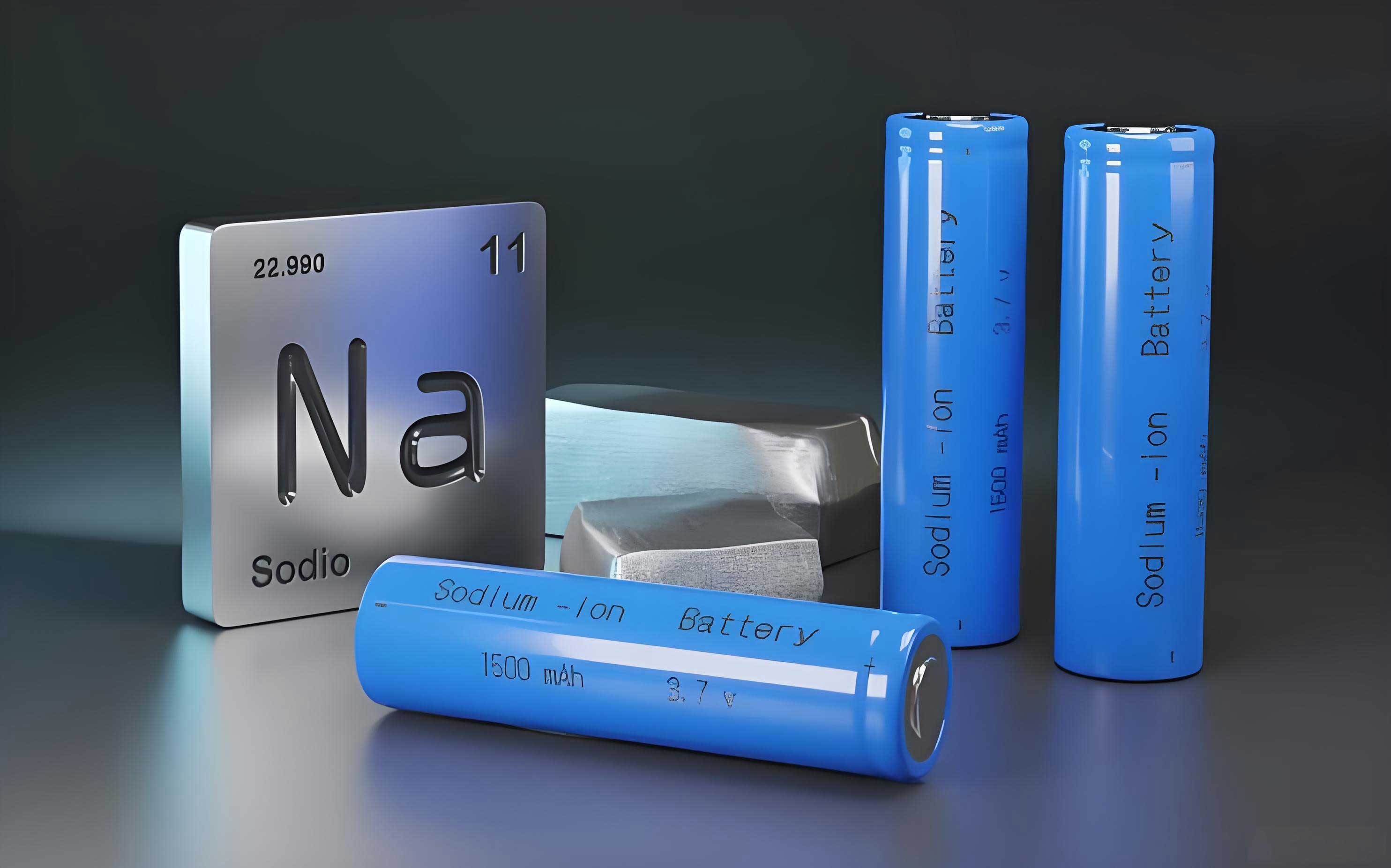
The core design philosophy revolved around creating a one-dimensional (1D) nanostructure. I hypothesized that a nanofibrous morphology, with its high aspect ratio and interconnected network, could provide efficient pathways for electron transport and better accommodate mechanical strain. To further enhance conductivity and buffer volume changes, integrating a conductive carbon matrix was essential. The challenge was to achieve an intimate and homogeneous combination of Fe₂O₃ and carbon at the nanoscale. This is where the electrostatic spinning, or electrospinning, technique became the cornerstone of my synthesis strategy. This versatile method allows for the facile fabrication of continuous polymer fibers embedded with precursor salts, which upon subsequent thermal treatment, can be converted into metal oxide/carbon composite fibers. The beauty of this approach lies in its ability to produce a structure where the active Fe₂O₃ nanoparticles are uniformly embedded within, or coated by, a continuous carbonaceous network derived from the pyrolyzed polymer. This specific architecture is what I aimed for to unlock high performance in a sodium-ion battery.
Material Design and Synthesis Rationale
The synthesis of the Fe₂O₃@C composite nanofibers was a deliberate two-step process designed to achieve precise structural control. The initial step involved preparing a homogeneous electrospinning solution. I dissolved iron(III) nitrate nonahydrate (Fe(NO₃)₃·9H₂O) in N,N-Dimethylformamide (DMF), followed by the addition of polyvinylpyrrolidone (PVP). PVP served a dual purpose: as the polymer carrier for fiber formation during electrospinning and as the carbon source during the subsequent pyrolysis. The mixture was stirred vigorously to ensure molecular-level mixing, resulting in a viscous, homogeneous reddish-brown solution. This homogeneity is crucial as it pre-determines the uniform distribution of iron species within the polymer fiber, a prerequisite for obtaining a uniform composite later.
This solution was then loaded into a syringe for the electrospinning process. Under a high applied voltage (20 kV), the solution droplet at the needle tip was stretched into a fine jet, which underwent a whipping instability, rapidly evaporated solvent, and was collected as a non-woven mat of continuous Fe(NO₃)₃/PVP composite fibers on an aluminum foil. The parameters—distance, voltage, and feed rate—were optimized to produce smooth, bead-free fibers. This as-spun mat, pale yellow in color, represented the precursor material with a well-defined fibrous morphology.
The transformational step was the thermal treatment. The precursor mat was subjected to calcination in an argon atmosphere at 600°C. During this process, multiple simultaneous reactions occurred:
- Pyrolysis of PVP: The PVP polymer chain decomposed, releasing volatile components and leaving behind a matrix of amorphous carbon.
- Decomposition of Iron Nitrate: Fe(NO₃)₃ thermally decomposed, eventually crystallizing into iron oxide nanoparticles.
- In-situ Composite Formation: As the PVP carbonized and the iron oxide crystallized, the resulting Fe₂O₃ nanoparticles became intimately embedded within the evolving carbon fiber matrix. The carbon derived from PVP not only formed a conductive web but also effectively prevented the agglomeration and excessive growth of the Fe₂O₃ crystallites, preserving their nano-sized dimensions.
The reaction can be conceptually summarized as:
$$ \text{Fe(NO}_3)_3/\text{PVP (fiber)} \xrightarrow[\text{Ar, 600°C}]{\text{Calcination}} \text{Fe}_2\text{O}_3@\text{C (nanofiber)} + \text{Gases (NO}_x\text{, H}_2\text{O, etc.)} $$
The final product was a black, self-standing mat composed of interconnected Fe₂O₃@C composite nanofibers, perfectly tailored for use as a binder-free or slurry-based anode for sodium-ion battery testing.
Structural and Morphological Characterization
To confirm the successful synthesis and understand the material’s properties, I employed a suite of characterization techniques. X-ray diffraction (XRD) analysis was first conducted to identify the crystalline phase of the iron oxide component. The obtained pattern showed distinct diffraction peaks that were perfectly indexed to the cubic phase of Fe₂O₃ (hematite, PDF# 39-1346). No peaks corresponding to impurities or other iron oxides (like Fe₃O₄) were detected, indicating high phase purity. The broad nature of the diffraction peaks suggested that the Fe₂O₃ crystallites were of small nanometer size, a desirable feature for electrochemical activity. Notably, no sharp peaks for graphitic carbon were observed, confirming that the carbon matrix derived from PVP pyrolysis was predominantly amorphous.
Fourier-transform infrared (FT-IR) spectroscopy provided complementary molecular-level insights. The spectrum exhibited strong characteristic absorption bands below 600 cm⁻¹, specifically at 472.4 cm⁻¹ and 576.6 cm⁻¹, which are attributed to the Fe-O stretching vibrations in the FeO₆ octahedra of cubic Fe₂O₃. This further corroborated the XRD findings. Additionally, the presence of carbon was evidenced by peaks associated with C=C and C-O bonds, confirming the carbonaceous nature of the matrix.
To probe the surface chemistry and elemental states, X-ray photoelectron spectroscopy (XPS) was performed. The survey spectrum confirmed the presence of Fe, O, and C. High-resolution scans of the Fe 2p region revealed peaks consistent with Fe³⁺ in Fe₂O₃. The C 1s spectrum could be deconvoluted into several components: the dominant peak at 284.1 eV was assigned to sp²-hybridized carbon (C=C), indicative of a conductive graphitic-like environment, while other peaks corresponded to C-C, C-O, and C=O bonds. Crucially, the deconvolution of the O 1s spectrum revealed a component attributable to Fe-O-C bonds, providing direct evidence of a strong chemical interaction between the Fe₂O₃ nanoparticles and the encapsulating carbon matrix. This interaction is vital for maintaining structural integrity and facilitating charge transfer during electrochemical cycling in the sodium-ion battery.
The morphology of the synthesized material was examined using scanning electron microscopy (SEM). The low- and high-magnification images unequivocally revealed a highly interconnected, non-woven network of continuous nanofibers. The individual fibers exhibited smooth surfaces and uniform diameters ranging from approximately 100 to 200 nanometers, with lengths extending to several tens of micrometers. This 1D nanostructure provides a large surface area and a robust conductive network. Energy-dispersive X-ray spectroscopy (EDS) elemental mapping performed on these fibers showed a perfectly homogeneous spatial distribution of Iron (Fe), Oxygen (O), and Carbon (C) signals throughout the fiber structure. This uniform distribution is a direct consequence of the electrospinning process and is critical for ensuring consistent electrochemical performance across the entire electrode in a sodium-ion battery.
Electrochemical Performance in Sodium-Ion Batteries
The true test of our material design was its electrochemical behavior as an anode in a sodium-ion battery. I assembled CR2032 coin cells using the Fe₂O₃@C nanofibers as the working electrode, sodium metal as the counter/reference electrode, and a standard NaPF₆ or NaClO₄-based electrolyte.
I began with cyclic voltammetry (CV) to understand the electrochemical reactions occurring during sodiation and desodiation. The initial cathodic (sodiation) scan displayed several reduction peaks. A prominent irreversible peak around 0.97 V vs. Na⁺/Na corresponds to the reduction of Fe₂O₃ to metallic Fe, accompanied by the formation of an amorphous Na₂O matrix and a solid electrolyte interphase (SEI) layer:
$$ \text{Fe}_2\text{O}_3 + 6\text{Na}^+ + 6e^- \rightarrow 2\text{Fe} + 3\text{Na}_2\text{O} $$
A second broad feature down to 0.01 V is associated with further reactions, including the formation of a sodium alloy with the reduced Fe nanoparticles and electrolyte decomposition contributing to SEI formation:
$$ \text{Fe} + x\text{Na}^+ + xe^- \leftrightarrow \text{Na}_x\text{Fe} $$
In the subsequent anodic (desodiation) scan and in following cycles, the CV curves became highly reproducible, featuring broad oxidation and reduction humps corresponding to the reversible alloying/dealloying reaction. The significant reduction in the intensity of the initial irreversible peak after the first cycle confirmed its one-time nature, primarily related to SEI formation and the initial reduction of Fe₂O₃.
Galvanostatic charge-discharge profiling provided quantitative performance metrics. At a current density of 100 mA g⁻¹ within a voltage window of 0.01-3.00 V, the Fe₂O₃@C anode delivered an initial discharge (sodiation) capacity of 554.8 mAh g⁻¹ and a charge (desodiation) capacity of 317.8 mAh g⁻¹. The initial Coulombic Efficiency (ICE) was 57.3%. This irreversible capacity loss in the first cycle is typical for conversion/alloying-type anodes and is attributed to the irreversible formation of the SEI layer and possibly incomplete conversion reactions.
The long-term cycling stability, a critical parameter for practical sodium-ion battery applications, was outstanding. The electrode exhibited excellent capacity retention. After 100 cycles, it still maintained a reversible charge capacity of 168.8 mAh g⁻¹. Furthermore, after the first few cycles, the Coulombic efficiency quickly stabilized and remained near 99% for the majority of the cycling test, indicating highly reversible sodium storage behavior. This exceptional stability can be directly attributed to the unique nanofiber architecture: the conductive carbon matrix buffers the substantial volume changes of Fe₂O₃, prevents nanoparticle aggregation, and maintains excellent electrical connectivity throughout the electrode.
To gain further insight into the electrode kinetics, electrochemical impedance spectroscopy (EIS) was performed on cells before cycling and after 100 cycles. The Nyquist plots were modeled using an equivalent circuit. A key finding was that the charge-transfer resistance (Rct) at the electrode/electrolyte interface decreased significantly after cycling, from 230.2 Ω to 108.2 Ω. This reduction is likely due to the electrochemical activation of the material and the formation of a stable, conductive SEI layer, which facilitates faster sodium-ion transfer—a positive evolution for sustained high-rate performance in a sodium-ion battery.
Comparative Analysis and Performance Metrics
The performance of the electrospun Fe₂O₃@C nanofibers can be contextualized by comparing them with other Fe₂O₃-based anodes reported for sodium-ion batteries. The synergistic effects of nanosizing, 1D morphology, and carbon compositing are evident.
| Material Morphology | Synthesis Method | Current Density (mA g⁻¹) | Reversible Capacity (mAh g⁻¹) | Cycle Number | Key Feature |
|---|---|---|---|---|---|
| Fe₂O₃@C Nanofibers (This work) | Electrospinning | 100 | ~169 | 100 | Homogeneous 1D composite, excellent stability |
| Fe₂O₃ Nanoparticles | Precipitation | 50 | ~200 (rapid fade) | 50 | Severe particle aggregation, poor cycling |
| Fe₂O₃/Graphene Composite | Hydrothermal | 100 | ~250 | 100 | Conductive graphene support improves performance |
| Porous Fe₂O₃/C Microspheres | Spray Pyrolysis | 200 | ~180 | 200 | Porous structure alleviates strain |
Furthermore, the sodium-ion diffusion coefficient (DNa), a fundamental kinetic parameter, can be estimated from the low-frequency Warburg region of the EIS data using the formula:
$$ D_{Na} = \frac{R^2 T^2}{2 A^2 n^4 F^4 C^2 \sigma^2} $$
where R is the gas constant, T is the absolute temperature, A is the electrode area, n is the number of electrons per molecule, F is Faraday’s constant, C is the sodium ion concentration, and σ is the Warburg coefficient obtained from the slope of Z’ vs. ω⁻¹/². The designed Fe₂O₃@C nanofiber structure, with its short diffusion lengths and conductive network, is engineered to maximize DNa, enabling good rate performance.
Insights into the Mechanism and Carbon’s Role
The superior performance of the Fe₂O₃@C nanofibers is not accidental but stems from a well-orchestrated combination of factors addressed by our material design. The electrochemical energy storage mechanism in this anode for sodium-ion batteries is primarily based on a conversion reaction followed by an alloying reaction, as outlined in the equations above. These reactions involve multiple electrons per formula unit, which is why Fe₂O₃ has a high theoretical capacity. However, they also induce massive structural rearrangements and volume changes.
The amorphous carbon matrix plays several indispensable roles:
- Conductive Highway: The carbon network, particularly the sp² C=C domains identified by XPS, provides a continuous path for rapid electron transport from the current collector to each active Fe₂O₃ nanoparticle, mitigating the material’s poor intrinsic conductivity.
- Mechanical Buffer: The flexible and robust carbon fiber acts as a confining scaffold. It absorbs the mechanical stress generated during the expansion and contraction of Fe₂O₃ nanoparticles upon sodium insertion/extraction. This effectively prevents the pulverization of the active material and maintains the structural integrity of the overall electrode.
- Agglomeration Suppressant: By encapsulating individual Fe₂O₃ nanocrystals, the carbon matrix physically separates them, preventing their migration and coalescence into larger, less active particles during repeated cycling.
- SEI Stabilizer: A stable SEI forms on the carbon surface. The consistent carbon environment helps in forming a more uniform and stable SEI layer compared to a bare metal oxide surface, reducing ongoing electrolyte decomposition and enhancing cycle life.
The 1D nanofiber morphology amplifies these benefits by offering direct 1D electron pathways, large electrode-electrolyte contact area for rapid ion exchange, and efficient strain relaxation along the fiber axis.
| Design Feature | Problem Addressed | Benefit for Sodium-Ion Battery Performance |
|---|---|---|
| Nano-sized Fe₂O₃ | Long Na⁺ diffusion paths; Slow kinetics | Shortens diffusion distance; Enhances rate capability |
| 1D Nanofiber Morphology | Poor electron transport; Particle isolation | Provides continuous electron pathway; Facilitates strain accommodation |
| Amorphous Carbon Coating | Low intrinsic conductivity; Volume expansion | Enhances electronic conductivity; Buffers mechanical stress |
| Homogeneous Fe-O-C Bonding | Weak interface contact; Particle detachment | Ensures strong adhesion; Maintains electrical contact during cycling |
Conclusion and Future Perspectives
In conclusion, my work demonstrates a successful materials engineering strategy for developing a high-performance anode for sodium-ion batteries. Through a straightforward and scalable electrospinning technique followed by controlled calcination, I synthesized a composite material consisting of Fe₂O₃ nanoparticles uniformly embedded within a continuous, amorphous carbon nanofiber network. This unique architecture effectively tackled the major challenges associated with Fe₂O₃ anodes: poor conductivity and structural degradation from volume changes. The electrochemical results validated the design, showing a good reversible capacity and, more importantly, exceptional cycling stability over 100 cycles. The role of the carbon matrix as both a conductive agent and a mechanical buffer was proven to be crucial.
This research opens several avenues for future exploration to further advance the performance of such materials for sodium-ion battery applications. Firstly, optimizing the calcination temperature and atmosphere could control the crystallinity of Fe₂O₃ and the graphitization degree of the carbon, potentially improving conductivity and initial Coulombic efficiency. Secondly, exploring different polymer precursors or adding a second carbon source (e.g., graphene oxide) into the electrospinning solution could create a more hierarchical or doped carbon structure with enhanced properties. Thirdly, pre-treating the Fe₂O₃@C fibers or employing electrolyte additives could help form a more robust and conductive SEI layer, reducing first-cycle irreversible loss. Finally, integrating this promising anode with a high-voltage cathode to construct a full sodium-ion battery cell and evaluating its practical energy density and long-term cycling is the essential next step toward practical application. The journey of optimizing this Fe₂O₃@C composite continues, but the foundation laid by this nanofiber design is a strong and promising one for the future of cost-effective and sustainable energy storage.