
The rapid advancement of new energy vehicles (NEVs) has placed increasingly stringent demands on power battery systems. While significant progress has been made, single battery chemistries often face inherent trade-offs. Lithium Iron Phosphate (LFP) batteries are renowned for their excellent safety and long cycle life, whereas sodium-ion battery technology offers compelling advantages in terms of cost and resource sustainability. This article explores an innovative hybrid battery module design that synergistically combines LFP and sodium-ion batteries. By leveraging a hierarchical topology, advanced connection techniques, and a deep reinforcement learning-based energy management strategy, the proposed AB module architecture aims to unlock superior comprehensive performance for next-generation NEV applications.
Fundamental Principles and Performance Characteristics
Understanding the distinct electrochemistry of each cell type is crucial for effective hybrid system design. Their complementary characteristics form the basis for optimization.
Electrochemical Mechanism of LFP Batteries
The operation of an LFP battery centers on the reversible intercalation and de-intercalation of lithium ions within an olivine-structured LiFePO4 cathode. This process follows a two-phase reaction mechanism between LiFePO4 and FePO4, resulting in a remarkably flat charge/discharge voltage plateau around 3.4 V. The intrinsic stability of the phosphate polyanion (PO43-) grants LFP its exceptional thermal and chemical safety. Common anodes are graphitic or hard carbons, and the electrolyte typically consists of LiPF6 salt in carbonate-based solvents. While offering high power capability and safety, the theoretical energy density of LFP is limited by its moderate specific capacity and operating voltage.
Working Principle of Sodium-Ion Batteries
The working principle of a sodium-ion battery parallels that of lithium-ion batteries, relying on the “rocking-chair” shuttling of Na+ ions between cathode and anode. However, the larger ionic radius of Na+ (1.02 Å) compared to Li+ (0.76 Å) necessitates different host materials. Common cathode candidates include layered oxides (e.g., NaxMO2, where M is a transition metal blend) and Prussian blue analogs. Hard carbon is the leading anode material for sodium-ion battery systems, providing a stable structure for Na+ storage with decent capacity.
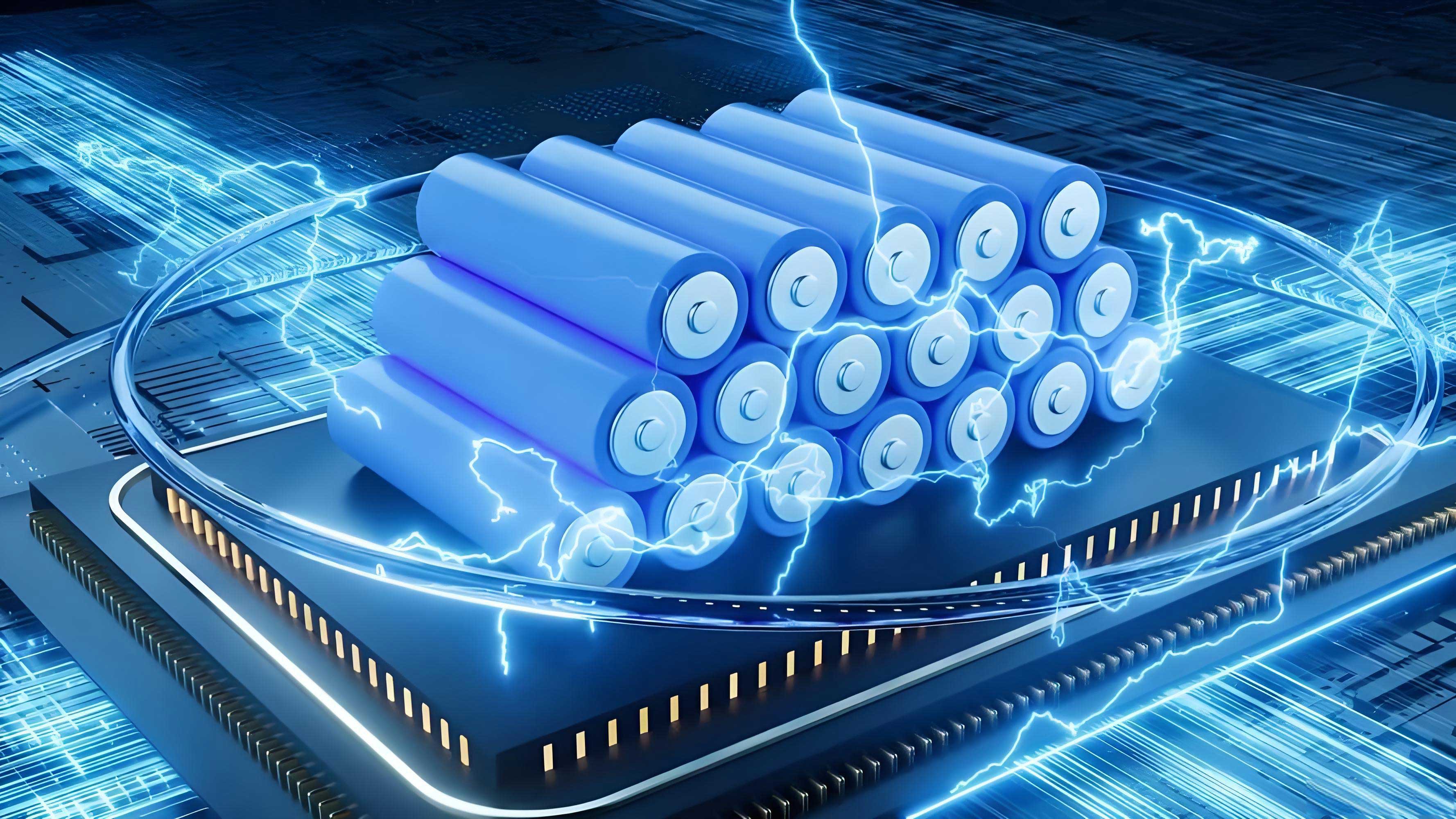
Electrolytes often use salts like NaPF6 or NaClO4 in similar organic solvents. Although the energy density of a typical sodium-ion battery is currently lower than that of state-of-the-art lithium-ion batteries, its strengths lie in lower raw material costs, better low-temperature performance, and superior safety characteristics. The performance characteristics of both systems are summarized below.
| Parameter | LFP Battery | Sodium-Ion Battery |
|---|---|---|
| Nominal Voltage | ~3.2 V | ~3.0 – 3.4 V |
| Typical Gravimetric Energy Density | 120-160 Wh/kg | 100-150 Wh/kg |
| Cycle Life (to 80% capacity) | >3000 cycles | >2000 cycles |
| Thermal Stability | Excellent | Very Good |
| Cost (Raw Materials) | Medium | Low |
| Low-Temperature Performance | Good | Excellent |
AB Module Hybrid System Design Methodology
1. Theoretical Architecture and Topology
The proposed hybrid system employs a hierarchical AB module topology to independently manage and optimally utilize the two distinct battery chemistries.
Hybrid System Topology: The system consists of two separate sub-modules: an LFP battery string and a sodium-ion battery string. Each sub-module is equipped with its own local Battery Management Unit (BMU) responsible for cell monitoring, balancing, and thermal management within that string. Crucially, each sub-module interfaces with the main high-voltage DC bus through a dedicated bidirectional DC/DC converter. This architecture allows for independent control of the operating voltage and current of each chemistry, enabling optimal power sharing regardless of their differing state-of-charge (SOC) or voltage characteristics. A master BMS coordinates the overall system, implementing high-level energy management strategies.
Cell Matching and Series-Parallel Optimization: To ensure pack longevity and performance, careful cell matching within each sub-module is essential. For a target system voltage $U_{sys}$ and capacity $C_{sys}$, the number of cells in series ($n_s$) and parallel ($n_p$) for each sub-module can be initially determined based on nominal cell voltage $U_{cell}$ and capacity $C_{cell}$:
$$
n_s = \frac{U_{sys}}{U_{cell}}, \quad n_p = \frac{C_{sys}}{C_{cell}}
$$
In practice, cells are first grouped using clustering algorithms (e.g., K-means) based on capacity, internal resistance, and self-discharge rate. Genetic Algorithms (GA) can then optimize the physical arrangement of these matched cells within the module to minimize intra-module temperature gradients and voltage imbalances during operation, subject to constraints like maximum current limits.
2. Thermal Management and Cell Balancing Strategy
Integrated Thermal Management: The LFP and sodium-ion battery sub-modules may have different optimal operating temperature windows. An integrated liquid-cooling plate system with independent zone control is designed. A fuzzy logic controller dynamically adjusts coolant flow $Q_c$ and fan speed $n_f$ for each zone based on inputs including surface temperature $T_s$, ambient temperature $T_a$, SOC, and load current $I$. The control rules can be conceptually represented as:
$$
Q_c, n_f = f_{fuzzy}(\Delta T, SOC, I), \quad \text{where } \Delta T = T_s – T_a
$$
This ensures both sub-modules operate within their respective ideal ranges (e.g., 20–40°C for LFP, 15–55°C for the sodium-ion battery), with a pack temperature gradient maintained below 5°C.
Hierarchical Balancing Strategy: A two-level balancing strategy is implemented. At the cell level within each sub-module, an active balancing circuit (e.g., switch-capacitor or transformer-based) redistributes energy among cells. The balancing current $I_{b,cell}$ can be modeled as:
$$
I_{b,cell} = \frac{C_b \cdot \Delta U_b}{R_b \cdot t_b}
$$
where $C_b$ is the balancing capacitance, $\Delta U_b$ is the voltage difference, $R_b$ is the balancing path resistance, and $t_b$ is the balancing activation period. At the system level, the DC/DC converters perform “module-level balancing” by controlling the power flow to/from each sub-module, effectively managing their State of Balance (SOB).
3. Interconnection and Interface Technology
Robust and low-resistance interconnection is vital. For connecting cells within a sub-module, ultrasonic welding is employed for its reliability and low thermal impact. To interface the different cell chemistries within the hybrid pack, specialized considerations are needed. The use of advanced, corrosion-resistant busbar materials and carefully designed mechanical clamping systems ensures stable electrical contact and manages differential thermal expansion between the LFP and sodium-ion battery modules.
4. Hybrid System Energy Management Strategy (EMS)
The core intelligence of the hybrid system lies in its EMS. We propose an adaptive strategy based on Deep Reinforcement Learning (DRL), specifically the Deep Deterministic Policy Gradient (DDPG) algorithm. The EMS aims to optimally split power demand between the LFP and sodium-ion sub-modules in real-time to maximize efficiency and lifespan.
Problem Formulation as MDP: The energy management task is modeled as a Markov Decision Process (MDP). The state (st) at time t includes: SOC of both sub-modules ($SOC_{LFP}$, $SOC_{Na}$), their State of Health ($SOH_{LFP}$, $SOH_{Na}$), temperature, and total power request ($P_{req}$). The action (at) is the power split ratio $k_t$, where $P_{LFP} = k_t \cdot P_{req}$ and $P_{Na} = (1-k_t) \cdot P_{req}$. The reward (rt) is designed to penalize inefficient operation and degradation, e.g.:
$$
r_t = -(\alpha_1 \cdot \eta_{loss} + \alpha_2 \cdot \Delta SOH + \alpha_3 \cdot f(T_{dev}))
$$
where $\eta_{loss}$ represents system losses, $\Delta SOH$ is an estimate of degradation incurred, and $f(T_{dev})$ penalizes temperature deviations from the optimal range.
DDPG Algorithm Implementation: DDPG uses an actor-critic framework with deep neural networks. The Actor network ($\mu(s|\theta^\mu)$) maps states to a deterministic action (the optimal $k_t$). The Critic network ($Q(s,a|\theta^Q)$) estimates the long-term value (Q-value) of taking action $a$ in state $s$. The networks are updated using gradient descent:
Critic Update: $$ L = \frac{1}{N} \sum_i (y_i – Q(s_i, a_i|\theta^Q))^2, \quad y_i = r_i + \gamma Q'(s_{i+1}, \mu'(s_{i+1}|\theta^{\mu’})|\theta^{Q’}) $$
Actor Update: $$ \nabla_{\theta^\mu} J \approx \frac{1}{N} \sum_i \nabla_a Q(s, a|\theta^Q)|_{s=s_i, a=\mu(s_i)} \nabla_{\theta^\mu} \mu(s|\theta^\mu)|_{s_i} $$
Here, $\gamma$ is the discount factor, and $\theta^{Q’}$ and $\theta^{\mu’}$ are parameters of the target networks which stabilize training. The trained policy allows the EMS to dynamically adapt the power split, for instance, using the sodium-ion battery for high-rate bursts or colder conditions while relying on the LFP pack for steady, high-energy throughput.
Experimental Research and Performance Validation
1. Experimental Design
A prototype hybrid battery pack was constructed and tested to validate the design. The specifications of the sub-modules are detailed below.
| Sub-module Parameter | LFP Module | Sodium-Ion Battery Module |
|---|---|---|
| Cell Chemistry | Commercial LiFePO4/Graphite | Commercial Prussian White/Hard Carbon |
| Cell Nominal Capacity | 50 Ah | 40 Ah |
| Cell Nominal Voltage | 3.2 V | 3.3 V |
| Module Configuration | 12S2P (38.4V, 100Ah) | 11S2P (36.3V, 80Ah) |
The test platform included a battery cycler, thermal chamber, and data acquisition system. Experiments focused on evaluating system performance under static and dynamic load profiles at 25°C. Key metrics measured were overall system capacity retention, round-trip energy efficiency, and internal resistance growth over cycles. The DRL-based EMS was compared against a rule-based baseline strategy (e.g., proportional SOC-based split).
2. Results and Analysis
The hybrid system demonstrated significant advantages over a single-chemistry pack of equivalent total energy. The DRL-based EMS successfully learned to exploit the strengths of each chemistry. For instance, during high-current pulses, the policy often allocated a larger share to the sodium-ion battery module due to its favorable kinetics, reducing polarization losses in the LFP module. During regenerative braking, the strategy considered the different acceptable charging rates and SOC windows.
The key performance results after 500 equivalent full cycles are summarized in the table below.
| Performance Metric | LFP-Only System | Sodium-Ion Battery-Only System | Hybrid System (DRL EMS) |
|---|---|---|---|
| System Capacity Retention | 95.8% | 93.2% | 97.1% |
| Average Round-Trip Efficiency | 94.0% | 92.5% | 95.5% |
| DC Internal Resistance Increase | 15.4% | 18.7% | 11.2% |
| Estimated Full Cycle Life (to 80% SOH) | ~3200 cycles | ~2200 cycles | >3500 cycles |
The data clearly indicates that the hybrid system, managed by the intelligent EMS, achieved the highest capacity retention and energy efficiency. Crucially, the rate of internal resistance growth was significantly lower than in either single-chemistry system, indicating reduced degradation stress on the individual cells. This validates the core hypothesis: the hybrid AB module architecture, with optimized power sharing, can extend overall system life by operating each chemistry within a more favorable regime. The synergy between the stable LFP and the robust sodium-ion battery leads to a system whose performance surpasses the simple average of its parts.
Conclusion
This study presents a comprehensive design and optimization methodology for a hybrid battery system integrating LFP and sodium-ion batteries using an AB module architecture. The hierarchical topology with independent DC/DC control, coupled with advanced interconnection and thermal management, provides the physical foundation for effective synergy. The implementation of a Deep Reinforcement Learning-based Energy Management Strategy represents a significant advancement, enabling real-time, adaptive power splitting that minimizes losses and mitigates degradation. Experimental results confirm that the optimized hybrid system exhibits superior performance in key metrics such as capacity retention, energy efficiency, and cycle life compared to single-chemistry counterparts. This work demonstrates the considerable potential of hybridizing LFP with sodium-ion battery technologies to create next-generation power systems that are not only high-performing and durable but also cost-effective and sustainable, paving the way for their broader adoption in electric vehicles and energy storage applications.