
The transition towards sustainable energy systems necessitates the development of efficient and cost-effective electrochemical energy storage technologies. Among these, sodium-ion battery technology has emerged as a highly promising candidate to complement, and potentially replace, lithium-ion batteries in applications such as large-scale grid storage and low-speed electric transportation. This promise stems from the abundant global reserves of sodium, its lower cost, and the favorable low-temperature performance of sodium-ion battery systems. Consequently, research and development in this field have gained tremendous momentum worldwide. The anode material is a critical component determining the performance and viability of a sodium-ion battery. While various materials, including titanium-based compounds and organic polymers, have been explored, carbon-based materials stand out due to their excellent electrochemical properties, stability, and low cost. Within this category, hard carbon, with its unique non-graphitizable, highly disordered structure featuring tunable interlayer spacing, abundant defects, and a complex pore network, has shown exceptional sodium storage capacity and cycle life, establishing itself as the most practical anode material for sodium-ion battery technology.
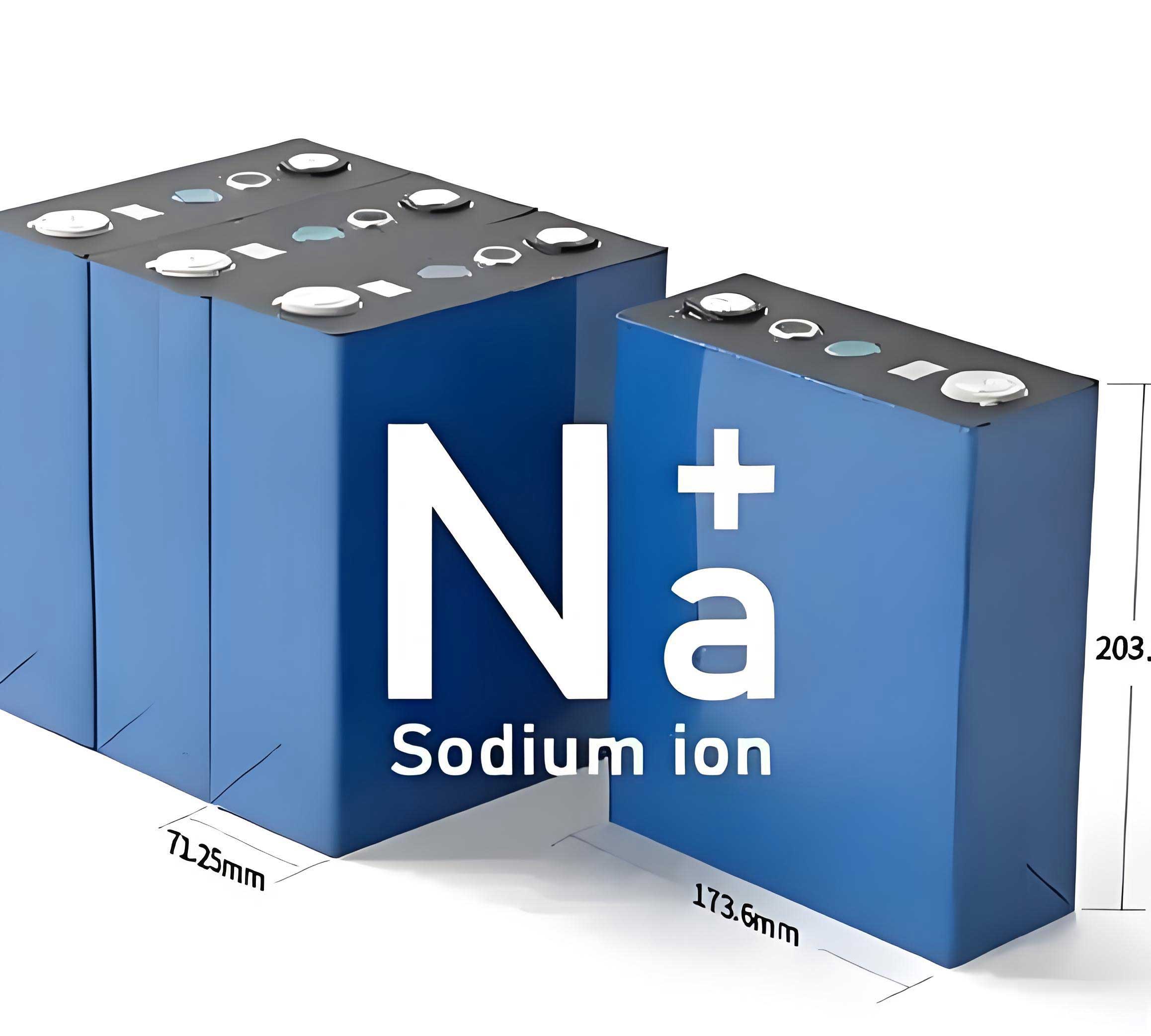
The electrochemical performance of hard carbon, particularly its capacity in the low-voltage plateau region (typically below 0.1 V vs. Na/Na+), is intricately linked to its microstructural characteristics. Research has progressively revealed that among the various pore structures within hard carbon, the presence of closed pores is paramount for achieving high reversible capacity. These closed pores, which are cavities not connected to the external surface, are believed to provide preferential sites for sodium storage in the plateau region, contributing significantly to the overall energy density of the sodium-ion battery. However, the exact mechanism of sodium storage within these closed pores remains a subject of debate, and the precise structure-property relationship between closed-pore characteristics (size, volume, distribution) and electrochemical metrics is not yet fully elucidated. This knowledge gap presents a significant challenge for the rational design and optimization of hard carbon anodes, thereby hindering the full-scale industrialization of sodium-ion battery technology. This article provides a comprehensive review of recent advances in understanding and engineering the closed-pore structure in hard carbon anodes for sodium-ion battery applications. We will define the closed-pore structure, discuss the ongoing debate regarding the sodium storage mechanism, detail various synthesis strategies for pore structure control, summarize advanced characterization techniques, and analyze the correlations between closed-pore features and electrochemical performance. Finally, we will outline the existing challenges and propose future research directions.
1. Fundamentals of Closed Pores in Hard Carbon
1.1 Definition and Structural Context
Hard carbon, or non-graphitizable carbon, is distinguished from soft carbon and graphite by its highly disordered microstructure. It consists of randomly oriented and cross-linked graphene-like domains (turbostratic nanodomains) that create a complex network of voids and pores. Based on their connectivity, pores in carbon materials are classified into two primary types:
- Open Pores: These are cavities and channels that are accessible from the external surface of the particle. Their surface area, pore volume, and size distribution can be characterized using standard techniques like gas adsorption (e.g., N₂, CO₂) or mercury intrusion porosimetry.
- Closed Pores: These are isolated, sealed cavities entirely enclosed within the carbon matrix, with no direct pathway to the exterior. Their walls are typically composed of curved and stacked graphene layers. Conventional gas adsorption methods cannot probe these pores because the probing molecules cannot penetrate them.
The presence and population of closed pores are a defining characteristic of high-performance hard carbons for sodium-ion battery anodes.
1.2 Sodium Storage Mechanisms: The Role of Closed Pores
The sodium storage behavior in hard carbon typically exhibits a characteristic voltage profile with two distinct regions: a sloping region above approximately 0.1 V and a low-voltage plateau region below 0.1 V. While consensus exists that the sloping capacity originates from the adsorption of Na+ ions on defect sites, heteroatoms, and the edges of carbon layers with wide interlayer spacing, the origin of the plateau capacity is a central focus of mechanistic studies. The understanding of closed pores is deeply intertwined with this debate.
1.2.1 Intercalation or Adsorption into Micropores
Early models, often termed “adsorption-intercalation,” proposed that Na+ ions first adsorb on surface sites (sloping region) and then intercalate into the interlayer spaces of the turbostratic nanodomains at low voltages (plateau region). Some variations suggested that Na+ ions could also be adsorbed into open micropores. This perspective was supported by techniques like in-situ X-ray diffraction showing changes in interlayer spacing.
1.2.2 Pore-Filling Mechanism
A growing body of recent evidence strongly supports a “pore-filling” mechanism for the plateau region. This model posits that the low-voltage plateau corresponds to the reversible filling of sodium into nano-sized cavities, particularly closed pores. Key evidence includes:
- The disappearance of the plateau after infiltrating hard carbon pores with sulfur, which blocks potential filling sites.
- In-situ and ex-situ characterization techniques, such as solid-state ²³Na nuclear magnetic resonance (NMR) and small-angle X-ray scattering (SAXS), which detect the formation of quasi-metallic sodium clusters or nano-sodium metal within the pores during discharge to low potentials.
- The correlation between increased plateau capacity and a higher volume of closed pores, rather than open pores.
The emerging consensus leans towards a hybrid or sequential model: Na+ ions are initially adsorbed on available surface defects (high-voltage slope), may intercalate into sufficiently large interlayer spaces (part of the slope or upper plateau), and finally, at the lowest potentials, fill the internal closed pores, potentially forming Na clusters. The capacity contribution from each process depends on the specific microstructure of the hard carbon. The closed pores are thus identified as crucial reservoirs for high-density sodium storage, directly linked to the energy-dense plateau region essential for a high-performance sodium-ion battery.
2. Synthesis and Control of Closed-Pore Structure
The creation of a beneficial closed-pore structure is not trivial. Excessive graphitization at high temperatures leads to ordered structures with few pores, while low carbonization temperatures yield highly disordered carbons lacking defined pore walls. Effective strategies focus on manipulating the precursor chemistry and pyrolysis conditions to promote the formation of curved, stacked layers that encapsulate voids.
| Strategy Category | Specific Method | Mechanism / Principle | Key Outcome |
|---|---|---|---|
| Precursor Engineering | Biomass Selection & High-Temp Carbonization | Natural hierarchical structure of biomass (e.g., wood, cork) provides a template. High temperature (>1300°C) drives the curling and stacking of carbon layers around evolved gas voids, transforming open pores into closed ones. | Increased closed-pore volume and plateau capacity with optimal carbonization temperature. |
| Chemical Pre-treatment of Biomass | Removal of lignin/hemicellulose (e.g., via sulfuric acid) thins the pore walls and inhibits excessive graphitic domain growth, facilitating the formation of thin-walled closed pores. | Enhanced kinetics and capacity due to thinner pore walls and tailored porosity. | |
| Molecular Design of Synthetic Precursors | Using highly cross-linked or aryl-rich polymers (e.g., phenolic resins) creates a rigid carbon skeleton that resits graphitic ordering, promoting a highly disordered structure with encapsulated pores. | High yield of closed pores and excellent plateau capacity. | |
| Pyrolysis Process Control | Heating Rate Manipulation | Very slow or ultra-fast heating rates can control the release of volatiles and the dynamics of carbon layer rearrangement, influencing pore closure. | Optimized pore structure, reduced surface area, and improved ICE. |
| Template/Additive Methods | Inorganic Template (MgO, ZnO) | Nano-sized template particles create voids during carbonization. Subsequent removal by acid etching leaves behind open pores that can be partially closed during further high-temperature treatment. | Precise creation of nanopores that can evolve into closed pores. |
| Chemical Activation (e.g., KOH, CO₂) + Re-carbonization | Initial activation creates abundant open micropores. A subsequent high-temperature carbonization step causes the reorganization and partial closing of these pores. | Significantly increased closed-pore content and high plateau capacity. | |
| Post-Synthesis Modification | Vapor Deposition Coating | Chemical vapor deposition (CVD) of carbon (e.g., from benzene or propylene) coats the external surface and entrance of open pores, effectively “sealing” them to create artificial closed pores. | Reduction of specific surface area, increase in ICE, and creation of additional sodium storage cavities. |
The synthesis of closed pores can be described conceptually by considering the evolution of pore volume during carbonization. The total pore volume $$V_{total}$$ can be considered as the sum of open pore volume $$V_{open}$$ and closed pore volume $$V_{closed}$$:
$$ V_{total} = V_{open} + V_{closed} $$
During high-temperature treatment, a transformation occurs where $$V_{open}$$ decreases while $$V_{closed}$$ increases, as described by:
$$ \frac{dV_{closed}}{dT} \propto -\frac{dV_{open}}{dT} \quad \text{(for T > T_{critical})} $$
where $$T_{critical}$$ is a material-specific temperature threshold for pore closure initiation.
3. Characterization Techniques for Closed Pores
Since closed pores are inaccessible to fluid probes, their characterization requires specialized techniques beyond standard physisorption.
| Technique | Principle | Information Obtained | Advantages & Limitations |
|---|---|---|---|
| Helium Pycnometry (True Density Measurement) | Measures the true volume of solid material by helium gas displacement, which penetrates all open pores but not closed pores. | True density (ρtrue). Closed pore volume can be estimated by comparing to the theoretical density of graphite (ρgraphite = 2.26 g/cm³): $$ V_{closed} \approx \frac{1}{\rho_{true}} – \frac{1}{\rho_{graphite}} $$ |
Advantage: Quantitative, standard method. Limitation: Requires relatively large sample mass; provides only bulk volume, no information on size/distribution. |
| Transmission Electron Microscopy (TEM) | Direct imaging of the carbon microstructure at nano- to atomic-scale resolution. | Direct visualization of closed pores (as light contrast regions), pore size, shape, and wall thickness (number of stacked graphene layers). | Advantage: Direct, visual, and local information. Limitation: Qualitative/semi-quantitative; statistical analysis over many images needed for representativeness; sample preparation sensitive. |
| Small-Angle X-ray Scattering (SAXS) | Measures elastic scattering of X-rays at very low angles (0.1-5°), caused by electron density fluctuations on a 1-100 nm scale. | Qualitative identification of closed pores (manifested as a “plateau” or “hump” in the scattering curve at specific q vectors). In-situ SAXS can track pore filling/emptying. Quantitative analysis (size distribution, specific surface area) is complex but possible with advanced models. | Advantage: Probes bulk sample; statistical; can be used in-situ. Limitation: Quantitative analysis requires sophisticated modeling; data interpretation can be non-trivial. |
The SAXS intensity I(q) as a function of the scattering vector q provides insights into the pore structure. For a two-phase system (carbon matrix and pores), the scattering at higher q follows Porod’s law if interfaces are sharp:
$$ \lim_{q \to \infty} [I(q) \cdot q^4] = K_P $$
where $$K_P$$ is the Porod constant related to the specific surface area. Deviations from Porod’s law indicate the presence of surface roughness or electron density gradients at interfaces, relevant for understanding pore walls. The scattering from nano-pores (closed or open) contributes to the mid-q region. The invariant Q, which is proportional to the total scattered intensity, is related to the volume fraction of pores ϕ and the contrast in electron density Δρ:
$$ Q = \int_0^{\infty} I(q) q^2 dq \propto \phi (1-\phi) (\Delta \rho)^2 $$
Tracking changes in Q during electrochemical cycling can quantify the amount of pore volume being filled with sodium.
4. Correlation Between Closed-Pore Structure and Electrochemical Performance
The design of the closed-pore architecture has a direct and profound impact on the key performance indicators of a sodium-ion battery anode.
| Performance Metric | Influence of Open Pores (Generally Detrimental) | Influence of Optimal Closed Pores (Beneficial) | Structural Descriptor & Rationale |
|---|---|---|---|
| Reversible Capacity (especially Plateau Capacity) | Minimal contribution to low-voltage plateau capacity. | Strong positive correlation. Plateau capacity (Cplateau) increases with closed-pore volume (Vclosed) or surface area (Sclosed). $$ C_{plateau} \propto V_{closed} $$ |
Closed pores act as primary reservoirs for Na cluster formation/filling. Larger internal volume accommodates more sodium. |
| Initial Coulombic Efficiency (ICE) | High specific surface area (SSA) from open pores leads to excessive solid electrolyte interface (SEI) formation, consuming Na+ and lowering ICE. | Reduces overall electrochemically exposed surface area. Carbon coating/sealing of pores directly boosts ICE. | ICE ∝ 1/SSAopen. Sealing open pores into closed ones minimizes irreversible side reactions. |
| Cycle Stability | Unstable SEI on large internal surface area can lead to continuous electrolyte decomposition and capacity fade. | More stable storage environment. However, pore collapse or deformation during deep cycling (especially at high rates) can cause capacity decay. | Mechanical robustness of the closed-pore walls (curvature, thickness) is crucial for long-term stability. |
| Plateau Potential | Not applicable. | Inverse correlation with pore size. Smaller closed pores (<1 nm) shift the plateau to slightly higher potentials, reducing sodium plating risk. $$ E_{plateau} \propto \frac{1}{d_{pore}} $$ |
Smaller pores enhance sodium-carbon interaction (wetting), stabilizing Na clusters at a higher potential versus Na/Na+. |
| Rate Capability | Can provide ion transport pathways if properly interconnected. | Limited if pores are too deep or inaccessible. Thin pore walls (few graphene layers) facilitate faster Na+ diffusion into the pore. | Kinetics depend on wall thickness and the presence of interconnected meso/macropores leading to closed pores. |
The ideal hard carbon anode for a sodium-ion battery therefore requires a balanced architecture: a hierarchy of pores where larger open or interconnected mesopores facilitate rapid ion transport to the interior, leading to a high population of small (<2 nm), uniformly distributed closed pores with thin, robust walls for high-density sodium storage. This multi-scale design maximizes capacity, ICE, rate performance, and cycle life simultaneously.
5. Summary, Challenges, and Future Perspectives
In summary, hard carbon stands as the leading anode material for practical sodium-ion battery applications. The closed-pore structure within hard carbon is unequivocally identified as a critical microstructural feature responsible for the high-capacity, low-voltage plateau, which is essential for achieving high energy density. The prevailing “adsorption-filling” mechanism, where sodium ions eventually form clusters within these closed pores, is well-supported by advanced characterization. Significant progress has been made in synthesizing closed-pore-rich carbons from various precursors through temperature control, templating, and post-treatment methods. Characterization via true density, TEM, and SAXS provides valuable, though sometimes qualitative, insights into these hidden structures. Clear correlations link increased closed-pore volume to higher plateau capacity and improved ICE, guiding material design.
However, several challenges must be addressed to advance the field further:
- Mechanistic Precision: A more dynamic and quantitative understanding of the sodium filling process is needed. What is the exact state of sodium (ionic, quasi-metallic, metallic) within pores of different sizes? What is the theoretical capacity limit of a closed pore? Advanced in-situ/operando techniques (NMR, X-ray scattering, microscopy) coupled with computational modeling are crucial.
- Quantitative Characterization: Moving beyond qualitative confirmation of closed pores to quantitative metrics—closed-pore size distribution, specific internal surface area, and connectivity—is vital. Developing standardized SAXS analysis protocols or novel techniques for closed-pore quantification is a key research frontier.
- Structure-Performance Modeling: Establishing predictive models that connect synthesis parameters (precursor, temperature, additives) to quantitative closed-pore descriptors and finally to electrochemical performance metrics (Cplateau, ICE, dE/dx) would enable rational design and accelerate discovery.
- Multi-scale Optimization: Closed pores cannot be optimized in isolation. Future work must focus on the synergistic design of hard carbon featuring optimal interlayer spacing for sloping capacity, a robust network of transport channels (meso/macropores), and a high density of suitably sized closed pores for plateau capacity, all while maintaining mechanical integrity. The concept of “small and abundant” closed pores is a promising guiding principle.
- Long-Term Stability: The evolution of closed-pore structure during long-term cycling, especially under fast-charging conditions, needs deeper investigation. Understanding and mitigating potential pore collapse or blockage is essential for commercial sodium-ion battery longevity.
Addressing these challenges will pave the way for the next generation of high-performance, low-cost hard carbon anodes, solidifying the position of sodium-ion battery technology as a cornerstone for the future of sustainable energy storage.