
In my work on energy storage systems, I have found that accurate state estimation is critical for ensuring the safe, reliable, and economical operation of battery energy storage systems. These systems typically consist of thousands of individual cells connected in series and parallel, managed by a battery management system, and interfaced with power conversion equipment. The central challenge is to accurately estimate the state of charge and state of health under diverse operating conditions while managing computational constraints and data privacy. Over the past decade, I have observed a rapid evolution from simple empirical methods to sophisticated physical models, data-driven approaches, and recent federated learning architectures. In this review, I share my perspective on the key aspects of battery energy storage system state estimation, covering degradation mechanisms, modeling approaches, state definitions, estimation methods, characterization techniques, lightweight embedded implementations, and the promising paradigm of federated learning.
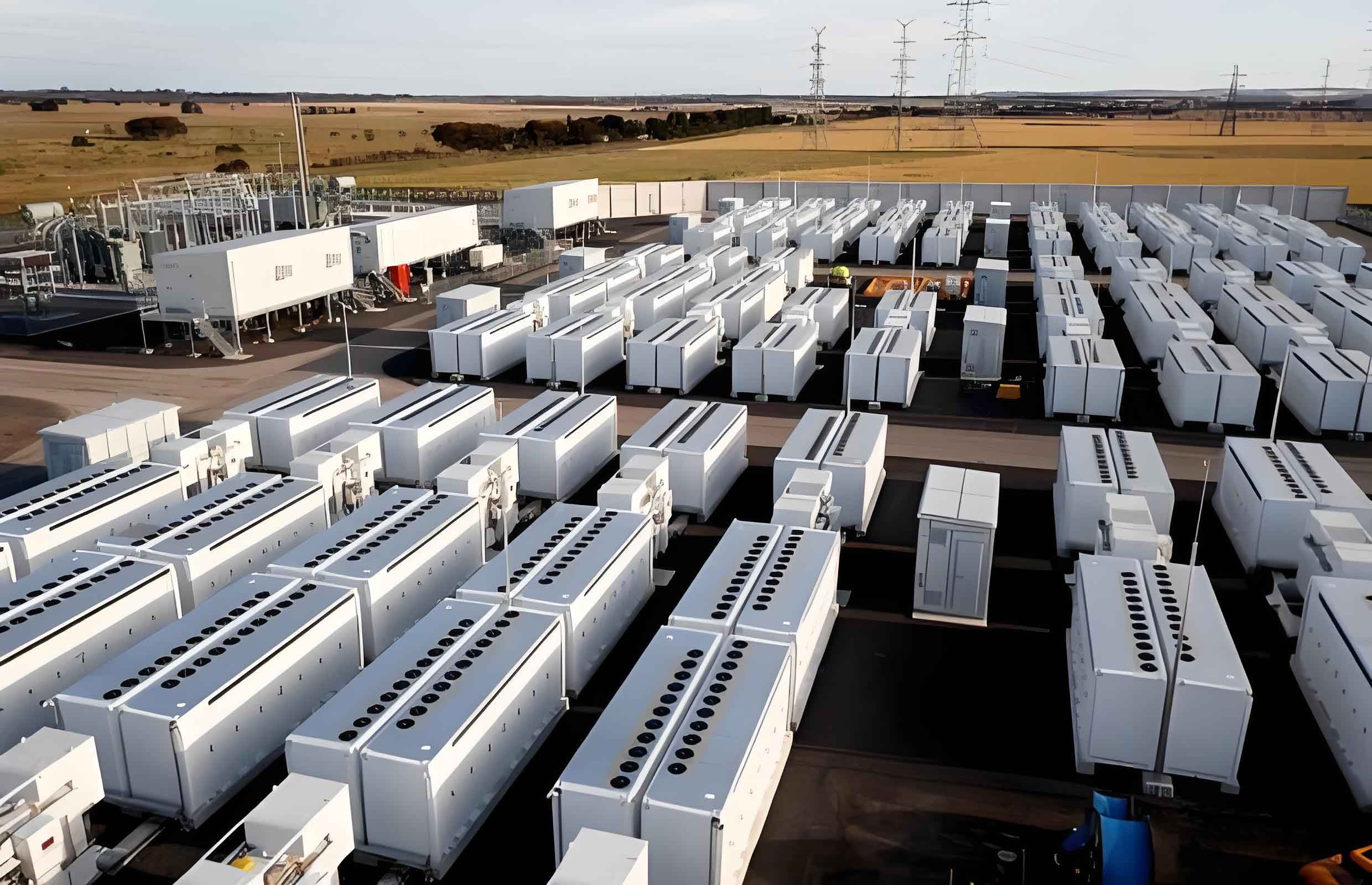
Picture a typical battery energy storage system – rows of cabinets housing thousands of lithium-ion cells. The interplay of internal electrochemistry and external environment leads to complex performance degradation. Understanding these mechanisms is the foundation for any state estimation strategy.
Battery Performance Degradation Mechanisms
The performance degradation of lithium-ion batteries, which dominate the current market for battery energy storage systems, arises from multiple interacting factors. From my analysis of the literature, the primary internal causes include active lithium loss, structural evolution of electrode materials, internal resistance increase, and dissolution of metal ions. Active lithium loss is consistently identified as the main reason for capacity fade, particularly due to the continuous formation and repair of the solid electrolyte interphase layer during cycling. This irreversible consumption of lithium reduces the amount of cyclable lithium available for charge transfer. Simultaneously, structural degradation of cathode and anode materials, such as phase transitions and particle cracking, impedes lithium-ion diffusion and increases interfacial impedance. The increase in internal resistance, caused by surface film growth and electrolyte decomposition, directly reduces power capability. Metal ion dissolution, especially manganese from cathodes, further poisons the anode surface.
External conditions dramatically accelerate these intrinsic mechanisms. I have compiled the key external factors and their effects in the table below.
| External Factor | Observed Effect on Battery Energy Storage System | Citation Example Trend |
|---|---|---|
| High temperature (> 40°C) | Electrolyte decomposition, accelerated SEI growth, loss of active area | Commonly reported in thermal runaway studies |
| Low temperature (< 0°C) | Lithium plating, dendritic growth, increased impedance | Observed in cold-climate installations |
| Overcharge | Gas evolution, copper dissolution, particle cracking | Documented in abuse tests |
| Overdischarge | Copper current collector corrosion, internal short circuits | Reported in deep-discharge scenarios |
| High C-rate cycling | Volume changes, pore clogging, reduced porosity | Common in fast-charging applications |
| Wide SOC window (e.g., 0–100%) | Structural damage from repeated phase transitions | Seen in cycle life studies |
These mechanisms directly influence the accuracy of state estimation for battery energy storage systems. For example, active lithium loss changes the open-circuit voltage versus SOC relationship, requiring periodic recalibration of models.
Battery Modeling Approaches
To estimate states like SOC and SOH, a model of the battery energy storage system is necessary. The three main modeling paradigms are electrochemical models, equivalent circuit models, and data-driven models. Each offers a different trade-off between accuracy and computational complexity.
| Model Type | Examples | Advantages | Disadvantages | Typical Usage in BESS |
|---|---|---|---|---|
| Electrochemical (P2D, SP) | Pseudo-2D, Single Particle model | High physical fidelity, captures internal state variables | High computational cost, many parameters, cell-specific | Offline design, research |
| Equivalent Circuit (RC) | Thevenin, PNGV, Second-order RC | Simple structure, low computation, easy parameter identification | Lacks electrochemical insight, limited extrapolation | Embedded BMS (most common) |
| Data-Driven (Neural Network, SVR) | LSTM, CNN, Support Vector Regression | Flexible, high accuracy with rich data, no physical assumptions | Data hungry, black-box, poor generalization beyond training domain | Cloud-based SOH prediction, big data analytics |
In my experience, equivalent circuit models are the workhorses for real-time SOC estimation in embedded battery management systems of battery energy storage systems, while data-driven models are increasingly adopted for system-level SOH forecasting where historical data from many similar systems is available.
State Definitions and Their Relationship
Two core states define the condition of a battery energy storage system: state of charge and state of health. SOC represents the remaining electric charge stored in the battery relative to its current capacity. SOH describes the aging level, typically expressed as a percentage of remaining capacity or increase in internal resistance.
The most common definitions are given by the following equations. For SOC:
$$ \text{SOC}(t) = \frac{Q(t)}{C(t)} $$
where Q(t) is the remaining charge and C(t) is the current actual capacity. For SOH, two definitions exist – absolute and relative. The absolute capacity-based SOH is:
$$ \text{SOH}_{\text{abs}} = \frac{C(t)}{C_n} $$
where C_n is the nominal capacity. The relative capacity-based SOH is:
$$ \text{SOH}_{\text{rel}} = \frac{C(t) – C_{\text{end}}}{C_n – C_{\text{end}}} $$
where C_end is the end-of-life capacity (often 80% of C_n). An internal-resistance-based SOH definition is:
$$ \text{SOH}_R = \frac{R_{\text{end}} – R(t)}{R_{\text{end}} – R_n} $$
The interdependence between SOC and SOH is evident when considering that the same amount of charge corresponds to different SOC values as the battery ages. For absolute SOH, the relationship is:
$$ \text{SOC} = \frac{Q}{C_n \cdot \text{SOH}} $$
For relative SOH:
$$ \text{SOC} = \frac{Q}{(C_n – C_{\text{end}}) \cdot \text{SOH} + C_{\text{end}}} $$
In a battery energy storage system, accurate joint estimation of SOC and SOH is essential for optimal scheduling, preventing overcharge/overdischarge, and determining when to replace cells or modules.
State Estimation Methods
Over the years, I have reviewed a wide array of techniques for estimating SOC and SOH in battery energy storage systems. These can be categorized into experimental observation methods, physical model-based methods, data-driven methods, and hybrid methods.
Experimental Observation Methods
These are offline methods requiring controlled laboratory conditions. For SOH, capacity measurement by full discharge, resistance measurement (DC or AC impedance), and differential analysis (incremental capacity or differential voltage) are common. For SOC, open-circuit voltage mapping and Coulomb counting are typical. While simple, they are unsuitable for continuous online estimation in field-deployed battery energy storage systems.
Physical Model-Based Methods
Using an electrochemical or equivalent circuit model, states are inferred via observers or filters. The extended Kalman filter and its variants (unscented Kalman filter, sigma-point Kalman filter) are widely applied to joint SOC/SOH estimation. The process involves prediction and update steps. For a discrete-time system model:
$$ \mathbf{x}_{k+1} = f(\mathbf{x}_k, u_k) + \mathbf{w}_k $$
$$ y_k = h(\mathbf{x}_k, u_k) + v_k $$
where x includes SOC, SOH-related parameters (capacity, resistance), u is current, y is voltage. The Kalman filter recursively minimizes the estimation error. In my experience, dual or joint Kalman filters are effective for simultaneously tracking SOC and capacity fade.
Data-Driven Methods
With the proliferation of cloud-connected battery energy storage systems, data-driven approaches that learn from operational data have gained traction. Neural networks, particularly long short-term memory networks and convolutional neural networks, can map current, voltage, and temperature sequences directly to SOC or SOH. These methods bypass physical modeling but require large, labeled datasets.
Hybrid Methods
Combining physical models with machine learning has shown promise. For instance, a particle filter can incorporate data-driven proposals, or an LSTM can correct voltage residuals from an equivalent circuit model. Such hybrid approaches balance interpretability and accuracy.
The following table summarizes representative studies for battery energy storage system state estimation.
| Method Category | Target State | Example Technique | Key Advantage | Challenge |
|---|---|---|---|---|
| Model-based (single cell) | SOH | Unscented particle filter with degradation model | Physical insight | High parameterization effort |
| Model-based (single cell) | SOC | Extended Kalman filter with second-order RC model | Real-time capability | Sensitivity to model error |
| Data-driven (single cell) | SOH | Support vector machine on voltage features | No physics needed | Requires comprehensive training data |
| Data-driven (single cell) | SOC | Bidirectional LSTM encoder-decoder | Handles nonlinear dynamics | Computationally heavy for edge |
| Data-driven (system) | SOH/SOC | Deep CNN on pack voltage | System-level modeling without per-cell complexity | Generalization across pack topologies |
| Hybrid (system) | SOH/SOC | Model-driven reduced-order model + neural network correction | Accuracy + efficiency | Integration complexity |
Data Acquisition Techniques
Accurate state estimation for battery energy storage systems relies on high-quality data. External operational data (voltage, current, temperature) are gathered by sensors in the battery management system. However, internal state information – such as lithium concentration gradients, electrolyte decomposition products, and electrode structural changes – is not directly accessible from external measurements. To bridge this gap, researchers use in-situ and ex-situ characterization techniques that probe the internal evolution of the battery.
In-situ techniques monitor the battery during operation. For example, in-situ X-ray diffraction reveals phase transitions in cathode materials; in-situ scanning electron microscopy shows morphological changes of the electrode surface; in-situ electrochemical impedance spectroscopy tracks impedance growth. Ex-situ techniques involve dismantling cells after cycling and performing post-mortem analysis with tools like X-ray photoelectron spectroscopy, inductively coupled plasma, and transmission electron microscopy. These methods have yielded critical insights into degradation mechanisms that inform model parameterization for battery energy storage systems.
| Technique | Type | Measured Information | Relevance to State Estimation |
|---|---|---|---|
| SEM/EDS | Ex-situ | Surface morphology, elemental distribution | Confirms SEI growth, lithium plating |
| XRD | In-situ | Crystal structure, lattice parameters | Phase change during cycling |
| XPS | Ex-situ | Chemical composition of surface layers | SEI composition and thickness |
| EIS | In-situ | Impedance components (ohmic, charge transfer, diffusion) | Directly correlates with SOH |
| ICP-OES | Ex-situ | Metal ion concentration in electrolyte | Quantifies dissolution rates |
| Differential Voltage Analysis | In-operando | Derivative of capacity vs. voltage | Identifies loss of active material and lithium inventory |
While these techniques are mostly used in laboratories today, I foresee that some in-operando methods, such as EIS and differential voltage analysis, could be embedded into advanced battery management systems of future battery energy storage systems to provide online degradation fingerprints.
Lightweight BMS Implementation
Practical deployment of state estimation algorithms in battery energy storage systems requires embedding them into the battery management system hardware. The computational platform must balance performance, power consumption, and cost. The three main architectures I have encountered are DSP, ARM (MCU), and FPGA.
| Platform | Typical Example | Advantages | Disadvantages | Suitable for |
|---|---|---|---|---|
| DSP | TMS320F28335 | High math performance, real-time control optimized | Limited parallel processing, higher power | Kalman filter, simple neural nets |
| ARM/MCU | STM32 series | Low power, rich peripherals, mature ecosystem | Limited computational throughput for complex models | Coulomb counting, OCV table lookup |
| FPGA | Xilinx Artix-7 | Parallel execution, reconfigurable, low latency | Higher design complexity, cost | Deep learning inference, real-time multi-cell estimation |
FPGA implementations are particularly attractive for running lightweight deep neural networks for SOC and SOH estimation in battery energy storage systems. Recent works have shown that with model compression techniques – such as pruning, quantization, and low-rank approximation – convolutional and recurrent layers can be efficiently mapped onto FPGA fabric. This approach enables sub-millisecond inference while maintaining estimation accuracy comparable to full-precision models running on GPUs.
In my opinion, the trend for next-generation battery energy storage systems is toward heterogeneous computing: an ARM core for management tasks, a DSP core for signal processing, and an FPGA or dedicated neural processing unit for AI-based state estimation.
Federated Learning for Battery Energy Storage Systems
One of the greatest challenges I have encountered in large-scale battery energy storage systems is the conflict between the desire to collect vast amounts of operational data to improve model accuracy and the need to protect sensitive information – such as system topology, load profiles, and performance anomalies – which is often proprietary. Federated learning offers a compelling solution. It allows multiple battery energy storage systems (clients) to collaboratively train a shared global model without sharing raw data.
The procedure works as follows. At each client (e.g., a battery energy storage system installation), a local model is trained on local data to perform SOC estimation. The client computes model updates (gradients) and sends only these encrypted parameters to a central server. The server aggregates updates (e.g., using FedAvg) and distributes the improved global model back. The global model can be used for high-level tasks such as SOH prediction across diverse operating conditions, while the local models retain real-time responsiveness.
I propose a specific architecture for battery energy storage systems:
- Edge layer: Each battery energy storage system’s embedded BMS runs a lightweight deep network (e.g., a compressed LSTM) to estimate SOC in real time. The model parameters are periodically updated from the cloud.
- Cloud layer: The central server aggregates local model updates from many battery energy storage systems. It also maintains a global SOH prediction model that uses features such as SOC trajectories, temperature profiles, and cycle counts from the aggregated knowledge. The cloud sends the global model or its gradients back to the edge.
The mathematical objective of federated learning is to minimize the global loss function:
$$ \min_{w} \mathcal{L}(w) = \frac{1}{K} \sum_{k=1}^{K} \mathbb{E}_{(x,y) \sim \mathcal{D}_k} [l_k(w; x, y)] $$
where K is the number of clients, D_k is the local data distribution at client k, and l_k is the local loss (e.g., mean squared error for SOC estimation). Only model weights w are communicated; raw data never leaves the edge.
This federated paradigm brings several benefits to battery energy storage systems:
- Data privacy: Raw voltage, current, and temperature sequences remain on-site.
- Reduced bandwidth: Only model parameters (few KB) are transmitted, not terabytes of raw data.
- Personalization: Clients can fine-tune the global model to their local conditions (e.g., climate, cycling pattern).
- Scalability: New battery energy storage systems can join the federation without central data storage.
I have identified several research challenges that remain for federated learning in battery energy storage systems:
- Handling heterogeneous data distributions (non-IID data across systems).
- Ensuring security against Byzantine attacks where malicious clients send corrupted updates.
- Reducing communication rounds for bandwidth-constrained field sites.
- Validating the convergence of SOH estimation models when the underlying aging dynamics vary significantly.
Future Directions
Looking ahead, I believe the following directions will dominate the field of state estimation for battery energy storage systems. First, the integration of multiple data sources – from in-situ sensors (e.g., internal pressure, fiber-optic temperature sensing) with cloud-based data analytics – will enable unprecedented fidelity. Second, the development of physics-informed neural networks that embed degradation laws directly into the loss function will reduce the need for massive training data while retaining accuracy. Third, the combination of federated learning with transfer learning will allow a pre-trained model from one battery energy storage system to be quickly adapted to another with minimal retraining.
Finally, the concept of digital twins – a high-fidelity virtual replica that continuously synchronizes with the real battery energy storage system using sensor data and physics-based models – will become mainstream. The digital twin will rely on the state estimation methods reviewed here and, in turn, provide actionable recommendations for operation, maintenance, and second-life applications.
Conclusion
In this review, I have shared my perspective on the essential components of state estimation for battery energy storage systems: the underlying degradation mechanisms that cause capacity and power fade, the modeling choices that balance accuracy and computational cost, the state definitions and their interdependence, the diverse estimation methods spanning from experimental to data-driven, the characterization techniques that provide insight into internal processes, the hardware platforms that enable embedded deployment, and the emerging paradigm of federated learning that addresses data privacy concerns while leveraging collective intelligence. As battery energy storage systems continue to proliferate in electric grids and renewable integration, robust state estimation will remain a cornerstone of safe, efficient, and economical operation. I am confident that the fusion of physics-based modeling, machine learning, and collaborative learning frameworks will drive the next generation of intelligent battery energy storage systems.