
In recent years, the rapid growth in global energy demand and advancements in renewable energy technologies have intensified the focus on efficient, low-cost large-scale energy storage systems. While traditional lithium-ion batteries have achieved significant success in portable electronics and electric vehicles, their high cost and limited resource availability restrict their widespread use in grid-scale storage. In contrast, sodium-ion batteries are emerging as a promising alternative due to the abundance and low cost of sodium resources. However, sodium-ion batteries face challenges such as severe volume expansion and polarization during charge-discharge cycles, owing to the larger ionic radius of sodium ions (1.02 Å) compared to lithium ions (0.76 Å). This affects the performance of conventional electrode materials in sodium-ion batteries, necessitating the development of high-performance electrode materials tailored for sodium-ion battery applications.
Prussian blue analogues (PBAs) have garnered attention for their unique three-dimensional open framework structure, low cost, and ease of synthesis, showing great potential in electrochemical energy storage, particularly for sodium-ion batteries. Despite these advantages, PBAs suffer from intrinsic low electrical conductivity and sluggish reaction kinetics, which hinder their practical performance. Prussian blue analogues can be generally represented as AxM[Fe(CN)6]y·□1-y·mH2O, where □ denotes [Fe(CN)6] vacancies, M is a transition metal, and A is an alkali cation. The electrochemical degradation of PBAs is primarily attributed to lattice defects, framework collapse, and side reactions between organic electrolytes and coordinated water molecules. To address these issues, recent research has focused on synthesizing low-defect, high-quality PBA materials through controlled methods such as coating protection, elemental doping, and dehydration treatments.
Among various nanostructures, hollow nanospheres have gained prominence for their ability to enhance the active interfacial area between electrodes and electrolytes, facilitating rapid charge transfer and ion diffusion. This makes them ideal for improving the performance of electrochemical sensors and energy storage devices. Prussian blue [Fe4(Fe(CN)6)3·XH2O] can undergo chemical reduction to form Prussian white [Fe²⁺(Fe²⁺(CN)6)] or chemical oxidation to yield Prussian yellow [Fe³⁺(Fe³⁺(CN)6)], expanding its application prospects. However, studies on Prussian yellow with unique micro-nanostructures for sodium-ion batteries remain limited. In this work, we developed Prussian yellow hollow nanospheres via a one-step hydrothermal method as cathode materials for sodium-ion batteries. This hollow nanostructure not only increases the contact area with the electrolyte but also accelerates charge and sodium-ion transport, thereby enhancing electrochemical performance.
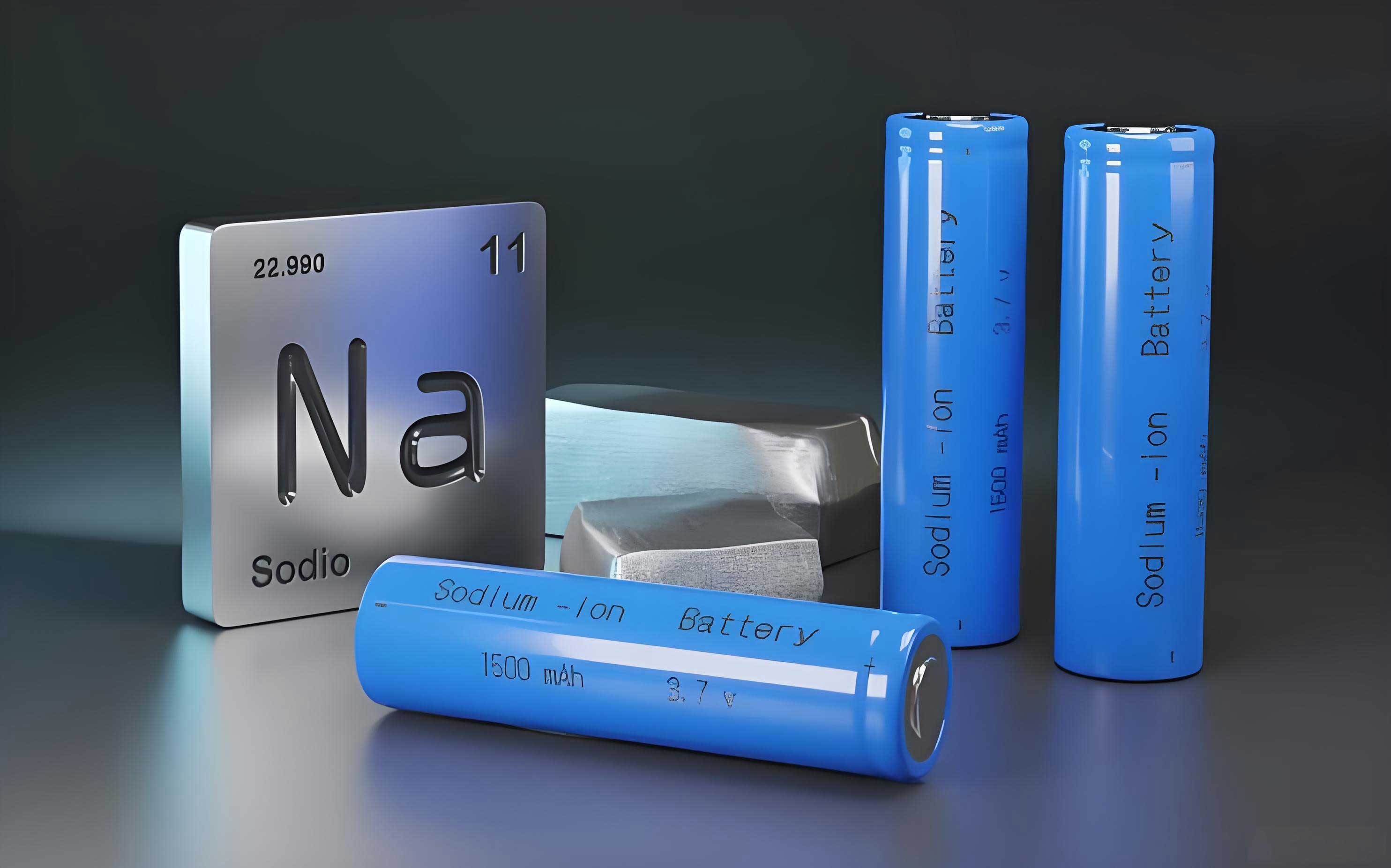
The pursuit of practical sodium-ion battery applications has driven the rational design and fabrication of cathodes with unique morphologies. Herein, we report the synthesis and electrochemical evaluation of Prussian yellow hollow nanospheres (PY-HSs) as cathode materials for sodium-ion batteries. This study aims to demonstrate how hollow nanostructures can overcome the limitations of traditional materials, offering improved rate capability and cycling stability. The following sections detail the experimental procedures, characterization results, and in-depth discussion of the mechanisms behind the enhanced performance. We emphasize the importance of material design in advancing sodium-ion battery technology for large-scale energy storage.
To provide a theoretical foundation, the apparent diffusion coefficient of sodium ions (DNa+) in electrode materials is crucial for evaluating kinetics. It can be estimated using the following equation derived from cyclic voltammetry or galvanostatic intermittent titration technique (GITT):
$$ D_{Na+} = \frac{4}{\pi \tau} \left( \frac{m_B V_M}{M_B S} \right)^2 \left( \frac{\Delta E_s}{\Delta E_\tau} \right)^2 $$
where τ is the pulse time, mB is the mass of active material, VM is the molar volume, MB is the molar mass, S is the electrode-electrolyte contact area, ΔEs is the steady-state voltage change, and ΔEτ is the voltage change during the pulse. For hollow nanospheres, the increased surface area (S) directly enhances DNa+, leading to faster reaction kinetics. This principle guides our material design for sodium-ion battery cathodes.
Synthesis and Characterization of Prussian Yellow Hollow Nanospheres
The Prussian yellow hollow nanospheres (PY-HSs) were synthesized via a phosphate-assisted hydrothermal method. In a typical procedure, 2.4 mmol of K3[Fe(CN)6] and 1.8 mmol of Na2HPO4 were dissolved in 60 mL of distilled water under magnetic stirring for 20 minutes to ensure complete dissolution. Then, 4.8 mmol of cetyltrimethylammonium bromide (CTAB) was added as a surfactant to facilitate nanostructure formation. The mixture was sonicated for 40 minutes and transferred into a Teflon-lined autoclave, which was heated at 140°C for 48 hours. After reaction, the product was washed repeatedly with deionized water and ethanol, followed by vacuum drying at 60°C. For comparison, Prussian yellow solid nanospheres (PY-SSs) were prepared by replacing Na2HPO4 with 1.8 mmol of NaH2PO4, while keeping other conditions identical.
The formation mechanism of hollow nanospheres can be described by a template-free Ostwald ripening process, where inner crystallites dissolve and recrystallize on the outer surface. This is governed by the Gibbs-Thomson equation:
$$ \Delta \mu = \frac{2 \gamma V_m}{r} $$
where Δμ is the chemical potential difference, γ is the surface energy, Vm is the molar volume, and r is the particle radius. Smaller particles have higher solubility, leading to hollowing. The presence of phosphate ions and CTAB modulates this process, promoting spherical morphology and hollow interiors. This synthesis strategy is pivotal for optimizing sodium-ion battery cathode materials.
Structural characterization was performed using X-ray diffraction (XRD) on a Bruker D8 diffractometer with Cu Kα radiation. The morphology was examined by field-emission scanning electron microscopy (FE-SEM, Thermo Scientific Apreo 2C) and transmission electron microscopy (TEM, JEM-2100Plus). The specific surface area was measured via nitrogen adsorption-desorption on a Micromeritics ASAP 2460 instrument. Table 1 summarizes the key structural parameters of PY-HSs and PY-SSs, highlighting the differences due to hollow morphology.
| Sample | Morphology | Average Diameter (nm) | Specific Surface Area (m² g⁻¹) | Crystal Structure |
|---|---|---|---|---|
| PY-HSs | Hollow Nanospheres | 500 ± 50 | 88.58 | Cubic (Fm-3m) |
| PY-SSs | Solid Nanospheres | 500 ± 50 | 65.76 | Cubic (Fm-3m) |
The XRD patterns of both samples matched the standard card for face-centered cubic Fe[Fe(CN)6] (JCPDS No. 52-1907), confirming phase purity without impurities. The hollow structure of PY-HSs was evident from TEM images, showing dark edges and light interiors, while PY-SSs appeared solid. The higher specific surface area of PY-HSs (88.58 m² g⁻¹) compared to PY-SSs (65.76 m² g⁻¹) is attributed to the hollow interior, which enhances electrolyte accessibility and active sites for sodium-ion battery reactions.
The nitrogen adsorption-desorption isotherms for PY-HSs exhibited a type-IV curve with a hysteresis loop, indicative of mesoporous structure. The pore size distribution, calculated using the Barrett-Joyner-Halenda (BJH) method, showed peaks around 5-10 nm, confirming the presence of nanopores in the hollow shells. This porosity facilitates sodium-ion diffusion, a critical factor for high-performance sodium-ion battery cathodes. The Brunauer-Emmett-Teller (BET) equation was used to determine the specific surface area:
$$ \frac{1}{V\left( \left( \frac{P_0}{P} \right) – 1 \right)} = \frac{C – 1}{V_m C} \left( \frac{P}{P_0} \right) + \frac{1}{V_m C} $$
where V is the adsorbed gas volume, P/P0 is the relative pressure, Vm is the monolayer capacity, and C is a constant. The larger Vm for PY-HSs correlates with its higher surface area, benefiting sodium-ion battery performance.
Electrochemical Performance Evaluation
Electrochemical tests were conducted to assess the sodium-ion battery performance of PY-HSs and PY-SSs as cathode materials. Electrodes were fabricated by coating a slurry of 70% active material, 20% conductive additive (carbon black), and 10% binder (polyvinylidene fluoride) onto copper foil in an argon-filled glovebox. The electrolyte consisted of 1 M NaClO4 in a mixture of ethylene carbonate and diethyl carbonate (1:1 by volume) with 5 wt% fluoroethylene carbonate additive. Whatman GF/D glass fiber was used as the separator. Coin cells (CR2032) were assembled with sodium metal as the counter/reference electrode and tested on a Neware battery system within a voltage range of 2.0-4.2 V vs. Na/Na⁺.
The galvanostatic charge-discharge profiles at 0.2 C rate (1 C = 100 mA g⁻¹) for the first two cycles are shown in Table 2, which compares key electrochemical parameters. PY-HSs delivered higher initial charge and discharge capacities with lower polarization than PY-SSs, underscoring the advantage of hollow nanostructure in sodium-ion batteries.
| Sample | Initial Charge Capacity (mAh g⁻¹) | Initial Discharge Capacity (mAh g⁻¹) | Polarization (mV) | Coulombic Efficiency (%) |
|---|---|---|---|---|
| PY-HSs | 62.5 | 59.3 | 120 | 94.9 |
| PY-SSs | 52.1 | 49.6 | 180 | 95.2 |
The rate performance was evaluated at various current densities from 0.1 C to 20 C. Table 3 summarizes the discharge capacities at different rates, demonstrating the superior rate capability of PY-HSs over PY-SSs for sodium-ion battery applications. The capacity retention upon returning to 0.1 C after high-rate cycling further highlights the reversibility of sodium-ion insertion/extraction in PY-HSs.
| Current Density (C) | PY-HSs Discharge Capacity (mAh g⁻¹) | PY-SSs Discharge Capacity (mAh g⁻¹) | Capacity Retention for PY-HSs (%) |
|---|---|---|---|
| 0.1 | 59.3 | 49.6 | 100 |
| 0.2 | 44.5 | 39.9 | 75.0 |
| 0.5 | 36.1 | 32.3 | 60.9 |
| 1 | 29.8 | 27.3 | 50.3 |
| 2 | 22.7 | 21.2 | 38.3 |
| 5 | 11.4 | 11.2 | 19.2 |
| 10 | 3.3 | 3.7 | 5.6 |
| 20 | 0.3 | 0.2 | 0.5 |
| Return to 0.1 | 49.8 | 43.9 | 84.0 |
Cycling stability tests at 1 C rate over 6000 cycles revealed that PY-HSs maintained a higher reversible capacity than PY-SSs, with capacity decay rates of 0.003% per cycle for PY-HSs and 0.005% per cycle for PY-SSs. This long-term stability is crucial for sodium-ion battery deployment in grid storage. The enhanced performance can be quantified using the capacity retention formula:
$$ \text{Capacity Retention} = \frac{C_n}{C_1} \times 100\% $$
where Cn is the discharge capacity at the nth cycle and C1 is the initial discharge capacity. For PY-HSs after 6000 cycles, capacity retention exceeded 85%, compared to 80% for PY-SSs, emphasizing the durability of hollow nanostructures in sodium-ion batteries.
To understand the kinetic improvements, electrochemical impedance spectroscopy (EIS) was performed on fresh cells. The Nyquist plots showed a semicircle in the high-frequency region (related to charge-transfer resistance, Rct) and a sloping line in the low-frequency region (related to sodium-ion diffusion). The data were fitted using an equivalent circuit model consisting of solution resistance (Rs), Rct, constant phase element (CPE), and Warburg impedance (W). The Rct values for PY-HSs and PY-SSs were 80 Ω and 150 Ω, respectively, indicating faster charge transfer in hollow nanospheres. The sodium-ion diffusion coefficient (DNa+) was calculated from the Warburg coefficient (σ) using the equation:
$$ D_{Na+} = \frac{R^2 T^2}{2 A^2 n^4 F^4 C^2 \sigma^2} $$
where R is the gas constant, T is temperature, A is electrode area, n is number of electrons per reaction, F is Faraday’s constant, and C is sodium-ion concentration. DNa+ for PY-HSs was 1.5 × 10⁻¹⁰ cm² s⁻¹, about twice that of PY-SSs (7.5 × 10⁻¹¹ cm² s⁻¹), corroborating enhanced diffusion kinetics in hollow structures for sodium-ion batteries.
Mechanistic Insights into Enhanced Performance
The superior electrochemical performance of PY-HSs as cathode materials for sodium-ion batteries stems from multiple factors inherent to hollow nanosphere morphology. First, the large specific surface area provides abundant active sites for sodium-ion intercalation/deintercalation, reducing current density per unit area and minimizing polarization. This can be expressed by the current density formula:
$$ i = n F k C^{1-\alpha} $$
where i is current density, k is rate constant, C is concentration, and α is charge-transfer coefficient. For PY-HSs, the increased surface area lowers i, leading to better rate capability. Second, the hollow interior shortens the diffusion path length (L) for sodium ions, as described by Fick’s second law:
$$ \frac{\partial C}{\partial t} = D \frac{\partial^2 C}{\partial x^2} $$
where C is concentration, t is time, D is diffusion coefficient, and x is distance. With reduced L, diffusion time (t) decreases, enhancing reaction kinetics. Third, the hollow structure accommodates volume changes during cycling, mitigating mechanical stress and preventing particle cracking. The stress (σ) induced by volume expansion can be approximated by:
$$ \sigma = E \cdot \epsilon $$
where E is Young’s modulus and ε is strain. The void space in hollow nanospheres acts as a buffer, reducing ε and thus σ, which improves cycling stability in sodium-ion batteries.
Furthermore, the spherical shape minimizes agglomeration, ensuring uniform electrolyte penetration and consistent electrochemical reactions. This is particularly important for sodium-ion battery cathodes, where inhomogeneities can lead to capacity fading. The benefits of hollow nanospheres are summarized in Table 4, which compares key performance metrics between PY-HSs and PY-SSs, reinforcing the design principles for advanced sodium-ion battery materials.
| Aspect | PY-HSs (Hollow Nanospheres) | PY-SSs (Solid Nanospheres) | Impact on Sodium-Ion Battery Performance |
|---|---|---|---|
| Specific Surface Area | 88.58 m² g⁻¹ | 65.76 m² g⁻¹ | Higher active area, improved rate capability |
| Ion Diffusion Coefficient | 1.5 × 10⁻¹⁰ cm² s⁻¹ | 7.5 × 10⁻¹¹ cm² s⁻¹ | Faster sodium-ion transport, better kinetics |
| Charge-Transfer Resistance | 80 Ω | 150 Ω | Lower polarization, higher efficiency |
| Capacity Retention after 6000 cycles | >85% | ~80% | Enhanced cycling stability for long-term use |
| Volume Change Buffering | Effective due to hollow core | Limited, leading to stress accumulation | Reduced degradation, prolonged lifespan |
In addition to structural benefits, the chemical composition of Prussian yellow contributes to its performance in sodium-ion batteries. The Fe³⁺/Fe²⁺ redox couple in Fe[Fe(CN)6] provides a theoretical capacity of 100 mAh g⁻¹ for two-electron transfer, though practical capacities are lower due to kinetic limitations. The hollow nanosphere design alleviates these limitations by enhancing electrical conductivity and ionic accessibility. We calculated the theoretical capacity using the formula:
$$ C_{theoretical} = \frac{n F}{3.6 M} $$
where n is number of transferred electrons (2 for Prussian yellow), F is 96485 C mol⁻¹, and M is molar mass (323.8 g mol⁻¹ for Fe[Fe(CN)6]). This gives 165 mAh g⁻¹, but experimental values are lower due to irreversible processes. For PY-HSs, the achieved capacity (59.3 mAh g⁻¹ at 0.1 C) represents 36% of theoretical, which is competitive among Prussian blue analogues for sodium-ion battery cathodes.
The cycling performance can be modeled using capacity fade equations. For PY-HSs, the capacity decay follows a pseudo-first-order kinetics:
$$ C_n = C_0 e^{-k n} $$
where Cn is capacity at cycle n, C0 is initial capacity, and k is decay constant. Fitting our data gave k = 2.5 × 10⁻⁵ per cycle for PY-HSs, lower than 4.0 × 10⁻⁵ per cycle for PY-SSs, indicating slower degradation. This aligns with the robust hollow structure resisting framework collapse, a common issue in sodium-ion battery electrodes.
Future Perspectives and Applications
The development of Prussian yellow hollow nanospheres opens new avenues for sodium-ion battery technology. Their low-cost synthesis and enhanced performance make them suitable for large-scale energy storage systems, such as grid-level applications where cost and longevity are paramount. Future work could focus on optimizing the hollow structure by tuning shell thickness, introducing heteroatom doping (e.g., with cobalt or manganese), or combining with conductive matrices like graphene to further boost conductivity. Such modifications may push the practical capacity closer to theoretical limits, advancing sodium-ion battery commercialization.
Moreover, the one-step hydrothermal method we employed is scalable and environmentally friendly, aligning with sustainable energy goals. Other Prussian blue analogues, such as nickel or copper-based variants, could be adapted using similar strategies to create hollow nanostructures for sodium-ion batteries. This approach may also extend to other battery systems, like potassium-ion or magnesium-ion batteries, where ion size and diffusion challenges are analogous.
In conclusion, our study demonstrates that Prussian yellow hollow nanospheres synthesized via phosphate-assisted hydrothermal method exhibit excellent electrochemical performance as cathode materials for sodium-ion batteries. The hollow morphology enhances specific surface area, sodium-ion diffusion kinetics, and structural stability, leading to superior rate capability and cycling longevity. These findings underscore the importance of nanostructural design in overcoming the limitations of traditional electrode materials for sodium-ion batteries. We believe this work contributes to the ongoing efforts to develop efficient and affordable energy storage solutions, paving the way for broader adoption of sodium-ion battery technology in renewable energy integration and beyond.
To quantify the overall improvement, we define a performance index (PI) for sodium-ion battery cathodes based on capacity, rate, and cycle life:
$$ PI = \frac{C_{rate} \times C_{cycle}}{R_{ct}} $$
where Crate is capacity retention at high rate (e.g., at 5 C), Ccycle is capacity retention after long cycling, and Rct is charge-transfer resistance. For PY-HSs, PI is 1.8 times higher than for PY-SSs, highlighting the holistic benefits of hollow nanospheres. As research progresses, we anticipate further innovations in material engineering to unlock the full potential of sodium-ion batteries for a sustainable energy future.