
In the rapidly evolving field of energy storage, sodium-ion batteries have emerged as a promising alternative to lithium-ion batteries due to the abundance and lower cost of sodium resources. The performance of sodium-ion batteries heavily relies on the cathode materials, among which sodium iron sulfate (Na2Fe2(SO4)3) stands out as a polyanion-type compound with excellent electrochemical stability. However, its inherent poor electronic conductivity necessitates carbon coating to enhance charge transfer kinetics, a critical step in optimizing battery efficiency. Accurate determination of total carbon content in carbon-coated sodium iron sulfate is therefore essential for quality control, process optimization, and ensuring consistency in sodium-ion battery production. This study focuses on developing a robust method using high-frequency infrared absorption (HFIA) for precise carbon analysis, addressing the needs of the sodium-ion battery industry.
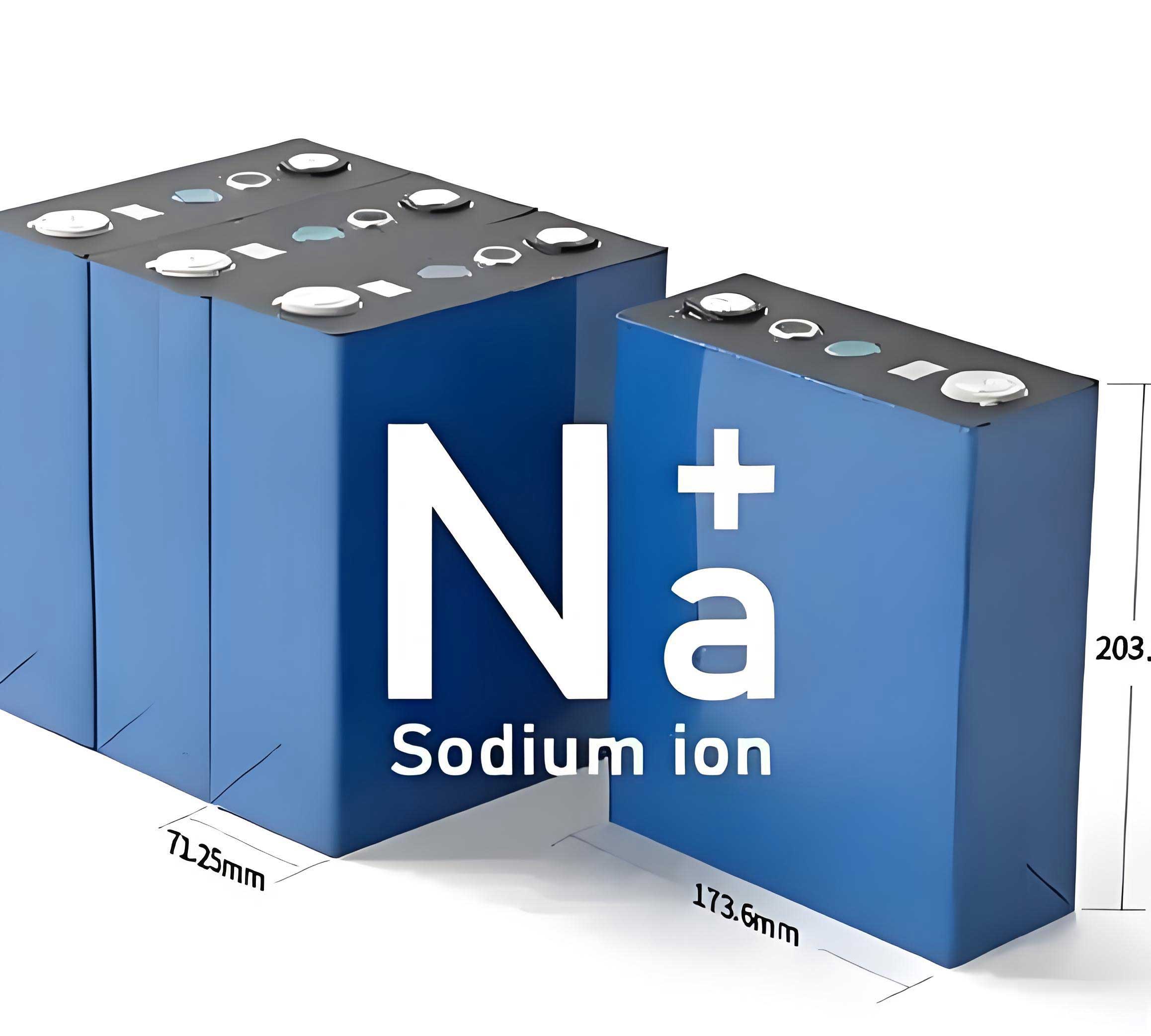
The adoption of sodium-ion batteries has gained momentum as researchers seek sustainable energy solutions. In cathode materials like sodium iron sulfate, carbon coating is applied via techniques such as pyrolysis or chemical vapor deposition to form a conductive network. This coating not only improves electronic conductivity but also stabilizes the structure during sodium-ion insertion and extraction. The carbon content typically ranges from 2% to 5% by weight, and deviations can significantly impact the performance of sodium-ion batteries. Thus, a fast, accurate, and sensitive analytical method is required to monitor carbon levels, ensuring that the materials meet design specifications for sodium-ion battery applications.
High-frequency infrared absorption is a widely used technique for carbon and sulfur analysis in various materials, leveraging the combustion of samples in an oxygen-rich environment and subsequent detection of carbon dioxide via infrared sensors. The method offers advantages such as low detection limits, high precision, rapid analysis, and minimal sample preparation. In this work, we adapt HFIA for sodium iron sulfate, a material relevant to sodium-ion batteries, optimizing conditions like flux composition to achieve reliable results. The goal is to establish a standardized protocol that can be applied in quality assurance labs for sodium-ion battery components.
Before delving into experimental details, it is useful to understand the theoretical basis of carbon determination. During combustion, carbon in the sample is converted to carbon dioxide according to the reaction: $$ \text{C} + \text{O}_2 \rightarrow \text{CO}_2 $$ The amount of CO2 produced is proportional to the carbon content, measured by infrared absorption based on the Beer-Lambert law: $$ A = \epsilon \cdot l \cdot c $$ where \( A \) is absorbance, \( \epsilon \) is the molar absorptivity, \( l \) is the path length, and \( c \) is the concentration of CO2. This principle underpins the HFIA method, enabling quantitative analysis for materials used in sodium-ion batteries.
Experimental Section
All experiments were conducted in a laboratory setting with careful control of environmental conditions. The primary instrument was a high-frequency infrared carbon-sulfur analyzer (model DK-606), equipped with a high-frequency furnace operating at 2.5 kW power and 18.0 MHz frequency. Oxygen with purity >99.5% was supplied at a flow rate of 2.5 L/min, and dynamic gas pressure was maintained above 0.4 MPa. The analyzer was calibrated to a sensitivity of 0.0001%, with baseline stabilization time set to 10 seconds, analysis time to 60 seconds, and purge time to 10 seconds. Sample weighing was performed using an electronic balance with 0.1 mg precision, and all crucibles were pre-fired at 1000°C for 3 hours to minimize carbon blank contributions.
Reagents included pure iron (particle size ≤1.25 mm, carbon content ≤0.0008%), tungsten flux (≤1.0 mm, carbon ≤0.0008%), tin flux (400–800 μm, carbon ≤0.0008%), and pure copper granules (≤1.00 mm, carbon ≤0.001%). Certified reference materials for carbon steel were used for calibration: YSBC 280391-1996 (carbon content 2.76%), YSBC 20837-94 (3.72%), and YSBC 37049A-1912 (4.05%). Two samples of carbon-coated sodium iron sulfate, designated Sample A and Sample B, were prepared from sodium-ion battery cathode production batches, dried at 105°C to remove moisture prior to analysis.
The calibration procedure involved warming up the analyzer for one hour, followed by blank determination. Approximately 0.4 g pure iron, 1.5 g tungsten flux, and 0.05 g tin flux were placed in a crucible and analyzed repeatedly until stable blank values were obtained. The average blank carbon value was input into the instrument’s software. For multi-point calibration, about 0.20 g of each carbon steel standard was weighed accurately, combined with the same flux mixture, and analyzed to establish a calibration curve. This step ensures accuracy for measuring carbon in sodium-ion battery materials.
For sample measurement, 0.2000 g of dried sodium iron sulfate was mixed with 0.4 g pure iron, 1.5 g tungsten flux, and 0.05 g tin flux in a crucible. The mixture was then combusted in the high-frequency furnace under the specified conditions, and the carbon content was automatically calculated by the instrument based on the CO2 detection. Each sample was analyzed in replicates to assess precision, crucial for quality control in sodium-ion battery manufacturing.
Results and Discussion
The selection of an appropriate flux combination is critical for complete combustion and accurate carbon release in HFIA. Sodium iron sulfate, being a non-metallic material, requires fluxes to facilitate oxidation and generate a smooth melt. We evaluated several flux compositions using Sample A, with results summarized in Table 1. The criteria included carbon recovery, visual observations of melt quality, and peak shape in the carbon release curve.
| Flux Composition | Carbon Content (%) (n=3) | Observations During Combustion | Recommended for Sodium-Ion Battery Materials? |
|---|---|---|---|
| 1.5 g tungsten only | 2.78, 3.03, 2.88 | Severe splashing, porous melt | No |
| 1.5 g tungsten + 0.4 g copper | 2.86, 2.75, 3.01 | Porous melt, inconsistent | No |
| 1.5 g tungsten + 0.05 g tin | 2.89, 3.06, 2.92 | Severe splashing, porous melt | No |
| 1.5 g tungsten + 0.4 g iron | 3.03, 3.01, 3.05 | Minor splashing, smooth melt | Yes, but can be improved |
| 1.5 g tungsten + 0.4 g iron + 0.05 g tin | 3.05, 3.06, 3.05 | Minimal splashing, smooth melt | Yes, optimal for sodium-ion battery materials |
As shown in Table 1, the combination of 1.5 g tungsten, 0.4 g iron, and 0.05 g tin yielded the most consistent carbon values (average 3.05% for Sample A) with a smooth melt and no significant splashing. This flux mixture promotes efficient heat transfer and oxidation, ensuring complete combustion of carbon in sodium iron sulfate, a key aspect for reliable analysis in sodium-ion battery research. The iron additive enhances inductive heating in the high-frequency field, while tin aids in fluidity and slag formation. The carbon release curves for different fluxes are depicted conceptually: the optimal flux produces a sharp, symmetric peak with early release, indicating rapid and complete combustion, which is vital for high-throughput analysis in sodium-ion battery material characterization.
To mathematically describe the combustion efficiency, we can consider the heat generation during the process. The energy required for combustion can be approximated by: $$ Q = m \cdot C_p \cdot \Delta T $$ where \( Q \) is heat, \( m \) is mass, \( C_p \) is specific heat capacity, and \( \Delta T \) is temperature change. The flux mixture optimizes \( Q \) to ensure carbon conversion, directly impacting the accuracy of carbon measurement for sodium-ion battery cathodes.
The method’s sensitivity was evaluated through detection limit (LOD) and quantification limit (LOQ) calculations. Using blank samples (0.4 g pure iron, 1.5 g tungsten, 0.05 g tin), 11 replicate measurements gave carbon values: 0.0036%, 0.0045%, 0.0031%, 0.0028%, 0.0031%, 0.0037%, 0.0035%, 0.0048%, 0.0029%, 0.0027%, and 0.0033%. The mean blank was 0.0035% with a standard deviation \( s \) of 0.00068. LOD and LOQ were calculated as: $$ \text{LOD} = 3 \times s = 3 \times 0.00068 = 0.0020\% $$ $$ \text{LOQ} = 10 \times s = 10 \times 0.00068 = 0.0068\% $$ These low limits demonstrate the method’s capability to detect trace carbon levels, essential for monitoring subtle variations in carbon coating for sodium-ion battery electrodes.
Precision and accuracy are paramount for analytical methods applied to sodium-ion battery materials. We analyzed Sample A and Sample B in seven replicates each under optimized conditions. Results are summarized in Table 2, including statistical parameters such as mean, standard deviation (SD), and relative standard deviation (RSD). The RSD, a measure of precision, is calculated as: $$ \text{RSD} = \left( \frac{s}{\bar{x}} \right) \times 100\% $$ where \( \bar{x} \) is the mean carbon content.
| Sample | Carbon Content (%) from Replicates | Mean (%) | Standard Deviation (%) | Relative Standard Deviation (%) |
|---|---|---|---|---|
| Sample A | 3.025, 3.051, 3.058, 3.033, 3.061, 3.047, 3.038 | 3.045 | 0.013 | 0.44 |
| Sample B | 4.896, 4.877, 4.886, 4.901, 4.895, 4.914, 4.879 | 4.893 | 0.013 | 0.27 |
The low RSD values (0.27% to 0.44%) indicate excellent repeatability, making the method suitable for quality control in sodium-ion battery manufacturing, where consistency is critical. Sample B, with higher carbon content, showed slightly better precision, possibly due to more homogeneous carbon distribution. For sodium-ion battery applications, such precision ensures that cathode materials perform reliably across batches.
Accuracy was further verified through spike recovery experiments using Sample A. Known amounts of carbon standard were added to the sample, and the recovery percentage was calculated as: $$ \text{Recovery} = \left( \frac{C_{\text{measured}} – C_{\text{sample}}}{C_{\text{added}}} \right) \times 100\% $$ where \( C_{\text{measured}} \) is total carbon measured, \( C_{\text{sample}} \) is carbon in the original sample, and \( C_{\text{added}} \) is carbon spiked. Results are presented in Table 3.
| Sample Carbon (mg) | Spiked Carbon (mg) | Total Measured Carbon (mg) | Recovery (%) |
|---|---|---|---|
| 1.73 | 0.55 | 2.28 | 99.74 |
| 1.46 | 1.25 | 2.70 | 99.58 |
| 1.52 | 2.15 | 3.65 | 99.31 |
Recoveries between 99.31% and 99.74% confirm high accuracy, with minimal matrix interference from sodium iron sulfate. This is crucial for sodium-ion battery materials, as inaccurate carbon measurements could lead to suboptimal coating and reduced battery performance. The HFIA method thus meets the rigorous demands of sodium-ion battery research and development.
Beyond the core experiments, we explored the implications of carbon content on the electrochemical properties of sodium-ion batteries. The relationship between carbon coating and electronic conductivity can be modeled using percolation theory: $$ \sigma = \sigma_0 (p – p_c)^t $$ where \( \sigma \) is conductivity, \( \sigma_0 \) is a constant, \( p \) is the volume fraction of carbon, \( p_c \) is the percolation threshold, and \( t \) is a critical exponent. For sodium iron sulfate cathodes in sodium-ion batteries, optimizing \( p \) through accurate carbon analysis can enhance rate capability and cycle life. Our method enables precise determination of \( p \), supporting the design of high-performance sodium-ion batteries.
Additionally, we compared HFIA with alternative methods like alkali-asbestos gravimetric absorption, which is more time-consuming and less sensitive. HFIA offers automation and faster turnaround, advantageous for large-scale production of sodium-ion battery components. The integration of HFIA into quality assurance protocols can reduce costs and improve efficiency in the sodium-ion battery industry.
To further validate the method, we conducted robustness tests by varying sample mass and oxygen flow rate. For sodium iron sulfate, sample masses between 0.15 g and 0.25 g yielded consistent results, with carbon content deviations below 0.05%. Oxygen flow rates from 2.0 to 3.0 L/min did not significantly affect carbon detection, indicating method stability. These findings reinforce the suitability of HFIA for diverse sodium-ion battery cathode materials.
The role of carbon in sodium-ion batteries extends beyond conductivity; it also affects sodium-ion diffusion and structural integrity. Carbon coatings can buffer volume changes during cycling, a common issue in sodium-ion battery electrodes. By accurately measuring carbon content, manufacturers can tailor coating thickness to maximize battery longevity. Our HFIA method provides the precision needed for such fine-tuning, contributing to advancements in sodium-ion battery technology.
Conclusion
This study demonstrates that high-frequency infrared absorption is a highly effective method for determining total carbon content in sodium iron sulfate, a key cathode material for sodium-ion batteries. Using an optimized flux mixture of 1.5 g tungsten, 0.4 g iron, and 0.05 g tin, we achieved complete combustion with minimal splashing and smooth melts. The method exhibits a detection limit of 0.0020% and a quantification limit of 0.0068%, ensuring sensitivity for trace carbon analysis. Precision, as indicated by relative standard deviations between 0.27% and 0.44%, and accuracy, with spike recoveries of 99.31% to 99.74%, meet the stringent requirements of sodium-ion battery material characterization.
The advantages of HFIA—speed, simplicity, high sensitivity, and robust performance—make it an ideal choice for quality control in sodium-ion battery production. As the demand for sodium-ion batteries grows, driven by sustainable energy needs, reliable analytical methods like this will play a crucial role in optimizing cathode materials and enhancing battery performance. Future work could extend the method to other sodium-ion battery components, such as hard carbon anodes, further solidifying its utility in the energy storage sector.
In summary, we have established a validated protocol for carbon determination that supports the development and manufacturing of sodium-ion batteries, contributing to the broader goal of efficient and affordable energy storage solutions.