
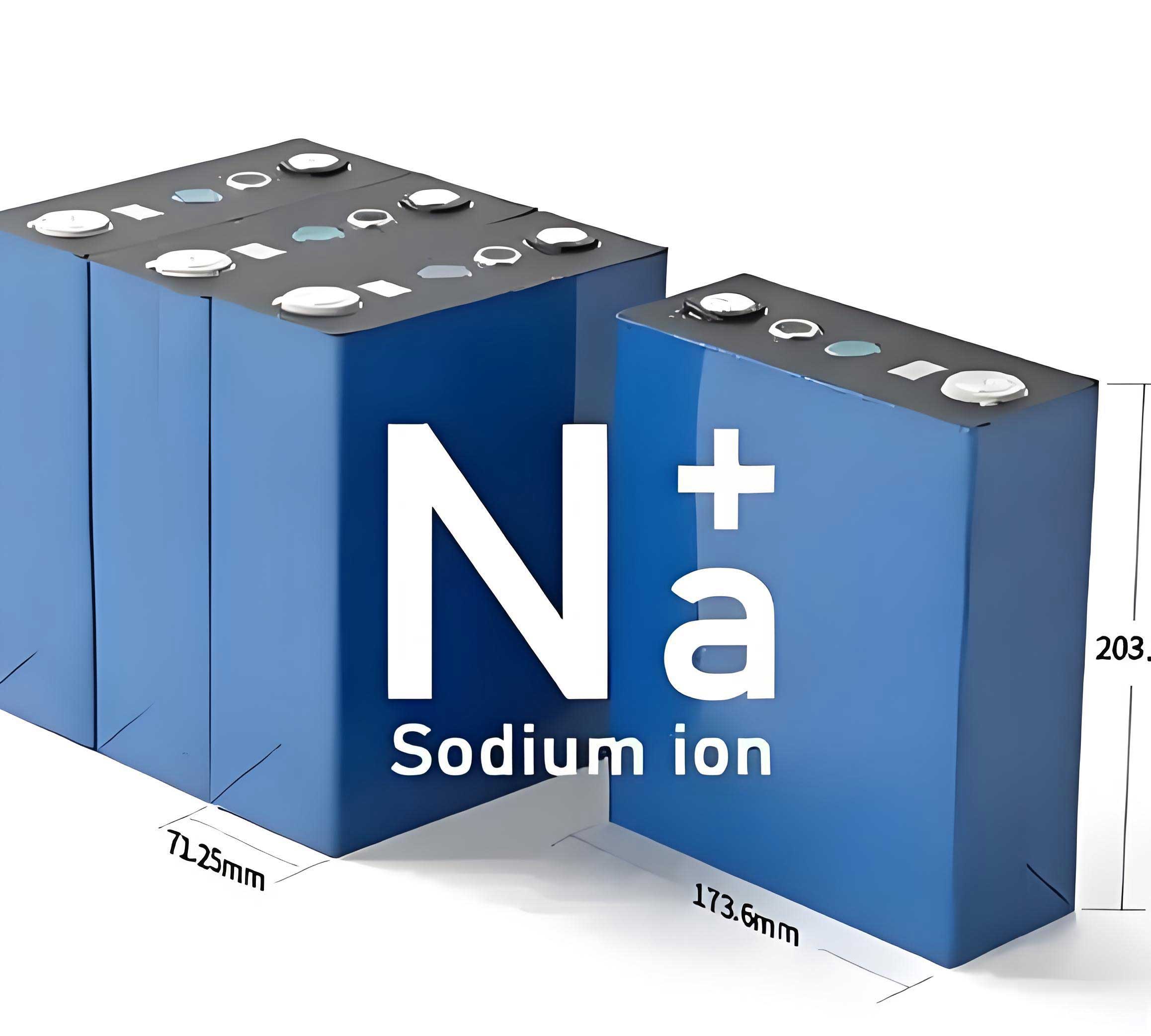
The ever-growing demand for energy storage, driven by the global shift towards renewable energy sources and the strategic goal of carbon neutrality, has intensified the search for sustainable and cost-effective battery technologies beyond lithium-ion systems. While lithium-ion batteries (LIBs) dominate portable electronics and electric vehicles, concerns regarding the limited global distribution and rising cost of lithium resources pose significant challenges for their large-scale grid storage applications. In this context, sodium-ion batteries (SIBs) have re-emerged as a compelling alternative. Sodium’s natural abundance, lower cost, and the feasibility of using aluminum current collectors offer distinct economic advantages. The operating principle of a sodium-ion battery is analogous to that of a lithium-ion battery, often described as a “rocking-chair” mechanism, where sodium ions shuttle between the cathode and anode during charge and discharge.
However, the development of high-performance sodium-ion batteries is not without hurdles. The larger ionic radius (Na+: ~1.02 Å vs. Li+: ~0.76 Å) and heavier mass of the sodium ion often lead to sluggish diffusion kinetics, significant structural strain during (de)intercalation, and inferior energy density compared to LIBs. The cathode material is a primary determinant of the cost, energy density, and cycle life of a battery. Among various cathode candidates for sodium-ion batteries, such as polyanionic compounds, Prussian blue analogues, and organic materials, layered transition metal oxides with the general formula NaxTMO2 (TM = transition metal) stand out due to their high theoretical capacity, relatively high operating voltage, and straightforward synthesis.
Layered oxides for sodium-ion batteries are primarily classified based on the coordination environment of Na+ ions and the stacking sequence of oxygen layers. The main types are P2, O3, and P3. The letter denotes the prismatic (P) or octahedral (O) site for Na+, and the number indicates the number of transition metal oxide layers in the smallest repeat unit. Each structure presents a unique set of electrochemical properties and challenges for sodium-ion battery cathodes:
- P2-type: Offers wide Na+ diffusion pathways and lower migration barriers, leading to good rate capability. However, it typically suffers from lower initial specific capacity due to lower sodium content and can undergo detrimental P2→O2 phase transitions at high voltages, compromising cycling stability.
- O3-type: Possesses higher initial sodium content, enabling higher specific capacity. Unfortunately, it often exhibits poor rate performance and faster capacity fade due to more complex phase transitions and higher Na+ diffusion barriers.
- P3-type: Features lower synthesis temperatures and better kinetics than O3-type, but its lower structural symmetry can lead to intricate phase evolution and capacity decay during cycling.
The overarching challenge is to design layered oxide cathodes that synergistically combine high capacity, long-term cyclability, excellent rate performance, and good air stability for practical sodium-ion batteries. This review aims to provide a comprehensive, first-person perspective on the recent progress in modifying layered oxide cathodes, focusing on strategic design from the component, structure, and surface/interface levels. We will delve into the underlying mechanisms, compare various strategies, and discuss future research directions to advance the field of sodium-ion batteries.
Component Design: Engineering the Bulk Chemistry
Tailoring the chemical composition is the most fundamental and widely employed strategy to enhance the performance of layered oxide cathodes for sodium-ion batteries. This involves selecting appropriate transition metal ions, optimizing their ratios, and strategically doping with alien elements to tune the electronic structure, stabilize the host framework, and modify the redox behavior.
Cationic Redox-Dominant Materials
Early research focused on simple binary systems isostructural to successful LIB cathodes like LiCoO2. While NaCoO2 showed promise, the scarcity and cost of cobalt shifted attention to more abundant elements like iron and manganese for sodium-ion battery applications.
Single Metal Systems: Materials like O3-NaFeO2 and P2-NaxMnO2 were extensively studied. O3-NaFeO2 delivers capacity based on the Fe3+/Fe4+ redox couple, but suffers from irreversible Fe3+ migration into tetrahedral sites in the Na layer at high states of charge, blocking Na+ pathways. P2-NaxMnO2 offers higher capacity but is plagued by Jahn-Teller distortion associated with Mn3+, leading to rapid structural degradation. The instability of these single-metal systems highlights the need for multi-component design.
Multi-Metal Systems & Doping: Incorporating multiple transition metals can mitigate individual shortcomings and leverage synergistic effects. A landmark material is P2-Na2/3Ni1/3Mn2/3O2. In this system, Ni2+ is oxidized to Ni3+/Ni4+ during charge, providing capacity, while Mn4+ remains electrochemically inactive but structurally stabilizing, suppressing Jahn-Teller distortion. This material exhibits excellent cycle life but moderate specific capacity. Another prominent example is P2-Na2/3Fe1/2Mn1/2O2, which utilizes both Fe and Mn redox, delivering high initial capacity. However, it undergoes a detrimental P2→O2 phase transition at high voltage and has poor air stability.
To further enhance performance, strategic doping with electrochemically inert or active elements is employed. Doping can suppress phase transitions, mitigate cation mixing, and tune the operating voltage. Common dopants include Mg, Zn, Cu, Ti, and Li. For instance, doping Li into the transition metal layer of P2-type materials can disrupt Na+/vacancy ordering, smoothing the charge/discharge profiles and improving rate capability in sodium-ion batteries. The effects of common doping elements are summarized below:
| Doping Element | Common Site | Primary Function | Impact on Sodium-Ion Battery Cathode |
|---|---|---|---|
| Mg2+ | TM Layer / Na Layer | Structural Pillar, Suppresses Phase Transition | Enhances cycling stability, may participate in or stabilize anionic redox. |
| Li+ | TM Layer | Disorders Na+/Vacancy, “Rivet” Effect | Improves rate performance, stabilizes structure, can enable anionic redox. |
| Ti4+ | TM Layer | Inert Stabilizer, Strengthens TM-O Bonds | Improves structural and air stability, may increase average voltage. |
| Zn2+ | TM Layer | Inert Stabilizer, Alters Electronic Structure | Suppresses Jahn-Teller distortion, can trigger anionic redox activity. |
| Cu2+ | TM Layer | Active Redox Center (Cu2+/Cu3+) | Provides additional capacity, often with low voltage hysteresis. |
The capacity derived purely from cationic redox is often limited by the number of transferable electrons per transition metal. The theoretical capacity based on cationic redox can be expressed as:
$$ C_{theory, cat} = \frac{nF}{3.6 M_{w}} $$
where \( n \) is the number of electrons transferred per formula unit, \( F \) is Faraday’s constant (96485 C mol-1), \( M_{w} \) is the molecular weight (g mol-1), and the factor 3.6 converts Coulombs to mAh. For many layered oxides, this ceiling is around 200 mAh g-1, prompting the exploration of additional redox mechanisms for sodium-ion batteries.
Harnessing Anionic Redox Activity
A paradigm-shifting advancement in high-capacity cathodes, initially for LIBs and now for sodium-ion batteries, is the utilization of reversible oxygen redox (O2-/On-). This process can provide extra capacity beyond the limitation of transition metal redox, potentially pushing the energy density of sodium-ion batteries significantly higher.
Fundamental Principle: The activity of lattice oxygen is linked to its local electronic structure. In traditional layered oxides, the oxygen 2p states are deeply bonded with transition metal d-states. However, in specific configurations—such as in Li/Na-rich compositions (e.g., Na2MO3) or in systems with certain inert dopants (e.g., Li+, Mg2+ in the TM layer)—non-bonding or weakly bonding O 2p states can appear near the Fermi level. These localized oxygen states can lose electrons upon charging, contributing to capacity without immediate oxygen gas release. The challenge lies in maintaining the reversibility of this process and preventing irreversible oxygen loss, which leads to voltage fade and capacity decay.
Material Categories:
- Na-Rich Layered Oxides: Materials like Na2RuO3 and Na2IrO3 exhibit clear anionic redox activity. The strong covalent character of Ru/Ir-O bonds helps stabilize the oxidized oxygen species (e.g., peroxo-like O2n- dimers). However, the high cost of 4d/5d metals limits their practical application in sodium-ion batteries.
- Na-Deficient Layered Oxides with “Triggers”: More promising for practical sodium-ion batteries are P2/P3-type manganese-based oxides doped with electrochemically inert ions (e.g., Li+, Mg2+, Zn2+, Al3+). For example, P2-Na2/3[Mg1/3Mn2/3]O2 and P3-Na0.65Mn0.5Al0.5O2 exhibit significant capacity from oxygen redox. The inert ion (Mg2+, Al3+) does not change oxidation state, creating a local environment where charge compensation upon Na+ extraction must occur via oxidation of the neighboring O2- and/or Mn4+.
Enhancing Reversibility: The major hurdle for anionic redox in sodium-ion battery cathodes is its often poor reversibility, manifested as large voltage hysteresis and gradual voltage decay. Key strategies to improve reversibility include:
- Increasing Covalency: Enhancing the TM-O bond covalency (e.g., through Cu or Ni doping) can stabilize the hole on oxygen, reducing oxygen loss.
- Superstructure Ordering: Controlling the local ordering of Li/Mn in materials like Nax[LiyMn1-y]O2 can influence the O2 formation pathways and Mn migration, thereby mitigating voltage fade.
- Anion Substitution: Partial substitution of O2- with F– (e.g., in P2-Na0.65Li0.22Mn0.78O1.99F0.01) can strengthen the overall lattice, reduce Mn3+ content, and improve the reversibility of oxygen redox.
- Dual Dopants: Co-doping strategies, such as using both Cu and Mg, can synergistically tune the electronic structure and stabilize the lattice oxygen.
The total capacity in such systems can be conceptually described as the sum of cationic and anionic contributions:
$$ C_{total} = C_{TM} + C_{O} = \frac{(n_{TM} + m_{O})F}{3.6 M_{w}} $$
where \( n_{TM} \) is the number of electrons from transition metal redox and \( m_{O} \) is the effective number of electrons from reversible oxygen redox per formula unit. Achieving a high and stable \( m_{O} \) value is the central goal for next-generation high-energy sodium-ion battery cathodes.
Structural Design: Building from the Micro to the Nano
Beyond chemical composition, ingeniously designing the microstructure and architecture of cathode particles is a powerful approach to address kinetic limitations and structural degradation in sodium-ion batteries.
Phase-Integrated Composites
Instead of pursuing a single pure phase, constructing composite materials that integrate different phase types can combine their respective advantages. A prominent example is the P2/O3 biphasic composite. The O3 phase provides high initial capacity, while the intergrown P2 phase offers robust structural stability and fast Na+ diffusion paths. This composite structure can buffer internal stress, suppress abrupt phase transitions, and lead to superior comprehensive performance in sodium-ion batteries. The synthesis often requires precise control over composition, sodium content, and calcination conditions to achieve the desired phase mixture.
Core-Shell and Gradient Structures
Architecting particles with non-uniform composition across their radius is a sophisticated design strategy.
- Core-Shell: A particle can be designed with an O3-type high-capacity core and a P2-type stable shell. The shell protects the core from direct electrolyte contact and suppresses surface degradation, while the core delivers high capacity. This requires advanced synthesis techniques like co-precipitation with controlled feeding rates.
- Concentration-Gradient: A more refined design features a continuous variation in composition from the particle interior to the surface. For instance, a titanium concentration gradient material, where the surface is Ti-rich and the core is Ti-poor, can be created. The Ti-rich surface enhances interfacial stability and electronic conductivity, resisting side reactions. The Ti-poor core maintains a high capacity. This gradient effectively minimizes overall structural strain during cycling of the sodium-ion battery.
The diffusion kinetics in such designed structures can be complex. For a spherical particle with a shell of different diffusivity, the apparent chemical diffusion coefficient \( D_{app} \) experienced by Na+ is influenced by both core and shell properties. While a detailed analytical solution is intricate, the shell often controls the rate-limiting step if it has lower ionic conductivity. The design goal is to engineer a shell that is both protective and ionically conductive.
Morphology and Nano-Engineering
Reducing the particle size to the nanoscale or creating specific morphologies can drastically shorten the Na+ diffusion path length (\( L \)), according to the diffusion time equation \( \tau \approx L^2 / D \), thereby improving rate performance. Synthesis methods like electrospinning can produce nanofibers of layered oxides, which offer large surface area and one-dimensional electronic conduction pathways. However, nanomaterials have higher surface energy, which can exacerbate side reactions with the electrolyte and lead to lower volumetric energy density. A balance must be struck between kinetics and stability for practical sodium-ion battery applications.
Surface and Interface Design: Fortifying the First Line of Defense
The surface of layered oxide cathodes is highly susceptible to degradation, which is a critical failure mode in sodium-ion batteries. Surface reactions with moisture (leading to Na+/H+ exchange and formation of insulating species like NaOH/Na2CO3) and with electrolytes (leading to parasitic decomposition and thick CEI formation) severely impair performance. Proactive surface modification is therefore essential.
Surface Coating
Applying a thin, uniform, and conformal coating layer on cathode particles is a highly effective strategy. The coating acts as a physical barrier, isolating the active material from the electrolyte. Ideal coatings should be chemically/electrochemically stable, ionically conductive for Na+, and electronically insulating or conductive as needed.
| Coating Material Type | Examples | Mechanism of Action in Sodium-Ion Batteries |
|---|---|---|
| Metal Oxides | Al2O3, MgO, ZrO2 | Scavenges acidic species (e.g., HF), suppresses transition metal dissolution, promotes formation of a stable CEI. |
| Phosphates | AlPO4, NaTi2(PO4)3 (NASICON) | Excellent chemical stability; NASICON-types offer high Na+ conductivity, facilitating interfacial ion transport. |
| Fluorides | AlF3 | Forms a robust protective layer, often improves high-voltage stability. |
| Conductive Polymers/Carbon | Polypyrrole, Graphene Oxide | Enhances electronic conductivity at the particle surface, improves rate capability. |
The effectiveness of a coating can be modeled by considering it as an additional resistance in series with the charge transfer resistance. A good coating minimizes the increase in interfacial resistance \( R_{int} \) while maximizing the protective benefit. Techniques like Atomic Layer Deposition (ALD) allow for precise, angstrom-level control over coating thickness, which is crucial for not impeding Na+ transport.
Constructing Artificial Interphaces
Instead of ex-situ coating, an artificial cathode-electrolyte interphase (ACEI) can be constructed in-situ through electrochemical pre-treatment. For example, a controlled pre-sodiation (electrochemical discharge) process can be used to intentionally embed a small amount of sodium into the cathode surface from the electrolyte, accompanied by the decomposition of electrolyte additives. This forms a tailored, ionically conductive, and robust interface layer before normal cycling begins. This ACEI is designed to be more stable than the naturally formed CEI, effectively suppressing further electrolyte decomposition and transition metal dissolution throughout the life of the sodium-ion battery.
Surface Doping/Etching
Chemical treatments can modify the very surface chemistry of the particles. Mild acid etching can remove surface impurities and residual lithium/sodium compounds, creating a cleaner and more active surface. Conversely, surface doping via solid-state diffusion or solution processes can create a concentration of stabilizing elements (e.g., B, F) at the surface, strengthening the surface lattice against oxygen loss—a key factor for stabilizing anionic redox activity in sodium-ion battery cathodes.
Summary, Challenges, and Future Perspectives
The development of layered oxide cathodes for sodium-ion batteries has seen remarkable progress through multifaceted design strategies. Component design via multi-metal integration and strategic doping has yielded materials with improved stability and capacity. The discovery and ongoing optimization of anionic redox have opened a path to break the capacity ceiling. Structural design through phase composites and core-shell/gradient architectures has successfully decoupled and addressed conflicting requirements of stability and capacity. Surface/interface engineering has provided critical protection against environmental and electrochemical degradation.
However, significant challenges remain on the path to commercialization of sodium-ion batteries based on layered oxide cathodes:
- Energy Density vs. Cycle Life Trade-off: Achieving both very high specific capacity (> 200 mAh g-1) and ultra-long cycle life (> 2000 cycles) in a single material remains difficult, especially when utilizing high-voltage anionic redox.
- Air and Moisture Stability: Many high-performance layered oxides, particularly P2-type and those with Mn3+, are hygroscopic. They react with CO2 and H2O in air, forming surface carbonates and hydroxides, which increases impedance and requires costly dry-room processing.
- Voltage Hysteresis and Fade in Anionic Redox: While capacities are high, the large voltage gap between charge and discharge and the gradual decay of the average voltage during cycling reduce energy efficiency and usable energy over time.
- Comprehensive Understanding: The complex interplay between cationic and anionic redox, local structure evolution, and interface dynamics, especially in multi-component, multi-phase systems, is not fully understood, hindering rational design.
Future research directions should focus on:
- Advanced Computational-Guided Discovery: Leveraging high-throughput density functional theory (DFT) calculations, machine learning, and materials genomics to screen vast compositional spaces for new layered oxide systems with predicted high stability, high voltage, and reversible anionic redox for sodium-ion batteries.
- Probing and Controlling Local Structures: Utilizing advanced in-situ/operando characterization techniques (e.g., high-resolution STEM, resonant inelastic X-ray scattering – RIXS, solid-state NMR) to directly observe the formation, stability, and evolution of oxygen redox states, cation migration, and local distortions at the atomic scale.
- Holistic “All-in-One” Design: Integrating multiple strategies into a single particle: e.g., a concentration-gradient particle with a composition that enables stable anionic redox in the core, coated with a functionalized hybrid layer (e.g., ionic conductor + electronic conductor) for ultimate protection and kinetics.
- Electrolyte and Full-Cell Optimization: Developing novel electrolyte formulations (high-concentration, fluorinated, solid-state) that are stable at high voltages (> 4.2 V vs. Na/Na+) and compatible with these advanced cathodes. Research must shift more towards full-cell testing with suitable anode materials (hard carbon, etc.) to evaluate practical energy density and longevity.
- Sustainable and Scalable Synthesis: Designing synthesis routes that minimize energy consumption, avoid toxic precursors, and are directly scalable to industrial production, ensuring the cost advantage of sodium-ion batteries is realized.
In conclusion, the journey to develop high-performance layered oxide cathodes for sodium-ion batteries is a vibrant and multidisciplinary endeavor. While challenges persist, the continuous innovation in component tailoring, structural architecting, and interface mastering provides a strong foundation. With sustained research efforts focusing on fundamental understanding and integrated design, layered oxide cathodes are poised to play a pivotal role in enabling economical, durable, and high-energy sodium-ion batteries for large-scale energy storage and beyond.