
As a researcher deeply engaged in the field of energy storage, I have witnessed the rapid evolution of battery technologies. Among these, sodium-ion batteries (SIBs) have emerged as a promising alternative to lithium-ion batteries (LIBs) due to their low cost, high safety, and the abundance of sodium resources. However, the development of high-performance anode materials remains a critical challenge for SIBs, primarily because the larger ionic radius of Na+ (0.102 nm) compared to Li+ (0.076 nm) limits the suitability of many LIB anode materials. In this context, phosphorus-based materials, particularly metal phosphides, have garnered significant attention due to their high theoretical capacities and potential for efficient sodium storage. This article aims to provide an in-depth review of the recent progress in metal phosphide anode materials for sodium-ion batteries, focusing on their electrochemical mechanisms, performance enhancements through composite strategies, and future perspectives.
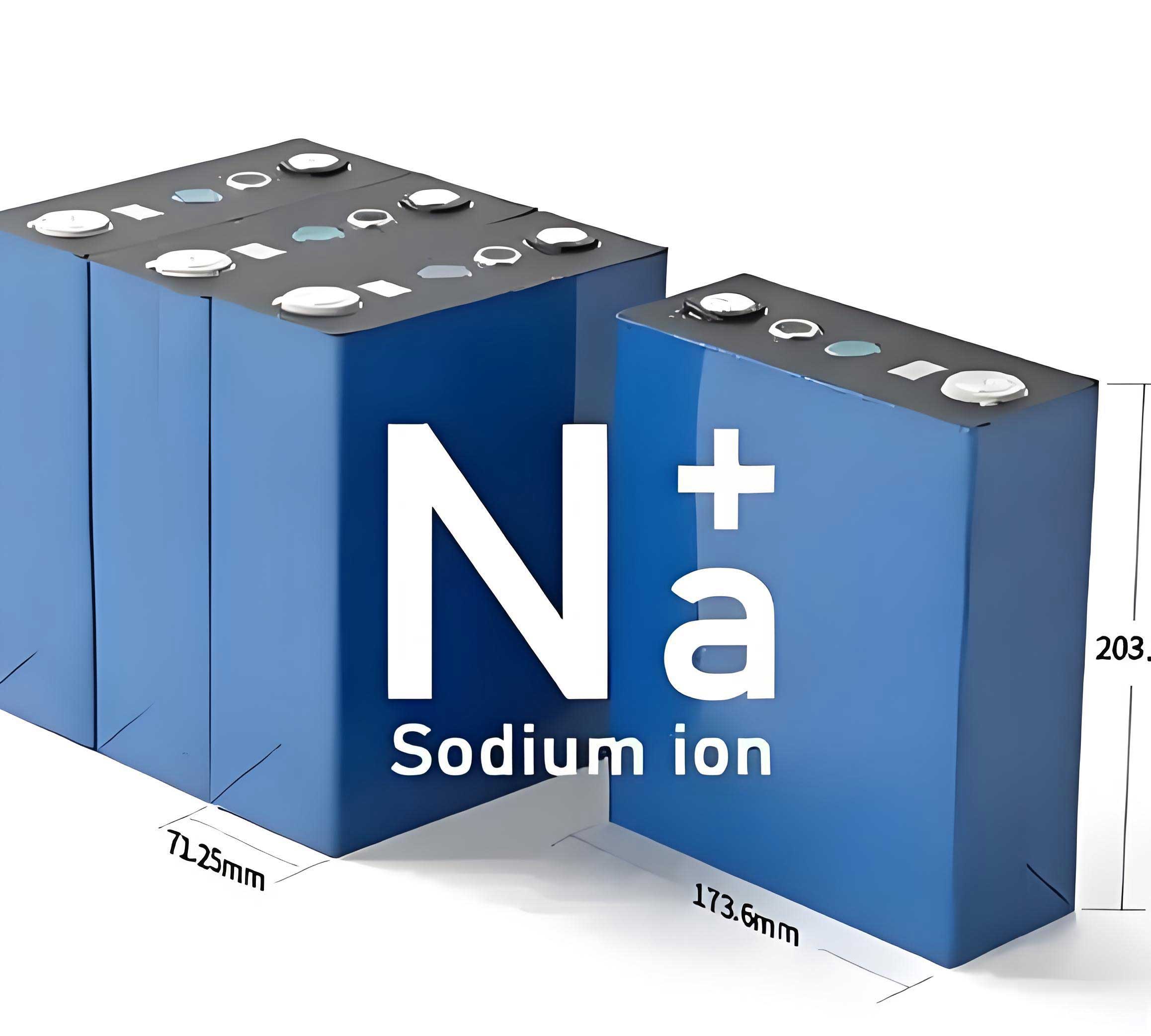
The growing demand for large-scale energy storage systems has driven extensive research into sodium-ion batteries, which offer advantages such as the use of aluminum foil as a current collector (since Na+ does not alloy with Al), reduced risk of dendrite formation, and environmental friendliness. Nonetheless, the energy density of SIBs is often lower than that of LIBs, necessitating the development of anode materials with high capacity, long cycle life, and good rate capability. Phosphorus, with a theoretical capacity of 2596 mAh g−1 through the alloying reaction to form Na3P, is one of the most promising candidates. However, its practical application is hindered by low electrical conductivity and significant volume expansion during sodiation/desodiation cycles. To address these issues, metal phosphides—formed by combining phosphorus with metals like copper, nickel, iron, germanium, tin, and zinc—have been explored. These materials not only enhance conductivity but also mitigate volume changes through conversion or conversion-alloying reactions, thereby improving the overall electrochemical performance of sodium-ion batteries.
In this review, I will systematically discuss the classification of metal phosphides based on their sodium storage mechanisms: conversion-type (e.g., CuPx, NiPx, FePx) and conversion-alloying-type (e.g., GePx, SnPx, ZnPx). For each category, I will delve into the synthesis methods, composite designs with carbonaceous materials (such as carbon nanotubes and graphene), and electrochemical properties. Furthermore, I will summarize key challenges, including low practical capacity, insufficient understanding of sodiation mechanisms, and the need for optimizing other battery components like electrolytes and binders. Finally, I will propose future research directions to advance the commercialization of metal phosphide anodes in sodium-ion batteries.
Classification and Sodiation Mechanisms of Metal Phosphides
Metal phosphides for sodium-ion battery anodes can be broadly categorized into two types based on their reaction pathways during sodium insertion and extraction. The conversion-type involves a direct reaction between the metal phosphide and Na+ to form Na3P and the corresponding metal, as represented by the general equation:
$$ \text{MP}_x + 3x\text{Na}^+ + 3xe^- \leftrightarrow x\text{Na}_3\text{P} + \text{M} $$
where M represents metals such as Cu, Ni, or Fe. This mechanism is typically observed in phosphides like CuP2, Ni2P, and FeP. In contrast, the conversion-alloying-type involves both conversion and alloying reactions, leading to the formation of Na3P and sodium-metal alloys (NayM). The general reaction can be expressed as:
$$ \text{MP}_x + (3x + y)\text{Na}^+ + (3x + y)e^- \leftrightarrow x\text{Na}_3\text{P} + \text{Na}_y\text{M} $$
This dual mechanism is common in phosphides like GeP3, Sn4P3, and ZnP2, where the metal component (e.g., Ge, Sn, Zn) further alloys with sodium. Understanding these mechanisms is crucial for designing materials with enhanced reversibility and stability in sodium-ion batteries.
Conversion-Type Metal Phosphides for Sodium-Ion Batteries
Conversion-type metal phosphides have been extensively studied due to their relatively simple reaction pathways and potential for high capacity. Below, I discuss three prominent examples: copper phosphides (CuPx), nickel phosphides (NiPx), and iron phosphides (FePx).
Copper Phosphides (CuPx)
Copper phosphides, including Cu3P, CuP2, and Cu2P7, exhibit promising electrochemical properties in sodium-ion batteries. For instance, Cu3P/C composites synthesized via ball-milling have demonstrated a capacity of 120 mAh g−1 after 120 cycles in diglyme-based electrolytes. However, CuP2 has garnered more attention due to its layered crystal structure, which facilitates sodium ion diffusion. When encapsulated in a three-dimensional graphene network (CuP2@GNs), the composite anode achieved a reversible capacity of 738 mAh g−1 at 0.1 A g−1 with an initial coulombic efficiency (ICE) of 83%. Moreover, it maintained 508 mAh g−1 at a high current density of 5 A g−1, showcasing excellent rate performance. Another innovative approach involved the synthesis of Cu2P7-black phosphorus-multi-walled carbon nanotube (CuP5/MWCNTs) ternary composites through ball-milling. This material exhibited an ICE of 84%, a high reversible capacity of 1170 mAh g−1 after 200 cycles, and 580 mAh g−1 at 5 A g−1. The synergistic effect between the 2D layered structures and 1D MWCNTs provided rapid electron/ion transport and buffered volume changes, highlighting the importance of composite design in enhancing the performance of copper phosphides for sodium-ion batteries.
Nickel Phosphides (NiPx)
Nickel phosphides, such as NiP3, Ni2P, Ni5P4, and Ni12P5, have been explored as anode materials for sodium-ion batteries. NiP3, with its high phosphorus content, offers a theoretical capacity of around 900 mAh g−1 and operates at a low redox potential of 0.2 V vs. Na+/Na, which is beneficial for energy density. In situ XRD studies have confirmed its conversion mechanism, where NiP3 directly transforms to Na3P upon sodiation and reverts upon desodiation. To address issues like aggregation and poor conductivity, composites with carbon materials have been developed. For example, Ni2P@acid-treated carbon nanotubes (ACNT) modified with cetyltrimethyl ammonium bromide (CTAB) showed a uniform microstructure, delivering 150.1 mAh g−1 at 0.1 A g−1 and 104.8 mAh g−1 at 4 A g−1. Similarly, porous nanosheet-assembled flower-like Ni5P4 (PNAF-NP) exhibited a high initial discharge capacity of 748.03 mAh g−1 at 0.2 A g−1 and maintained 456.34 mAh g−1 after 300 cycles. Hollow-structured Ni12P5@C/graphene nanosheets (GNs) composites also demonstrated improved performance, with a reversible capacity of 234.9 mAh g−1 at 0.1 A g−1. These examples underscore the role of nanostructuring and carbon hybridization in optimizing nickel phosphides for sodium-ion battery applications.
Iron Phosphides (FePx)
Iron phosphides, primarily FeP and FeP4, have shown potential as anode materials for sodium-ion batteries. FeP@N,P-codoped carbon nanofibers (NPC) fabricated via electrospinning offered flexibility and stability, retaining 391 mAh g−1 after 1000 cycles at 0.1 A g−1. In contrast, FeP4 synthesized by ball-milling delivered an initial capacity of 1137 mAh g−1 at 0.089 A g−1 with an ICE of 84.0%, and maintained 1000 mAh g−1 after 30 cycles. Although the sodiation mechanism of FeP4 is not fully understood, its high capacity and rate performance (e.g., 920 mAh g−1 at 3.578 A g−1) make it a compelling candidate for high-energy-density sodium-ion batteries. The integration of FePx with carbon matrices effectively mitigates volume expansion and enhances conductivity, as seen in these composites.
Conversion-Alloying-Type Metal Phosphides for Sodium-Ion Batteries
Conversion-alloying-type metal phosphides leverage both conversion and alloying reactions to achieve high sodium storage capacities. Key materials in this category include germanium phosphides (GePx), tin phosphides (SnPx), and zinc phosphides (ZnPx).
Germanium Phosphides (GePx)
Germanium phosphides, such as GeP, GeP3, and GeP5, are attractive due to their high theoretical capacities and layered structures. For instance, Ge2P3 composites synthesized by ball-mixing GeP and black phosphorus exhibited an ICE of 88% and a capacity of 890 mAh g−1 after 100 cycles. GeP3, when combined with carbon and reduced graphene oxide (GeP3/C@rGO), showed enhanced conductivity (5.89×10⁻¹ S cm−1) and a high reversible capacity of 823 mAh g−1 after 400 cycles at 0.2 A g−1. Theoretical studies on monolayer GeP3 predict a capacity of 1295.42 mAh g−1 for sodium-ion batteries, with low diffusion barriers for Na+, suggesting excellent rate capability. GeP5/ acetylene black (AB)/partially reduced GO composites demonstrated a reversible capacity of 400 mAh g−1 after 50 cycles at 0.5 A g−1, benefiting from a dual-carbon conductive network. Additionally, few-layer GeP (FL-GP) exfoliated via lithium intercalation and composited with rGO (FL-GP/rGO) delivered 504.2 mAh g−1 at 0.1 A g−1 after 70 cycles. Porous GePx microspheres (MGePx) synthesized via solvothermal methods also exhibited high performance, with 704 mAh g−1 at 0.24 A g−1 after 100 cycles. These advancements highlight the effectiveness of dimensionality reduction and carbon compositing in improving the electrochemical properties of germanium phosphides for sodium-ion batteries.
Tin Phosphides (SnPx)
Tin phosphides, including Sn4P3, SnP, and SnP3, are promising anode materials due to the high conductivity of tin and the high capacity of phosphorus. Sn4P3 has a theoretical capacity of 1132 mAh g−1, but suffers from volume expansion and aggregation. To overcome this, composites like Sn4P3-P@GNs (SPPG) were developed via ball-milling, which showed an ICE of 75.1% and exceptional cycling stability (>550 mAh g−1 after 1000 cycles at 1 A g−1). The formation of a stable SEI layer rich in NaF and strong interactions between active materials and graphene contributed to this performance. Other composites, such as Sn4P3@hard carbon and Sn4P3@carbon nanofibers, also demonstrated improved cyclability. SnP nanocrystals (SnP NCs) exhibited a capacity of 600 mAh g−1 at 0.1 A g−1 after 200 cycles, while SnP3/C composites maintained 810 mAh g−1 after 150 cycles at 0.15 A g−1. The self-healing ability of SnP3, due to strong Sn-P bonding, helps mitigate pulverization and aggregation during cycling. The table below summarizes the properties of various SnPx materials for sodium-ion batteries.
| Sample | Sn/P Ratio | Theoretical Capacity (mAh g−1) | Composite | ICE (%) | Cycling Stability (mAh g−1 / cycles / current density) |
|---|---|---|---|---|---|
| Sn4P3 | 1.33 | 1132 | SPPG | 75.1 | >550 / 1000 / 1 A g−1 |
| Sn4P3 | 1.33 | 1132 | @Hard Carbon | 69.5 | 430 / 100 / 0.1 A g−1 |
| SnP | 1 | 1209 | SnP NCs | >60 | 600 / 200 / 0.1 A g−1 |
| SnP3 | 0.33 | 1616 | SnP3/C | 71.2 | 810 / 150 / 0.15 A g−1 |
Zinc Phosphides (ZnPx)
Zinc phosphides, such as ZnP2 and Zn3P2, have also been investigated for sodium-ion batteries. Among them, ZnP2 exhibits superior sodiation performance compared to Zn3P2. When composited with Super P carbon (ZnP2-C), it delivered a high reversible capacity of 883 mAh g−1 after 130 cycles with no capacity decay. In situ characterization techniques revealed a one-step conversion/recombination mechanism for ZnP2-C during sodiation/desodiation, as described by the reaction:
$$ \text{ZnP}_2 + 6\text{Na}^+ + 6e^- \leftrightarrow 2\text{Na}_3\text{P} + \text{Zn} $$
followed by the alloying reaction:
$$ \text{Zn} + 13\text{Na}^+ + 13e^- \leftrightarrow \text{Na}_{13}\text{Zn} $$
The composite structure buffered volume changes and enhanced conductivity, resulting in excellent rate performance (e.g., 350 mAh g−1 at 2.7 A g−1). These findings emphasize the importance of mechanistic studies in optimizing zinc phosphides for sodium-ion battery anodes.
Electrochemical Performance Comparison of Metal Phosphide Anodes
To provide a comprehensive overview, I have compiled the electrochemical properties of various metal phosphides for sodium-ion batteries in the table below. Key parameters include voltage range, initial coulombic efficiency (ICE), charging potential, cycling stability, and rate performance. This comparison highlights the diversity in performance across different materials and composites.
| Sample | Voltage Range (V) | ICE (%) | Charging Potential (V vs. Na+/Na) | Cycling Stability (mAh g−1 / cycles / current density) | Rate Performance (mAh g−1 / current density) |
|---|---|---|---|---|---|
| Cu3P/C | 0.01-2.5 | 50 | 0.4 | 120 / 120 / 0.0366 A g−1 | 130 / 0.363 A g−1 |
| CuP2@GNs | – | 83 | 0.5-0.9 | 640 / 50 / 0.5 A g−1 | 508 / 5 A g−1 |
| CuP5/MWCNTs | – | 84 | 0.4 | 1170 / 200 / – | 580 / 5 A g−1 |
| NiP3 | 0.0-2.5 | – | 0.2 | 900 / 15 / 0.1C | – |
| Ni2P@ACNT(CTAB) | 0.01-3 | 35.2 | 0.6 | 150.1 / 100 / 0.1 A g−1 | 104.8 / 4 A g−1 |
| Porous Ni5P4 (PNAF-NP) | 0.01-3 | 88.49 | 0.2 | 456.34 / 300 / 0.2 A g−1 | 432.23 / 5 A g−1 |
| Ni12P5@C/GNs | 0.1-3 | 45.5 | 0.8 | 164.8 / 500 / 0.1 A g−1 | 105.6 / 2 A g−1 |
| FeP@NPC | 0.01-3 | 49 | 0.5 | 391 / 1000 / 0.1 A g−1 | 250.2 / 5 A g−1 |
| FeP4 | 0.05-2.0 | 84.0 | 0.6 | 1000 / 30 / 0.089 A g−1 | ~920 / 3.578 A g−1 |
| Ge2P3 | – | 88 | 0.6 | 890 / 100 / – | 275 / 5 A g−1 |
| GeP3/C@rGO | 0.01-2.5 | 57.8 | 0.7 | 823 / 400 / 0.2 A g−1 | 435.4 / 5 A g−1 |
| GeP5/AB/p-rGO | 0.01-2.8 | ~60 | 0.5 | 400 / 50 / 0.5 A g−1 | 175 / 5 A g−1 |
| FL-GP/rGO | 0.01-2.5 | 57 | 0.5 | 504.2 / 70 / 0.1 A g−1, 230 / 250 / 1 A g−1 | 250 / 2 A g−1 |
| MGePx | 0.01-2 | 65.28 | 0.4 | 704 / 100 / 0.24 A g−1, 278 / 200 / 1.2 A g−1 | 117 / 12 A g−1 |
| SPPG | 0.005-2 | 75.1 | 0.5 | >550 / 1000 / 1 A g−1 | 315 / 10 A g−1 |
| SnP NCs | 0.005-1.5 | >60 | 0.46 | 600 / 200 / 0.1 A g−1 | 396 / 2.5 A g−1 |
| SnP3/C | 0-2.0 | 71.2 | 0.5 | 810 / 150 / 0.15 A g−1 | 400 / 2.56 A g−1 |
| ZnP2-C | 0-2.0 | 65.8 | 0.6 | 883 / 130 / 0.05 A g−1 | 350 / 2.7 A g−1 |
From the table, it is evident that conversion-type metal phosphides like CuP5/MWCNTs and PNAF-NP exhibit high ICE values (84% and 88.49%, respectively) and good cycling stability, making them suitable for high-energy-density sodium-ion batteries. Conversion-alloying-type materials such as Ge2P3, SPPG, and SnP3/C also show promising performance, with capacities exceeding 800 mAh g−1 in many cases. However, challenges remain, including the low ICE of some composites (e.g., Ni2P@ACNT(CTAB) at 35.2%) and the need for further optimization of charging potentials to enhance energy density.
Challenges and Future Perspectives
Despite significant progress, metal phosphide anode materials for sodium-ion batteries face several challenges that must be addressed to enable commercial adoption. First, the practical capacities of many metal phosphides are still below their theoretical values, often due to incomplete sodiation/desodiation reactions, poor kinetics, and irreversible side reactions. Second, the sodiation mechanisms of some materials, such as FeP4, are not fully understood, hindering rational design. Third, the initial coulombic efficiency (ICE) can be low, primarily due to solid electrolyte interface (SEI) formation and sodium ion trapping in defects or functional groups of carbon matrices. Fourth, the synergistic effects of other battery components, like electrolyte additives (e.g., fluoroethylene carbonate, FEC) and binders, require more systematic study to optimize overall performance.
To overcome these challenges, I propose the following future research directions: 1) Advanced composite design: Integrating metal phosphides with multidimensional carbon architectures (e.g., 3D graphene foams, heteroatom-doped carbons) can enhance conductivity, buffer volume changes, and provide more active sites for sodium storage. 2) Nanostructuring and morphology control: Fabricating metal phosphides as nanoparticles, nanowires, or 2D nanosheets can shorten ion diffusion paths, improve reaction kinetics, and mitigate pulverization. 3) In-depth mechanistic studies: Utilizing advanced in situ characterization techniques, such as in situ XRD, TEM, and X-ray absorption spectroscopy, will elucidate sodiation/desodiation pathways and phase transformations, guiding material optimization. 4) Optimization of full-cell configurations: Pairing high-performance metal phosphide anodes with suitable cathodes and electrolytes in sodium-ion batteries is essential to achieve high energy density and long cycle life. 5) Exploration of novel metal phosphides: Beyond the commonly studied systems, other metal phosphides (e.g., cobalt phosphides, manganese phosphides) should be investigated for their sodium storage potential.
Conclusion
In summary, metal phosphides represent a versatile class of anode materials for sodium-ion batteries, offering high theoretical capacities through conversion or conversion-alloying mechanisms. Through strategies like carbon compositing, nanostructuring, and surface modification, significant improvements in electrochemical performance—including enhanced conductivity, cyclability, and rate capability—have been achieved. However, challenges such as low practical capacity, insufficient mechanistic understanding, and low initial coulombic efficiency persist. Future efforts should focus on innovative material designs, comprehensive mechanistic studies, and system-level optimization to unlock the full potential of metal phosphides in sodium-ion batteries. As research continues to advance, I am optimistic that these materials will play a pivotal role in the development of cost-effective, high-performance sodium-ion batteries for large-scale energy storage applications.
Throughout this review, I have emphasized the importance of sodium-ion batteries as a sustainable energy storage solution, and metal phosphides as key enablers for their success. By addressing the current limitations and leveraging interdisciplinary approaches, we can accelerate the commercialization of sodium-ion battery technology, contributing to a greener and more energy-efficient future.