
As global energy demands escalate and environmental concerns intensify, the pursuit of sustainable and efficient energy storage systems has become paramount. Among various technologies, lithium-ion batteries have dominated the market due to their high energy density and long cycle life. However, the limited availability and rising cost of lithium resources, coupled with the relatively low theoretical capacity of graphite anodes (372 mAh g⁻¹), have spurred research into alternative battery systems. Sodium-ion batteries emerge as a promising candidate, owing to the abundance of sodium, lower cost, and enhanced safety. Nonetheless, sodium-ion batteries face similar challenges in developing high-capacity anode materials. In this context, metal sulfides have garnered significant attention as conversion-type anode materials for sodium-ion batteries, thanks to their high theoretical capacities derived from multi-electron redox reactions. However, intrinsic issues such as poor electronic conductivity, substantial volume expansion, polysulfide dissolution, and sluggish ion diffusion kinetics hinder their practical application. To address these limitations, constructing heterostructures has proven to be an effective strategy, leveraging synergistic effects between components to enhance electrochemical performance. In this article, I will review the structural characteristics, energy storage mechanisms, and recent progress in heterostructured metal sulfide anodes, with a focus on their application in sodium-ion batteries, while incorporating tables and formulas to summarize key points.
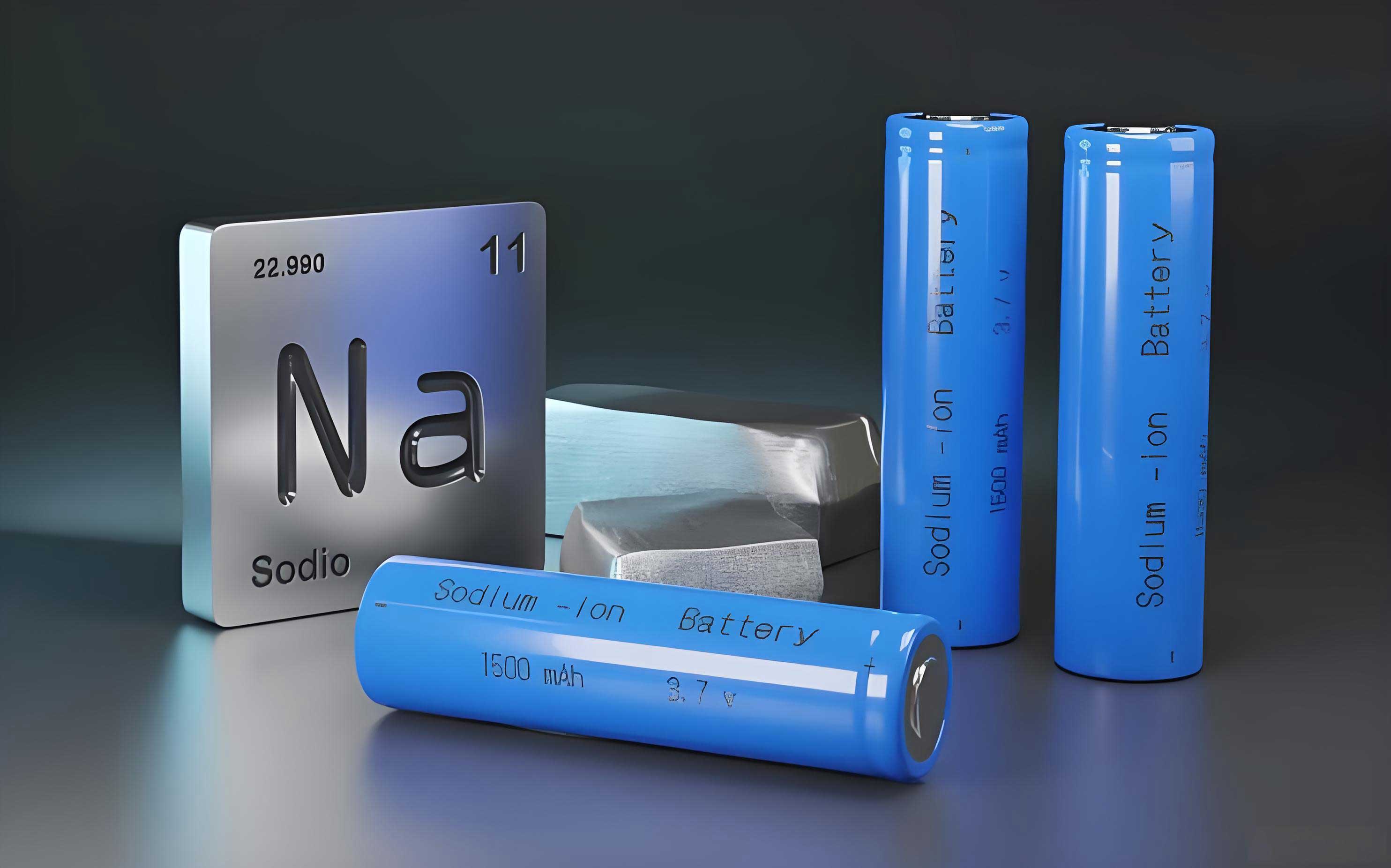
Metal sulfides exhibit diverse crystal structures, broadly categorized into layered and non-layered types. Layered metal sulfides, such as MoS₂, WS₂, VS₂, and SnS₂, feature strong intralayer covalent bonds and weak interlayer van der Waals forces, which facilitate the intercalation of alkali metal ions like Na⁺. This structural characteristic is crucial for sodium-ion battery applications, as the larger ionic radius of Na⁺ (0.102 nm) compared to Li⁺ (0.076 nm) necessitates ample spacing for efficient insertion. The energy storage mechanism in metal sulfides involves conversion and, in some cases, alloying reactions. For transition metal sulfides (e.g., MoS₂, FeS₂), the reaction proceeds via conversion: $$ M_xS_y + y \cdot n \text{Na}^+ + y \cdot n e^- \leftrightarrow x M + y \text{Na}_nS $$ where M represents metals like Mo, Fe, or Cu. For metal or semimetal sulfides (e.g., SnS₂, Sb₂S₃), an additional alloying step occurs: $$ M + n \text{Na}^+ + n e^- \leftrightarrow \text{Na}_nM $$ leading to higher theoretical capacities. However, these reactions often result in irreversible capacity loss due to the formation of solid-electrolyte interphase (SEI) layers and polysulfide dissolution, which are particularly detrimental in sodium-ion batteries.
The challenges associated with metal sulfide anodes in sodium-ion batteries are multifaceted. First, their low electronic conductivity impedes charge transfer, leading to high polarization and poor rate capability. Second, the substantial volume changes during sodiation/desodiation (e.g., up to 300% for SnS₂) cause electrode pulverization and capacity fading. Third, the dissolution of polysulfide intermediates (Na₂Sₓ, where x=3-8) into organic electrolytes results in active material loss and shuttle effects. Fourth, the slow diffusion kinetics of Na⁺ ions, attributed to their larger size, further limits performance. To quantify these issues, the diffusion energy barrier for Na⁺ in VS₂ is calculated to be 0.21 eV, higher than that for Li⁺ (0.13 eV), highlighting the kinetic challenges in sodium-ion batteries. These limitations necessitate innovative material design, and heterostructuring has emerged as a powerful approach to mitigate them.
Heterostructures involve the integration of two or more distinct materials at the nanoscale, creating interfaces that induce charge redistribution and built-in electric fields. When metal sulfides are combined with other components (e.g., carbon materials or other metal compounds), band alignment occurs at the heterojunction, leading to enhanced electronic conductivity and accelerated ion transport. The built-in electric field drives the separation of electrons and holes, reducing recombination and improving redox activity. This phenomenon is particularly beneficial for sodium-ion battery anodes, as it can lower the energy barrier for Na⁺ insertion and extraction. The charge storage mechanism in heterostructures can be described by the following general formula for capacitance contribution: $$ C = C_{\text{double-layer}} + C_{\text{pseudocapacitive}} $$ where the pseudocapacitive component is boosted by heterointerface effects. For instance, in a MoS₂/FeS₂ heterostructure, the interfacial coupling facilitates rapid Na⁺ diffusion, as evidenced by electrochemical impedance spectroscopy showing reduced charge transfer resistance.
Several synthesis methods are employed to fabricate metal sulfide heterostructures for sodium-ion battery anodes. These methods control morphology, size, and interface properties, which directly impact electrochemical performance. Below is a table summarizing common synthesis techniques, their advantages, and limitations:
| Synthesis Method | Description | Advantages | Limitations |
|---|---|---|---|
| Hydrothermal/Solvothermal | Uses aqueous or organic solvents at high temperature and pressure in a sealed autoclave. | Produces uniform nanostructures with high crystallinity; tunable morphologies. | Time-consuming; requires precise control of parameters. |
| Co-precipitation | Involves simultaneous precipitation of metal precursors followed by sulfidation. | Simple, scalable; yields homogeneous composites. | May require additional annealing; limited to certain compositions. |
| Electrospinning | Spins polymer/metal precursor solutions into nanofibers, followed by carbonization and sulfidation. | Creates flexible, free-standing electrodes; enhances conductivity. | Complex setup; dependent on polymer properties. |
| Solid-state Reaction | Direct heating of metal and sulfur sources in inert atmosphere. | Cost-effective; suitable for mass production. | Poor control over morphology; may lead to large particles. |
Each method offers unique benefits for optimizing heterostructures in sodium-ion batteries. For example, hydrothermal synthesis is widely used to prepare MoS₂-based heterostructures with carbon coatings, which improve conductivity and buffer volume changes. The reaction for hydrothermal growth of MoS₂ on carbon matrices can be represented as: $$ \text{MoO}_4^{2-} + \text{SC(NH}_2\text{)}_2 + \text{C-source} \rightarrow \text{MoS}_2/\text{C} + \text{byproducts} $$ This process enables the formation of nanoarchitectures that enhance sodium storage.
Research progress in heterostructured metal sulfide anodes for sodium-ion batteries can be categorized into three main types: (1) metal sulfides compounded with carbon materials, (2) metal sulfides combined with other metal compounds, and (3) ternary systems incorporating both carbon and metal compounds. Below, I discuss each category with examples and performance metrics.
Category 1: Metal Sulfides with Carbon Materials. Carbon materials like graphene, carbon nanotubes, and amorphous carbon are integrated with metal sulfides to boost electronic conductivity and mechanical stability. For instance, MoS₂ nanosheets anchored on reduced graphene oxide (MoS₂/rGO) exhibit improved rate capability and cycle life in sodium-ion batteries. The heterostructure facilitates electron transfer and mitigates volume expansion. The capacity retention after 500 cycles at 1 A g⁻¹ can exceed 80%, compared to rapid decay in pure MoS₂. Another example is SnS₂ embedded in nitrogen-doped carbon nanofibers (SnS₂@N-CNF), which shows a high reversible capacity of 450 mAh g⁻¹ at 0.1 A g⁻¹. The carbon matrix not only enhances conductivity but also confines polysulfides, reducing dissolution. The electrochemical performance of such composites can be modeled using the equation for capacity fading: $$ Q = Q_0 – k \sqrt{t} $$ where \(Q\) is capacity, \(Q_0\) is initial capacity, \(k\) is degradation rate, and \(t\) is time; heterostructures typically exhibit lower \(k\) values.
Category 2: Metal Sulfides with Other Metal Compounds. Combining metal sulfides with oxides or other sulfides creates heterojunctions that induce built-in electric fields, promoting charge separation and faster ion diffusion. For example, Bi₂S₃/MoS₂ heterostructures display enhanced sodium storage due to phase boundaries that optimize Na⁺ pathways. The specific capacity reaches 500 mAh g⁻¹ at 0.2 A g⁻¹, with excellent stability over 1000 cycles. Similarly, MnS-MoS₂ composites prepared via solvothermal methods show pseudocapacitive behavior, contributing to high rate performance. The interfacial energy storage can be described by: $$ i = a v^b $$ where \(i\) is current, \(v\) is scan rate, and \(b\) approaches 1 for ideal pseudocapacitance; heterostructures often exhibit \(b > 0.8\), indicating surface-controlled processes beneficial for sodium-ion batteries.
Category 3: Ternary Heterostructures with Carbon and Metal Compounds. Integrating carbon matrices with bimetallic sulfides yields synergistic effects. For instance, Sb₂S₃@FeS₂/rGO hollow nanorods demonstrate a capacity of 537.9 mAh g⁻¹ at 10 A g⁻¹ and 85.7% retention after 1000 cycles at 5 A g⁻¹. The carbon coating enhances conductivity, while the heterointerface between Sb₂S₃ and FeS₂ accelerates Na⁺ kinetics. Another example is ZnS/SnS₂@N,S-doped carbon, where the heterostructure provides multiple active sites and buffers volume changes. The overall sodium storage reaction in such systems can be complex, involving sequential steps: $$ \text{MS} + \text{Na}^+ + e^- \rightarrow \text{M} + \text{NaS} $$ $$ \text{M} + x\text{Na}^+ + x e^- \rightarrow \text{Na}_x\text{M} $$ where M denotes metals like Sn or Sb. The synergy between components reduces polarization and improves reversibility.
To summarize the electrochemical performance of various heterostructured metal sulfide anodes for sodium-ion batteries, the following table provides key data:
| Material | Structure | Capacity (mAh g⁻¹) | Current Density | Cycle Stability |
|---|---|---|---|---|
| MoS₂/rGO | Nanosheets on graphene | 450 at 0.1 A g⁻¹ | 1 A g⁻¹ | 80% after 500 cycles |
| SnS₂@N-CNF | Nanofiber-encapsulated | 500 at 0.2 A g⁻¹ | 2 A g⁻¹ | 85% after 300 cycles |
| Bi₂S₃/MoS₂ | Flower-like heterostructure | 500 at 0.2 A g⁻¹ | 5 A g⁻¹ | 90% after 1000 cycles |
| Sb₂S₃@FeS₂/rGO | Hollow nanorods | 537.9 at 10 A g⁻¹ | 5 A g⁻¹ | 85.7% after 1000 cycles |
| ZnS/SnS₂@NSC | Cube-like composite | 480 at 0.5 A g⁻¹ | 1 A g⁻¹ | 88% after 500 cycles |
The enhanced performance in sodium-ion batteries is attributed to several factors: (1) increased electronic conductivity from carbon networks, (2) reduced volume strain due to buffering effects, (3) inhibited polysulfide dissolution via physical confinement, and (4) accelerated Na⁺ diffusion at heterointerfaces. Mathematical models, such as the diffusion equation for Na⁺ in heterostructures: $$ J = -D \frac{\partial c}{\partial x} $$ where \(J\) is flux, \(D\) is diffusion coefficient, and \(c\) is concentration, indicate that \(D\) is higher in heterostructures due to built-in electric fields.
Despite the progress, challenges remain in understanding the fundamental mechanisms of heterostructures for sodium-ion batteries. The charge redistribution at interfaces depends on band alignment, carrier concentrations, and built-in potential, which require deeper investigation. For instance, the band bending at a MoS₂/ZnS junction can be described by: $$ \Delta E = \frac{q^2 N_d W^2}{2\epsilon} $$ where \(\Delta E\) is built-in potential, \(q\) is charge, \(N_d\) is donor concentration, \(W\) is depletion width, and \(\epsilon\) is permittivity. Optimizing these parameters is crucial for maximizing performance. Additionally, structural factors like interface thickness and coupling strength influence ion transport; however, systematic studies are lacking. Future research should focus on in situ characterization techniques to monitor heterointerface evolution during sodiation/desodiation.
From a practical standpoint, scalable synthesis methods are needed to produce heterostructured anodes cost-effectively for sodium-ion batteries. Current approaches often involve multi-step processes or high-temperature treatments, increasing energy consumption. Microwave-assisted synthesis or one-pot methods could offer alternatives, enabling large-scale production. Moreover, the environmental impact of metal sulfide synthesis must be considered; using biomass-derived carbon or recycling strategies can enhance sustainability. For example, wood waste-derived carbon inks have been explored for 3D printing electrodes, which could be adapted for sodium-ion battery anodes.
In conclusion, heterostructured metal sulfide anodes represent a promising avenue for advancing sodium-ion battery technology. By leveraging synergistic effects between components, these materials address key limitations of individual metal sulfides, such as low conductivity and volume expansion. The integration of carbon materials and other metal compounds through various synthesis methods has led to significant improvements in capacity, rate capability, and cycle life. However, further work is needed to elucidate interfacial mechanisms, optimize structural parameters, and develop scalable fabrication techniques. As research progresses, heterostructured anodes may pave the way for high-performance, cost-effective sodium-ion batteries, contributing to a sustainable energy future. The continued emphasis on sodium-ion battery innovation will drive the exploration of novel heterostructures, ultimately enhancing energy storage solutions for diverse applications.