
In the realm of energy storage, lithium-ion batteries have emerged as a cornerstone technology, powering everything from portable electronics to electric vehicles and grid-scale systems. The performance of a lithium-ion battery is intricately linked to the materials that constitute its electrodes. Among these, conductive additives play a pivotal role, especially in cathodes where active materials like lithium iron phosphate (LFP) possess inherently low electronic conductivity. Carbon black, a common conductive agent, forms a percolating network that facilitates electron transport, thereby enhancing rate capability and overall efficiency. However, the quality of carbon black, particularly its impurity profile, can significantly influence the electrochemical behavior of the lithium-ion battery. One often-overlooked impurity is sulfur, which can originate from the raw materials or production processes used in manufacturing carbon black. In this comprehensive study, I investigate the effects of sulfur impurities and their concentration in carbon black on various performance metrics of lithium-ion batteries, from electrode properties to full-cell behavior under diverse operational conditions.
The conductive network within a lithium-ion battery electrode is not merely a passive component; it actively participates in the electrochemical processes. Carbon black, typically produced via thermal decomposition of hydrocarbons, exists in primary forms such as acetylene black and furnace black. Acetylene black, derived from acetylene gas, tends to have lower impurity levels, while furnace black, produced from oil feedstocks like coal tar or anthracene oil, often contains higher amounts of sulfur due to the sulfur-rich nature of the precursors. These sulfur impurities can exist in various forms—inorganic sulfides, sulfates, or organic compounds like thiols and thioethers. When incorporated into a lithium-ion battery, these species may engage in parasitic reactions with the electrolyte or electrode materials, leading to capacity loss, increased internal resistance, and accelerated degradation. Despite its potential impact, systematic studies on the role of sulfur content in carbon black for lithium-ion batteries are scarce. This work aims to fill that gap by employing a controlled single-variable approach to isolate and quantify the influence of sulfur impurities.
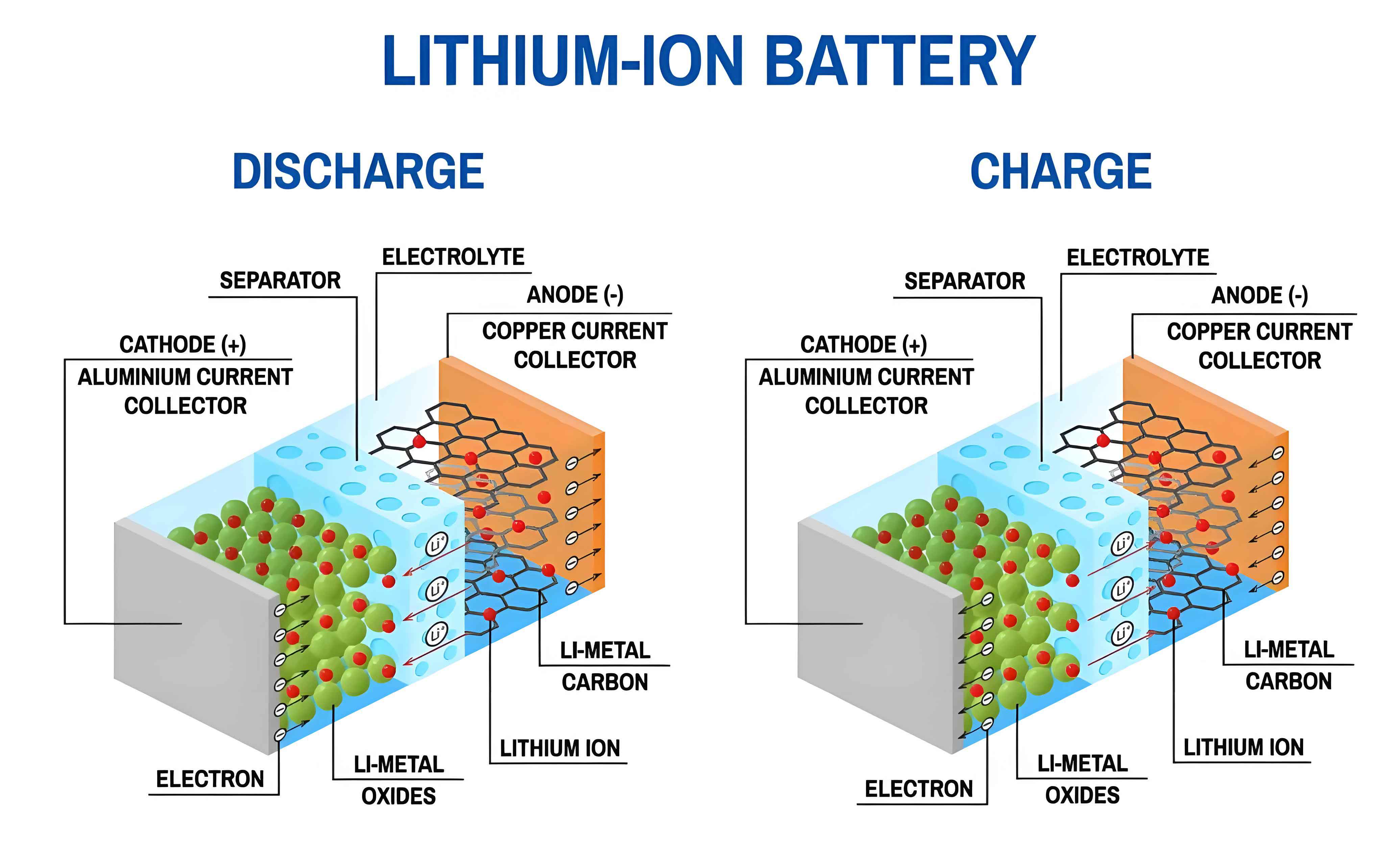
My experimental design centered on selecting four representative carbon black products with varying sulfur contents. These included one acetylene black (denoted as ‘base’) and three furnace black samples (‘A’, ‘B’, and ‘C’). Sample B was a desulfurized version of A, allowing for a direct comparison of the effect of sulfur removal. Sample C, sourced from a different oil feedstock, exhibited the highest sulfur content among the set. The sulfur concentrations were quantitatively analyzed using inductively coupled plasma optical emission spectrometry (ICP-OES), and other physicochemical properties such as specific surface area and morphology were characterized via BET analysis and scanning electron microscopy (SEM). To fabricate the lithium-ion battery electrodes, I prepared a standard lithium iron phosphate (LiFePO₄) cathode and a synthetic graphite anode, each incorporating 1 wt% of the respective carbon black. The slurry was coated onto current collectors, dried, calendared, and assembled into 20 Ah pouch cells using a consistent manufacturing process. This ensured that any performance differences could be primarily attributed to the carbon black variant used.
The fundamental role of a conductive additive in a lithium-ion battery is to lower the electrode’s electronic resistivity. The resistivity of a composite electrode can be modeled using percolation theory, where the effective conductivity $\sigma_{\text{eff}}$ depends on the volume fraction of the conductive phase. For a random mixture of insulating active material and conductive particles, the threshold percolation fraction $\phi_c$ is critical. The relationship can be approximated as:
$$ \sigma_{\text{eff}} = \sigma_0 (\phi – \phi_c)^t $$
where $\sigma_0$ is the intrinsic conductivity of the conductive agent, $\phi$ is its volume fraction, and $t$ is a critical exponent typically around 2.0 for three-dimensional systems. In our case, the dispersion quality influenced by surface functional groups on furnace black could lower $\phi_c$, enhancing $\sigma_{\text{eff}}$ even at the same loading. This aligns with the observed reduction in cathode sheet resistivity for furnace black samples. The sulfur impurities themselves, however, do not directly contribute to conductivity; instead, they may introduce defects or reactive sites that affect long-term stability.
| Sample | Type | Specific Surface Area (m²/g) | Sulfur Content (ppm) | Morphological Notes |
|---|---|---|---|---|
| Base | Acetylene Black | 62.90 | 29.23 | Larger primary particles, porous branched structure |
| A | Furnace Black | 63.80 | 2280.90 | Abundant functional groups, good dispersion |
| B | Desulfurized A | 66.10 | 320.20 | Similar to A but with slightly degraded structure |
| C | Furnace Black | 71.97 | 6296.04 | Highest sulfur, smallest primary particles |
Upon examining the electrode sheets, I measured the peel strength and resistivity. The data revealed a consistent trend: cathodes with furnace black samples (A, B, C) exhibited lower resistivity compared to the base acetylene black. This improvement can be attributed to the presence of oxygen-containing functional groups (e.g., carboxyl, carbonyl, hydroxyl) on the surface of furnace black, which enhance dispersibility during slurry mixing. A more uniform distribution of carbon black particles establishes a more continuous conductive network, thereby reducing electronic resistance. The peel strength, indicative of adhesion between the active layer and current collector, also showed modest improvements for furnace black, likely due to better binder distribution facilitated by improved dispersion. In contrast, anode sheets displayed negligible differences in resistivity and peel strength, as the highly conductive graphite dominates the electronic pathways, masking the subtle effects of the conductive additive.
| Sample | Cathode Resistivity (Ω·cm) | Cathode Peel Strength (N/m) | Anode Resistivity (Ω·cm) | Anode Peel Strength (N/m) |
|---|---|---|---|---|
| Base | 15.42 | 32.5 | 1.08 | 28.7 |
| A | 14.29 | 33.8 | 1.05 | 29.1 |
| B | 13.89 | 33.2 | 1.10 | 28.9 |
| C | 14.09 | 34.0 | 1.07 | 29.3 |
The electrochemical evaluation of the assembled lithium-ion battery cells commenced with constant-current capacity tests at 25°C. The specific capacity, calculated based on the mass of the active material, showed a clear correlation with sulfur content. Cells employing the base acetylene black (lowest sulfur) delivered the highest capacity, while those with high-sulfur furnace black (sample C) exhibited the lowest. This capacity loss can be modeled by considering the irreversible consumption of lithium ions due to side reactions involving sulfur species. If we denote the initial lithium inventory as $Q_{\text{Li}}^0$ and the charge consumed by parasitic reactions as $Q_{\text{par}}$, the reversible capacity $C_{\text{rev}}$ is diminished:
$$ C_{\text{rev}} = Q_{\text{Li}}^0 – Q_{\text{par}} $$
For sulfur-induced reactions, $Q_{\text{par}}$ may be proportional to the sulfur concentration $[S]$ and the reaction rate constant $k_s$ over the formation cycles:
$$ Q_{\text{par}} = \alpha k_s [S] $$
where $\alpha$ is a proportionality factor. The data suggests that even moderate sulfur levels (as in sample A) cause a measurable drop in capacity, indicating that sulfur impurities act as a sink for active lithium, likely through the formation of Li₂S or other solid products on the graphite anode surface. These products create insulating layers that hinder lithium-ion intercalation and deintercalation, effectively reducing the usable capacity of the lithium-ion battery.
Cycle life testing, both at room temperature (25°C) and elevated temperature (55°C), further underscored the detrimental impact of sulfur. Cells with higher sulfur content displayed faster capacity fade and, in some cases, a more pronounced drop-off in later cycles. The capacity retention after a given number of cycles can be expressed empirically by a decay function:
$$ C_n = C_0 \cdot e^{-\beta n} $$
where $C_n$ is the capacity at cycle $n$, $C_0$ is the initial capacity, and $\beta$ is the decay coefficient. For cells with sulfur-rich carbon black, $\beta$ was larger, indicating accelerated degradation. At high temperatures, the reactivity of sulfur species increases, exacerbating side reactions such as electrolyte decomposition and continuous solid electrolyte interphase (SEI) growth. The sulfur compounds can catalyze the breakdown of carbonate-based electrolytes, generating gaseous products (e.g., SO₂, H₂S) that contribute to cell swelling and pressure buildup. Moreover, the deposition of Li₂S and other sulfides can mechanically stress the SEI, causing fractures and exposing fresh electrode surfaces to further reaction, thereby perpetuating a vicious cycle of lithium loss and impedance rise. This is particularly critical for the long-term reliability of lithium-ion battery systems.
Direct current internal resistance (DCIR) measurements provided insights into the kinetic limitations imposed by the conductive network. At both 25°C and 0°C, cells with furnace black samples A and C showed slightly lower DCIR than the base cell, whereas the desulfurized sample B exhibited a marginal increase. This suggests that the structural benefits of furnace black—such as better dispersion and a more tortuous, porous network—can facilitate ion transport, offsetting any minor resistive contributions from sulfur impurities. The DCIR at a given state of charge (SOC) can be decomposed into ohmic, charge-transfer, and diffusion components. The ohmic component, influenced by electronic conduction, is lower when the carbon network is more continuous. However, for sample B, the desulfurization process might have altered the carbon structure, reducing porosity and increasing tortuosity, which could lengthen ion diffusion paths and thus raise the overall DCIR, especially at low temperatures where ionic conductivity is hampered. The interplay between sulfur content and carbon morphology is complex, but for typical operating conditions, the impact of sulfur on DCIR appears secondary to the morphological factors in a lithium-ion battery.
| SOC (%) | Base (mΩ) | A (mΩ) | B (mΩ) | C (mΩ) |
|---|---|---|---|---|
| 90 | 12.3 | 12.0 | 12.7 | 11.9 |
| 70 | 11.8 | 11.5 | 12.2 | 11.4 |
| 50 | 11.5 | 11.2 | 11.9 | 11.1 |
| 30 | 11.9 | 11.6 | 12.3 | 11.5 |
| 10 | 13.2 | 12.9 | 13.6 | 12.8 |
Rate capability and high-low temperature performance tests revealed that sulfur content had no statistically significant influence on these short-term dynamic behaviors. Cells were discharged at rates from 0.33C to 3C at 25°C, and all samples maintained capacity retention above 98% even at 3C. Similarly, when discharged at temperatures ranging from -20°C to 55°C, the capacity retention curves nearly overlapped. This indicates that the conductive network’s ability to support high current flows or operate under thermal stress is primarily dictated by the intrinsic properties of the carbon black (e.g., structure, surface area) rather than sulfur impurities. The electrochemical reactions at high rates or extreme temperatures are largely governed by ion diffusion in the electrolyte and charge transfer at the electrode interfaces; sulfur-induced side reactions are relatively slow and thus do not manifest prominently in these accelerated tests. Nevertheless, for the overall health of a lithium-ion battery, cumulative damage from sulfur over long-term operation cannot be ignored.
The most striking evidence of sulfur’s detrimental effect emerged from calendar life testing at 55°C. Cells were stored at full charge for 67 days (7 days formation plus 60 days storage), and both charge retention and capacity recovery were monitored. The results showed a strong negative correlation between sulfur content and these metrics. Sample C, with the highest sulfur, suffered the largest capacity loss and poorest recovery. Post-test analysis of cells revealed that high-sulfur cells exhibited pronounced gassing, dried-out electrodes, and lithium plating on the anode, whereas low-sulfur cells remained relatively intact. The mechanisms at play here involve thermal acceleration of sulfur-related parasitic reactions. At elevated temperatures, organic sulfur compounds decompose more readily, and inorganic sulfides become more mobile. The generated gases (e.g., from electrolyte reduction catalyzed by sulfur species) increase internal pressure, leading to delamination and increased contact resistance. Furthermore, the continuous consumption of electrolyte depletes the ion-conducting medium, raising overall impedance and causing inhomogeneous current distribution that promotes lithium plating. The capacity recovery rate $R_{\text{rec}}$ can be modeled as a function of storage time $t_s$ and sulfur concentration $[S]$:
$$ R_{\text{rec}} = R_0 – \gamma [S] \cdot t_s $$
where $R_0$ is the ideal recovery rate and $\gamma$ is a temperature-dependent coefficient. This linear degradation underscores the importance of impurity control for enhancing the calendar life of lithium-ion battery systems, especially in applications requiring long-term storage such as renewable energy buffering or backup power.
| Sample | Initial Capacity (Ah) | Charge Retention (%) | Capacity Recovery (%) | Post-Test Observations |
|---|---|---|---|---|
| Base | 20.1 | 94.2 | 92.8 | Minor gassing, electrodes moist |
| A | 19.8 | 91.5 | 89.3 | Moderate gassing, some drying |
| B | 20.0 | 92.1 | 90.5 | Similar to A but less severe |
| C | 19.6 | 88.7 | 85.1 | Severe gassing, dry electrodes, lithium plating |
To further quantify the impact of sulfur on cycle life, I derived a semi-empirical model linking capacity fade to cycle number and sulfur content. Assuming first-order kinetics for the parasitic reactions, the cumulative lithium loss $\Delta Q_{\text{Li}}$ after $n$ cycles can be written as:
$$ \Delta Q_{\text{Li}} = [S] \cdot (k_1 + k_2 T) \cdot n $$
where $k_1$ and $k_2$ are rate constants at reference and elevated temperatures $T$, respectively. The remaining capacity $C_n$ is then:
$$ C_n = C_0 – \Delta Q_{\text{Li}} = C_0 – [S] \cdot (k_1 + k_2 T) \cdot n $$
This linear relationship approximates the observed trend in the early to mid stages of cycling. For longer cycles, higher-order terms may become significant as the accumulation of reaction products alters the electrode morphology and increases polarization. Such models are valuable for predicting the lifespan of a lithium-ion battery when using carbon black with known impurity levels.
In summary, this investigation elucidates the multifaceted role of sulfur impurities in carbon black for lithium-ion battery applications. While furnace black products, with their functional groups, offer advantages in dispersion and initial conductivity reduction, their inherent sulfur content poses a long-term risk to battery performance. Key findings include: (1) Sulfur impurities, especially at concentrations above a few hundred ppm, cause irreversible capacity loss by consuming active lithium through side reactions; (2) Cycle life and calendar life are adversely affected, with high temperatures accelerating the degradation; (3) Short-term properties like rate capability and low-temperature performance are largely unaffected, as sulfur’s impact is cumulative rather than instantaneous; (4) DCIR can be improved by the morphological characteristics of furnace black, but desulfurization processes that damage the carbon structure may negate this benefit. Therefore, for designing durable lithium-ion battery systems, it is imperative to specify carbon black with low sulfur content, and manufacturers should prioritize feedstock selection and purification steps to minimize this impurity. Future work could explore the synergistic effects of sulfur with other impurities, or develop surface treatments to passivate sulfur sites without compromising conductive network integrity. As the demand for high-performance, long-lasting lithium-ion batteries grows, understanding and controlling material impurities like sulfur will be crucial for advancing energy storage technology.
The implications of this study extend beyond academic interest; they directly inform material selection and quality control practices in lithium-ion battery production. For instance, in large-scale applications such as electric vehicles or stationary storage, where batteries are expected to operate for years under varying environmental conditions, even minor impurities can lead to significant performance divergence over time. By establishing a correlation between sulfur content in carbon black and key failure modes, this work provides a framework for setting material specifications and predictive maintenance schedules. Moreover, the methodologies employed—combining physicochemical analysis, electrode characterization, and multi-condition electrochemical testing—serve as a template for evaluating other conductive additives or novel materials. As the lithium-ion battery industry continues to evolve, embracing such detailed material science insights will be essential for achieving the next leap in energy density, safety, and longevity.