
The pursuit of sustainable energy solutions has intensified the focus on efficient energy storage systems. Among these, the lithium-ion battery stands as a paramount technology, powering everything from portable electronics to electric vehicles. However, the performance and sustainability of lithium-ion batteries are intrinsically tied to their constituent materials, particularly the anode. Conventional anode materials like graphite, silicon, and transition metal oxides face challenges such as limited theoretical capacity, significant volume expansion, and inadequate ionic/electronic transport kinetics. Consequently, the exploration of novel anode materials is a critical frontier in advancing lithium-ion battery technology.
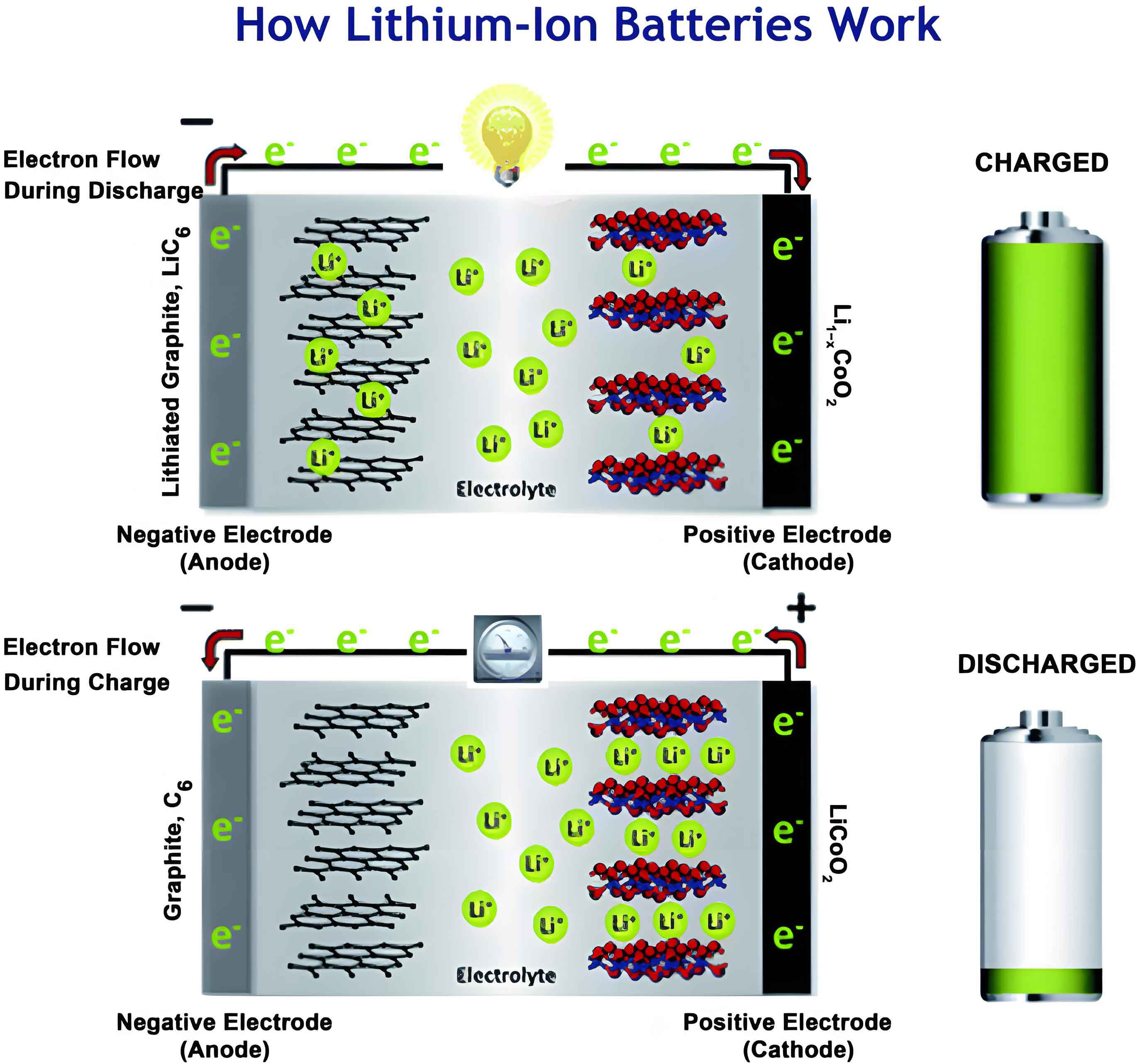
Covalent Organic Frameworks (COFs) have emerged as a revolutionary class of porous crystalline polymers constructed from organic building blocks via strong covalent bonds. Their defining characteristics—high structural diversity, predesignable pore architectures, and ease of functionalization—position them as promising candidates for next-generation electrode materials. When applied as anodes in lithium-ion batteries, COFs primarily operate on an intercalation mechanism, where Li+ ions reversibly insert into and extract from the well-defined nanopores and active functional sites of the framework. The theoretical capacity of a COF-based electrode can be estimated based on its redox-active functional groups and formula weight. A simplified expression for the specific capacity (C) is:
$$ C = \frac{nF}{3.6M} $$
where *n* is the number of electrons transferred per formula unit, *F* is Faraday’s constant (96485 C/mol), and *M* is the molar mass (g/mol) of the formula unit. The factor 3.6 converts Coulombs to mAh. This tunable capacity, coupled with their organic, environmentally benign nature, makes COFs highly attractive for sustainable lithium-ion battery development.
Despite their immense potential, the practical deployment of bulk COFs in lithium-ion batteries is hampered by intrinsic limitations. Their typically poor intrinsic electronic conductivity, stemming from the insulating nature of many organic linkers, leads to sluggish charge transfer and inferior rate capability. Furthermore, the strong π-π stacking and van der Waals interactions between adjacent 2D layers often cause severe aggregation and restacking. This results in reduced accessible surface area, elongated ion diffusion pathways, and underutilization of internal active sites, ultimately compromising the electrochemical performance. Therefore, developing effective modification strategies is paramount to unlock the full potential of COF-based anodes for high-performance lithium-ion batteries.
Fundamental Principles and Advancements of COF Anodes
Organic electrode materials are classified into n-type, p-type, and bipolar types based on their charge storage mechanism. COFs employed as anodes typically function as n-type materials. During discharge (lithiation), the neutral COF framework (N) is reduced, accepting electrons and Li+ ions to form a negatively charged lithiated state (Nn-). The charge process (delithiation) reverses this reaction. The redox activity originates from specific functional groups within the COF structure, such as carbonyls (C=O), imines (C=N), azo groups (N=N), and conjugated aromatic systems. The design flexibility of COFs allows for the strategic incorporation of these redox-active moieties and the engineering of pore size to facilitate Li+ transport, which is crucial for the kinetics of the lithium-ion battery.
Significant research progress has been made in developing various COF systems for lithium-ion battery anodes, as summarized in Table 1. Studies have shown that modifying the linker length, introducing redox-active metallophthalocyanine units, or employing specific topological designs can substantially enhance the specific capacity and cycling stability. For instance, frameworks with extended conjugation or larger pore apertures often demonstrate improved Li+ accessibility and higher capacity.
| COF Material | Key Components | Specific Capacity (mAh/g) | Current Density (A/g) | Cycles | Key Feature |
|---|---|---|---|---|---|
| CoTAPc-TDA | Cobalt phthalocyanine + Triphenylamine linker | 826 | 0.1 | 300 | Metallophthalocyanine core |
| HAB-COF | Hexaaminobenzene + Terephthalaldehyde | 1255 | 1 | 1100 | High-density imine groups |
| USTB-6@G | Diquinoxalino-phenazine-based COF on Graphene | 285 (at 0.2C) | ~0.057 | 6000 | Composite with graphene |
| DAB-NiPc | Nickel phthalocyanine + Benzidine | 941 | 0.2 | 700 | Larger pore size (2.98 nm) |
| TFPB-NiPc@CC | Ni-phthalocyanine COF on Carbon Cloth | 1090.2 | 0.2 | 50 | Binder-free flexible electrode |
The data indicates promising capacities and cycling life, validating the potential of COFs. However, a common observation is the need for an extended “activation” period before reaching stable capacity, often attributed to the gradual wetting of the porous structure by the electrolyte and the slow kinetics in bulk materials. This underscores the necessity for modification strategies aimed at enhancing conductivity and mass transport within the COF electrode for the lithium-ion battery.
Key Modification Strategies for Enhanced Performance
1. Post-Synthetic Modification (PSM)
PSM involves the chemical alteration of a pre-formed crystalline COF without collapsing its framework. This strategy is powerful for introducing specific functionalities that enhance electrical conductivity or add supplementary redox sites. A prominent approach is the doping of COFs with charge-transfer complexes or conductive polymers.
For example, doping with I2 or 7,7,8,8-tetracyanoquinodimethane (TCNQ) can significantly increase bulk electronic conductivity by several orders of magnitude. The dopant molecules undergo redox reactions with the COF’s π-system, generating charge carriers (holes or electrons) within the extended conjugated network. The enhanced conductivity directly benefits the charge transfer rate in the lithium-ion battery anode, improving rate performance. Another effective method is the in-situ electrochemical polymerization of monomers like 3,4-ethylenedioxythiophene (EDOT) within the COF pores, forming an interpenetrating network of conductive poly(3,4-ethylenedioxythiophene) (PEDOT). While this composites the pore volume, it creates efficient highways for electron transport, drastically reducing the electrode’s internal resistance and accelerating reaction kinetics. The trade-off between porosity and conductivity must be carefully balanced to optimize the overall lithium-ion battery performance.
2. Compositing with Conductive Carbon Matrices
Integrating COFs with conductive carbon materials (graphene, carbon nanotubes (CNTs), carbon cloth) is a highly effective and widely adopted strategy to mitigate both conductivity and aggregation issues. The interaction is often driven by π-π stacking between the conjugated systems of the COF and the carbon substrate.
- Graphene/Reduced Graphene Oxide (rGO): Serving as a 2D conductive scaffold, graphene nanosheets can inhibit the restacking of COF layers while providing a continuous electron transport network. In-situ growth of COFs on graphene leads to uniformly dispersed nanosheets, which shortens ion diffusion paths and exposes more active sites. Such composites have demonstrated exceptional long-term cycling stability in lithium-ion batteries, exceeding thousands of cycles.
- Carbon Nanotubes (CNTs): The 1D fibrous structure of CNTs can wrap around or be embedded within COF particles, forming a robust 3D conductive web. This network enhances mechanical integrity and facilitates rapid electron transfer throughout the electrode. Composites like COF@CNTs have shown remarkably high reversible capacities, attributed to the synergistic effect where the CNTs ensure electrical connectivity and the COF provides abundant redox-active sites for lithium-ion storage.
- Carbon Cloth (CC): This strategy enables the fabrication of binder-free and current-collector-free flexible electrodes. The direct growth of COF nanosheets on the microfibers of carbon cloth creates a hierarchical structure. The carbon cloth acts as an excellent conductive skeleton, and the in-situ synthesis often promotes self-exfoliation of the COF. The resulting flexible electrode exhibits good capacity, stability, and foldability, pointing toward applications in wearable and flexible lithium-ion battery devices.
The effectiveness of this strategy can be summarized by the enhancement in effective conductivity ($\sigma_{eff}$) of the composite compared to the pristine COF ($\sigma_{COF}$), which follows a percolation theory model. The composite’s performance in a lithium-ion battery is governed by improved kinetics from both electronic and ionic conduction.
3. Exfoliation into Few-Layer or Monolayer Nanosheets
This is arguably the most crucial strategy for addressing the core limitations of bulk COFs. Transforming stacked 2D COFs into few-layer Covalent Organic Nanosheets (CONs) or even monolayers drastically reduces Li+ diffusion distances, exposes a vastly greater proportion of accessible redox-active sites, and can partially alleviate electronic transport limitations by reducing interlayer hopping barriers. The benefits for lithium-ion battery anodes are profound: faster kinetics, higher achievable capacity, and improved rate capability.
Exfoliation strategies are broadly categorized into bottom-up and top-down approaches, with the latter being more commonly employed for post-synthesis modification.
A. Bottom-Up Strategies
These methods aim to directly synthesize ultrathin COF films or nanosheets by controlling reaction conditions.
- Interfacial Polymerization: Conducting polymerization at an interface (e.g., liquid-liquid, liquid-air) can produce continuous, free-standing COF films with controlled thicknesses from nanometers to micrometers. While these films are excellent for studies of intrinsic charge transport and are promising as separators or solid-state electrolyte hosts, their direct use as mass-efficient bulk anode materials for standard lithium-ion batteries is less common.
- Structural Design for Self-Exfoliation: Designing COF monomers with intrinsic curvature or incorporating sterically demanding side groups can weaken interlayer interactions, leading to spontaneous exfoliation during synthesis. For instance, COFs with flexible or non-planar linkers may form slightly corrugated layers that resist tight stacking, resulting in the formation of few-layer nanosheets directly in solution. This one-pot method is elegant but requires sophisticated molecular design.
B. Top-Down Strategies
These methods involve breaking the non-covalent interactions in pre-synthesized bulk COF powders to peel them apart into nanosheets.
| Strategy | Mechanism | Examples/Methods | Advantages | Challenges |
|---|---|---|---|---|
| Chemical Exfoliation | Weakening π-π stacking via chemical reaction. | Diels-Alder addition with maleic anhydride; Thiol-ene “click” reaction; Oxidative intercalation (KMnO4). | Can introduce new functional groups; May achieve high exfoliation degree. | Chemical specificity; Risk of framework degradation; May alter core structure. |
| Mechanical Exfoliation | Applying shear forces to overcome interlayer adhesion. | Ball-milling; Manual grinding in a mortar. | Simple, universal, scalable; Preserves chemical structure. | Broad thickness distribution; Low yield of monolayers; Potential amorphization. |
| Liquid-Phase Assisted Sonication | Using solvent energy and ultrasonic cavitation to separate layers. | Sonication in water/isopropanol; Sonication with ionic liquid (IL) additives. | Can produce high-quality nanosheets; ILs offer green, tunable media. | Requires optimization of solvent/energy; Some solvents are not environmentally benign. |
The impact of exfoliation on lithium-ion battery performance is dramatic, as illustrated by the data in Table 3. In nearly all cases, the exfoliated CONs deliver significantly higher specific capacity, better rate performance, and more stable cycling than their bulk counterparts. This is primarily due to the drastically increased electrochemically active surface area (ECSA) and shortened solid-state diffusion length for Li+ ions. The diffusion time constant ($\tau$) is proportional to the square of the diffusion length ($L$): $$ \tau \propto L^2 / D $$ where $D$ is the diffusion coefficient. Exfoliation reduces $L$ from micrometer-scale in bulk particles to nanometer-scale in nanosheets, thus reducing $\tau$ by several orders of magnitude, which is essential for high-power lithium-ion batteries.
| Material (Bulk → Exfoliated) | Capacity (Bulk, mAh/g) | Capacity (Exfoliated, mAh/g) | Current Density (A/g) | Key Improvement |
|---|---|---|---|---|
| Anthracene-COF → CONsa | 200 | 790 | 0.1 | ~4x capacity increase |
| COF-935 → CON-UV-1b | 264 | 494 | 1.0 | ~90% increase, better rate performance |
| TFPB-COF → E-TFPB-COFc | 126 | 968 | 0.1 | ~7.7x capacity increase |
| Fluorinated CTF → E-FCTFd | 576 | 1035 | 0.1 | ~80% increase, excellent long-term cycling |
| Triazine-COF → Exfoliated COFe | ~600 | 874 | 0.1 | Improved capacity and fast-charging ability |
a via Diels-Alder reaction; b via thiol-ene reaction; c via oxidative intercalation; d via ball-milling; e via manual grinding.
Conclusion and Future Perspectives
Covalent Organic Frameworks represent a paradigm-shifting class of materials for lithium-ion battery anodes, offering a blend of high theoretical capacity, structural tunability, and environmental sustainability. The journey from promising material to practical application hinges on overcoming their inherent drawbacks of poor conductivity and tendency to aggregate. This review has systematically detailed the primary modification strategies—post-synthetic modification, compositing with carbon matrices, and exfoliation into nanosheets—that have been developed to address these challenges.
Among these, exfoliation stands out as a uniquely powerful approach. The transformation of bulk COFs into few-layer or monolayer CONs directly attacks the fundamental issues of long ion diffusion paths and inaccessible active sites. The resultant performance enhancements in lithium-ion batteries, including multi-fold increases in capacity and dramatically improved rate capability, are compelling evidence of its efficacy. The future of this strategy lies in developing more controlled, scalable, and green methods for producing high-quality, monolayer CONs in large quantities. Liquid-phase exfoliation using tailored green solvents (e.g., specific ionic liquids) or advanced mechanochemical methods show particular promise.
Looking forward, the path for COF-based anodes in lithium-ion batteries will likely involve the intelligent integration of multiple strategies. For instance, exfoliated CONs could be subsequently doped with conductive polymers or seamlessly integrated into 3D graphene or CNT networks to create hierarchical composites that excel in all aspects: electronic conductivity, ionic accessibility, mechanical stability, and high tap density. Furthermore, the rational design of COFs from the molecular level, guided by computational screening and AI, to inherently favor exfoliation or possess high intrinsic conductivity will be a key research direction.
The ultimate goal is the development of a practical, high-performance organic anode that can outperform or complement current technologies. The scalable production of monolayer CONs could be the breakthrough that propels COFs from laboratory curiosities to core components in the next generation of sustainable, high-energy-density lithium-ion batteries. Continued interdisciplinary efforts in materials design, chemical synthesis, and electrochemical engineering are essential to realize this potential and contribute to a greener energy future.