
In this comprehensive review, we delve into the critical aspects of failure analysis for lithium-ion batteries, a cornerstone technology in modern energy storage systems. The widespread adoption of lithium-ion batteries in electric vehicles, portable electronics, and grid storage underscores their importance, yet their performance degradation and safety risks pose significant challenges. Understanding the mechanisms behind lithium-ion battery failure is essential for enhancing lifespan, reliability, and safety. Here, we present an in-depth exploration from a first-person perspective, drawing on extensive research to outline analysis workflows, failure phenomena, diagnostic methods, and root causes. We emphasize key terms like “li ion battery” throughout to reinforce focus, and incorporate formulas and tables to summarize complex concepts. This article aims to serve as a detailed resource for researchers and engineers working on lithium-ion battery technologies.
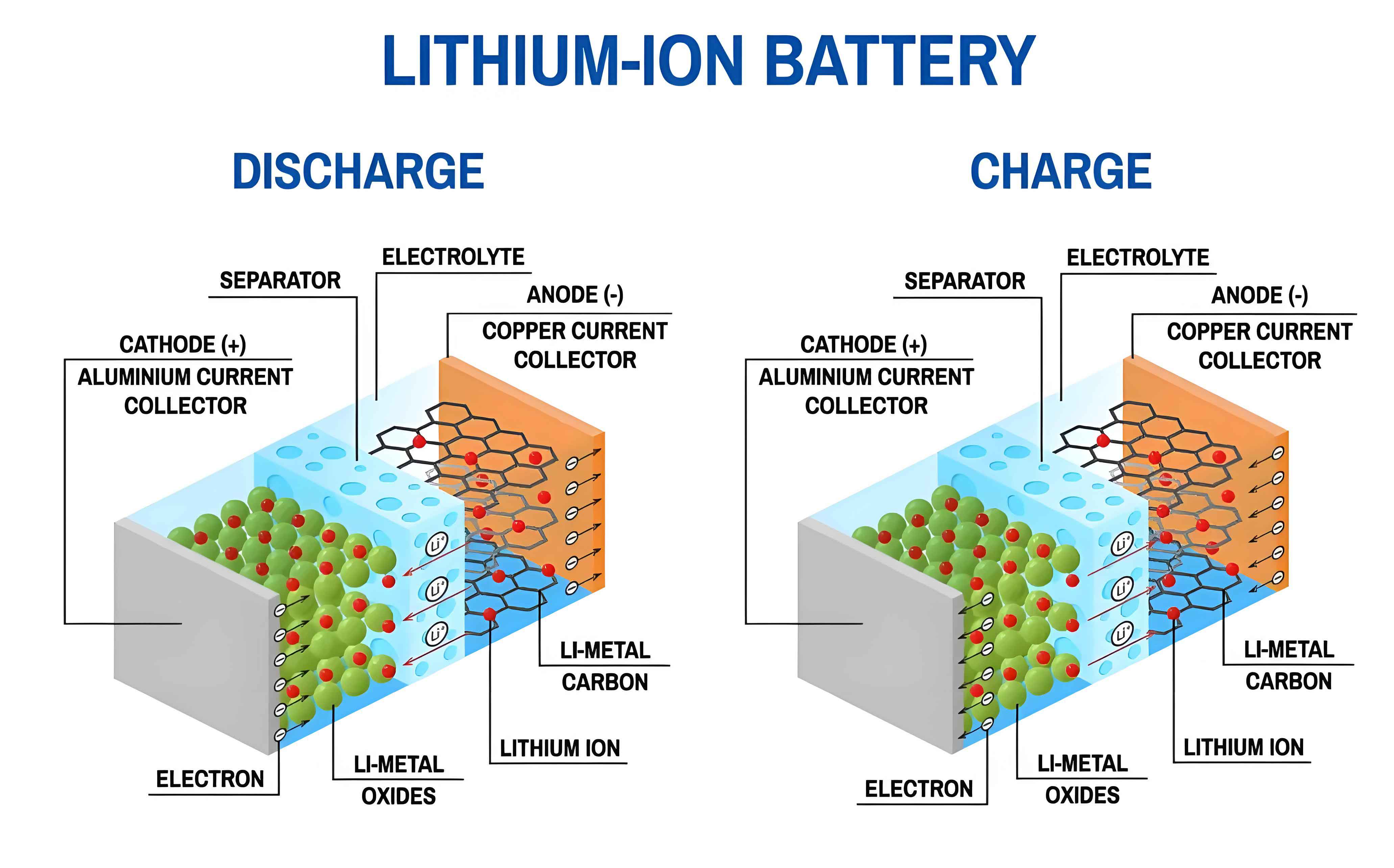
The evolution of lithium-ion batteries has revolutionized energy storage, but their failure modes—such as capacity fade, impedance rise, and thermal runaway—demand rigorous analysis. We begin by outlining a systematic failure analysis workflow, which forms the backbone of diagnosing issues in li-ion batteries. This workflow typically involves visual inspection, non-destructive testing, destructive testing, and comprehensive synthesis. Each step is crucial for preserving evidence and pinpointing failure mechanisms without altering the battery’s state. For instance, visual inspection checks for physical damage like swelling or leakage, while non-destructive tests assess electrochemical performance through techniques like electrochemical impedance spectroscopy (EIS). We stress that this structured approach is vital for accurate failure diagnosis in lithium-ion batteries, as it minimizes information loss and guides subsequent analyses.
To elaborate on the workflow, we present a detailed table summarizing the key steps and associated tests for lithium-ion battery failure analysis. This table expands on standard protocols to include advanced methods.
| Analysis Stage | Primary Tests and Observations | Purpose in Li-Ion Battery Diagnosis |
|---|---|---|
| Visual Inspection | Check for physical damage (cracks, corrosion, swelling), leakage, or burn marks; measure dimensions and weight. | Identify external failure signs like thermal runaway or mechanical abuse in the li-ion battery. |
| Non-Destructive Testing | Electrochemical tests: capacity measurement, EIS, cyclic voltammetry (CV); in-situ characterization: X-ray computed tomography (CT), neutron diffraction. | Assess internal state without disassembly; detect issues like short circuits or material degradation in the lithium-ion battery. |
| Destructive Testing | Disassembly in inert atmosphere; analysis of electrodes, separator, electrolyte, gases; SEM, XRD, FTIR, GC-MS. | Examine component-level changes; quantify lithium inventory loss or active material failure in the li-ion battery. |
| Comprehensive Synthesis | Correlate data from all tests; model failure mechanisms; propose root causes and mitigation strategies. | Integrate findings to explain failure phenomena and guide improvements for lithium-ion batteries. |
Moving to failure phenomena, capacity fade is a predominant issue in aging li-ion batteries. It can be reversible or irreversible, with the latter stemming from lithium inventory loss (LLI) and loss of active material (LAM). We model this using a simplified analogy: the battery’s capacity is akin to water transferred between two cups, where cup volume represents active material and water amount represents available lithium ions. Mathematically, the total capacity loss (ΔC) can be expressed as:
$$ \Delta C = \Delta C_{\text{LLI}} + \Delta C_{\text{LAM}} $$
Here, ΔCLLI arises from side reactions consuming lithium, such as solid-electrolyte interphase (SEI) growth, while ΔCLAM results from structural degradation of electrodes. For example, in positive electrodes like LiNixMnyCozO2 (NMC), phase transitions and metal dissolution contribute to LAM. In negative electrodes like graphite, excessive SEI formation and volume changes are key factors. We emphasize that understanding these mechanisms is critical for extending the life of lithium-ion batteries.
Impedance increase is another common failure mode in li-ion batteries, often linked to kinetics limitations. The internal resistance (Rint) of a lithium-ion battery comprises ohmic, charge-transfer, and diffusion components, which can be modeled using EIS data. The total impedance Z(ω) as a function of angular frequency ω is given by:
$$ Z(\omega) = R_{\Omega} + \frac{R_{ct}}{1 + j\omega R_{ct}C_{dl}} + \frac{\sigma}{\sqrt{\omega}}(1-j) $$
where RΩ is the ohmic resistance, Rct is the charge-transfer resistance, Cdl is the double-layer capacitance, and σ is the Warburg coefficient for diffusion. Increases in these parameters indicate degradation pathways—for instance, SEI growth raises Rct, while electrolyte depletion elevates RΩ. We note that impedance rise not only reduces power but also accelerates capacity fade in lithium-ion batteries, making it a key diagnostic marker.
Safety-related failures, such as gas generation, thermal runaway, and internal short circuits, pose severe risks in li-ion batteries. Gas evolution often results from electrolyte decomposition at high voltages or temperatures. For a typical electrolyte like LiPF6 in organic carbonates, reactions produce gases like CO2, CO, and hydrocarbons. The rate of gas generation (rgas) can be described empirically:
$$ r_{\text{gas}} = k \cdot e^{-E_a/(RT)} \cdot [\text{Electrolyte}] $$
where k is a rate constant, Ea is activation energy, R is the gas constant, T is temperature, and [Electrolyte] is concentration. Thermal runaway, a cascading exothermic process, involves multiple reactions that release heat. The heat generation rate (Q̇) during thermal runaway of a lithium-ion battery can be approximated by:
$$ \dot{Q} = \sum_i \Delta H_i \cdot r_i $$
where ΔHi is the enthalpy of reaction i (e.g., SEI decomposition, electrode-electrolyte reactions) and ri is its rate. Internal short circuits, often due to dendrite growth or separator failure, lead to rapid self-discharge and can trigger thermal runaway. We stress that safety failures in lithium-ion batteries require real-time monitoring, such as using sensors for temperature and gas composition.
To further elucidate failure causes, we present a table categorizing root causes based on origin, specifically for li-ion batteries. This table expands on common factors mentioned in literature.
| Origin Category | Specific Causes | Impact on Li-Ion Battery Failure |
|---|---|---|
| Battery-Intrinsic Factors | Electrode material degradation (e.g., cracking, phase changes), binder failure, separator shrinkage, impurity contamination during manufacturing. | Directly leads to capacity fade and impedance rise; may cause internal shorts in the lithium-ion battery. |
| External Environmental Factors | Overcharge/overdischarge, high/low temperature exposure, mechanical stress (crush, puncture), high current rates. | Accelerates aging and triggers safety events like thermal runaway in the li-ion battery. |
| Operational Conditions | Deep cycling, fast charging, state-of-charge (SOC) swings, prolonged storage at high SOC. | Induces lithium plating, SEI growth, and electrolyte oxidation in lithium-ion batteries. |
Failure analysis methods for lithium-ion batteries encompass a wide array of techniques. Electrochemical tests provide insights into performance degradation. For instance, the galvanostatic intermittent titration technique (GITT) estimates the lithium-ion diffusion coefficient (DLi) in electrodes:
$$ D_{\text{Li}} = \frac{4}{\pi} \left( \frac{nV_m}{FS} \right)^2 \left( \frac{\Delta E_s}{\Delta E_\tau} \right)^2 $$
where n is the number of electrons, Vm is the molar volume, F is Faraday’s constant, S is electrode area, ΔEs is the steady-state voltage change, and ΔEτ is the transient voltage change. Similarly, cyclic voltammetry (CV) helps identify redox peaks and reaction kinetics. We emphasize that combining these methods with material characterization—such as scanning electron microscopy (SEM) for morphology or X-ray diffraction (XRD) for structure—is essential for comprehensive failure analysis of li-ion batteries.
Component-level analysis is crucial for diagnosing failures in lithium-ion batteries. For electrodes, techniques like X-ray photoelectron spectroscopy (XPS) reveal surface chemistry changes, such as SEI composition. The SEI thickness (δSEI) growth over time (t) can be modeled as:
$$ \delta_{\text{SEI}} = \sqrt{k_{\text{SEI}} \cdot t} $$
where kSEI is a growth constant dependent on electrolyte and potential. For separators, porosity measurements and thermal analysis indicate degradation. The ionic conductivity (κ) of the separator in a li-ion battery, critical for performance, is given by:
$$ \kappa = \frac{L}{R_b \cdot A} $$
where L is thickness, Rb is bulk resistance from EIS, and A is area. Electrolyte analysis via gas chromatography-mass spectrometry (GC-MS) identifies decomposition products, while gas analysis monitors safety hazards. We note that post-mortem dissection, done under inert conditions, preserves evidence for these tests in lithium-ion batteries.
To summarize diagnostic techniques, we provide a table listing key methods and their applications for li-ion battery failure analysis. This table includes both standard and advanced approaches.
| Technique Category | Specific Methods | Information Gained for Li-Ion Battery |
|---|---|---|
| Electrochemical Characterization | EIS, CV, GITT, PITT, capacity-cycling tests. | Kinetic parameters, diffusion coefficients, state-of-health (SOH) of the lithium-ion battery. |
| Material and Surface Analysis | SEM, TEM, XRD, FTIR, Raman spectroscopy, XPS. | Morphology, crystal structure, chemical composition, SEI/CEI layers in li-ion battery components. |
| Thermal and Gas Analysis | TGA-DSC, ARC, GC, MS, calorimetry. | Thermal stability, reaction enthalpies, gas evolution during failure of lithium-ion batteries. |
| In-Situ and Operando Methods | In-situ XRD, neutron imaging, optical fiber sensors. | Real-time structural changes, temperature, and strain inside operating li-ion batteries. |
Looking ahead, future research directions for lithium-ion battery failure analysis include integrating machine learning for predictive diagnostics and developing more sensitive in-situ probes. For example, algorithms can model capacity fade based on operational data, using equations like:
$$ C(t) = C_0 \cdot e^{-\alpha t} + \beta \cdot \log(1+\gamma t) $$
where C(t) is capacity at time t, C0 is initial capacity, and α, β, γ are degradation parameters. Additionally, advanced materials like solid-state electrolytes may mitigate some failure modes, but their analysis requires new methodologies. We stress that continuous improvement in failure analysis will enhance the safety and longevity of lithium-ion batteries, supporting their role in sustainable energy systems.
In conclusion, we have explored the multifaceted domain of lithium-ion battery failure analysis, emphasizing systematic workflows, diverse failure phenomena, and robust diagnostic methods. The repeated focus on “li ion battery” throughout this review underscores its centrality to modern technology. By leveraging formulas and tables, we have summarized complex concepts, from capacity loss mechanisms to impedance modeling. As lithium-ion batteries evolve, so must our approaches to understanding their failures, ensuring they meet the growing demands of energy storage. We hope this detailed exposition aids researchers in advancing the reliability and safety of lithium-ion batteries for future applications.