
As a researcher deeply engaged in the field of electrochemical energy storage, I am keenly aware of the transformative role that lithium-ion batteries play in modern technology. Their high energy density, long cycle life, and lack of memory effect have cemented their status as the premier choice for applications ranging from consumer electronics to electric vehicles, and from satellites to unmanned systems. The pursuit of higher energy density for extended operational endurance has been a dominant theme. However, a new, equally critical demand has emerged with growing urgency: the capability for fast charging. Fast-charging lithium-ion battery technology refers to cells engineered to accept electrical energy at significantly higher current rates, or C-rates, compared to conventional cells. While a standard lithium-ion battery might require 1 to 1.5 hours to charge fully at a 1C rate, a fast-charging battery operating at 3C can reduce this time to approximately 30 minutes, including constant-current and topping charge phases. In military applications, this capability drastically shortens the response and turnaround time for various platforms, enhancing their tactical flexibility and readiness. In the civilian sector, particularly for electric vehicles, it directly addresses range anxiety and operational efficiency, making electric mobility more practical. This article delves into the mechanistic analysis of fast charging, explores the material and engineering challenges, and presents findings from my own research on developing a high-performance fast-charging lithium-ion cell.
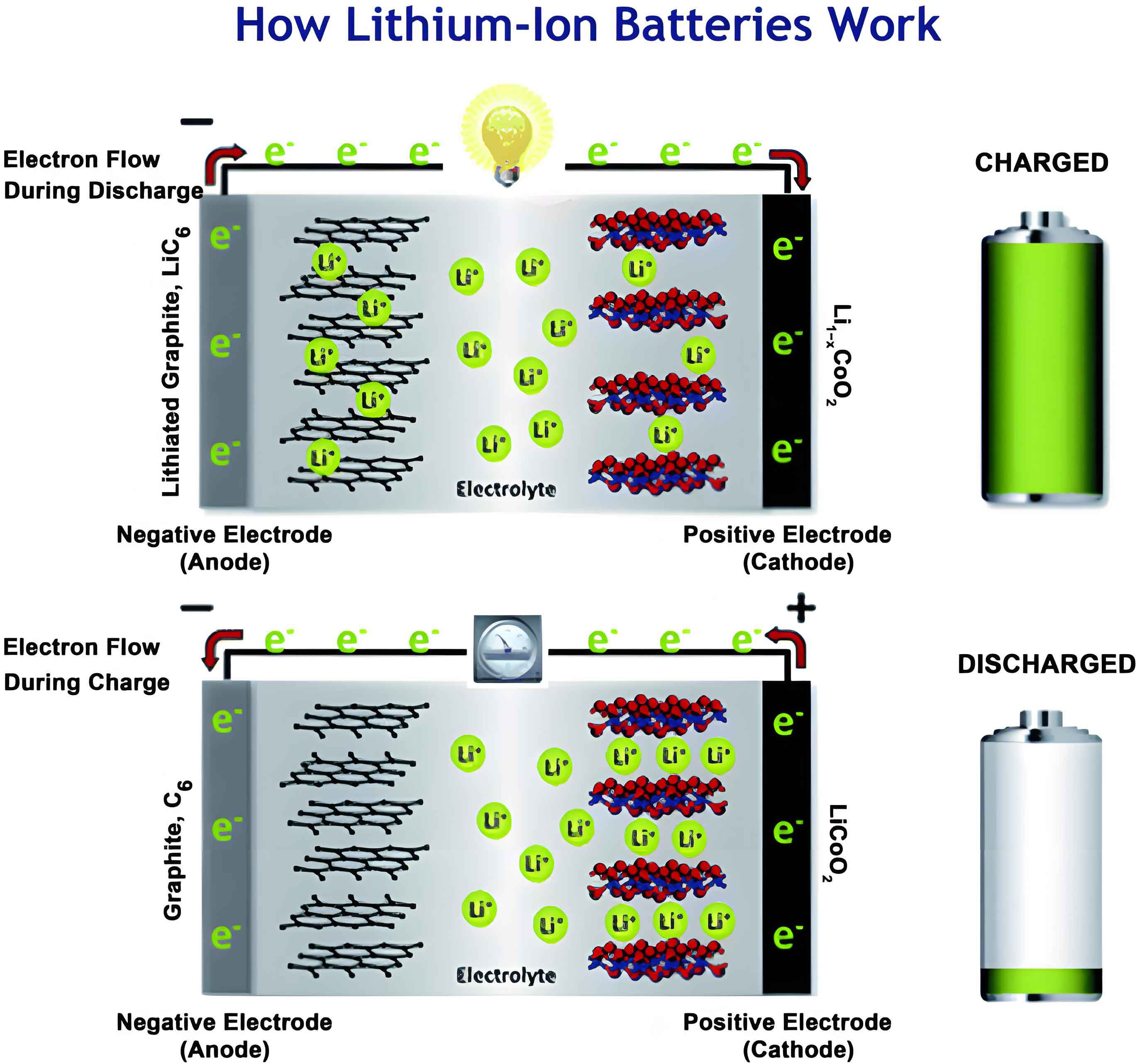
The fundamental operation of a lithium-ion battery during charging involves the extraction of lithium ions from the cathode lattice, their migration through the electrolyte, and their subsequent insertion into the anode structure, accompanied by a compensating flow of electrons through the external circuit. The speed of this process is governed by kinetics and transport phenomena. The limiting factors can be described by several key equations. The diffusion of Li+ within solid electrode particles is described by Fick’s laws. For spherical particles, the characteristic diffusion time constant is:
$$ \tau_{diff} = \frac{r^2}{D} $$
where \( r \) is the particle radius and \( D \) is the solid-state diffusion coefficient. To enable fast charging, \( \tau_{diff} \) must be minimized, which necessitates smaller particle sizes (\( r \)) and/or materials with higher intrinsic diffusion coefficients (\( D \)).
At the electrode-electrolyte interface, the charge transfer kinetics follow the Butler-Volmer equation:
$$ j = j_0 \left[ \exp\left(\frac{\alpha_a F \eta}{RT}\right) – \exp\left(-\frac{\alpha_c F \eta}{RT}\right) \right] $$
where \( j \) is the current density, \( j_0 \) is the exchange current density, \( \alpha \) are transfer coefficients, \( F \) is Faraday’s constant, \( \eta \) is the overpotential, \( R \) is the gas constant, and \( T \) is temperature. A high \( j_0 \) is desirable for fast kinetics, which depends on the electrocatalytic activity of the interface and the electrolyte composition.
The total cell polarization (\( \Delta V \)) during charging at a current \( I \) can be expressed as the sum of ohmic, activation, and concentration overpotentials:
$$ \Delta V = I R_{\Omega} + \eta_{act} + \eta_{conc} $$
Fast charging at high \( I \) amplifies all these loss terms. If the anode potential is driven too low due to high polarization, it can drop below 0 V vs. Li/Li+, creating the thermodynamic condition for lithium metal plating (electrodeposition) on the anode surface instead of intercalation. This is the primary failure mode and safety hazard in fast-charging lithium-ion battery systems.
The pursuit of fast-charging capability in lithium-ion battery technology encounters a constellation of intertwined technical challenges that must be solved holistically. These challenges impact the choice of materials, the design of components, and the manufacturing process. The core issues are summarized in the table below.
| Challenge Area | Specific Issues During Fast Charging | Consequences for the Lithium-Ion Battery |
|---|---|---|
| Anode Interface | High current density leads to severe anode polarization and large local overpotential. This drives the anode potential below the Li plating potential. | Metallic lithium plating occurs on the graphite surface. Over cycles, this forms lithium dendrites, which can penetrate the separator, cause an internal short circuit, and lead to thermal runaway. This is the most critical safety risk. |
| Cathode Material Structure | Rapid extraction of Li+ ions from the cathode lattice creates high mechanical stress and can destabilize the crystal framework. | Accelerated structural degradation, phase transitions, and particle cracking. This results in irreversible capacity loss, increased impedance, and poor cycle life for the lithium-ion battery. |
| Electrolyte Stability | High currents generate significant joule heating, raising cell temperature. The high anode potential (low vs. Li/Li+) also pushes the electrochemical window. | Accelerated decomposition of electrolyte solvents and salts at both electrodes. Increased SEI (Solid Electrolyte Interphase) growth and gas generation, leading to capacity fade, swelling, and increased impedance. |
| Current Distribution & Heat Management | Non-uniform Li+ flux and local impedance variations lead to uneven current density across the electrode area. | Localized hot spots, uneven lithiation, and accelerated aging in specific regions, compromising the overall performance and safety of the lithium-ion battery. |
Material selection is paramount for a lithium-ion battery targeting fast-charging applications. For the cathode, the industry trend favors high-nickel layered oxides (e.g., NCM811, NCA). They offer a compelling combination of high specific capacity (for energy density) and relatively good rate capability. However, their structural and interfacial instability at high voltages and during fast Li+ extraction is a concern. Mitigation strategies involve bulk doping (e.g., with Al, Mg, Ti) to stabilize the lattice and surface coating (e.g., with Al2O3, Li3PO4) to suppress side reactions and transition metal dissolution.
The anode presents the most significant bottleneck. While graphite is the dominant commercial material due to its high capacity and low cost, its low lithium diffusion coefficient and relatively low Li+ intercalation potential (~0.1 V vs. Li/Li+) make it prone to plating. Advanced graphite materials for fast-charging lithium-ion battery anodes feature morphological and structural modifications: small, spherical particles to shorten diffusion paths; surface coatings with amorphous carbon or metal oxides to create a more conductive and stable interface that facilitates rapid Li+ transfer; and the introduction of porosity. Alternative materials like lithium titanate (LTO) are inherently safe and fast-charging due to their zero-strain characteristic and high potential (~1.55 V vs. Li/Li+), which eliminates Li plating. However, the low energy density of an LTO-based lithium-ion battery is a major drawback. Silicon-based anodes, while offering ultra-high capacity, suffer from large volume changes that are exacerbated during fast charging, making cycle life a challenge. Therefore, optimized graphite and silicon-graphite composites are the primary focus.
The electrolyte must be formulated specifically for a fast-charging lithium-ion battery. Key objectives are to achieve high ionic conductivity, low viscosity, and low Li+ desolvation energy at the anode interface. Strategies include using low-viscosity linear carbonate solvents (e.g., ethyl methyl carbonate, EMC), increasing lithium salt concentration (though this increases cost and viscosity), and employing novel salts like LiFSI for better conductivity and stability. Additive engineering is crucial. Film-forming additives like vinylene carbonate (VC) and fluoroethylene carbonate (FEC) are essential to create a robust, low-impedance, and ionically conductive SEI on the anode that withstands the stress of rapid Li+ flux. Other additives may be used to stabilize the cathode electrolyte interface (CEI) and suppress gas generation.
The role of the separator in a fast-charging lithium-ion battery extends beyond simple electrical insulation. Its properties directly influence ion transport and safety. A thinner separator reduces the distance for ion travel, lowering ohmic resistance. Higher porosity facilitates easier ionic flow. However, these features often come at the expense of mechanical strength and thermal shutdown properties. Ceramic-coated separators (e.g., with Al2O3 or SiO2) offer an excellent compromise: the ceramic coating enhances thermal stability, prevents shrinkage at elevated temperatures (a critical safety feature given the heat generation during fast charge), and can improve wettability by the electrolyte, all while maintaining good ionic conductivity. The optimal choice balances low tortuosity for ion transport with sufficient mechanical integrity and safety features.
Electrode engineering and cell design are where material properties are translated into cell-level performance. For a fast-charging lithium-ion battery, power-optimized design principles are employed, often at a calculated trade-off with volumetric energy density. Key parameters include:
- Electrode Thickness: Thin electrodes are preferred. While reducing the area-specific capacity (mAh/cm²), they drastically shorten the Li+ diffusion path within the electrode, reducing concentration polarization. This is often the most effective design change.
- Porosity and Tortuosity: A higher electrode porosity creates more open channels for electrolyte penetration and ion transport. Optimizing the particle packing and binder distribution minimizes tortuosity, the “zig-zag” path ions must take.
- Conductive Additive Network: An increased percentage and optimized morphology (e.g., using 1D carbon nanotubes or 2D graphene in addition to carbon black) of conductive additives ensure rapid electron transport throughout the electrode, minimizing electronic resistance.
- Current Collectors: Using thinner foils or coated foils with lower resistance contributes to reducing the overall cell impedance.
The collective impact of these design choices can be assessed through the cell’s area-specific impedance (ASI) and its power capability, often characterized by peak power density (W/kg) or pulse resistance.
In my research, we developed a fast-charging pouch cell to validate these principles. The cell was designed with a target capacity of 1.0 Ah and a specific energy of 205 Wh/kg. We selected a high-rate NCM (LiNixCoyMnzO2) cathode material. The anode was composed of graphite coated with a thin layer of amorphous carbon, designed to provide a “highway” for rapid Li+ surface transport and more stable SEI formation. The electrodes were fabricated using a power-type design: lower active material loadings and higher porosity compared to energy-optimized cells. A thin (~20 µm) ceramic-coated separator was chosen to enhance safety and ion transport. The electrolyte formulation included a base of organic carbonates with lithium hexafluorophosphate (LiPF6) salt and a tailored additive package focused on anode SEI stabilization. The cells were assembled using a Z-stacking process and encapsulated in aluminum laminate film.
The electrochemical performance of this lithium-ion battery was systematically evaluated. Initial formation cycling at 0.1C showed a first-cycle charge capacity of 1308 mAh and a discharge capacity of 1169 mAh, yielding a Coulombic efficiency of approximately 88%. The cells were then rated at 0.5C, delivering the target capacity of 1.1 Ah, corresponding to the 205 Wh/kg specific energy. The voltage profile during this rating cycle is smooth and typical of NCM/graphite systems. The critical test was rate capability. The cells were charged and discharged at increasing C-rates from 1C to 5C. The discharge capacity retention relative to the 1C/1C performance is summarized below:
| Charge/Discharge Rate | Discharge Capacity (mAh) | Retention vs. 1C (%) | Mid-point Voltage (V) | Constant-Current (CC) Charge Ratio (%) |
|---|---|---|---|---|
| 1C / 1C | 1092 | 100% | 3.629 | 95.7 |
| 3C / 3C | 1036 | 95% | 3.564 | 89.9 |
| 4C / 4C | 1030 | 94% | 3.528 | 87.3 |
| 5C / 5C | 1019 | 93% | 3.486 | 83.8 |
The data demonstrates excellent fast-charging capability. Even at a 5C charge rate (full charge in ~12 minutes in theory, excluding CV phase), the lithium-ion battery retains 93% of its 1C capacity. The constant-current charge ratio, a key indicator of fast-charge efficiency, remains above 83% at 5C, indicating relatively low polarization. The gradual decrease in mid-point voltage with increasing rate reflects the higher internal polarization (\( \Delta V = I R_{total} \)). Temperature rise during a 5C discharge was measured to be around 12°C, which is manageable but underscores the need for thermal management in a pack.
A separate experiment highlighted the impact of the separator. Cells built with a standard polyolefin separator and the ceramic-coated separator were compared. At all tested C-rates, the lithium-ion battery with the ceramic-coated separator showed superior capacity retention. This is attributed to the better electrolyte retention, more uniform current distribution, and potentially lower tortuosity offered by the ceramic coating, facilitating faster ionic conduction.
The long-term cycle life under fast-charging conditions is a decisive metric. A cell was subjected to continuous 3C charge and 3C discharge cycling at room temperature without any external pressure fixture. The capacity retention over 1000 cycles is shown in the plot below (conceptual data trend). The cell exhibited outstanding stability, maintaining over 86% of its initial capacity after 1000 fast cycles. This indicates that the material selections, interface engineering via electrolytes, and cell design were effective in mitigating the degradation mechanisms typically accelerated by fast charging.
Post-mortem analysis was conducted on a cell after a 5C fast-charge cycle to inspect for lithium plating. The disassembled cell in an argon-filled glovebox showed well-wetted electrodes. The cathode surface was clean and intact. Crucially, the graphite anode exhibited a uniform, golden-brown color characteristic of fully lithiated graphite (LiC6), with no signs of the dull gray or silvery deposits indicative of metallic lithium plating. This visual inspection, while preliminary, strongly suggests that the fast-charging protocol and cell design successfully kept the anode potential above the plating threshold, validating the effectiveness of the approach.
In conclusion, the development of fast-charging lithium-ion battery technology is a multi-faceted endeavor requiring a systems-level approach. It is not merely about applying a higher current; it demands a re-engineering of the entire cell from materials to microstructure. The central challenge is to orchestrate extremely rapid yet uniform lithiation of the anode while avoiding the thermodynamic and kinetic conditions that lead to lithium plating. This work demonstrates that through the strategic selection of high-rate NCM cathodes, surface-engineered graphite anodes, tailored electrolytes, thin ceramic-coated separators, and power-optimized electrode design, it is feasible to create a lithium-ion battery that offers a compelling balance of specific energy (205 Wh/kg) and exceptional fast-charging capability (sustainable 5C rate). Furthermore, the robust cycle life exceeding 1000 cycles at 3C and the absence of visible lithium plating post-test underscore the stability and safety of this approach. Future advancements will likely focus on further refining anode materials (e.g., ordered graphite, composite anodes), developing ultra-high conductivity electrolytes and binders, and integrating sophisticated real-time charging algorithms that dynamically adjust current based on cell state to push the boundaries of speed while guaranteeing the longevity and safety of every lithium-ion battery.