
As we witness a transformative phase in energy storage technologies, the emergence of sodium-ion battery systems marks a pivotal advancement. From my perspective as an observer in the field, the recent deployment of large-scale sodium-ion battery energy storage stations signifies a breakthrough that could reshape the global landscape of renewable energy integration. The development of these systems addresses critical challenges in grid stability, cost-effectiveness, and resource sustainability, paving the way for a more resilient and efficient power infrastructure.
The core innovation lies in the application of sodium-ion battery technology for grid-scale energy storage. Unlike conventional lithium-ion systems, sodium-ion batteries leverage abundant raw materials, which significantly reduces dependency on scarce resources. The fundamental working principle of a sodium-ion battery involves the reversible movement of sodium ions between the cathode and anode during charge and discharge cycles, similar to lithium-ion batteries but with distinct advantages in material availability and performance under varying conditions. The electrochemical reaction can be represented as:
$$ \text{Na}^+ + e^- + \text{Host} \rightleftharpoons \text{NaHost} $$
This reaction underpins the energy storage mechanism, where the intercalation and deintercalation of sodium ions enable efficient energy conversion. The energy density of a sodium-ion battery, while typically lower than that of lithium-ion counterparts, is compensated by lower costs and enhanced safety profiles. To illustrate the technological parameters, consider the following table comparing key characteristics of sodium-ion and lithium-ion batteries:
| Parameter | Sodium-Ion Battery | Lithium-Ion Battery |
|---|---|---|
| Raw Material Abundance | High (sodium is widely available) | Limited (lithium reserves are concentrated) |
| Cost per kWh (estimated) | $50-$100 | $100-$150 |
| Operating Temperature Range | -40°C to 60°C | -20°C to 50°C |
| Cycle Life (cycles) | 3000-5000 | 2000-4000 |
| Energy Conversion Efficiency | >92% | 85-90% |
| Safety Profile | Higher thermal stability | Moderate risk of thermal runaway |
The deployment of a large-scale sodium-ion battery energy storage station represents a milestone in engineering. This system integrates multiple battery modules, power conversion units, and control systems to manage energy flow seamlessly. The energy conversion efficiency, a critical metric, is defined as:
$$ \eta = \frac{E_{\text{out}}}{E_{\text{in}}} \times 100\% $$
where \( E_{\text{in}} \) is the input electrical energy during charging and \( E_{\text{out}} \) is the output during discharging. For the sodium-ion battery system, reported efficiencies exceed 92%, attributed to advanced thermal management and optimized cell design. The thermal control ensures minimal temperature variation across thousands of cells, enhancing longevity and safety. This is quantified by the temperature differential equation:
$$ \Delta T = T_{\text{max}} – T_{\text{min}} \leq 3^\circ \text{C} $$
for over 20,000 cells in the array. Such precision underscores the technological sophistication achieved through research and development efforts.
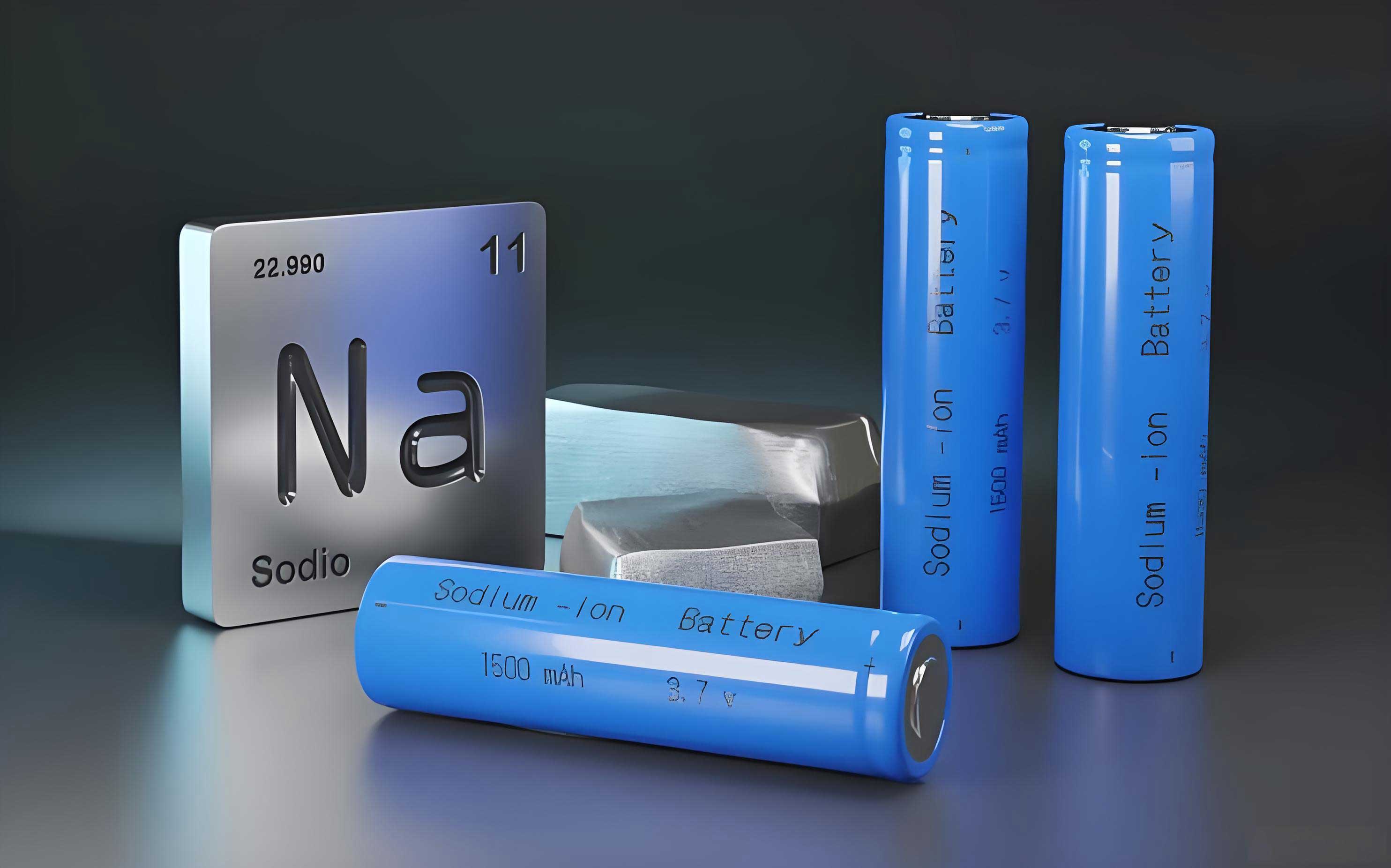
From a strategic viewpoint, the integration of sodium-ion battery storage into the grid facilitates peak shaving, frequency regulation, and renewable energy smoothing. The power output \( P(t) \) from the storage system can be modeled as:
$$ P(t) = \sum_{i=1}^{n} P_i \cdot f_i(t) $$
where \( P_i \) is the power rating of each module and \( f_i(t) \) is the activation function based on grid demand. This modular approach allows scalability, akin to building blocks, enabling expansions to hundreds of megawatt-hours. The economic viability of sodium-ion battery systems is enhanced by their low levelized cost of storage (LCOS), calculated as:
$$ \text{LCOS} = \frac{\text{Total Cost over Lifetime}}{\text{Total Energy Delivered over Lifetime}} $$
With advancements in material science and manufacturing, the LCOS for sodium-ion battery storage is projected to fall below $0.02 per kWh, making it competitive with other storage technologies. The cost reduction stems from economies of scale and improved cycle life, which can be expressed as:
$$ C_{\text{total}} = C_{\text{cap}} + \sum_{t=1}^{N} \frac{C_{\text{op}}(t)}{(1+r)^t} $$
where \( C_{\text{cap}} \) is capital cost, \( C_{\text{op}}(t) \) is operational cost in year \( t \), \( r \) is discount rate, and \( N \) is system lifetime in years. For sodium-ion batteries, \( C_{\text{cap}} \) is 20-30% lower than lithium-ion systems due to cheaper materials like sodium carbonate versus lithium carbonate.
The complementary role of sodium-ion battery technology with lithium-ion systems is crucial for diversifying the energy storage portfolio. While lithium-ion batteries dominate current deployments, sodium-ion alternatives offer resilience against supply chain disruptions. The table below summarizes the potential application domains for sodium-ion batteries:
| Application Domain | Potential for Sodium-Ion Battery | Key Advantages |
|---|---|---|
| Large-Scale Grid Storage | High (for frequency regulation and peak shaving) | Cost-effectiveness and scalability |
| Electric Vehicles (Low-Speed) | Moderate (as a complement to lithium-ion) | Better low-temperature performance |
| Industrial Energy Management | High (for load balancing) | High safety and long cycle life |
| Renewable Integration (Solar/Wind) | Very High (for smoothing intermittent output) | Rapid response and high efficiency |
In terms of performance metrics, the sodium-ion battery exhibits superior characteristics in specific areas. The energy density \( \rho_E \) in Wh/kg can be approximated by:
$$ \rho_E = \frac{n \cdot F \cdot V}{3.6 \cdot M} $$
where \( n \) is the number of electrons transferred, \( F \) is Faraday’s constant (96485 C/mol), \( V \) is cell voltage, and \( M \) is molar mass of active materials. For sodium-ion batteries, typical values range from 100-150 Wh/kg, sufficient for stationary storage applications. Moreover, the power density \( \rho_P \) in W/kg, critical for rapid charge/discharge, is given by:
$$ \rho_P = \frac{V^2}{R \cdot m} $$
with \( R \) as internal resistance and \( m \) as mass. Innovations in electrode design have reduced \( R \), boosting \( \rho_P \) for sodium-ion systems.
The scalability of sodium-ion battery storage is a game-changer for regional energy plans. For instance, projections for energy storage capacity growth highlight the role of sodium-ion technology. The following table outlines targets for sodium-ion battery deployment in a regional context, based on policy frameworks:
| Year | Target Capacity (GW) | Expected Share from Sodium-Ion Battery | Key Drivers |
|---|---|---|---|
| 2025 | 3.0 | 20% | Demonstration projects and cost reductions |
| 2030 | 10.0 | 40% | Industrial scaling and technological maturity |
| 2035 | 25.0 | 60% | Market competitiveness and sustainability goals |
These targets align with global trends towards decarbonization, where sodium-ion battery storage contributes to reducing carbon emissions by enabling higher penetration of renewables. The carbon savings \( \Delta C \) in tons per year can be estimated as:
$$ \Delta C = E_{\text{stored}} \cdot \text{CF} \cdot \epsilon \cdot I_{\text{carbon}} $$
where \( E_{\text{stored}} \) is annual energy stored in kWh, CF is capacity factor, \( \epsilon \) is grid emission factor in kg CO₂/kWh, and \( I_{\text{carbon}} \) is improvement factor from storage efficiency. For a 100 MWh sodium-ion battery system, \( \Delta C \) can exceed 10,000 tons annually, showcasing environmental benefits.
From my experience, the research and development behind sodium-ion battery technology have focused on overcoming early limitations. Key breakthroughs include the synthesis of high-performance cathode materials like layered oxides or polyanionic compounds, which enhance sodium-ion diffusion kinetics. The diffusion coefficient \( D \) of sodium ions in these materials follows Arrhenius behavior:
$$ D = D_0 \exp\left(-\frac{E_a}{RT}\right) $$
with \( D_0 \) as pre-exponential factor, \( E_a \) activation energy, \( R \) gas constant, and \( T \) temperature. Optimizing \( E_a \) through material engineering has improved rate capability. Additionally, anode materials such as hard carbon exhibit high capacity for sodium storage, with intercalation capacity \( Q \) modeled as:
$$ Q = nF \int_{0}^{t} I \, dt $$
where \( I \) is current and \( t \) time. These advancements have propelled sodium-ion battery cycle life beyond 5000 cycles, meeting grid storage demands.
The economic implications of sodium-ion battery adoption are profound. As production scales, learning curve effects reduce costs, described by the experience curve formula:
$$ C(x) = C_0 \cdot x^{-b} $$
where \( C(x) \) is cost per unit after cumulative production \( x \), \( C_0 \) initial cost, and \( b \) learning rate (typically 0.1-0.3 for batteries). For sodium-ion batteries, \( b \) is estimated at 0.2, leading to rapid cost declines. This accelerates the return on investment (ROI) for storage projects, computed as:
$$ \text{ROI} = \frac{\text{Net Benefits over Lifetime}}{\text{Initial Investment}} \times 100\% $$
With lower initial costs, sodium-ion battery systems achieve ROI faster than alternatives, driving market uptake.
In the context of grid integration, sodium-ion battery storage enhances reliability by providing ancillary services. The frequency response capability is quantified by the droop control equation:
$$ \Delta P = -K \cdot \Delta f $$
where \( \Delta P \) is power adjustment, \( K \) droop constant, and \( \Delta f \) frequency deviation. Sodium-ion batteries, with fast response times, excel in this role. Furthermore, the state of charge (SOC) management is critical for longevity, governed by:
$$ \text{SOC}(t) = \text{SOC}_0 + \frac{1}{C} \int_{0}^{t} I(\tau) \, d\tau $$
where \( C \) is battery capacity. Advanced algorithms optimize SOC to prevent overcharge or deep discharge, extending life.
The future trajectory of sodium-ion battery technology hinges on continuous innovation. Areas like solid-state electrolytes promise higher safety and energy density. The ionic conductivity \( \sigma \) of such electrolytes is given by:
$$ \sigma = n q \mu $$
with \( n \) charge carrier density, \( q \) charge, and \( \mu \) mobility. Research aims to boost \( \sigma \) to rival liquid electrolytes. Additionally, recycling processes for sodium-ion batteries are simpler due to less toxic materials, reducing environmental impact.
From a policy perspective, support for sodium-ion battery storage is growing through incentives and standards. This fosters a robust ecosystem, from raw material sourcing to end-of-life management. The holistic approach ensures sustainable growth, aligning with climate goals.
In conclusion, the advent of sodium-ion battery energy storage marks a transformative leap towards a resilient and affordable energy future. The technology’s advantages in cost, safety, and scalability position it as a cornerstone for grid modernization. As we advance, continued collaboration across research, industry, and policy will unlock the full potential of sodium-ion battery systems, powering a cleaner world.