
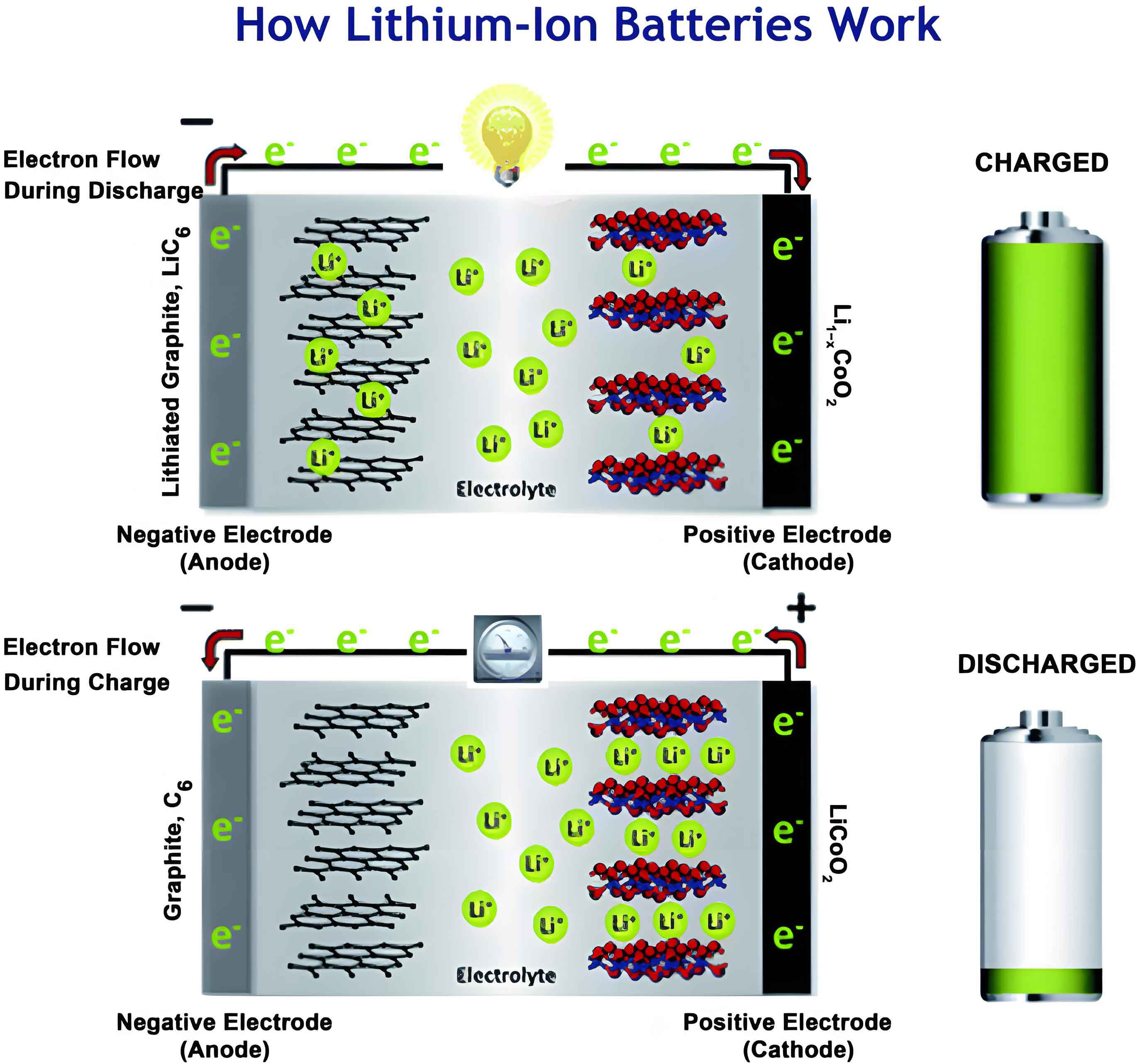
The global transition towards a new power system dominated by renewable energy sources has positioned energy storage stations as critical facilities for providing flexible regulation. Among various storage technologies, the lithium-ion battery stands out due to its high energy density and efficiency. However, the risk of thermal runaway in lithium-ion batteries represents a significant potential safety hazard for the industry. By the end of 2024, over 80 fire incidents had been reported in energy storage stations worldwide, with more than 80% of these fires initiated by battery thermal runaway. Consequently, the development of efficient safety early-warning technologies for early risk identification has become a paramount concern for ensuring the safe operation of energy storage systems.
Conventional battery monitoring primarily relies on external parameters such as voltage, current, and temperature. While useful, the information gleaned from these parameters is often limited and fails to provide a comprehensive picture of the internal state of the lithium-ion battery. As the demand for precise state assessment and proactive safety management of lithium-ion batteries continues to grow, the research into more accurate evaluation methods and early warning technologies has become increasingly urgent.
Electrochemical Impedance Spectroscopy (EIS) has emerged as a powerful, non-invasive electrochemical characterization technique. It operates by applying a small-amplitude sinusoidal excitation signal (current or voltage) across a wide frequency range and measuring the corresponding linear response. The resulting impedance spectrum provides a wealth of information regarding the internal structure and kinetic processes of a lithium-ion battery. The high sensitivity and resolution of EIS make it an indispensable tool for state monitoring and safety prognosis. In recent years, the application of EIS for state estimation and safety warning in lithium-ion batteries has garnered significant research interest. This article comprehensively reviews the research progress from the past five years, focusing on three key application areas: State-of-Charge (SOC) estimation, State-of-Health (SOH) estimation, and Safety Warning for lithium-ion batteries.
Fundamentals of Electrochemical Impedance Spectroscopy for Lithium-Ion Batteries
At its core, EIS probes the frequency-dependent impedance of an electrochemical system. For a lithium-ion battery, this impedance is a complex quantity, $Z(\omega) = Z'(\omega) + jZ”(\omega)$, where $Z’$ is the real part (related to resistive behavior), $Z”$ is the imaginary part (related to capacitive/inductive behavior), $\omega = 2\pi f$ is the angular frequency, and $j$ is the imaginary unit. A typical Nyquist plot (negative imaginary part vs. real part) for a lithium-ion battery often exhibits several features: a high-frequency intercept related to ohmic resistance ($R_{\Omega}$), one or two depressed semicircles in the mid-to-high frequency range associated with solid-electrolyte interphase (SEI) layer resistance ($R_{SEI}$) and charge transfer resistance ($R_{ct}$), and a low-frequency tail indicative of solid-state diffusion Warburg impedance ($Z_W$).
The interpretation of these features allows for the diagnosis of various states and faults within the lithium-ion battery. Changes in SOC primarily affect the concentration of lithium ions in the electrodes, influencing the diffusion impedance and, to a lesser extent, the charge transfer kinetics. SOH degradation, resulting from mechanisms like loss of active material (LAM) and loss of lithium inventory (LLI), manifests as an increase in ohmic resistance, growth of the SEI layer, and increase in charge transfer resistance. Safety-critical faults such as overcharge, over-discharge, and the onset of thermal runaway induce drastic and often characteristic alterations in the impedance spectrum.
EIS for State-of-Charge (SOC) Estimation of Lithium-Ion Batteries
Accurate SOC estimation is crucial for battery management systems (BMS) to prevent overcharge/over-discharge and inform users. Traditional methods like Coulomb counting and open-circuit voltage (OCV) mapping have limitations regarding accuracy and real-time capability. EIS offers a promising alternative by providing a direct, non-invasive link to internal electrochemical states. Recent research has focused on several methodological approaches.
Equivalent Circuit Model (ECM)-Based Methods
This approach involves fitting the measured EIS data to a predefined electrical circuit model whose components represent physical processes. Common models include the Randles circuit and its more complex variants. The parameters of these models (e.g., $R_{ct}$, double-layer capacitance $C_{dl}$, diffusion parameters) are then correlated with SOC.
$$Z_{Randles}(\omega) = R_{\Omega} + \frac{R_{ct}}{1 + j\omega R_{ct} C_{dl}} + Z_W(\omega)$$
Researchers have developed enhanced ECMs for improved SOC estimation accuracy. For instance, a polynomial ECM incorporating SOC effects was proposed to capture the nonlinear relationship between model parameters and SOC. By fitting EIS data at various SOC states, a mapping was established to estimate SOC from new EIS measurements. Other work utilized an optimized ECM with an improved data acquisition method based on impedance measurement boards, reportedly achieving SOC estimation errors below 1.3% within the 60%-100% SOC range. The challenge remains in ensuring model generality across different lithium-ion battery chemistries and operating conditions.
| ECM Type | Key Components | Parameters Sensitive to SOC | Typical Application Range |
|---|---|---|---|
| Simple Randles | $R_\Omega$, $R_{ct}$, $C_{dl}$, $Z_W$ | $Z_W$ parameters, OCV (from low-freq extrapolation) | Laboratory calibration |
| Enhanced Randles (2 RC) | $R_\Omega$, $R_{SEI}$, $C_{SEI}$, $R_{ct}$, $C_{dl}$, $Z_W$ | $R_{ct}$, $Z_W$ parameters | Detailed aging analysis |
| Fractional Order (FOM) | $R_\Omega$, $R_{ct}$, Constant Phase Element (CPE) | CPE parameters ($Y_0$, $n$) | Dynamic工况, better fit to depressed semicircles |
Machine Learning and Data-Driven Methods
The rise of machine learning (ML) has provided powerful tools to handle the complex, high-dimensional nature of EIS data. These methods learn the direct mapping between impedance features (or raw spectra) and SOC without requiring explicit physical models. Common algorithms include Gaussian Process Regression (GPR), Support Vector Machines (SVM), and deep learning models like Convolutional Neural Networks (CNN) and Long Short-Term Memory (LSTM) networks.
A notable two-step online estimation framework was developed: first, a CNN-LSTM fusion model predicts the full EIS spectrum from easily obtainable charge data; second, a Whale Optimization Algorithm (WOA)-optimized GPR model selects a combination of frequency-specific features (e.g., real part of impedance at 7.94 Hz) for final SOC estimation, achieving an error below 1.4%. This approach cleverly identifies features that are weakly correlated with temperature but retain SOC information, enhancing robustness. Other studies have explored using LSTM networks to reconstruct EIS from time-domain pulse data or employing data fusion strategies that combine EIS with thermodynamic parameters.
$$SOC = \mathcal{F}_{ML}(Z'(f_1), Z”(f_1), Z'(f_2), Z”(f_2), …, T)$$
where $\mathcal{F}_{ML}$ represents the learned non-linear function from the ML model.
Impedance Spectrum Reconstruction and Fast EIS Techniques
A significant barrier to the online application of EIS is the long measurement time required for a full spectrum sweep. Recent research focuses on fast EIS or spectrum reconstruction techniques that obtain sufficient impedance information from shorter tests. Methods include injecting multi-sine or pseudo-random binary sequence (PRBS) signals and applying advanced signal processing.
One approach uses an inverse-repeat M-sequence composite coding strategy with a three-stage segmented current excitation. Coupled with Morse complex wavelet convolution time-frequency analysis, this method can reconstruct the impedance spectrum in the 30 mHz–300 Hz range with high fidelity in just 4.5 minutes, compared to 30 minutes for conventional methods. Other techniques involve using Morlet wavelets to reconstruct impedance feature fields or employing deep convolutional networks to predict full spectra from under-sampled pulse data fragments. The development of low-cost impedance measurement boards to replace bulky potentiostats further supports the engineering feasibility of online EIS for SOC estimation in lithium-ion battery systems.
Multi-Frequency EIS and Feature Selection
Instead of using the full spectrum, selecting specific characteristic frequencies can simplify the estimation algorithm. Research has shown that different frequency bands are sensitive to different states. For SOC, low-frequency data (related to diffusion) is highly informative but also sensitive to temperature and aging. Therefore, identifying robust frequency points or bands is crucial.
Studies have employed multi-frequency EIS, measuring impedance at a carefully selected set of frequencies, to estimate the internal temperature of the lithium-ion battery. This internal temperature estimate can then be used to correct and improve the accuracy of SOC estimation models that are typically temperature-sensitive. The core idea is to find a multi-frequency impedance vector that maximizes correlation with SOC while minimizing correlation with interfering factors like temperature (T) and SOH.
$$\min_{f_i} \left( \frac{\partial SOC}{\partial T} \right) \quad \text{subject to} \quad \max_{f_i} \left( \frac{\partial SOC}{\partial Z(f_i)} \right)$$
In practice, correlation analysis (e.g., Pearson coefficient) is performed on datasets spanning various SOC, T, and SOH levels to identify optimal frequency points $f_{opt1}, f_{opt2}, …$ for reliable SOC estimation of the lithium-ion battery.
EIS for State-of-Health (SOH) Estimation of Lithium-Ion Batteries
SOH, typically defined as the ratio of current maximum capacity to initial capacity, is a vital metric for predicting remaining useful life and scheduling maintenance. EIS is highly effective for SOH estimation as it directly probes the degradation mechanisms that cause capacity fade and power loss in lithium-ion batteries.
ECM-Based SOH Estimation
Similar to SOC, ECM parameters evolve with battery aging. Increases in $R_{\Omega}$ indicate electrolyte degradation or contact loss. Growth of $R_{SEI}$ corresponds to continuous SEI layer formation consuming lithium inventory. An increase in $R_{ct}$ reflects degraded electrode kinetics, often due to active material loss or passivation. By tracking these parameters over the lifespan of a lithium-ion battery, SOH can be estimated.
Advanced methods involve dynamic model selection. A multi-ECM dynamic selection method was proposed, where the optimal model for current operating conditions is chosen in real-time based on EIS data, improving adaptability and boosting the SOH prediction coefficient of determination ($R^2$) by over 34%. Fractional-order models (FOMs) are increasingly used as they better represent the distributed time-constant nature of electrochemical systems. A model using Grünwald-Letnikov fractional derivatives demonstrated a 30% reduction in fitting error under dynamic loads compared to integer-order models.
$$_{GL}D_t^\alpha f(t) = \lim_{h \to 0} h^{-\alpha} \sum_{k=0}^{\infty} (-1)^k \binom{\alpha}{k} f(t – kh)$$
where $\alpha$ is the fractional order, offering more flexibility in modeling the constant phase element (CPE) behavior ubiquitous in lithium-ion battery impedance.
Data-Driven Models for SOH
ML models are exceptionally suited for capturing the complex, non-linear relationship between EIS features and SOH degradation trajectories. A common framework uses feature extraction (e.g., from selected frequencies, ECM parameters, or Distribution of Relaxation Times – DRT) followed by a regression model.
The DRT method, which transforms EIS data into a distribution of relaxation times, is particularly powerful for decoupling overlapping processes. Peaks in the DRT plot can be uniquely assigned to specific electrochemical processes (SEI formation, charge transfer, diffusion), and the evolution of these peak areas or resistances strongly correlates with SOH.
$$Z(\omega) = R_\infty + \int_0^\infty \frac{\gamma(\tau)}{1 + j\omega \tau} d\tau$$
where $\gamma(\tau)$ is the distribution function of relaxation times $\tau$.
One study employed a Principal Component Analysis (PCA) and Gaussian Process Regression (GPR) framework, achieving SOH prediction with an average error below 2%. Another implemented a CNN-LSTM network to map charging data to EIS spectra, then used a WOA-optimized GPR on selected frequency features for SOH estimation, controlling key parameter identification error within 1.1%. These methods effectively handle the non-stationary nature of aging data for lithium-ion batteries.
Multi-Modal Feature Fusion for SOH
To improve robustness, SOH estimation models often fuse EIS data with other measurable signals. This multi-modal approach combines the deep diagnostic power of EIS with the simplicity of voltage, current, and temperature measurements.
Research has developed methods that analyze both high-frequency and low-frequency impedance information alongside thermal parameters. Deep learning algorithms are then used to fuse these modalities for precise SOH estimation, showing high prediction accuracy and adaptability across varied working conditions. Fast online diagnosis methods have also been proposed, using DRT analysis to identify key frequency points (e.g., $f_1$, $f_2$, $f_3$) strongly related to SOH. Measuring impedance at just these 3-4 points enables rapid diagnosis with errors around 2%, making it highly practical for BMS integration. The core challenge lies in the computational complexity of fusing and processing multi-modal data in real-time for the lithium-ion battery management system.
| SOH Estimation Method | Core Principle | Key Features/Parameters | Advantages | Challenges |
|---|---|---|---|---|
| ECM Parameter Tracking | Monitor increase in $R_\Omega$, $R_{SEI}$, $R_{ct}$ | $R_{ct}$ is a strong SOH indicator | Physically interpretable, simple | Model fitting required, sensitive to measurement noise |
| DRT Analysis | Deconvolve EIS into time-constant distributions | Area/ magnitude of specific DRT peaks | Decouples overlapping processes, highly diagnostic | Computation-intensive, requires careful regularization |
| ML on Full/Condensed Spectrum | Learn non-linear mapping Z(f) -> SOH | Impedance at selected frequencies or full spectrum | High accuracy, can handle complex patterns | Requires large, diverse training datasets, “black-box” nature |
| Multi-Modal Fusion | Fuse EIS features with V, I, T data | Hybrid feature vector | Improved robustness and accuracy | Increased algorithm complexity and data requirements |
EIS for Safety Warning in Lithium-Ion Batteries
Early detection of abusive conditions is critical to prevent catastrophic failure. EIS can serve as a highly sensitive early warning tool by detecting subtle changes in internal impedance that precede overt symptoms like voltage collapse or temperature runaway.
Overcharge Warning
Overcharge leads to lithium plating, electrolyte decomposition, and SEI breakdown. These processes induce characteristic changes in the EIS of a lithium-ion battery. Research has identified the real part of impedance at a specific frequency (e.g., 10 Hz, $Z’_{10Hz}$) as a sensitive indicator. During the early stage of overcharge, $Z’_{10Hz}$ may show a specific trend of “accelerated decrease followed by a sudden increase” due to complex interfacial changes. By modeling the normal evolution of this parameter with an adaptive ARIMA time-series model and monitoring for residual anomalies, warnings can be issued 105-580 seconds in advance of significant overcharge under various C-rate conditions.
A hierarchical warning method based on a Fractional-Order ECM (FECM) has also been proposed. It monitors parameters like $R_{SEI}$ (from mid-high frequency, indicating SEI stability) and $R_{ct}$ (from mid-low frequency, indicating electrode activity) in real-time. Different rates of change in these parameters trigger different warning levels (e.g., Level 1: slow rise, Level 2: sharp increase, Level 3: inflection point), providing a graded safety response. This method reportedly offers more than 58% earlier warning compared to traditional voltage/temperature monitoring for the lithium-ion battery.
Over-discharge Warning
Over-discharge can cause copper dissolution from the anode current collector and structural degradation of cathode materials. Similar to overcharge, it leaves a fingerprint on the impedance spectrum. Studies have shown that the $Z’_{10Hz}$ parameter also exhibits an accelerating decrease prior to the voltage drop associated with deep over-discharge. An algorithm combining an adaptive forecasting model (ARIMA) for trend prediction and a statistical distribution model for anomaly detection can provide warnings approximately 114 seconds before a damaging over-discharge event occurs in the lithium-ion battery. Other methods analyze changes in the impedance phase angle at characteristic frequencies, offering alternative warning signatures.
Thermal Runaway Early Warning
Thermal runaway is the most severe safety event, often preceded by a chain of exothermic reactions. Early detection is vital. EIS contributes by enabling internal temperature estimation and detecting impedance signatures of early-stage decomposition reactions.
The internal temperature of a lithium-ion battery cell, which can be 5–10°C higher than the surface temperature during operation, is a critical parameter for predicting thermal runaway onset. EIS-based internal temperature estimation models use the strong temperature dependence of kinetic parameters like $R_{ct}$. By establishing a calibration between impedance phase/gain and temperature, internal temperature can be estimated from online EIS measurements.
$$R_{ct} = A \cdot \exp\left(\frac{E_a}{R T_{int}}\right)$$
where $E_a$ is activation energy, $R$ is gas constant, and $T_{int}$ is internal temperature. Monitoring $T_{int}$ provides a more accurate trigger for cooling interventions.
Furthermore, specific impedance changes have been identified as precursors. For instance, in the 100–500 Hz range, the impedance magnitude may transition from a decreasing trend to a sudden increase at the onset of internal short circuit or severe gas generation, serving as a critical warning indicator. Algorithms that detect such inflection points or “knees” in the impedance curve can provide warnings several minutes (e.g., 313 seconds or more) before the rapid temperature rise phase of thermal runaway in the lithium-ion battery, a significant lead time over traditional voltage/temperature signals alone.
| Fault Mode | Key EIS Warning Signatures | Proposed Warning Parameters/Algorithms | Reported Lead Time Advantage |
|---|---|---|---|
| Overcharge | Change in mid-frequency semicircle (SEI breakdown, Li plating), specific trend in $Z’$ at selected freq. | $Z’_{10Hz}$ trend + Adaptive ARIMA anomaly detection; FECM-based $R_{SEI}$/$R_{ct}$ monitoring | 105-580 s earlier than voltage cutoff; >58% earlier than V/T monitoring |
| Over-discharge | Accelerating decrease in low-mid freq. $Z’$ prior to voltage plunge. | $Z’_{10Hz}$ trend + ARIMA & Distribution model | ~114 s before critical voltage |
| Thermal Runaway Precursor | Internal temp. rise via $R_{ct}$ shift; Impedance magnitude inflection in 100-500 Hz band. | EIS-based internal $T_{int}$ estimation; Detection of impedance curve “knee” point | Enables proactive cooling; 1-3 min earlier than V/T signals |
Summary and Future Perspectives
In recent years, EIS technology has demonstrated remarkable efficacy in the state estimation and safety warning of lithium-ion batteries. Through in-depth analysis of EIS data, researchers can achieve high-precision prediction of SOC and SOH. Furthermore, by monitoring characteristic impedance changes, early warning for faults such as overcharge, over-discharge, and the onset of thermal runaway is feasible. These advancements lay a solid technical foundation for the safe operation of lithium-ion battery systems.
Nevertheless, several challenges persist. The complexity of EIS data makes model construction and parameter identification difficult, especially under the coupled influence of multiple factors like aging, temperature, and SOC. The generalization of models across diverse lithium-ion battery chemistries, formats, and operating conditions requires further attention. The real-time capability and computational robustness of online EIS algorithms need continuous improvement to meet the demands of practical BMS applications.
The future of EIS-based diagnostics for lithium-ion batteries is closely tied to the integration with artificial intelligence and edge computing. Promising research directions include:
- Enhancing Model Generalization and Adaptability: Developing physics-informed neural networks or transfer learning frameworks that can adapt pre-trained models to new lithium-ion battery types with minimal calibration data.
- Algorithm Optimization for Real-Time Performance: Creating lightweight neural networks and efficient signal processing algorithms for embedded BMS hardware, enabling real-time EIS analysis and decision-making.
- Deep Fusion of Multi-Modal Data: Integrating EIS not just with voltage, current, and temperature, but also with other sensing modalities like ultrasound or fiber optic sensors for a multi-dimensional health assessment of the lithium-ion battery.
- Prognostic Health Management (PHM): Moving beyond state estimation to true prognosis. Using EIS-derived parameters as inputs to predictive models for estimating remaining useful life (RUL) under actual usage profiles, enabling predictive maintenance for lithium-ion battery systems.
- Standardization and Benchmarking: Establishing standardized EIS testing protocols and open-source benchmark datasets for different lithium-ion battery failure modes to accelerate algorithm development and validation.
In conclusion, EIS stands as a powerful, information-rich technique that is transitioning from a laboratory tool to a cornerstone of next-generation, intelligent battery management. As measurement hardware becomes cheaper and algorithms more efficient, the widespread integration of EIS-based diagnostics promises to significantly enhance the safety, reliability, and longevity of lithium-ion battery energy storage systems.