
The rapid electrification of transportation and the growing demand for grid-scale energy storage have positioned the lithium-ion battery as the cornerstone technology of our sustainable energy future. Its superior energy density, power density, and cycle life make it the preferred choice for electric vehicles (EVs) and renewable energy integration. However, the electrochemical processes within a lithium-ion battery are inherently temperature-sensitive. Maintaining an optimal operating temperature window, typically between 298.15 K and 313.15 K, is critical for ensuring safety, maximizing performance, and prolonging service life. Exceeding this range accelerates degradation, while localized overheating can trigger catastrophic thermal runaway. Therefore, the development of efficient, reliable, and compact Battery Thermal Management Systems (BTMS) is paramount for the safe deployment of high-performance lithium-ion batteries.
Traditional active cooling methods, such as forced air or liquid cooling, effectively remove heat but add complexity, weight, and parasitic power consumption to the system. In contrast, passive cooling using Phase Change Materials (PCMs) offers an elegant solution by absorbing substantial amounts of heat as latent heat during melting at a nearly constant temperature. This leads to more uniform surface temperatures and requires zero operational energy. Conventional PCM-based BTMS designs involve encapsulating the battery or battery module within a PCM matrix, constituting an external cooling approach. While effective, this method adds significant volume and mass, reducing the overall system’s gravimetric and volumetric energy density—a critical parameter for EV range.
This article explores an innovative internal cooling strategy designed to overcome the limitations of external methods. The core insight leverages the intrinsic structure of a standard cylindrical lithium-ion battery. These cells are manufactured by winding electrode sheets (the “jellyroll”) around a central, hollow mandrel. We propose filling this otherwise vacant core with a suitable PCM, thereby creating a direct, internal heat absorption pathway.
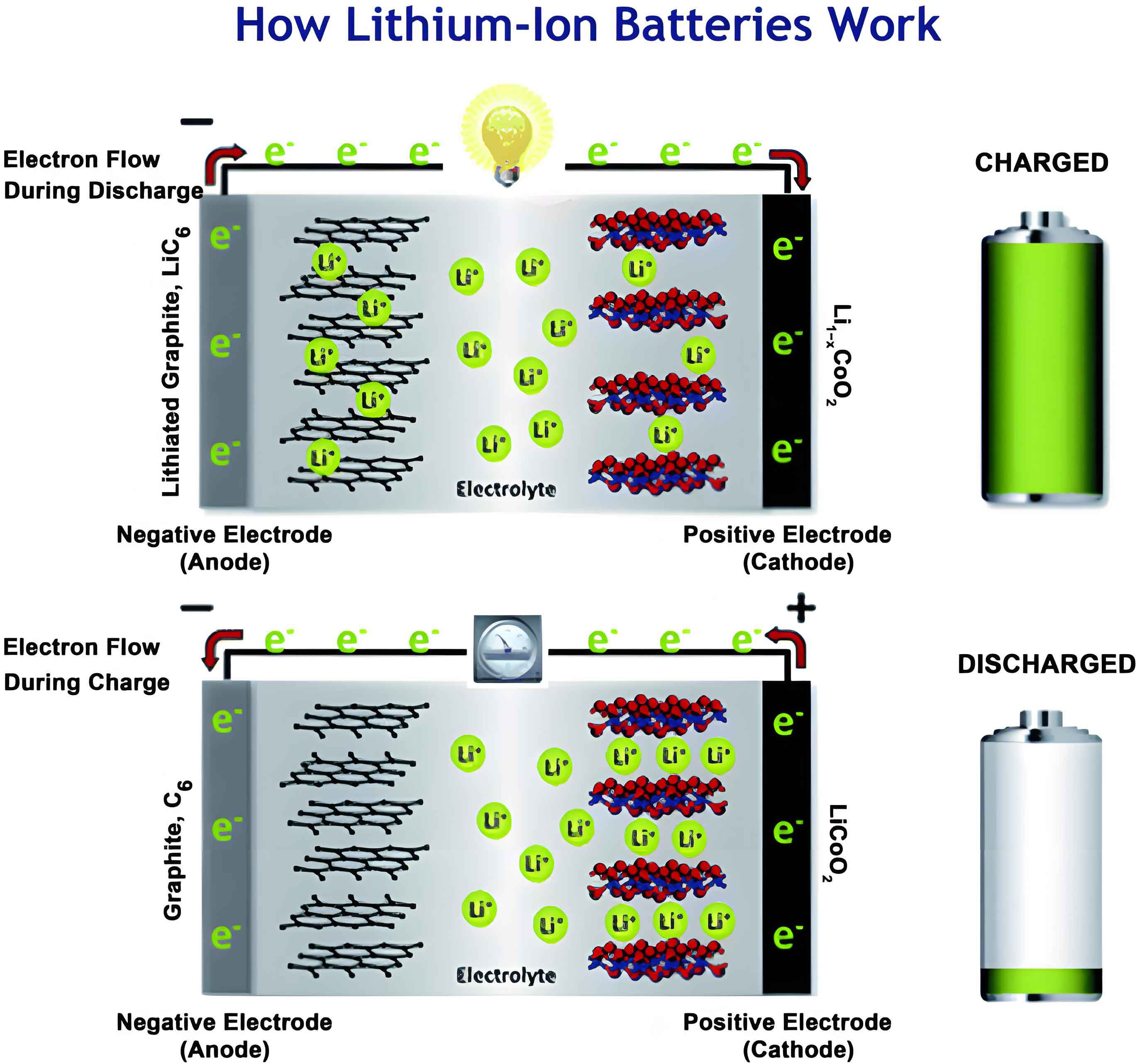
This design capitalizes on existing space, minimizing the impact on energy density. The primary objective is to conduct a comprehensive numerical and experimental investigation into the cooling performance of this internal PCM design. We systematically evaluate its effectiveness against external PCM cooling and analyze the influence of key PCM thermophysical properties—melting temperature, latent heat, and thermal conductivity—on critical battery thermal metrics: maximum temperature ($T_{max}$) and maximum temperature difference ($\Delta T_{max}$).
Fundamental Principles and Numerical Modeling
The thermal behavior of a lithium-ion battery is governed by its heat generation and the anisotropic heat transfer within its structure. During operation, heat is generated from irreversible (ohmic and polarization) and reversible (entropic) processes. The volumetric heat generation rate ($q$), derived from the Bernardi model, is expressed as:
$$ q = \frac{I}{V}\left(IR_t + T\frac{dU_0}{dT}\right) $$
where $I$ is the current, $V$ is the battery volume, $R_t$ is the internal resistance, $T$ is the absolute temperature, and $dU_0/dT$ is the entropy coefficient. For this study, we consider a constant heat generation rate corresponding to a 2C discharge rate for a 2.6 Ah LiFePO4 26650 cylindrical lithium-ion battery.
A significant challenge in cooling cylindrical cells is thermal anisotropy. The radial thermal conductivity ($\lambda_r$) of the wound jellyroll is typically an order of magnitude lower than the axial conductivity ($\lambda_z$). This creates a high thermal resistance for heat traveling from the core to the outer surface, leading to large internal temperature gradients. The three-dimensional energy conservation equation for the battery domain is:
$$ \rho_b c_{p,b} \frac{\partial T}{\partial t} = \lambda_{r} \left( \frac{1}{r}\frac{\partial}{\partial r}\left( r \frac{\partial T}{\partial r} \right) \right) + \lambda_{z} \frac{\partial^2 T}{\partial z^2} + q $$
where $\rho_b$, $c_{p,b}$ are the density and specific heat capacity of the lithium-ion battery, respectively.
The phase change process within the PCM is modeled using the enthalpy-porosity technique. The governing equations for mass, momentum, and energy are:
Continuity: $$\nabla \cdot \vec{u} = 0$$
Momentum: $$\rho_{pcm} \frac{\partial \vec{u}}{\partial t} + \rho_{pcm} (\vec{u} \cdot \nabla) \vec{u} = -\nabla P + \mu_{pcm} \nabla^2 \vec{u} + \rho_{pcm} \vec{g} \beta (T_{pcm} – T_m) + A \vec{u}$$
Energy: $$\rho_{pcm} c_{p,pcm} \frac{\partial T_{pcm}}{\partial t} + \rho_{pcm} c_{p,pcm} \vec{u} \cdot \nabla T_{pcm} = \nabla \cdot (k_{pcm} \nabla T_{pcm}) – \rho_{pcm} L \frac{\partial f_l}{\partial t}$$
Here, $\vec{u}$, $P$, $\mu$, $\beta$, $g$, $T_m$, $k$, and $L$ represent velocity, pressure, dynamic viscosity, thermal expansion coefficient, gravity, melting temperature, thermal conductivity, and latent heat, respectively. The term $A$ is a source term for damping velocities in the mushy zone, defined as $A = \frac{A_{mush}(1-f_l)^2}{f_l^3 + \epsilon}$, where $f_l$ is the liquid fraction and $A_{mush}$ is the mushy zone constant. The liquid fraction is defined as:
$$ f_l = \begin{cases} 0 & T_{pcm} < T_s \\ \frac{T_{pcm} – T_s}{T_l – T_s} & T_s \leq T_{pcm} \leq T_l \\ 1 & T_{pcm} > T_l \end{cases} $$
where $T_s$ and $T_l$ are the solidus and liquidus temperatures.
Model Design, Experimental Validation, and Simulation Setup
We designed two distinct geometrical models based on a 26650 cylindrical lithium-ion battery (26 mm diameter, 65 mm height, 4 mm diameter hollow core).
1. Internal PCM Cooling Model: The hollow core is entirely filled with PCM. The outer cylindrical surface and the top/bottom ends are exposed to natural convection with the ambient.
2. External PCM Cooling Model: A 1 mm thick layer of PCM surrounds the outer cylindrical surface of the battery. The outer PCM surface and the battery ends are subjected to natural convection.
To validate the concept and the numerical model, a thermal test battery was fabricated. A stainless steel foil wound with Kapton tape simulated the anisotropic jellyroll, and a cartridge heater provided controlled heat generation. Experiments were conducted with the core both empty and filled with a paraffin-based PCM. Temperature was monitored at multiple radial locations. The experimental data for the empty core test was used to calibrate the model’s radial thermal conductivity. Subsequently, the PCM-filled core test was simulated. As shown in the comparative results (the specific figure is not reproduced per instructions, but the trend is described), the numerical model accurately predicted the temperature rise, with a deviation of less than 1 K. Crucially, the experiment confirmed the effectiveness of internal cooling, showing a temperature reduction of over 3 K compared to the empty core case under identical heating conditions.
The material properties used for the lithium-ion battery and the baseline PCM are summarized in Table 1.
| Component | Property | Value |
|---|---|---|
| Lithium-ion Battery | Capacity | 2.6 Ah |
| Density, $\rho_b$ | 2285 kg/m³ | |
| Specific Heat, $c_{p,b}$ | 1605 J/kg·K | |
| Radial Conductivity, $\lambda_r$ | 0.2 W/m·K | |
| Axial Conductivity, $\lambda_z$ | 30 W/m·K | |
| Heat Generation Rate (2C) | $q$ | ~25,000 W/m³ |
| Baseline PCM | Density, $\rho_{pcm}$ | 814 kg/m³ |
| Specific Heat, $c_{p,pcm}$ | 2150 J/kg·K | |
| Thermal Conductivity, $k_{pcm}$ | 0.42 W/m·K | |
| Melting Temperature, $T_m$ | 303.15 K | |
| Latent Heat, $L$ | 247.05 kJ/kg | |
| Dynamic Viscosity, $\mu_{pcm}$ | 0.004 Pa·s |
All simulations were conducted for a 1800s discharge period. The initial and ambient temperatures were set to 298.15 K, with a natural convection coefficient of 5 W/m²·K on exposed surfaces.
Performance Comparison: Internal vs. External PCM Cooling
The fundamental difference between the two cooling strategies lies in their heat transfer topology. External cooling relies on a unidirectional path: heat generated in the core must travel radially outward through the entire jellyroll to reach the PCM layer. Internal cooling enables a bidirectional path: heat can flow radially inward to the core PCM and radially outward to the surface simultaneously. This effectively reduces the overall thermal resistance.
The simulation results starkly highlight the consequences of this difference. While the external PCM cooling achieved a slightly lower final maximum temperature ($T_{max, ext}$ = 311.45 K vs. $T_{max, int}$ = 315.21 K), it suffered from a severe temperature gradient. The maximum temperature difference within the lithium-ion battery was $\Delta T_{max, ext}$ = 6.77 K. In contrast, the internal cooling strategy maintained exceptional temperature uniformity with $\Delta T_{max, int}$ = 1.77 K.
| Cooling Method | Final T_max (K) | Final ΔT_max (K) | Heat Transfer Path | Key Advantage |
|---|---|---|---|---|
| Internal PCM | 315.21 | 1.77 | Bidirectional (Inward/Outward) | Superior Temperature Uniformity |
| External PCM | 311.45 | 6.77 | Unidirectional (Outward only) | Slightly Lower Peak Temperature |
The evolution of the hottest spot location provides further insight. In the external cooling mode, the hottest spot remains pinned at the core throughout the discharge. In the internal cooling mode, as the core PCM begins melting and absorbing heat efficiently, the hottest spot migrates away from the core towards a mid-radial region, leading to a more flattened temperature profile. This dynamic is crucial for the longevity of the lithium-ion battery, as large, sustained gradients promote uneven aging and stress.
Furthermore, the impact on system-level energy density is profound. For the single 26650 lithium-ion battery cell:
$$ \text{Volumetric Energy Density} = \frac{\text{Energy}}{\text{Total Volume}} $$
The internal cooling design uses pre-existing space, leaving the cell volume unchanged. The external design, with its 1 mm PCM shell, increases the total volume by approximately 20%, leading to a corresponding decrease in volumetric energy density. This is a critical disadvantage for space-constrained applications like electric vehicles.
The Influence of PCM Thermophysical Properties
The performance of the internal PCM cooling system is intrinsically linked to the properties of the phase change material itself. We investigated the effects of three key parameters.
1. Melting Temperature ($T_m$)
The PCM melting temperature determines the activation point of latent heat absorption. Simulations were run with $T_m$ values of 300.15 K, 303.15 K, 306.15 K, and 309.15 K. The final maximum temperatures were remarkably similar (~314.8 K to 315.4 K). However, the maximum temperature difference showed a clear trend:
$$ \Delta T_{max} \propto \frac{1}{T_m} \quad \text{(for the studied range)} $$
A lower $T_m$ causes the PCM to melt completely earlier in the discharge cycle. Once fully melted, it only provides sensible heat storage, which is less effective, leading to a steeper temperature rise and larger internal gradients at the end of discharge. A higher $T_m$ maintains the phase change for a longer duration, promoting uniformity. However, $T_m$ must remain within the battery’s safe operating window. A value of 303.15 K (30°C) offers a good compromise, initiating cooling early while maintaining adequate latent heat reserve.
2. Latent Heat of Fusion ($L$)
The latent heat capacity defines the total amount of heat the PCM can absorb isothermally. Increasing $L$ directly improves thermal buffering. As shown in the data below, higher latent heat reduces both the final maximum temperature and the maximum temperature difference of the lithium-ion battery.
| Latent Heat, $L$ (kJ/kg) | Battery $T_{max}$ (K) | Battery $\Delta T_{max}$ (K) | PCM State at 1800s |
|---|---|---|---|
| 150 | 315.81 | 1.92 | Fully Melted Earlier |
| 175 | 315.65 | 1.86 | Fully Melted |
| 200 | 315.48 | 1.82 | Near Fully Melted |
| 225 | 315.32 | 1.77 | Partially Melted |
| 247.05 | 315.21 | 1.73 | Partially Melted |
The relationship can be summarized as:
$$ T_{max}, \Delta T_{max} \approx C – \alpha L $$
where $C$ and $\alpha$ are constants. A PCM with high latent heat is therefore essential for extending the effective cooling duration and enhancing uniformity in a lithium-ion battery.
3. Thermal Conductivity ($k_{pcm}$)
Unlike in external cooling or composite PCMs where conductivity is critical, its role inside the confined core is nuanced. Increasing $k_{pcm}$ from 0.21 to 3.36 W/m·K accelerated the melting rate but had a negligible impact on the final thermal state of the lithium-ion battery. The final $T_{max}$ varied by less than 0.05 K and $\Delta T_{max}$ by less than 0.05 K. This is because the primary thermal resistance lies in the battery’s radial conduction ($\lambda_r$ = 0.2 W/m·K), not in the PCM core once a thin layer near the interface has melted. The heat spreading benefit of high conductivity is minimal in this small, cylindrical geometry. Therefore, for this specific internal design, enhancing PCM conductivity (e.g., with expensive additives) yields diminishing returns.
Synthesis and Conclusions
This investigation demonstrates that the internal integration of PCM within the hollow core of a cylindrical lithium-ion battery presents a highly effective thermal management strategy. The core findings are synthesized as follows:
1. Superior Temperature Homogeneity: The bidirectional heat rejection inherent to the internal design dramatically reduces the maximum temperature difference within the lithium-ion battery compared to external wraparound methods. Maintaining $\Delta T_{max}$ below 2 K, as achieved here, is crucial for minimizing electrochemical imbalance and prolonging cycle life.
2. Minimal Impact on Energy Density: By utilizing otherwise wasted space, the internal cooling approach preserves the volumetric and gravimetric energy density of the battery pack, a paramount advantage for electric vehicle applications where every watt-hour per liter counts.
3. Optimal PCM Selection Guidelines: For internal cooling of a lithium-ion battery:
- Melting Temperature ($T_m$): Should be slightly above the desired operating temperature (e.g., 303-308 K) to ensure latent heat is utilized throughout the high-heat generation phase without prematurely exhausting the PCM’s capacity.
- Latent Heat ($L$): Should be maximized within practical limits. This is the most influential property for lowering the peak temperature and extending the safe operating window of the lithium-ion battery. The heat absorption capacity scales linearly with latent heat: $Q_{absorbed} = m_{pcm} \cdot L \cdot f_l$.
- Thermal Conductivity ($k_{pcm}$): Is of secondary importance. A moderate intrinsic conductivity is sufficient. The system’s thermal performance is more strongly bounded by the radial conductivity of the lithium-ion battery jellyroll itself.
4. System Integration and Future Outlook: The internal PCM approach is particularly well-suited for cylindrical lithium-ion battery cells. For practical deployment, encapsulation and seal integrity of the PCM within the core must be ensured. Furthermore, this passive system can be synergistically combined with active cooling (e.g., a lightweight aluminum sleeve with microchannels) to handle extreme fast-charging or high ambient temperature scenarios. The active system could manage peak loads, while the internal PCM handles regular operation and ensures baseline temperature uniformity, creating a hybrid BTMS that is both efficient and robust.
In conclusion, rethinking thermal management from the inside out by leveraging the innate structure of the cylindrical lithium-ion battery offers a significant leap forward. The internal PCM cooling paradigm effectively addresses the dual challenges of heat accumulation and temperature gradient, all while upholding the critical energy density metrics essential for the next generation of high-performance, safe lithium-ion battery systems.