
The rapid development of new energy sources has positioned LiFePO4 battery energy storage stations as critical infrastructure for ensuring grid stability and energy supply. However, the inherent chemical properties and complex management of these batteries present significant fire risks. When firefighting measures are employed, they generate substantial quantities of firefighting drainage water. The treatment and discharge of this wastewater pose serious threats to ecological security. Therefore, an in-depth analysis of the water quality characteristics of firefighting wastewater from LiFePO4 battery energy storage stations and the proposal of corresponding engineering countermeasures are of paramount importance for ensuring environmental safety and the sustainable development of such facilities.
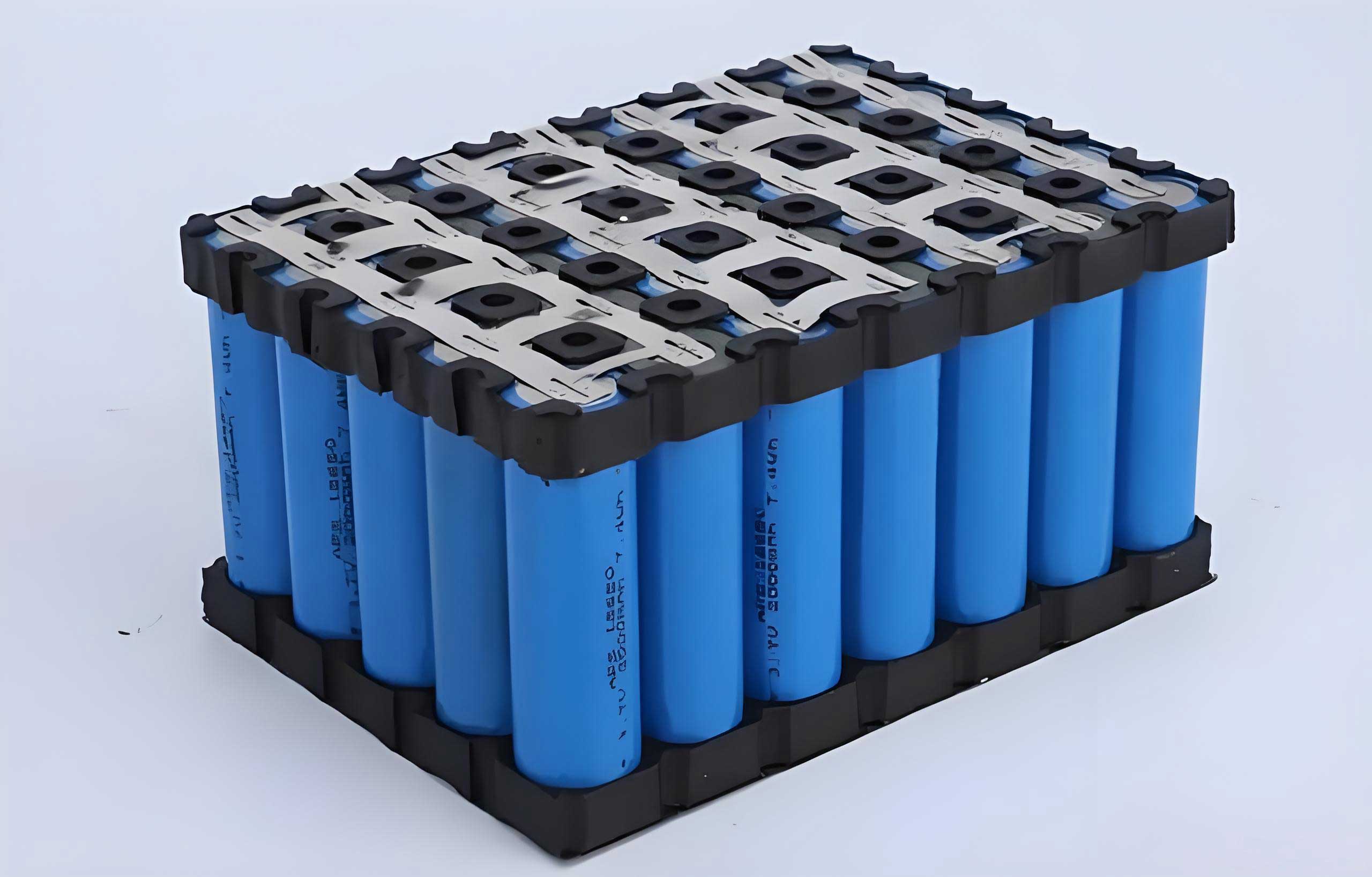
Structural and Performance Characteristics of LiFePO4 Batteries
The LiFePO4 battery, renowned for its structural and performance advantages, is one of the most promising lithium-ion battery technologies today. Its key features are outlined below.
Structural Composition: A standard LiFePO4 battery consists of a cathode, anode, separator, electrolyte, and casing. The cathode material is lithium iron phosphate (LiFePO4), while the anode is typically a carbon-based material like graphite. The separator, usually made from a polymer, physically isolates the cathode and anode. The electrolyte, a lithium salt solution, serves as the ion transport medium. The casing, constructed from metal or specialized plastic, protects the internal components.
Performance Attributes: Under non-extreme conditions, the LiFePO4 battery exhibits high safety, with a low risk of thermal runaway, explosion, or fire. It boasts a long cycle life, often retaining over 80% of its initial capacity after 2,000 charge-discharge cycles. Furthermore, it is capable of rapid charging and high-power output, making it suitable for applications requiring instantaneous power. Environmentally, it is considered less hazardous as it contains no heavy metals like cobalt.
Investigation of Fire Hazards in LiFePO4 Battery Energy Storage Stations
While LiFePO4 batteries offer advantages such as long life and stable performance, their proliferation in large-scale energy storage stations has intensified fire safety concerns. The primary hazards originate from the batteries themselves and the station’s design.
1. Hazards from Charging and Discharging: Heat generation is intrinsic to the electrochemical reactions during the charging and discharging of a LiFePO4 battery. If the station’s thermal management system is inadequately designed or fails, heat accumulation can occur. When the battery temperature exceeds a critical threshold, it can trigger thermal runaway, leading to fire.
2. Hazards from Electrolyte: The electrolyte, typically composed of flammable organic solvents and lithium salts, is a major fire hazard. Under normal operation, it is sealed within the battery. However, if the battery casing is compromised due to damage or degradation, the leaked electrolyte can rapidly volatilize, potentially igniting or exploding upon contact with air.
3. Safety Risks in Station Design: Many energy storage stations employ centralized, high-density layouts to maximize storage efficiency. While efficient, this design facilitates rapid fire propagation between closely packed battery clusters. A fire in one module can quickly escalate, posing severe risks to the entire station and surrounding areas.
4. Hazards from Short Circuits: Internal or external short circuits cause a sudden surge in current, generating intense heat. This can be due to manufacturing defects, aging, mechanical damage, or faulty battery management systems (BMS) that fail to detect abnormalities. The generated heat can rapidly increase the internal temperature, leading to fire or explosion.
5. Hazards from Thermal Runaway: This is a cascading failure mode. When a battery’s internal temperature reaches a critical point, exothermic chemical reactions accelerate, producing more heat and gas, which further increases temperature and pressure. This positive feedback loop can result in fire, explosion, or the propagation of thermal runaway to adjacent cells. Triggers include internal short circuits, overcharging, or excessive discharge rates.
Water Quality Analysis of Firefighting Drainage from LiFePO4 Battery Energy Storage Stations
Engineering Context and Experimental Methodology
In a representative project, a single 5 MWh battery container houses 4,992 cells, each with a capacity of 314Ah and a nominal voltage of 3.2V. The fire protection system includes a module-level water mist system with a design water volume of approximately 20 m³, supplemented by outdoor hydrants bringing the total design firefighting water volume to about 240 m³.
Recognizing that real-world fires involve batteries in various states of charge (SOC) and health, this study analyzed wastewater from extinguishing tests on both new and aged LiFePO4 batteries. LP11025265-100Ah type cells were used. “New” batteries were unused, while “Old” batteries were cycled to 80% of their original capacity. Batteries were conditioned to 100%, 50%, and 0% SOC.
Test Procedure: Batteries were artificially ignited. After 10-15 seconds, 500 ml of water was applied, often intensifying the flame initially. Water application continued until combustion ceased. The residual solid material was removed, and the wastewater was collected and labeled according to the battery’s age and SOC (e.g., New_100, Old_50).
Water Quality Analysis: The volume of wastewater generated varied. To standardize comparison, all measured pollutant concentrations were normalized to a baseline firefighting water volume of 15 liters. The results were compared against China’s GB/T 31962-2015 Class C standard for sewage discharged into urban下水道 (referred to as the “Municipal Standard”).
Analysis of Test Results
The key findings from the water quality analysis are summarized in the table below, which presents the concentration ranges observed for various parameters.
| Parameter | Concentration Range in Test Wastewater (mg/L) | Municipal Standard Limit (mg/L) | Status vs. Standard |
|---|---|---|---|
| pH | 7.3 – 7.6 | 6.0 – 9.0 | Compliant |
| Copper (Cu) | 0.1 – 2.1 | 2.0 | Mostly Compliant |
| Nickel (Ni) | 0.1 – 0.3 | 1.0 | Compliant |
| Chromium (Cr) | 0.2 – 0.8 | 1.5 | Compliant |
| Lead (Pb) | ~0.0 | 1.0 | Compliant |
| Manganese (Mn) | ~0.0 | 2.0 | Compliant |
| Arsenic (As) | 0.0 – 0.3 | 0.5 | Compliant |
| Fluoride (F⁻) | 12 – 197 | 20 | Frequently Exceeds |
| Suspended Solids (SS) | 870 – 2060 | 400 | Significantly Exceeds |
| Chemical Oxygen Demand (COD) | 25,000 – 58,310 | 500 | Drastically Exceeds |
| Total Phosphorus (TP) | 45 – 410 | 8.0 | Significantly Exceeds |
| Total Nitrogen (TN) | 45 – 410 | 70 | Often Exceeds |
| Ammonia Nitrogen (NH₃-N) | 1 – 20 | 45 | Compliant |
The data reveals several critical insights into the nature of firefighting wastewater from LiFePO4 battery fires:
pH and Heavy Metals: The wastewater was neutral (pH 7.3-7.6). Most heavy metal concentrations (Ni, Cr, Pb, Mn, As) were low and within regulatory limits. Copper was occasionally near or slightly above the limit. This suggests that, for the LiFePO4 chemistry, heavy metal leaching is not the primary pollution concern during a short-duration fire event.
Suspended Solids (SS) and COD: Both parameters were extraordinarily high. The elevated SS indicates a large amount of particulate matter from burnt/unburnt battery components, soot, and eroded materials. The extremely high COD values (50-100 times the standard) signify a massive load of oxidizable organic matter. This originates from the incomplete combustion of organic electrolytes, solvents, binders, and plastic components within the LiFePO4 battery assembly. The COD can be conceptually related to the organic carbon content released:
$$ \text{COD Load} \propto m_{\text{org}} \times f_{\text{comb}} $$
where \( m_{\text{org}} \) is the mass of organic material in the battery and \( f_{\text{comb}} \) is the fraction that is incompletely combusted and leached into the water.
Total Phosphorus (TP): TP concentrations were significantly超标, especially in batteries at higher SOC. This is directly attributable to the lithium iron phosphate (LiFePO4) cathode material. During thermal decomposition and interaction with firefighting water, phosphorus from the cathode can be released in various forms (e.g., phosphates).
Fluoride (F⁻): Fluoride levels were frequently超标. This is a signature pollutant from the decomposition of lithium hexafluorophosphate (LiPF₆), the common electrolyte salt in many LiFePO4 batteries. The hydrolysis reaction of LiPF₆ is:
$$ \text{LiPF}_6 + 4\text{H}_2\text{O} \rightarrow \text{LiF} + 5\text{HF} + \text{H}_3\text{PO}_4 $$
The generated hydrofluoric acid (HF) dissolves in water, contributing to fluoride ions. Aged batteries tended to show higher fluoride concentrations, possibly due to pre-existing degradation of the electrolyte salt.
Scaling to Engineering Reality: The experimental water use was 15L per 100Ah cell. Scaling to a real 314Ah cell suggests a water volume per cell (\(V_{cell}\)) of approximately:
$$ V_{cell} \approx 15 \text{ L} \times \frac{314 \text{ Ah}}{100 \text{ Ah}} \approx 47 \text{ L} $$
For a station with thousands of cells, the total firefighting water volume (\(V_{total}\)) could be estimated as:
$$ V_{total} = N_{cells} \times V_{cell} \times f_{involvement} $$
where \(N_{cells}\) is the total number of cells and \(f_{involvement}\) is the fraction of cells actively involved in the fire and suppression. Even for a partial involvement, \(V_{total}\) can reach hundreds of cubic meters. Consequently, while concentrations of some pollutants like metals may dilute, the total mass discharge of key pollutants like COD, TP, and Fluoride becomes substantial:
$$ \text{Mass Pollutant} = C_{pollutant} \times V_{total} $$
This scaling confirms that COD and TP remain critical超标 pollutants in real-world scenarios.
Engineering Countermeasures for Firefighting Drainage Management
Based on the water quality analysis and scaling considerations, the management strategy for firefighting wastewater from LiFePO4 battery energy storage stations must be tailored to the specific environmental context and regulatory framework. The following tiered approach is proposed.
| Scenario / Condition | Proposed Countermeasure | Rationale & Considerations |
|---|---|---|
| Areas with Standard Environmental Requirements | Controlled Discharge to Storm/Sewer Network | Firefighting drainage is a low-frequency, high-impact event. The total volume, while significant for a single event, is small relative to annual urban wastewater flows. The environmental impact of the diluted, one-time discharge may be deemed acceptable after risk assessment. Constructing dedicated, large-scale collection and treatment facilities is often economically prohibitive (costs can exceed millions). This option requires prior approval from authorities and a demonstration that no significant harm will occur. |
| Environmentally Sensitive Areas or Strict Regulations | Containment and Off-site Treatment | Direct discharge is unacceptable. The wastewater must be fully contained on-site. Given the high COD and specific pollutants (F⁻, P), on-site treatment is complex and costly. The recommended strategy is to collect wastewater in lined containment basins or tanks. The water can then be subjected to natural evaporation in “evaporation ponds” to reduce volume, followed by transportation of the residual sludge or concentrated liquid to a specialized hazardous waste treatment facility. Alternatively, if the local municipal wastewater treatment plant has the capacity and permits to accept it, controlled discharge to the sewer for central treatment is a viable option. |
| Supplementary Risk Mitigation Strategy | Passive Fire Protection & Design Optimization | To minimize wastewater generation at its source, consider a “passive” compartmentalization strategy. If a fire is confirmed in one battery container, the fixed suppression system within that container is activated. For adjacent containers, instead of aggressive suppression, cooling water sprays are used on the exterior to prevent fire spread. This reduces the total volume of water contacting burning battery materials. Trade-off: This may allow the primary fire to burn longer, causing greater asset loss and potentially longer-duration smoke emissions. It requires careful safety and environmental impact assessment. |
Integrated Engineering Design Principles: Beyond post-fire management, the design of the LiFePO4 battery energy storage station itself should incorporate features to mitigate fire and drainage impact:
- Secondary Containment: The entire battery storage area should have impermeable flooring (e.g., HDPE liner) with high curb walls to create a primary catchment basin for all firefighting water and leakage.
- Segmented Bunding: Large stations should be divided into smaller, isolated containment zones to limit the volume of wastewater mixed in any single incident.
- Drainage Control: Install sealed valves or gates on drainage outlets from the containment area. These should be manually or automatically closed upon fire alarm activation to trap contaminated water.
- Advanced Detection and Early Suppression: Implement a multi-tiered fire detection system (gas, smoke, heat) coupled with very early suppression systems (e.g., aerosol, precise water mist) to extinguish incipient fires before they grow large, thereby drastically reducing the needed firefighting water and consequent wastewater.
The required containment volume (\(V_{containment}\)) can be estimated as:
$$ V_{containment} \ge V_{firewater} + V_{rainfall} $$
where \(V_{firewater}\) is the total design firefighting water volume (e.g., 240 m³ in the example) and \(V_{rainfall}\) is the volume from precipitation during the critical period.
Conclusion
In summary, the analysis of firefighting drainage from LiFePO4 battery energy storage stations reveals a complex wastewater profile characterized by exceptionally high concentrations of COD, suspended solids, total phosphorus, and fluoride, primarily stemming from the combustion and decomposition of organic components, the cathode material, and the electrolyte salt. While heavy metal pollution appears less acute for the LiFePO4 chemistry, the organic and inorganic load presents a significant environmental challenge. Scaling experimental data to real-world engineering scales confirms that these pollutants remain critical concerns.
Effective management requires a context-specific, tiered approach. For general areas, controlled discharge after dilution may be an acceptable, cost-effective solution following rigorous environmental risk assessment. In sensitive regions, mandatory on-site containment and subsequent off-site treatment at specialized facilities are necessary. Proactive design measures, including secondary containment, drainage control, and advanced early suppression systems, are essential to minimize both fire risk and wastewater generation at the source.
Addressing the water quality and management of firefighting drainage is not merely a regulatory compliance issue but a fundamental aspect of the sustainable and safe integration of LiFePO4 battery energy storage systems into the modern power grid. Continued research into more fire-resistant battery chemistries, improved suppression agents that reduce secondary pollution, and optimized station design will further enhance the environmental profile of this crucial energy storage technology.