
In recent years, the rapid development of new energy vehicles, portable electronic devices, and energy storage systems has highlighted the critical role of lithium-ion batteries as key power units. The charging efficiency and service life of lithium-ion batteries have become focal points of research. Traditional constant current-constant voltage (CC-CV) charging strategies, while simple and reliable, exhibit numerous shortcomings in terms of charging speed, battery safety, and lifespan protection. To achieve more intelligent and efficient charging control for lithium-ion batteries, I propose a neural network-based optimization method for lithium-ion battery charging strategies. By constructing a neural network model with input features such as voltage, current, temperature, and state of charge (SOC), the method predicts the operational response of lithium-ion batteries under different charging strategies and incorporates optimization algorithms to dynamically adjust the charging strategy. Experimental results indicate that, compared to traditional CC-CV charging strategies, this method reduces charging time by approximately 12% and lowers maximum temperature rise by about 15% while ensuring charging safety, significantly mitigating negative impacts on battery lifespan. It demonstrates broad application prospects in enhancing the intelligent management of lithium-ion batteries.
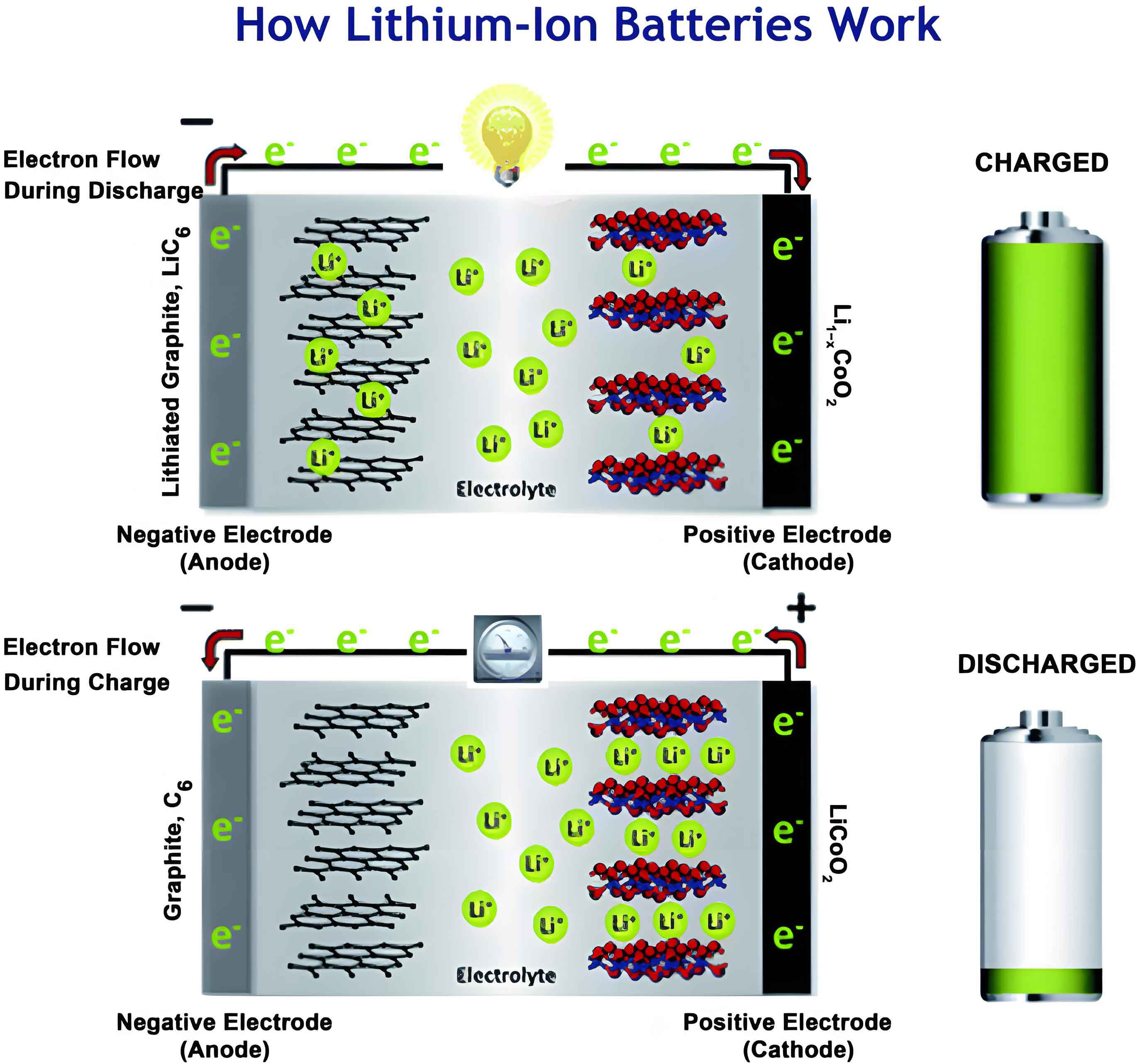
The widespread adoption of lithium-ion batteries is driven by their high energy density and long cycle life, making them essential in various applications. However, charging strategies for lithium-ion batteries must balance efficiency, safety, and longevity. Traditional methods often fall short in optimizing these factors simultaneously. With advancements in artificial intelligence, neural networks offer a promising approach to model the complex nonlinear dynamics of lithium-ion batteries during charging. This paper explores a data-driven framework that leverages neural networks to predict battery states and optimize charging parameters, ultimately improving the performance and durability of lithium-ion batteries. The focus is on developing a holistic solution that addresses real-time charging challenges for lithium-ion batteries in diverse environments.
Lithium-ion battery modeling is a fundamental step in charging strategy optimization. The behavior of lithium-ion batteries during charging is influenced by multiple interdependent factors, such as current, voltage, temperature, and SOC, which exhibit nonlinear relationships. Data-driven modeling methods, particularly neural networks, are well-suited for capturing these complexities without relying on intricate physical equations. In this work, I employ neural networks to build predictive models for lithium-ion battery states, enabling accurate forecasting of key parameters under varying charging conditions. This approach facilitates the design of adaptive charging strategies tailored to the unique characteristics of lithium-ion batteries.
The neural network model takes inputs such as charging current \(I(t)\), time \(t\), environmental temperature \(T(t)\), and historical SOC values, and outputs battery terminal voltage \(V(t)\), SOC, or internal temperature. For instance, a standard feedforward neural network (e.g., backpropagation network) can be represented as:
$$ y = f(W_n \cdot f(W_{n-1} \cdot \ldots \cdot f(W_1 x + b_1) + b_{n-1}) + b_n) $$
where \(x\) is the input feature vector, \(f\) is the activation function, \(y\) is the predicted output, and \(W_i\) and \(b_i\) are weights and biases, respectively. To enhance temporal modeling capabilities for lithium-ion battery charging sequences, recurrent neural networks (RNNs) like Long Short-Term Memory (LSTM) or Gated Recurrent Unit (GRU) are integrated, allowing the model to retain memory of historical charging processes. The training of these neural networks for lithium-ion battery applications involves minimizing a loss function, typically the mean squared error (MSE):
$$ L = \frac{1}{N} \sum_{i=1}^{N} (\hat{y}_i – y_i)^2 $$
where \(\hat{y}_i\) is the predicted value and \(y_i\) is the true value for lithium-ion battery states. This loss function guides the optimization of network weights via backpropagation and gradient descent, ensuring accurate predictions for lithium-ion battery behavior.
Designing and training the neural network model requires careful consideration of architecture, input-output features, and data preprocessing. For lithium-ion battery charging optimization, I propose a hybrid model combining convolutional neural networks (CNN) and LSTM networks, referred to as CNN-LSTM. This architecture excels at extracting spatial features from input sequences and capturing long-term dependencies, making it ideal for time-series data from lithium-ion batteries. The CNN component processes local patterns in charging parameters, while the LSTM handles temporal dynamics, collectively improving prediction accuracy for lithium-ion battery states.
The input and output features for the neural network model are selected based on their relevance to lithium-ion battery charging dynamics. Table 1 summarizes the key variables used in modeling lithium-ion batteries:
| Input Feature | Meaning | Unit |
|---|---|---|
| \(I(t)\) | Current charging current | A |
| \(t\) | Current time or cumulative charging time | s |
| \(T(t)\) | Current environmental temperature | °C |
| \(V(t-1)\) | Terminal voltage at previous time step | V |
| \(SOC(t-1)\) | State of charge at previous time step | % |
The output targets include battery terminal voltage \(V(t)\), SOC, or temperature. To ensure robust training, input features are normalized using techniques like Min-Max scaling to the range [0,1], reducing the impact of differing scales on model performance for lithium-ion batteries. The dataset is constructed from publicly available sources, such as the NASA battery dataset, supplemented with simulated data to cover diverse charging scenarios for lithium-ion batteries. Data preprocessing involves removing outliers, handling missing values, and segmenting time-series data into sliding windows. The dataset is split into training, validation, and test sets in a 7:2:1 ratio, with data augmentation applied through noise injection to enhance generalization for lithium-ion battery variants.
Training the neural network model for lithium-ion battery applications follows a supervised learning approach. The Adam optimizer is used with an initial learning rate of \(1 \times 10^{-3}\), which decays over time. The batch size is set to 64, and training proceeds for up to 200 epochs, with early stopping triggered if validation loss plateaus to prevent overfitting. Evaluation metrics include root mean square error (RMSE), mean absolute error (MAE), and coefficient of determination (\(R^2\)), assessing the model’s predictive accuracy for lithium-ion battery states. The training process demonstrates steady convergence, as shown by decreasing loss values and increasing accuracy on both training and validation sets, confirming the model’s effectiveness for lithium-ion battery charging prediction.
Optimizing the charging strategy for lithium-ion batteries involves defining a multi-objective function that balances charging time, battery health degradation, and thermal safety. For a lithium-ion battery, the optimization goal is to minimize a composite function \(J\):
$$ J = w_1 \cdot T_{\text{charge}} + w_2 \cdot D_{\text{SOH}} + w_3 \cdot R_{\text{temp}} $$
where \(T_{\text{charge}}\) is the charging time from current SOC to target SOC, \(D_{\text{SOH}}\) is the degradation in state of health (SOH) predicted by the neural network for the lithium-ion battery, \(R_{\text{temp}}\) is the temperature rise risk measured by maximum temperature change, and \(w_1, w_2, w_3\) are weighting coefficients adjusted based on application priorities for lithium-ion batteries. The neural network model provides real-time estimates of \(D_{\text{SOH}}\) and \(R_{\text{temp}}\), enabling dynamic optimization tailored to lithium-ion battery conditions.
To solve this multi-objective optimization problem for lithium-ion batteries, I employ a genetic algorithm (GA), which performs a global search over charging parameters. The GA process includes the following steps: encoding charging parameters like constant current phase current \(I_{cc}\), constant voltage cutoff current \(I_{\text{cutoff}}\), and phase-switching SOC into chromosome genes; generating an initial population of random individuals; defining a fitness function based on the objective \(J\) computed via neural network predictions for lithium-ion batteries; and iteratively applying selection, crossover, and mutation operations until convergence. The algorithm outputs optimal charging strategy parameters that enhance the performance of lithium-ion batteries. Table 2 illustrates the encoding scheme for lithium-ion battery charging parameters in the GA:
| Parameter | Encoding Range | Description |
|---|---|---|
| \(I_{cc}\) | [0.5C, 2C] | Constant current rate for lithium-ion battery |
| \(I_{\text{cutoff}}\) | [0.01C, 0.1C] | Cutoff current in constant voltage phase |
| \(SOC_{\text{switch}}\) | [70%, 90%] | SOC threshold for phase transition |
Simulation results validate the effectiveness of the proposed optimization method for lithium-ion batteries. Compared to traditional CC-CV strategies, the GA-optimized approach reduces charging time, SOH degradation, and temperature rise. For instance, in a case study on a lithium-ion battery, charging time decreased from 90 minutes to 75 minutes, SOH attenuation dropped from 3.5% to 2.1%, and temperature rise was lowered from 12°C to 9.8°C. These improvements highlight the method’s ability to enhance the longevity and safety of lithium-ion batteries through intelligent charging control.
Experimental analysis compares the performance of various neural network models in optimizing lithium-ion battery charging strategies. The proposed CNN-LSTM model is evaluated against baseline models, including BP neural networks, standalone LSTM, and GRU networks. Table 3 presents a quantitative comparison on test data for lithium-ion battery state prediction:
| Model Type | MSE | MAE | \(R^2\) | Training Time (s) |
|---|---|---|---|---|
| BP Neural Network | 0.0098 | 0.0742 | 0.913 | 102.4 |
| LSTM | 0.0043 | 0.0547 | 0.958 | 135.2 |
| GRU | 0.0039 | 0.0512 | 0.964 | 126.7 |
| CNN-LSTM (Proposed) | 0.0025 | 0.0376 | 0.982 | 158.7 |
The CNN-LSTM model achieves the lowest MSE and MAE, along with the highest \(R^2\) value, indicating superior predictive accuracy for lithium-ion battery states. This performance stems from its ability to extract both spatial and temporal features from charging data of lithium-ion batteries. Although training time is slightly higher due to model complexity, the gains in accuracy justify its use for real-time optimization of lithium-ion battery charging.
Further analysis involves testing the optimized charging strategy on different lithium-ion battery types under varying initial conditions. The neural network model demonstrates robust adaptability, maintaining high prediction accuracy across diverse SOC levels and environmental temperatures for lithium-ion batteries. This versatility is crucial for practical applications, where lithium-ion batteries may operate in unpredictable scenarios. Additionally, the integration of genetic algorithm optimization allows for customized charging profiles that minimize stress on lithium-ion batteries, extending their operational lifespan. The synergy between neural network predictions and GA-based parameter tuning creates a closed-loop system that continuously refines charging strategies for lithium-ion batteries based on real-time feedback.
In summary, the proposed CNN-LSTM fusion algorithm offers significant advantages for optimizing lithium-ion battery charging strategies. First, its strong temporal feature extraction capability, combining convolutional and recurrent neural networks, enables accurate modeling of long-term dependencies in lithium-ion battery charging sequences. Second, predictive precision is markedly improved, with MSE and MAE reductions and an \(R^2\) increase to 0.982, ensuring reliable strategy recommendations for lithium-ion batteries. Third, the multi-objective optimization framework balances charging speed, health preservation, and thermal safety for lithium-ion batteries, addressing key challenges in battery management systems. Future work could explore reinforcement learning techniques to further enhance adaptive charging control for lithium-ion batteries in dynamic environments.
The implications of this research extend to various sectors reliant on lithium-ion batteries, such as electric vehicles and grid storage. By implementing intelligent charging strategies, the efficiency and durability of lithium-ion batteries can be maximized, contributing to sustainable energy solutions. Continued advancements in neural network architectures and optimization algorithms will likely drive further innovations in lithium-ion battery management, paving the way for smarter and safer energy storage systems.