
The widespread adoption of lithium-ion batteries as the cornerstone of energy storage and electric mobility represents a significant stride towards a sustainable future. However, this rapid growth precipitates a corresponding surge in end-of-life batteries. Managing the resultant stream of spent lithium-ion batteries presents a critical environmental challenge. The recycling processes, while essential for resource recovery, harbor inherent risks that, if not meticulously managed, can lead to severe pollution across ecological mediums. In this article, I discuss the multifaceted environmental hazards associated with lithium-ion battery recycling, analyze the evolution of regulatory frameworks, examine the current state of the recycling industry, and propose integrated management strategies for a sustainable closed-loop system.
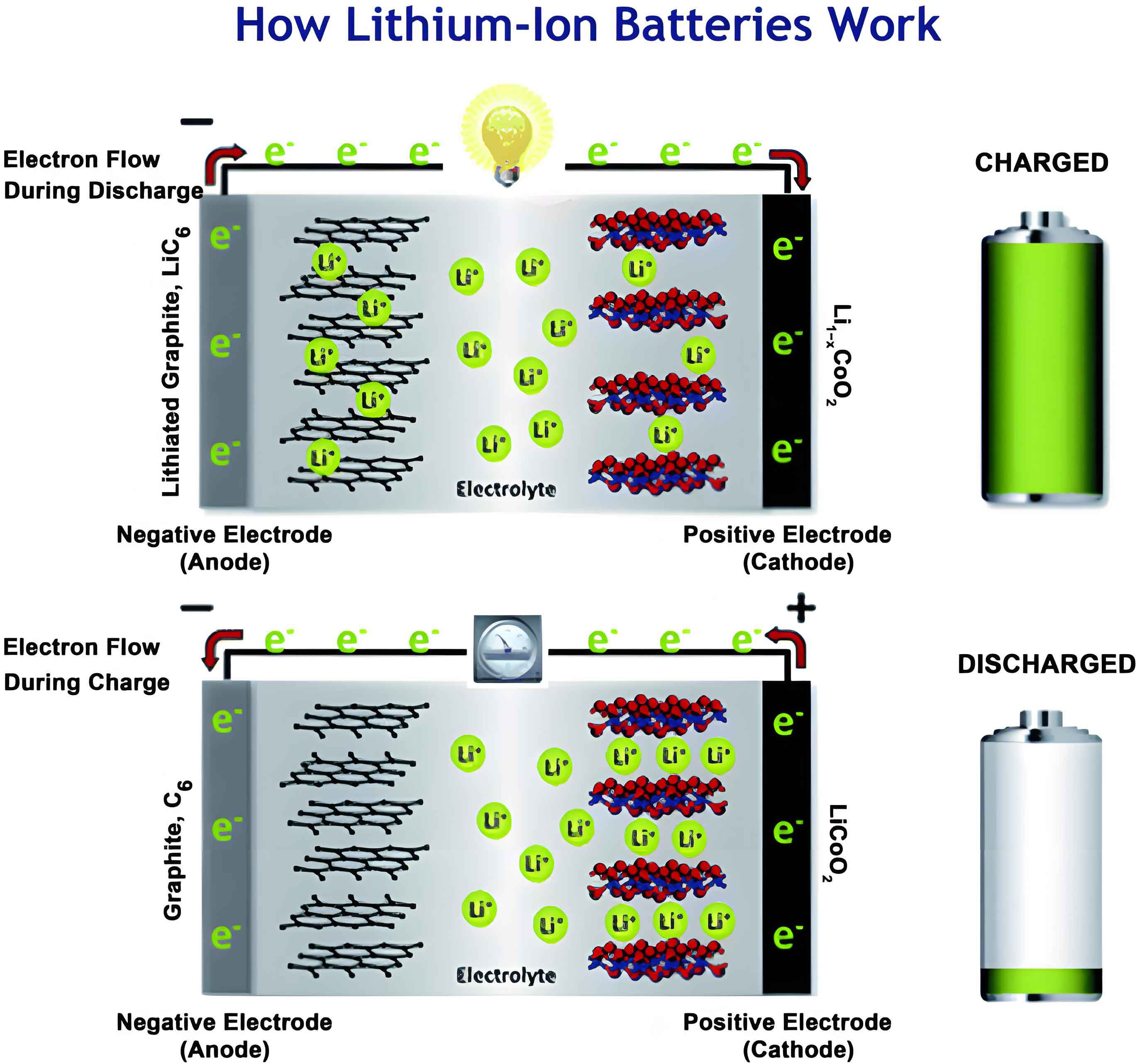
The recycling of a lithium-ion battery typically involves a multi-stage process, each stage introducing distinct environmental risk vectors. The generic flow encompasses collection, discharge, dismantling, and subsequent separation into components like the cathode, anode, electrolyte, and casing. The valuable metals are then recovered via hydrometallurgical (acid/alkali leaching) or pyrometallurgical (high-temperature smelting) routes, while organic components are treated thermally or with solvents.
Identification of Environmental Risks in the Recycling Chain
The environmental risks can be systematically categorized based on the phase of recycling and the nature of the pollutant.
1. Physical Dismantling and Mechanical Processing Risks
The initial handling of spent lithium-ion batteries poses immediate physical hazards. Residual electrical charge can cause short circuits, leading to fires or explosions. Mechanical shredding and crushing generate particulate matter (dust) laden with toxic heavy metals from cathode materials, such as nickel (Ni), cobalt (Co), and manganese (Mn). The dispersion of this dust into the air poses inhalation risks to workers and can contaminate soil and water bodies in the vicinity of unregulated facilities.
2. Chemical Leaching and Electrolyte Decomposition Risks
This phase presents profound chemical pollution threats. The most acute risk arises from the electrolyte, typically containing lithium hexafluorophosphate (LiPF6). Upon exposure to moisture, LiPF6 hydrolyzes, producing highly toxic and corrosive hydrogen fluoride (HF):
$$ \text{LiPF}_6 + \text{H}_2\text{O} \rightarrow \text{LiF} + \text{POF}_3 + 2\text{HF} $$
HF is extremely hazardous and can cause severe environmental acidification. Furthermore, hydrometallurgical processes employ concentrated acids (e.g., H2SO4, HCl) or alkalis to leach metals. Spills or inadequate treatment of these spent leaching solutions can lead to catastrophic soil and groundwater contamination. Soluble ions like lithium (Li+), nickel (Ni2+), and cobalt (Co2+) are highly mobile in aquatic systems, leading to pervasive and long-term pollution.
3. Thermal Treatment and Atmospheric Emission Risks
Pyrometallurgical recovery and thermal treatment of plastics (e.g., separators, casing) generate significant airborne pollutants. Incomplete combustion, especially under oxygen-deficient conditions, can lead to the formation of persistent organic pollutants (POPs). For instance, if the battery components contain chlorinated plastics like polyvinyl chloride (PVC), the process can synthesize dioxins and furans, which are highly toxic, carcinogenic, and bioaccumulative. The emission control of such gases is technically challenging and critical.
4. Cross-Media Pollution Transfer Mechanism
The environmental impact of a mismanaged lithium-ion battery is not confined to a single medium. A conceptual model of the pollution transfer can be described. For example, heavy metal particles (M) from dust can deposit on soil (S). Their bioavailability and subsequent uptake by plants (P) is a function of soil pH and organic matter content, often modeled by a distribution coefficient Kd:
$$ C_{\text{sorbed}} = K_d \cdot C_{\text{solution}}^{n} $$
where \( C_{\text{sorbed}} \) is the concentration on soil solids, \( C_{\text{solution}} \) is the concentration in soil pore water, and \( n \) is a fitting parameter. These metals then enter the food chain. Simultaneously, fluoride ions (F–) from electrolyte decomposition can leach into groundwater (G), with their concentration attenuating over distance (x) from the source, which can be approximated for simple scenarios by:
$$ C(x) = C_0 \cdot e^{-\lambda x} $$
where \( C_0 \) is the initial concentration and \( \lambda \) is a decay constant dependent on hydrogeological conditions.
Evolution of Management Policies for Lithium-ion Battery Recycling
The policy landscape for managing end-of-life lithium-ion batteries, particularly from electric vehicles, has evolved through distinct phases, reflecting a learning curve from awareness to comprehensive regulation.
| Policy Evolution Phase | Timeframe | Key Policy Themes & Instruments | Core Features & Advancements |
|---|---|---|---|
| Exploratory Phase | ~2012-2015 | • Integrated within broader new energy vehicle (NEV) promotion plans. • Mention of establishing a recycling system. |
• Reactive and ancillary policy design. • Lack of specific responsibility assignment or operational details. |
| Specialized Breakthrough Phase | ~2015-2018 | • Issuance of dedicated technical policies for power battery recycling. • Formal introduction of the Extended Producer Responsibility (EPR) principle. |
• Shift from concept to technical guidelines. • Clarification of automakers’ and battery producers’ primary responsibility for recycling. |
| Pilot Deepening Phase | ~2018-2021 | • Release of interim management measures. • Launch of regional pilot programs for recycling. |
• Focus on traceability management and standard setting. • Practical experimentation with business models and responsibility fulfillment in pilot zones. |
| Comprehensive Standardization Phase | 2021-Present | • Upgrading of industry standard conditions for battery production and recycling. • National action plans for building a complete recycling system. • Integration with broader industrial resource utilization policies. |
• Holistic, closed-loop regulatory framework covering design, production, use, and end-of-life. • Emphasis on nationwide synergy, cross-regional coordination, and stringent environmental compliance for recycling facilities. |
This progression demonstrates a strategic tightening of control, moving from voluntary encouragement to mandatory, technically-grounded regulation encompassing the entire lifecycle of a lithium-ion battery.
Current State of the Lithium-ion Battery Recycling Industry
The lithium-ion battery recycling industry has matured into a complex ecosystem with a clearly defined “dual-track” value chain: cascade utilization for less degraded batteries and material recovery through dismantling and regeneration for others.
Industry Chain Structure
| Chain Segment | Key Actors & Functions | Interconnections |
|---|---|---|
| Upstream (Supply & Inputs) | • Battery Manufacturers (e.g., CATL, BYD) • Automotive OEMs • Consumer Electronics Firms • Collection Networks & Traders • Specialized Equipment Suppliers |
Provide the source of spent lithium-ion batteries and the technology for handling them. EPR regulations formally link producers to this segment. |
| Midstream (Processing) | • Cascade Utilization Service Providers • Professional Dismantling & Recycling Companies • Testing & Certification Agencies |
Constitute the core processing layer. They assess battery state of health (SOH) for cascade use or perform physical/chemical processes for material recovery. |
| Downstream (Output & Reintegration) | • Precursor & Cathode Material Producers • Battery Cell Manufacturers (again) |
Absorb recovered materials (Li, Co, Ni, Mn, Cu, Al) to manufacture new battery-grade chemicals, closing the material loop. |
Market Scale and Growth Trajectory
The global market for lithium-ion battery recycling is experiencing exponential growth, driven by the wave of retiring batteries from the first generation of EVs and consumer electronics. China, as the world’s largest producer and consumer of lithium-ion batteries, represents a significant portion of this market.
| Year | Global Recycling Volume (10k tons) | China Recycling Volume (10k tons) |
|---|---|---|
| 2020 | 33.84 | 11.39 |
| 2021 | 54.65 | 22.62 |
| 2022 | ~75.00 (Est.) | ~35.00 (Est.) |
| 2023 | ~102.00 (Est.) | ~52.00 (Est.) |
| 2024 | 132.15 | 69.57 |
| 2025 (Projected) | 172.20 | 83.12 |
Note: Figures are illustrative based on industry reports and projections.
The growth can be modeled by a compound annual growth rate (CAGR). For the Chinese market from 2020 to 2025, the approximate CAGR can be calculated as:
$$ \text{CAGR} = \left( \frac{V_{2025}}{V_{2020}} \right)^{\frac{1}{5}} – 1 $$
where \( V_{2025} \) and \( V_{2020} \) are the volumes in 2025 and 2020, respectively. This underscores the urgency for robust environmental risk management systems to scale alongside the industry.
Prospective Environmental Risk Management Measures
To mitigate the identified risks and foster a sustainable circular economy for lithium-ion batteries, a multi-pronged management approach is essential. I propose the following integrated strategies:
1. Enhanced Full Lifecycle Tracking and Compliance Oversight
The cornerstone of modern risk management is digital traceability. Mandating a unique, tamper-proof digital product passport (DPP) for each lithium-ion battery module or pack is crucial. This DPP, following the EPR principle, would record key data: manufacturer, chemistry, production date, and critical material content. At end-of-life, every transaction—from decommissioning to final recycling—must be logged in a national or regional digital tracking platform. This enables real-time regulatory oversight and prevents illegal dumping or informal recycling.
Furthermore, permitting for recycling facilities must be based on strict environmental performance indicators (EPIs). The standard compliance cost \( C_{comp} \) for a facility can be expressed as a function of its technology level (T), scale (S), and location sensitivity (L):
$$ C_{comp} = f(T, S, L) = \alpha \cdot I_T + \beta \cdot \frac{1}{S} + \gamma \cdot L $$
where \( I_T \) represents the investment in advanced, low-pollution technology (inversely related to risk), and \( \alpha, \beta, \gamma \) are weighting coefficients. Regulations should incentivize lower \( C_{comp} \) through streamlined permitting for high-T, large-S facilities in appropriately zoned areas (low L).
2. Tiered Responsibility Allocation and Green Finance Mechanisms
While EPR sets the foundation, a nuanced, tiered responsibility model is needed. Producers are primarily responsible for financing and organizing recycling, but obligations should cascade:
- Design Responsibility: Mandate eco-design standards (e.g., easy disassembly, material labeling, reduced hazardous substance use).
- Consumer Responsibility: Implement and enforce convenient, free take-back systems.
- Recycler Responsibility: Adhere to best available techniques (BAT) and environmental safety standards.
Green finance is pivotal. A risk-adjusted green loan rate \( r_{green} \) for a recycling project could be modeled as:
$$ r_{green} = r_{base} – \delta \cdot \text{EPI} + \theta \cdot \text{ERI} $$
where \( r_{base} \) is the base interest rate, EPI is the environmental performance index of the project (leading to a subsidy \( \delta \)), and ERI is an environmental risk index (incurring a premium \( \theta \)). This directly links financing cost to environmental stewardship. Additionally, mandatory environmental liability insurance for recyclers can internalize potential cleanup costs, providing a financial safety net against accidents.
3. Development of Regional Synergistic Industrial Ecosystems
Environmental risk management efficiency can be vastly improved through regional cooperation. Instead of fragmented, small-scale facilities, planning should promote centralized, state-of-the-art “recycling hubs” within strategic industrial parks. These hubs benefit from economies of scale in pollution control infrastructure (e.g., centralized wastewater treatment, advanced flue gas scrubbing).
A regional synergy model can optimize logistics and treatment. The total environmental cost \( C_{total} \) for recycling a region’s lithium-ion battery waste could be minimized by solving:
$$ \min C_{total} = \sum_{i=1}^{n} (C_{trans,i} + C_{proc,i} + C_{risk,i}) $$
subject to constraints on processing capacity, emission limits, and collection coverage. Here, \( C_{trans,i} \), \( C_{proc,i} \), and \( C_{risk,i} \) are the transportation, processing, and risk-associated costs for sub-region \( i \) or facility \( i \). Regional governments can collaborate to establish “white lists” for cross-border battery waste transportation, standardize environmental standards, and jointly invest in shared R&D for cleaner recycling technologies, creating a collaborative, low-risk industrial ecology.
In conclusion, the path towards a truly sustainable lithium-ion battery economy is inextricably linked to mastering the environmental challenges of its end-of-life phase. As the recycling market scales, preemptive and integrated risk management—combining digital traceability, tiered economic responsibility, innovative finance, and regional industrial symbiosis—is not merely an option but a necessity. By implementing these strategies, we can ensure that the green promise of the lithium-ion battery is fulfilled across its entire lifecycle, safeguarding our environment while securing the critical materials for our energy future.