
As a researcher focused on sustainable energy solutions, I have been deeply involved in the study of recycling methods for spent lithium-ion batteries. The rapid proliferation of lithium-ion battery technology, particularly in electric vehicles and portable electronics, has led to an impending surge in battery waste. Among various cathode materials, ternary systems such as LiNi1/3Co1/3Mn1/3O2 are widely used due to their high energy density and cost-effectiveness. However, their shorter lifespan compared to alternatives like lithium iron phosphate batteries necessitates efficient recycling strategies to recover valuable metals like lithium, nickel, cobalt, and manganese. In this work, I explore a carbothermal reduction approach followed by leaching with saturated chlorine water to enhance the recovery efficiency of lithium from ternary cathode materials, aiming to develop a low-cost and effective method for lithium-ion battery recycling.
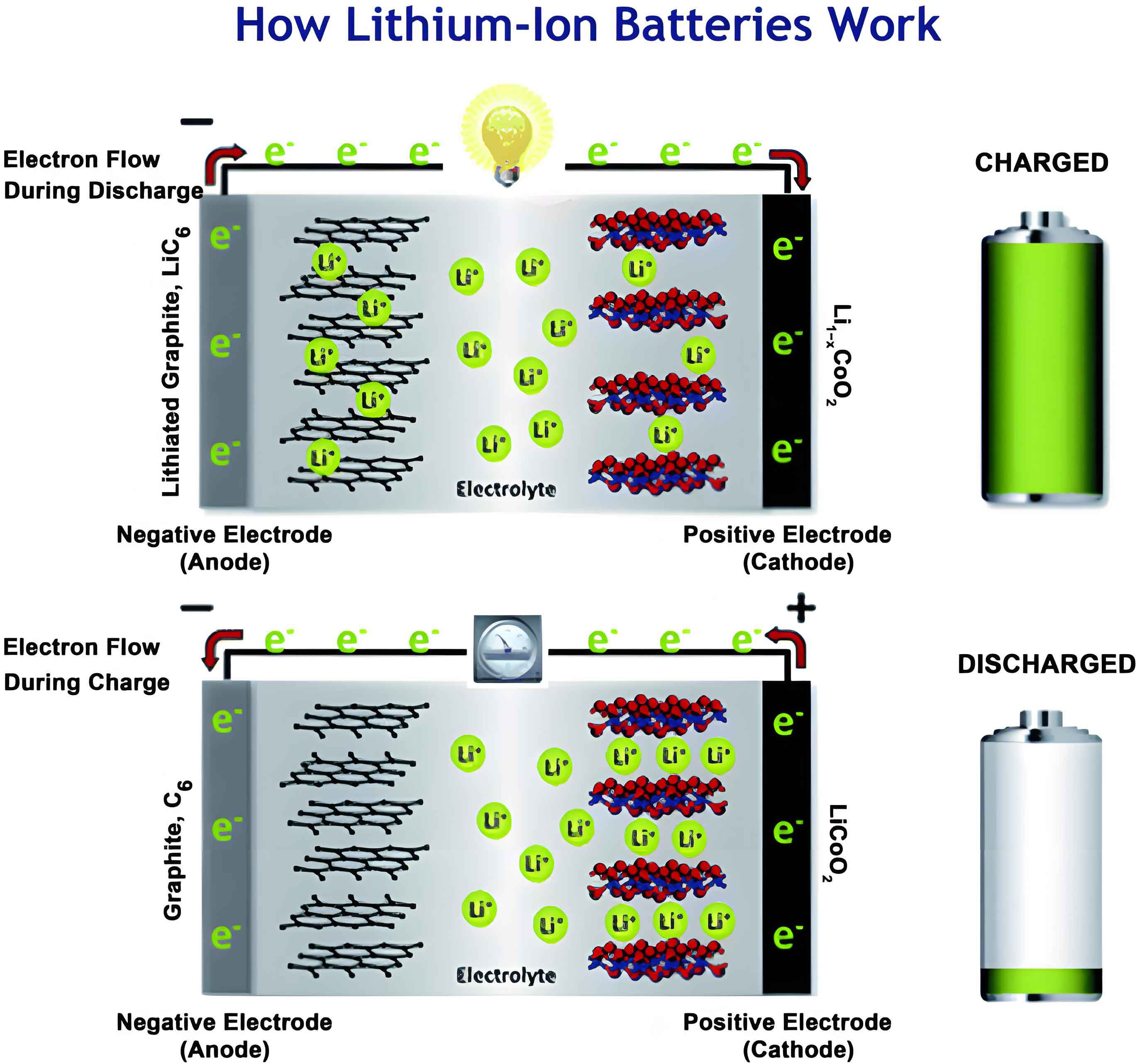
The global demand for lithium-ion batteries is driven by their superior performance in energy storage applications, but the environmental and economic impacts of disposal are concerning. Traditional hydrometallurgical recycling methods often involve the use of strong acids and reducing agents to dissolve high-valent metal oxides, which can be costly and inefficient. To address this, I investigated a two-step process: carbothermal reduction to convert refractory oxides into more soluble forms, followed by leaching with saturated chlorine water. Chlorine water offers advantages as an oxidizing agent, being inexpensive and generating by-products like NaOH and H2, which can be utilized in other industrial processes. This study systematically examines the effects of carbothermal reduction temperature on the phase transformations, morphology, and leaching efficiency of lithium and other metals from LiNi1/3Co1/3Mn1/3O2, contributing to the advancement of lithium-ion battery recycling technologies.
In the context of lithium-ion battery recycling, the ternary cathode material LiNi1/3Co1/3Mn1/3O2 presents a complex challenge due to the stability of its layered structure. The general formula for such ternary oxides can be represented as LiMO2, where M is a combination of transition metals. During carbothermal reduction, carbon acts as a reducing agent to lower the oxidation states of metals, facilitating subsequent leaching. The overall reaction can be described by a simplified equation:
$$ \text{LiNi}_{1/3}\text{Co}_{1/3}\text{Mn}_{1/3}\text{O}_2 + x\text{C} \rightarrow \text{Li}_2\text{CO}_3 + \text{Ni} + \text{Co} + \text{MnO} + \text{CO} \uparrow $$
However, the actual mechanism depends on temperature and stoichiometry. To quantify the reduction efficiency, I define the degree of reduction (α) as:
$$ \alpha = \frac{m_0 – m_t}{m_0} \times 100\% $$
where \( m_0 \) is the initial mass and \( m_t \) is the mass after reduction at temperature \( T \). This parameter helps correlate mass loss with phase changes observed in XRD analysis.
For this study, I prepared LiNi1/3Co1/3Mn1/3O2 samples mixed with glucose (C6H12O6) in a 1:1 mass ratio. Glucose serves as a carbon source for reduction, decomposing at elevated temperatures to provide reactive carbon. The mixture was ground thoroughly and subjected to carbothermal reduction in a nitrogen atmosphere at temperatures of 300, 450, 600, 750, and 900°C for 4 hours each. After reduction, the products were characterized using X-ray diffraction (XRD) and scanning electron microscopy (SEM) to analyze phase composition and morphology. The leaching step involved immersing 1 g of reduced product in saturated chlorine water at 25°C for 1 hour, with electrolysis at 7 V to enhance oxidation. The leachate was separated by centrifugation, and the concentrations of Li, Ni, Co, and Mn were measured using inductively coupled plasma optical emission spectrometry (ICP-OES) to calculate leaching efficiencies.
The mass changes during carbothermal reduction are summarized in Table 1. As temperature increases, the mass loss becomes more pronounced, indicating progressive decomposition and reduction reactions. This trend aligns with the thermal degradation of glucose and the reduction of metal oxides. At 900°C, the significant mass loss suggests complete reduction and possible volatilization of components.
| Temperature (°C) | Initial Mass (g) | Final Mass (g) | Mass Loss (%) |
|---|---|---|---|
| 300 | 2.000 | 1.950 | 2.50 |
| 450 | 2.000 | 1.880 | 6.00 |
| 600 | 2.000 | 1.810 | 9.50 |
| 750 | 2.000 | 1.785 | 10.75 |
| 900 | 2.000 | 1.720 | 14.00 |
XRD analysis of the reduced products reveals distinct phase transformations. At 300°C, the diffraction patterns closely resemble the original ternary material, indicating minimal reduction. At 450°C, peaks corresponding to MnO emerge, with shifts suggesting the presence of NiO and CoO impurities. For temperatures ≥600°C, the patterns show consistent phases: MnO, Li2CO3, and metallic Ni and Co. The intensity of Li2CO3 peaks decreases at 900°C, possibly due to its reaction with MnO to form a dense layer that inhibits further reduction. The phase evolution can be modeled using the Johnson-Mehl-Avrami-Kolmogorov (JMAK) equation for solid-state reactions:
$$ \ln[-\ln(1-\alpha)] = n\ln k + n\ln t $$
where \( \alpha \) is the fraction transformed, \( k \) is the rate constant, \( n \) is the Avrami exponent, and \( t \) is time. Fitting this to XRD data helps understand the kinetics of reduction in lithium-ion battery materials.
After leaching with saturated chlorine water, XRD of the residues shows further changes. For samples reduced at 450°C, NiO and CoO peaks become prominent, confirming the oxidation of reduced species during leaching. At higher temperatures, metallic Ni and Co persist, indicating their resistance to dissolution in chlorine water. SEM images illustrate morphological changes: at 300°C, the surface is covered with large, irregular deposits; at 450°C, plate-like attachments appear; and at ≥600°C, smoother surfaces with spherical particles (5–6 μm in diameter) are observed. Agglomeration increases with temperature, particularly at 900°C, where uniform clusters form. These structural insights are crucial for optimizing leaching conditions in lithium-ion battery recycling.
The leaching efficiencies of lithium and transition metals are presented in Table 2. Lithium leaching reaches a maximum of 93.32% at 750°C, declining at 900°C due to reduced Li2CO3 availability. In contrast, Ni, Co, and Mn show lower efficiencies, with Ni peaking at 9.47% at 900°C. This disparity arises from the solubility differences: Li2CO3 readily dissolves in acidic chlorine water, while metallic Ni and Co require stronger oxidative conditions. The leaching process can be described by a diffusion-controlled model:
$$ \frac{dC}{dt} = k_d A (C_s – C) $$
where \( C \) is concentration, \( k_d \) is the diffusion coefficient, \( A \) is surface area, and \( C_s \) is saturation concentration. Enhancing surface area through finer grinding could improve recovery rates for lithium-ion battery components.
| Temperature (°C) | Li Leaching (%) | Ni Leaching (%) | Co Leaching (%) | Mn Leaching (%) |
|---|---|---|---|---|
| 300 | 27.76 | 2.03 | 2.40 | 1.02 |
| 450 | 66.16 | 3.56 | 3.03 | 0.16 |
| 600 | 92.60 | 5.42 | 3.72 | 0.60 |
| 750 | 93.32 | 2.55 | 1.50 | 0.79 |
| 900 | 77.35 | 9.47 | 6.40 | 1.21 |
To further analyze the leaching behavior, I consider the thermodynamics of the reactions. The standard Gibbs free energy change (\( \Delta G^\circ \)) for the dissolution of Li2CO3 in chlorine water can be approximated using the Nernst equation:
$$ \Delta G = \Delta G^\circ + RT \ln Q $$
where \( R \) is the gas constant, \( T \) is temperature, and \( Q \) is the reaction quotient. For lithium-ion battery recycling, optimizing \( T \) and chlorine concentration can shift equilibrium toward higher lithium recovery. Additionally, the role of chlorine as an oxidant is key; it converts metals to soluble chlorides via reactions like:
$$ \text{Ni} + \text{Cl}_2 \rightarrow \text{NiCl}_2 $$
However, the low leaching efficiencies for transition metals suggest that competitive reactions or passivation layers may limit dissolution.
In practice, the scalability of this method for lithium-ion battery recycling depends on economic and environmental factors. I evaluate the cost-effectiveness by estimating energy consumption during carbothermal reduction. The heat required (\( Q \)) can be calculated as:
$$ Q = m C_p \Delta T + \Delta H_r $$
where \( m \) is mass, \( C_p \) is specific heat capacity, \( \Delta T \) is temperature change, and \( \Delta H_r \) is reaction enthalpy. At 750°C, the optimal temperature for lithium leaching, energy input is moderate compared to higher temperatures. Moreover, the use of chlorine water, which can be generated on-site via electrolysis of NaCl, reduces chemical costs. Life-cycle assessment (LCA) studies indicate that such integrated approaches could lower the carbon footprint of lithium-ion battery production by enabling closed-loop material flows.
The implications of this research extend beyond ternary materials to other cathode chemistries in lithium-ion batteries, such as lithium cobalt oxide (LCO) or lithium nickel manganese cobalt oxide (NMC). By adjusting reduction conditions, similar strategies could be applied to recover valuable metals from diverse spent batteries. Future work should focus on improving the leaching of nickel and cobalt, possibly through additives or potential-controlled electrolysis. Additionally, real-world testing with industrial battery waste is necessary to validate laboratory findings. As the demand for lithium-ion batteries continues to grow, developing efficient recycling technologies is paramount for resource sustainability and environmental protection.
In conclusion, my investigation demonstrates that carbothermal reduction at 750°C followed by chlorine water leaching effectively recovers lithium from LiNi1/3Co1/3Mn1/3O2 with high efficiency. The phase transformations and leaching behaviors are temperature-dependent, offering insights for optimizing recovery processes. This study contributes to the ongoing efforts to enhance the circular economy of lithium-ion batteries, emphasizing the importance of innovative hydrometallurgical methods. By refining these techniques, we can mitigate the environmental impact of battery waste and secure the supply of critical materials for future energy storage systems.
To support further research, I propose a mathematical model for predicting leaching efficiency based on reduction temperature and time. Let \( E_L \) represent lithium leaching efficiency, which can be expressed as a function of temperature \( T \) and time \( t \):
$$ E_L = a T^b e^{-c/t} $$
where \( a \), \( b \), and \( c \) are empirical constants derived from experimental data. Similarly, for transition metals, a multivariate regression approach can account for factors like particle size and chlorine concentration. Such models facilitate the design of industrial-scale processes for lithium-ion battery recycling, ensuring maximum resource recovery with minimal waste generation.
Finally, I acknowledge the limitations of this study, including the use of pure ternary materials rather than actual spent batteries, which may contain binders and conductive additives. Future experiments should incorporate pretreatment steps to remove these components. Nonetheless, the findings provide a solid foundation for advancing lithium-ion battery recycling technologies, aligning with global sustainability goals. As a researcher, I am committed to exploring greener alternatives that support the transition to renewable energy and responsible resource management.