
The preservation of perishable agricultural produce, particularly at the point of harvest, represents a critical challenge in global food security and supply chain efficiency. The first link in the post-harvest cold chain, often termed the “field-head” or “on-farm” cold store, is vital for maintaining freshness and reducing spoilage. However, the widespread adoption of these units is significantly hampered by two interconnected factors: the high operational cost of electricity and the logistical or financial constraints associated with grid connectivity and capacity expansion in remote or rural areas. This confluence of challenges necessitates a paradigm shift towards decentralized, sustainable, and economically viable cooling solutions. The answer, I propose, lies in the intelligent integration of a modern solar system with mature thermal energy storage.
Conventional cold storage relies entirely on the electrical grid, making its operation costly and geographically limited. The search for alternatives naturally leads to renewable energy sources. Among these, solar energy stands out due to its ubiquity, scalability, and decreasing cost of harnessing technology. A well-designed solar system can provide the necessary power independently. The core technological innovation discussed here is not merely using solar panels to power a refrigerator, but rather a synergistic combination: a photovoltaic (PV) solar system directly driving an ice-making and storage system. This approach, termed solar photovoltaic-driven ice storage, elegantly solves the fundamental problem of solar energy’s intermittency by storing energy in the form of ice (cold) rather than in batteries (electricity). This article delves into the rationale, technological framework, and compelling advantages of this application for field-head cold storage.
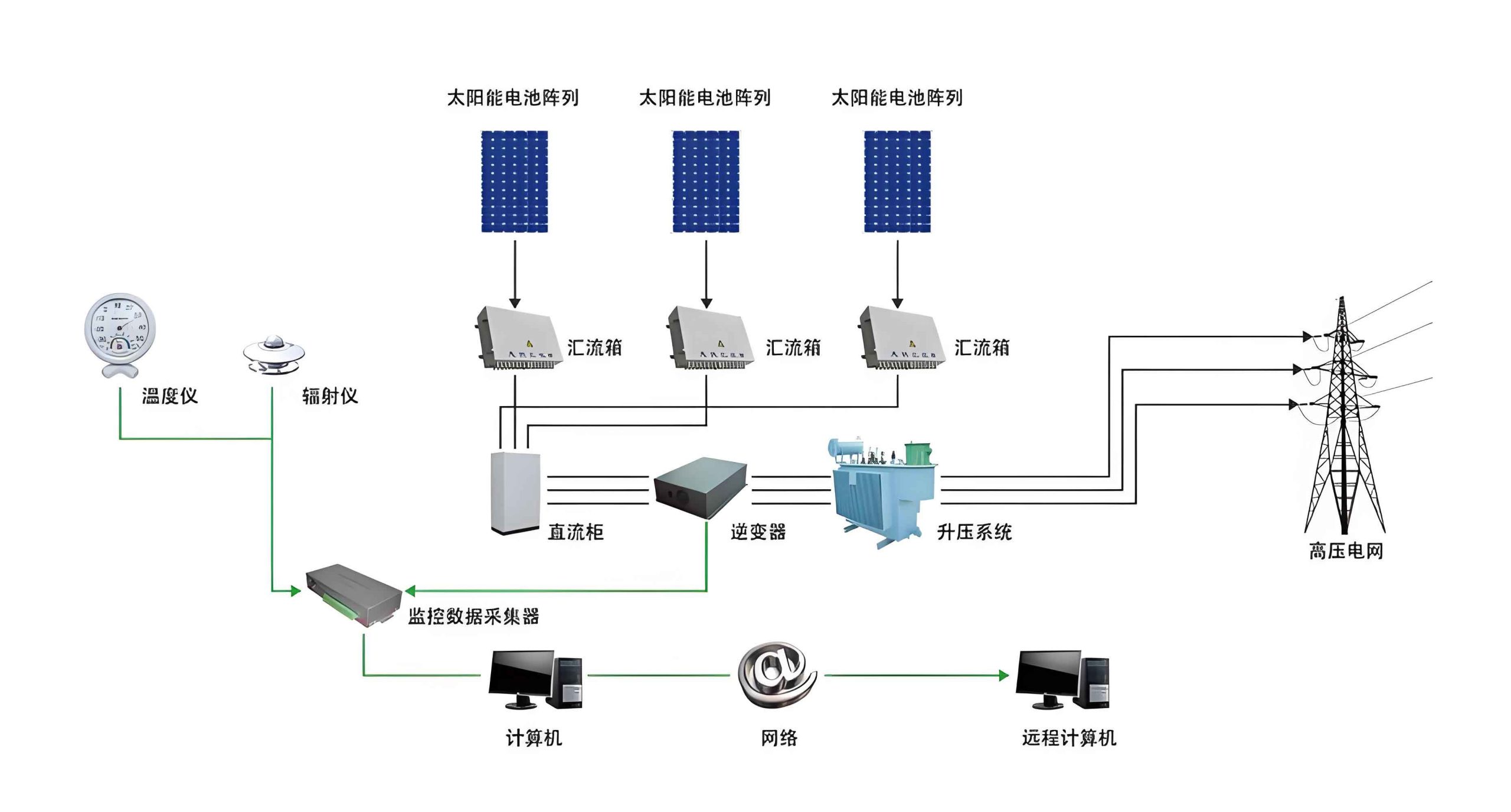
The concept of harnessing the sun for cooling has been explored through two primary pathways: solar thermal and solar photovoltaic. Solar thermal cooling utilizes collected heat to drive absorption, adsorption, or ejector refrigeration cycles. While effective, these systems often involve complex components, lower coefficients of performance (COP), and are better suited for larger-scale, stationary applications. The focus for decentralized, modular cold storage has increasingly shifted towards solar photovoltaic cooling. Here, the solar system converts sunlight directly into electricity, which then powers a vapor-compression refrigeration cycle—the same highly efficient and reliable technology found in most household and commercial refrigerators.
The global trajectory of renewable energy adoption underscores the potential of this approach. Photovoltaic technology has experienced unprecedented growth, with annual average capacity increases far surpassing other renewables. This growth is fueled by a dramatic reduction in the cost of PV modules and consistent improvements in their conversion efficiency. The levelized cost of electricity from utility-scale PV has fallen drastically, making solar-generated power increasingly competitive with fossil fuels. For a self-contained solar system, this trend is paramount, as it directly impacts the economic feasibility of off-grid applications like field-head cold storage.
The primary technical hurdle for any standalone PV application is the mismatch between energy generation and demand. The sun does not shine at night, and cloud cover causes variability during the day. A cold storage facility, however, requires continuous cooling. Traditional off-grid solar system designs incorporate battery banks to store electrical energy for use during non-sunny periods. While functional, this solution introduces significant drawbacks:
- High Cost: Batteries represent a substantial portion of the initial capital investment.
- Limited Lifespan & Environmental Impact: Batteries typically need replacement every 3-5 years, adding recurring costs and creating disposal/recycling challenges for toxic or rare materials.
- System Complexity and Losses: Adding charge controllers, battery management systems, and DC-AC inverters increases complexity and introduces energy conversion losses.
These limitations have constrained the scalability and economic attractiveness of solar-powered refrigeration. The proposed model circumvents these issues by replacing electrochemical storage (batteries) with thermal energy storage (ice). The fundamental principle is elegantly simple: use the DC electricity from the PV array to directly drive a variable-speed compressor during daylight hours. This compressor works not to cool the storage space directly, but to produce and store ice in an insulated tank. After sunset or during low solar irradiance, the stored ice provides cooling to the storage chamber, often via a simple heat exchanger and circulation pump. This transforms the solar system from an intermittent power source into a provider of continuous cooling capacity.
This direct-drive, ice-buffered solar system offers a cascade of technical and economic benefits:
| Feature | Battery-Based PV System | Ice Storage-Based PV System |
|---|---|---|
| Energy Storage Medium | Electrochemical (Batteries) | Thermal (Ice) |
| Typical Storage Lifetime | 3-7 years | 15-30 years (for storage tank) |
| Replacement Cost | High (frequent) | Very Low (infrequent) |
| Environmental Footprint | High (toxic materials, recycling issues) | Low (water/glycol, inert materials) |
| System Efficiency Path | PV -> Battery (loss) -> Inverter (loss) -> Compressor | PV -> MPPT Controller -> Compressor -> Ice |
| Primary Application Fit | General low-power loads, lighting | Loads with inherent thermal inertia (cold storage) |
The efficiency of the overall solar system is paramount. Key performance metrics can be expressed through the following formulas. The DC power output from the PV array ($P_{pv}$) under specific conditions is given by:
$$ P_{pv} = G \cdot A \cdot \eta_{pv} $$
where $G$ is the solar irradiance (W/m²), $A$ is the total panel area (m²), and $\eta_{pv}$ is the PV module efficiency. A Maximum Power Point Tracking (MPPT) charge controller is essential to ensure the array always operates at its peak efficiency point, maximizing energy harvest.
The cooling production is governed by the refrigeration cycle. The rate of ice production ($\dot{Q}_{ice}$) can be related to the compressor’s electrical power input ($P_{comp}$) and the system’s Coefficient of Performance for ice-making ($COP_{ice}$):
$$ \dot{Q}_{ice} = P_{comp} \cdot COP_{ice} $$
The total ice mass ($m_{ice}$) stored over a period of sunshine ($t_{sun}$) is:
$$ m_{ice} = \frac{1}{L_{f}} \int_{0}^{t_{sun}} \dot{Q}_{ice} \,dt $$
where $L_{f}$ is the latent heat of fusion of water (approximately 334 kJ/kg). This stored ice represents the usable “cold battery.” The subsequent cooling power available from melting this ice ($\dot{Q}_{cool}$) to meet the cold room’s load is:
$$ \dot{Q}_{cool} = \dot{m}_{w} \cdot c_{p,w} \cdot \Delta T + \dot{m}_{ice} \cdot L_{f} $$
where $\dot{m}_{w}$ and $\dot{m}_{ice}$ are meltwater and ice melt rates, $c_{p,w}$ is the specific heat of water, and $\Delta T$ is the temperature difference.
The core system components must be carefully matched. A high-efficiency, DC-driven variable-speed compressor is the heart of the system. Its speed is modulated by a controller linked to the MPPT unit, allowing it to adapt its power draw to the constantly changing output of the PV solar system. This ensures stable operation even under fluctuating light conditions, eliminating the need for large battery buffers. The ice storage tank’s size is the critical design parameter, determined by the required cold storage autonomy (e.g., 24, 48, or 72 hours) and the local solar resource pattern.
| Component | Key Function & Selection Criteria |
|---|---|
| PV Array | Converts sunlight to DC power. Sized based on daily cooling load, compressor efficiency, and local solar insolation. |
| MPPT Charge Controller | Optimizes PV array output; regulates power to the compressor. |
| DC Variable-Speed Compressor | Drives the refrigerant cycle. Must operate efficiently across a wide range of input voltages/powers. |
| Ice-Making Evaporator | Submerged coil or plate heat exchanger where ice is formed on surfaces. |
| Insulated Ice Storage Tank | Stores ice-water mixture. Size defines system’s thermal autonomy. |
| Cold Room Heat Exchanger | Transfers cooling from the ice tank meltwater to the air inside the cold storage chamber. |
| Circulation Pumps | Move secondary coolant (e.g., glycol-water) between ice tank and cold room. |
The economic argument for this solar system is compelling when viewed through the lens of total lifecycle cost. While the initial investment in PV panels and a specialized DC compressor may be comparable to a grid-connected unit with a diesel generator backup, the operational cost divergence is dramatic. The fuel cost for a diesel system is high and volatile. The battery-based solar system incurs significant recurring capital costs for battery replacement. In contrast, the ice-storage PV system has near-zero “fuel” cost after installation and minimal maintenance or replacement costs for its primary storage medium. The system’s robustness and longevity make it ideal for the 15-20 year lifespan of the PV panels.
The application prospects for this technology are vast and align perfectly with global sustainability and development goals. It is a quintessential example of a distributed, renewable energy solution.
- Remote & Off-Grid Agriculture: This is the primary use case. Farms in regions with unreliable or non-existent grid power can establish immediate post-harvest cooling, drastically reducing food waste, improving farmers’ incomes, and enabling access to higher-value markets.
- Isolated Communities and Infrastructure: Beyond agriculture, such systems can provide critical vaccine and medical storage for remote clinics, preserve food for distant military outposts, fishing communities, or eco-lodges.
- Grid-Connected Demand Management: Even in grid-connected areas, a PV-powered ice storage system can operate in a “grid-assist” mode. It can prioritize solar energy for ice production during the day, reducing peak-time electricity draw from the grid and lowering energy bills. The ice storage acts as a demand-shifting tool.
- Reduction of Carbon Footprint: By displacing diesel generators and reducing reliance on fossil-fuel-based grid electricity, each deployed system contributes directly to carbon emission reduction and cleaner air.
In conclusion, the integration of a photovoltaic solar system with ice storage technology presents a transformative solution for decentralized cold storage. It directly addresses the critical pain points of energy cost, accessibility, and reliability that have hindered the proliferation of field-head cold chains. By replacing short-lived, expensive, and environmentally problematic batteries with durable, high-capacity thermal storage, the system achieves remarkable economic and operational efficiency. The technical components—high-efficiency PV, MPPT control, DC variable-speed compressors, and ice tanks—are all proven, commercially available technologies. Their integration into a coherent, purpose-built solar system for cooling is an innovation whose time has come. As the global community strives for sustainable agriculture, reduced food waste, and equitable energy access, solar photovoltaic-driven ice storage stands out as a pragmatic, powerful, and immediately deployable technology with the potential to revolutionize cold chain logistics from the ground up.