
The pursuit of high-performance energy storage systems is central to the global transition towards sustainable energy. Among these systems, the lithium-ion battery remains a dominant technology due to its balance of energy density, lifespan, and established manufacturing base. A critical yet often underappreciated component within every lithium-ion battery is the separator. This thin, porous membrane physically isolates the cathode and anode to prevent electrical short circuits while simultaneously providing interconnected pathways for ionic transport. The performance of the separator directly influences key battery metrics: its ionic conductivity affects rate capability, its mechanical strength dictates resistance to lithium dendrite penetration, and its thermal stability is paramount for safety. Therefore, advancing separator technology is not merely an incremental improvement but a fundamental step towards next-generation lithium-ion batteries with enhanced energy density, power, and reliability.
Conventional commercial separators for lithium-ion batteries are predominantly based on polyolefins, such as polyethylene (PE) and polypropylene (PP), manufactured via two main processes: the dry process (melt-stretching) and the wet process (phase inversion). While effective, both methods present inherent limitations that constrain further development. The dry process involves melting a polymer, extruding it into a film, and then stretching it uniaxially or biaxially to create microporous structures through lamellar separation. This method is solvent-free but demands polymers with specific, high molecular weights and crystallinity, limiting material choices. More critically, it often results in slit-like pores with relatively low and poorly controlled porosity, which can impede electrolyte wetting and ion transport kinetics. In contrast, the wet process offers superior control over pore size distribution and higher porosity. It involves mixing a polymer with a liquid plasticizer or solvent to form a homogenous solution, casting it into a film, and then extracting the liquid phase with a volatile solvent to leave behind a porous network. However, this process is notoriously energy-intensive, complex, and environmentally taxing due to the massive consumption and subsequent recovery of organic solvents. The reliance on these traditional, resource-heavy processes, coupled with a dependence on imported high-precision manufacturing equipment, has created a bottleneck for the domestic advancement of the lithium-ion battery industry.
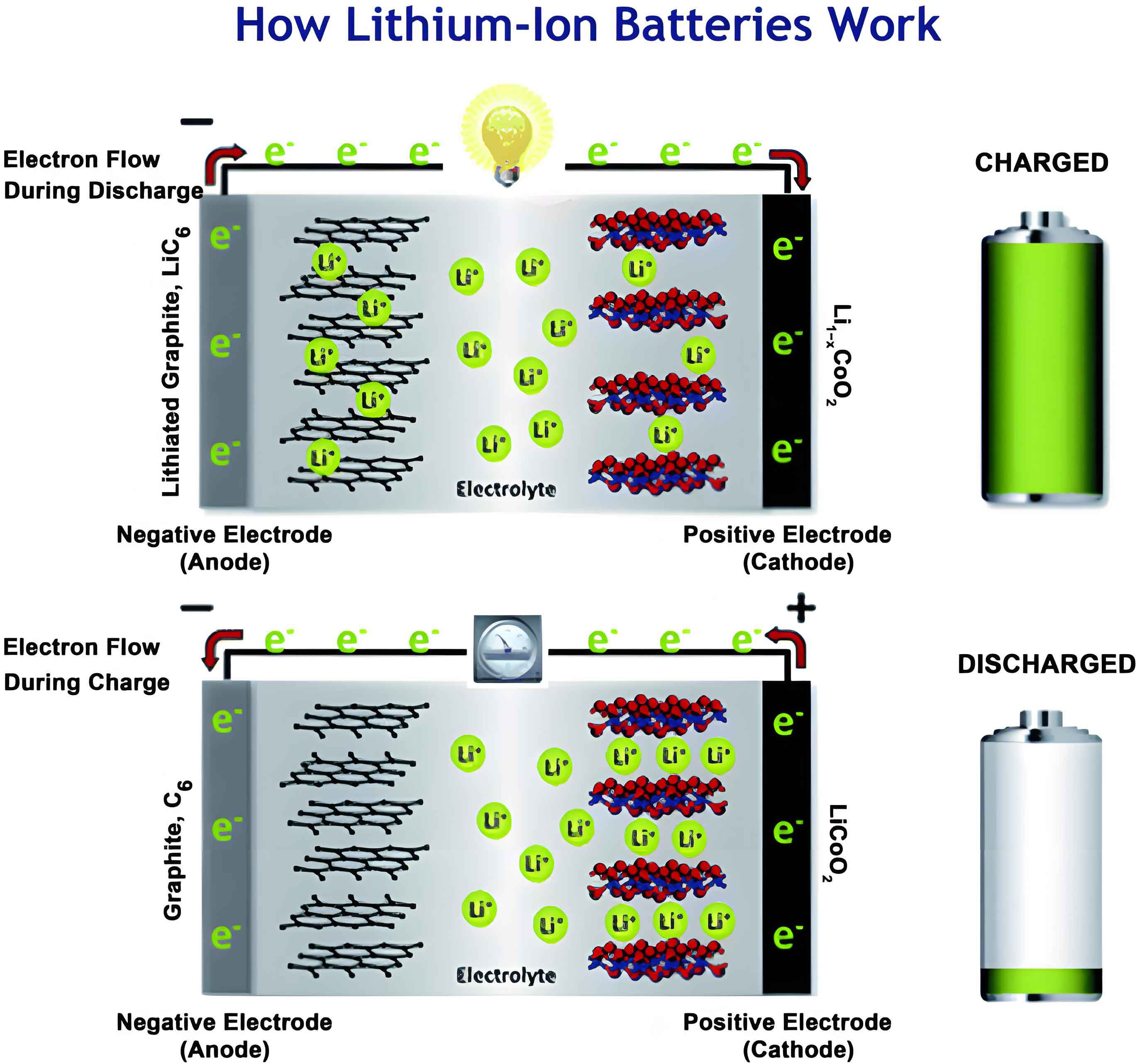
Our research is motivated by the need to circumvent these limitations through a paradigm shift in separator design and fabrication. We propose a novel concept: utilizing intentionally engineered nanocrack networks as the primary ion-conducting channels, bypassing the need for traditional pore-creation steps altogether. Nanocracks, typically viewed as defects leading to material failure, are here repurposed as functional nanochannels. This approach draws inspiration from natural systems and emerging technologies like nanofluidic devices, where confined crack geometries enable unique transport phenomena. The core of our strategy lies in exploiting the thermodynamic incompatibility between two immiscible polymers. When blended, these polymers undergo microphase separation, forming a distinct interphase. This interphase region, characterized by weak molecular interactions and a disorganized structure, becomes the preferential site for nano-crack formation under specific processing conditions. By carefully selecting polymer pairs and controlling the processing parameters, we can generate a uniform, three-dimensional network of these nanocracks, creating a percolating pathway for lithium ions.
For this pioneering work, we selected a blend of poly(butylene adipate-co-terephthalate) (PBAT) and isotactic polypropylene (iPP). PBAT, a biodegradable aliphatic-aromatic copolyester, offers excellent film-forming ability and flexibility. iPP provides mechanical robustness, chemical stability, and a well-defined crystalline structure. Crucially, the significant difference in polarity and chemical structure between the polyester (PBAT) and the polyolefin (iPP) ensures poor compatibility, fulfilling the prerequisite for pronounced microphase separation. We employed a streamlined, industrially scalable fabrication route: melt-blending followed by blow molding. This process eliminates the solvent extraction step of the wet process and the precise stretching and heat-setting stages of the dry process, offering a potentially more energy-efficient and cost-effective manufacturing pathway for lithium-ion battery separators.
1. Design Principle and Fabrication of the Nanocrack Separator
The fundamental principle guiding our separator design is classical polymer thermodynamics, described by the Flory-Huggins theory for polymer blends. The miscibility of two polymers is governed by the Gibbs free energy of mixing, $\Delta G_m$:
$$\Delta G_m = \Delta H_m – T\Delta S_m$$
For most polymer pairs, the combinatorial entropy of mixing, $\Delta S_m$, is very small due to their large molecular sizes. Therefore, the enthalpy term, $\Delta H_m$, often becomes decisive. $\Delta H_m$ is related to the Flory-Huggins interaction parameter, $\chi_{12}$:
$$\Delta H_m \propto \chi_{12} \phi_1 \phi_2$$
where $\phi_1$ and $\phi_2$ are the volume fractions of the two polymers. A positive $\chi_{12}$ indicates endothermic mixing and phase separation. For PBAT and iPP, the interaction parameter is highly positive due to their dissimilar solubility parameters, leading to immiscibility and the formation of a two-phase morphology upon blending.
During the melt-blending and subsequent blow-molding process, shear forces disperse one polymer within the other as the minor phase. Upon cooling, each polymer phase solidifies, with iPP crystallizing into its characteristic spherulitic structure. The weak adhesion at the PBAT/iPP interphase, combined with the different thermal contraction coefficients and mechanical stresses induced during film formation and handling, leads to the spontaneous formation of micro- and nano-scale cracks along these interfaces. These are not random defects but a direct consequence of the engineered material structure. The density and dimensions of this nanocrack network can be tuned by the blend ratio, processing temperatures, and cooling rates, providing a handle to control the separator’s final properties such as porosity and tortuosity for the lithium-ion battery electrolyte.
The fabrication procedure is remarkably simple:
- Melt Blending & Pelletizing: PBAT and iPP granules are dry-mixed at predetermined weight ratios (e.g., 60/40, 70/30, 80/20 PBAT/iPP). The mixture is fed into a twin-screw extruder, where it is melted, homogenized, and shear-mixed. The extrudate is cooled and cut into composite pellets.
- Blow Molding: The composite pellets are fed into a blow film extruder. The polymer is re-melted, extruded through an annular die to form a tube, which is then inflated by internal air pressure. This biaxial stretching action simultaneously thins the film and orients the polymer phases. The crucial nanocrack structure forms during the cooling and solidification of this blown film bubble.
This one-step film formation process bypasses the dedicated “pore-making” stage entirely. The key process parameters optimized for different blend compositions are summarized in the table below.
| PBAT Content (wt%) | Extrusion Zones Temp. (°C) | Screw / Haul-off Speed | Key Morphology Feature |
|---|---|---|---|
| 60 | 190 / 195 / 195 | Medium / Medium | Fine, dispersed iPP phase |
| 70 | 190 / 200 / 200 | Optimized / Optimized | Co-continuous, uniform nanocrack network |
| 80 | 180 / 185 / 185 | Slower / Slower | PBAT matrix with large iPP domains |
2. Structural and Physicochemical Characterization
The morphology of the as-prepared separators was examined using scanning electron microscopy (SEM). The surface and cross-sectional images reveal the unique architecture of our material. Unlike the conventional round or slit-like pores, a dense network of linear, nano-scale cracks is observed uniformly distributed across the film. These cracks, with widths on the order of tens to hundreds of nanometers, run along the interfaces between the polymer phases. The cross-sectional view further shows a layered structure with interconnected crack channels propagating through the thickness, confirming the formation of a three-dimensional percolating network ideal for ion transport in a lithium-ion battery.
The thermal and crystalline behavior was investigated using polarized optical microscopy (POM) and differential scanning calorimetry (DSC). POM images of the pure components and the blend provide visual evidence of phase separation. Pure iPP shows large, well-defined spherulites with Maltese cross patterns, while PBAT exhibits different crystalline features. In the 70/30 PBAT/iPP blend, distinct phase-separated domains are visible. Upon melting, a co-continuous morphology is observed, which upon cooling re-solidifies into the two-phase structure that templates the nanocrack formation. DSC thermograms show separate melting peaks for PBAT and iPP, confirming their immiscibility. The degree of crystallinity of each phase can be calculated from the melting enthalpy:
$$X_c = \frac{\Delta H_m}{\Delta H_m^0 \cdot w} \times 100\%$$
where $\Delta H_m$ is the measured melting enthalpy, $\Delta H_m^0$ is the theoretical melting enthalpy for a 100% crystalline polymer, and $w$ is the weight fraction of that polymer in the blend. The crystallinity of the iPP phase influences the mechanical strength and the crack formation mechanism.
The physicochemical properties critical for a lithium-ion battery separator were systematically measured. The porosity ($P$) and electrolyte uptake ($U$) are vital for housing the liquid electrolyte. They were determined using a standard liquid immersion method:
$$P = \frac{(M_{wet} – M_{dry}) / \rho_{liq}}{A \cdot t} \times 100\%$$
$$U = \frac{M_{wet} – M_{dry}}{M_{dry}} \times 100\%$$
where $M_{dry}$ and $M_{wet}$ are the masses of the separator before and after immersion in a wetting liquid (e.g., n-butanol for porosity, electrolyte for uptake), $\rho_{liq}$ is the liquid density, $A$ is the area, and $t$ is the thickness. Our nanocrack separator demonstrated a high porosity of ~43% and an exceptional electrolyte uptake of ~110%, significantly surpassing typical values for commercial polyolefin separators. This is attributed to the highly accessible and interconnected nanocrack network.
The wettability was assessed by the contact angle of a standard lithium-ion battery electrolyte droplet. The separator showed excellent wettability with an instant contact angle as low as ~34.5°, indicating strong capillary action into the nanocracks, which is essential for rapid electrolyte filling and uniform electrode-separator interface formation. Mechanical properties were evaluated by tensile testing in both machine (MD) and transverse directions (TD). The results, summarized below, show outstanding flexibility and strength.
| Property | Value (Machine Direction) | Value (Transverse Direction) | Significance for Lithium-ion Battery |
|---|---|---|---|
| Thickness | ~25 µm | Standard thickness for cell design and energy density. | |
| Ultimate Tensile Strength | 21.74 MPa | 7.52 MPa | High strength prevents tear during cell winding/assembly. |
| Strain at Break | 597.58% | 392.41% | Exceptional elongation accommodates volume changes, resists dendrite puncture. |
| Ionic Conductivity ($\sigma$) | 0.25 mS cm⁻¹ | Calculated from EIS: $\sigma = L / (R_b \cdot A)$. Enables good rate performance. | |
| Electrochemical Stability Window | > 4.0 V vs. Li⁺/Li | Stable with common cathode materials (e.g., LiFePO₄, NMC). | |
The ionic conductivity ($\sigma$) is the most direct measure of a separator’s ability to facilitate ion transport. It was calculated from electrochemical impedance spectroscopy (EIS) data obtained from a symmetric stainless steel (SS) cell:
$$\sigma = \frac{L}{R_b \cdot A}$$
where $L$ is the separator thickness, $A$ is the contact area, and $R_b$ is the bulk resistance derived from the high-frequency intercept on the real axis of the Nyquist plot. The achieved conductivity of 0.25 mS cm⁻¹ confirms that the nanocrack network provides highly effective pathways for lithium-ion diffusion, meeting the essential requirement for a functional separator in a lithium-ion battery.
3. Electrochemical Performance in Lithium-ion Battery Cells
To validate the practical application, we assembled and tested CR2032 coin cells. The cell configuration was Li metal anode | nanocrack separator soaked in 1 M LiPF₆ in EC/DEC | LiFePO₄ (LFP) cathode. This configuration provides a stringent test for the separator’s compatibility and performance in a working lithium-ion battery.
First, the electrochemical stability window was verified via linear sweep voltammetry (LSV). The separator demonstrated stability up to approximately 4.0 V vs. Li⁺/Li, which is fully sufficient for operation with the LFP cathode (∼3.45 V). Cyclic voltammetry (CV) of the Li||LFP cell at a slow scan rate (0.1 mV s⁻¹) showed a well-defined, symmetric redox couple corresponding to the Fe²⁺/Fe³⁺ reaction, indicating highly reversible lithium-ion intercalation/de-intercalation with low polarization, facilitated by the efficient ionic transport through the separator.
The long-term cycling stability is a critical metric for any battery component. Cells were cycled at various C-rates. At a 0.1 C rate, the cell delivered an initial discharge capacity of 155.99 mAh g⁻¹, which is very close to the theoretical capacity of LFP. The capacity retention after 100 cycles was an impressive 92.9%. The coulombic efficiency averaged over 100%, a phenomenon often observed in lithium-metal cells where the dissolution of the solid electrolyte interphase (SEI) can release previously trapped lithium, leading to a temporary efficiency exceeding 100%. The charge-discharge voltage profiles remained stable with minimal polarization growth, indicating stable interfacial resistance.
Rate capability tests further demonstrated the efficacy of the nanocrack ion channels. The cell was subjected to increasing current densities from 0.1 C to 1 C and then back to 0.1 C. The specific capacities delivered at different rates are shown below. The separator enabled stable operation even at 1 C, with a capacity of ~146 mAh g⁻¹. When the rate was returned to 0.1 C, the capacity recovered to 152.23 mAh g⁻¹, demonstrating excellent reversibility and the absence of structural degradation within the separator under dynamic cycling conditions in the lithium-ion battery.
| C-rate | Average Discharge Capacity (mAh g⁻¹) | Capacity Retention vs. 0.1C |
|---|---|---|
| 0.1 C | 155.0 | 100% |
| 0.2 C | 150.5 | 97.1% |
| 0.5 C | 148.2 | 95.6% |
| 0.8 C | 146.8 | 94.7% |
| 1.0 C | 146.4 | 94.5% |
| Return to 0.1 C | 152.2 | 98.2% |
To evaluate the separator’s resistance against lithium dendrites—a major safety concern in lithium-ion batteries employing lithium metal anodes—we performed cycling tests in symmetric Li||Li cells. At a current density of 0.1 mA cm⁻² and a fixed areal capacity, the cell maintained a stable and low overpotential for over 300 hours before failure, indicating that the separator’s mechanical toughness effectively suppressed dendrite penetration for a significant period.
4. Conclusion and Perspective
In this work, we have successfully designed, fabricated, and validated a novel class of separator for lithium-ion batteries based on an engineered nanocrack network. By leveraging the inherent incompatibility between PBAT and iPP, we achieved a controlled microphase separation that templates the formation of a uniform, three-dimensional network of nanochannels during a simple blow-molding process. This innovative approach completely eliminates the energy- and solvent-intensive pore-forming steps (solvent extraction or precise stretching) required in conventional separator manufacturing.
The resulting nanocrack separator exhibits a compelling set of properties: high porosity and electrolyte uptake derived from its interconnected architecture, excellent mechanical strength and flexibility due to the polymer blend composition, and an ionic conductivity sufficient for practical battery operation. When integrated into Li||LiFePO₄ lithium-ion battery cells, it enables high specific capacity, excellent cycling stability (>92% retention after 100 cycles), and good rate capability. These results unequivocally demonstrate the feasibility and promise of the nanocrack concept as a viable ion-transport medium.
This study opens a new avenue for separator technology, moving beyond the paradigm of creating “pores” to one of engineering “functional interfaces.” The potential for further optimization is vast. Future work will focus on: (1) exploring other polymer pairs to tailor surface chemistry, thermal stability, and mechanical properties; (2) precisely controlling the nanocrack dimensions and density through advanced processing techniques and the use of compatibilizers; (3) evaluating performance in higher-voltage lithium-ion battery systems with nickel-rich cathodes or silicon anodes; and (4) scaling up the blow-molding process for commercial production. By providing a simpler, more sustainable, and highly tunable manufacturing route, this nanocrack separator technology has the potential to address critical bottlenecks and contribute significantly to the advancement of next-generation energy storage systems, particularly in the ever-evolving landscape of the lithium-ion battery.