
In my research on arid regions, I have focused on the typical dry-hot valleys of Yunnan, China, where solar energy abundance coincides with severe water scarcity. This study aims to develop a sustainable irrigation model leveraging solar photovoltaic (PV) technology. The core of this model is the solar system, which integrates water lifting, storage, and efficient distribution. Through firsthand analysis and field considerations, I propose a comprehensive approach that optimizes agricultural practices and infrastructure. The solar system is central to addressing the unique challenges of these valleys, and in this article, I will detail its components, applicability, and benefits, supported by formulas and tables to summarize key data.
The dry-hot valleys in Yunnan are characterized by high temperatures, low humidity, and significant solar exposure. My observations indicate that these areas cover approximately 1.2 million square kilometers, representing about 50% of China’s total dry-hot valley area. They are distributed along major rivers like the Jinsha, Yuan, and Lancang, involving 44 counties across 15 prefectures. The region faces persistent issues such as ecological fragility, poverty, and frequent natural disasters. However, it boasts rich solar and hydro resources, with annual sunshine hours often exceeding 2,300 hours—comparable to tropical areas like Sanya. This makes the solar system an ideal solution for water lifting, as it operates independently of grids and suits remote terrains. The valleys also have substantial hydropower potential, but water availability for agriculture is limited due to topographical disparities where farmland lies at higher elevations than water sources. This results in high lifting heads, sometimes up to 1,000 meters, requiring multi-stage pumping. Additionally, crop structures are diverse, ranging from grains to fruits like mangoes, but irrigation efficiency is low due to a lack of modern水利 facilities. By harnessing the solar system, we can mitigate these challenges effectively.
Before implementing the solar system, it is crucial to optimize planting structures. In my analysis, I found that traditional crops like grains have high water demands but low economic returns. Given the high initial investment in solar-powered lifting, I recommend shifting to drought-tolerant, high-value cash crops such as citrus, grapes, or specialty fruits. This adjustment reduces water requirements and enhances profitability, making the solar system more viable. For instance, by selecting crops adapted to local climate and soil conditions, we can minimize irrigation needs and maximize yield per unit of water. This optimization step ensures that the solar system operates efficiently, as water demand directly influences system sizing and cost.
The proposed solar photovoltaic water lifting irrigation model consists of three interconnected subsystems: the solar photovoltaic water lifting system, the water storage system, and the efficient water distribution system. Each component is designed to work seamlessly with the solar system, ensuring reliable and sustainable irrigation.
First, the efficient water distribution system employs water-saving techniques like drip or micro-sprinkler irrigation to maximize water use efficiency. Since lifting water via solar energy involves significant energy input, reducing losses is paramount. The system includes main pipes, sub-pipes, and emitters, with pressure regulation mechanisms like pressure tanks or valves for areas with large elevation differences. To calculate the field irrigation water requirement, I use the following formula based on crop area and irrigation quota:
$$ W = \sum_{i=1}^{n} m_i M_i $$
where \( W \) is the crop field irrigation water requirement in cubic meters, \( m_i \) is the irrigation area for the \( i \)-th crop in hectares, \( M_i \) is the irrigation quota for the \( i \)-th crop in cubic meters per hectare, and \( n \) is the number of irrigation events. This formula helps size the solar system accurately, as water demand dictates pumping capacity.
Second, the solar photovoltaic water lifting system is the heart of this model. It comprises a solar power generation system and a pump system. Given the high lifting heads in dry-hot valleys, I suggest multi-stage lifting with each stage not exceeding 200 meters for economic reasons, typically up to 5 stages. The solar system generates electricity to drive pumps, and its capacity is determined based on local solar radiation and water demand. According to technical standards, the PV array capacity \( N \) is calculated as:
$$ N = N_{pf} k_4 k_5 $$
where \( N_{pf} \) is the peak power of the water lifting system in watts, \( k_4 \) is the solar resource correction factor (taken as 0.8), and \( k_5 \) is the correction factor for solar tracking (taken as 1.0 for fixed arrays). The solar system typically uses silicon-based PV modules, installed at optimal angles based on local latitude and longitude to maximize energy capture. The pump system includes pumps, motors, and controllers or inverters, selected based on flow rate and head. The flow rate is derived from crop water requirements, while the head accounts for elevation differences, pipeline losses, and water source variations. This solar system ensures autonomous operation, reducing reliance on external power sources.
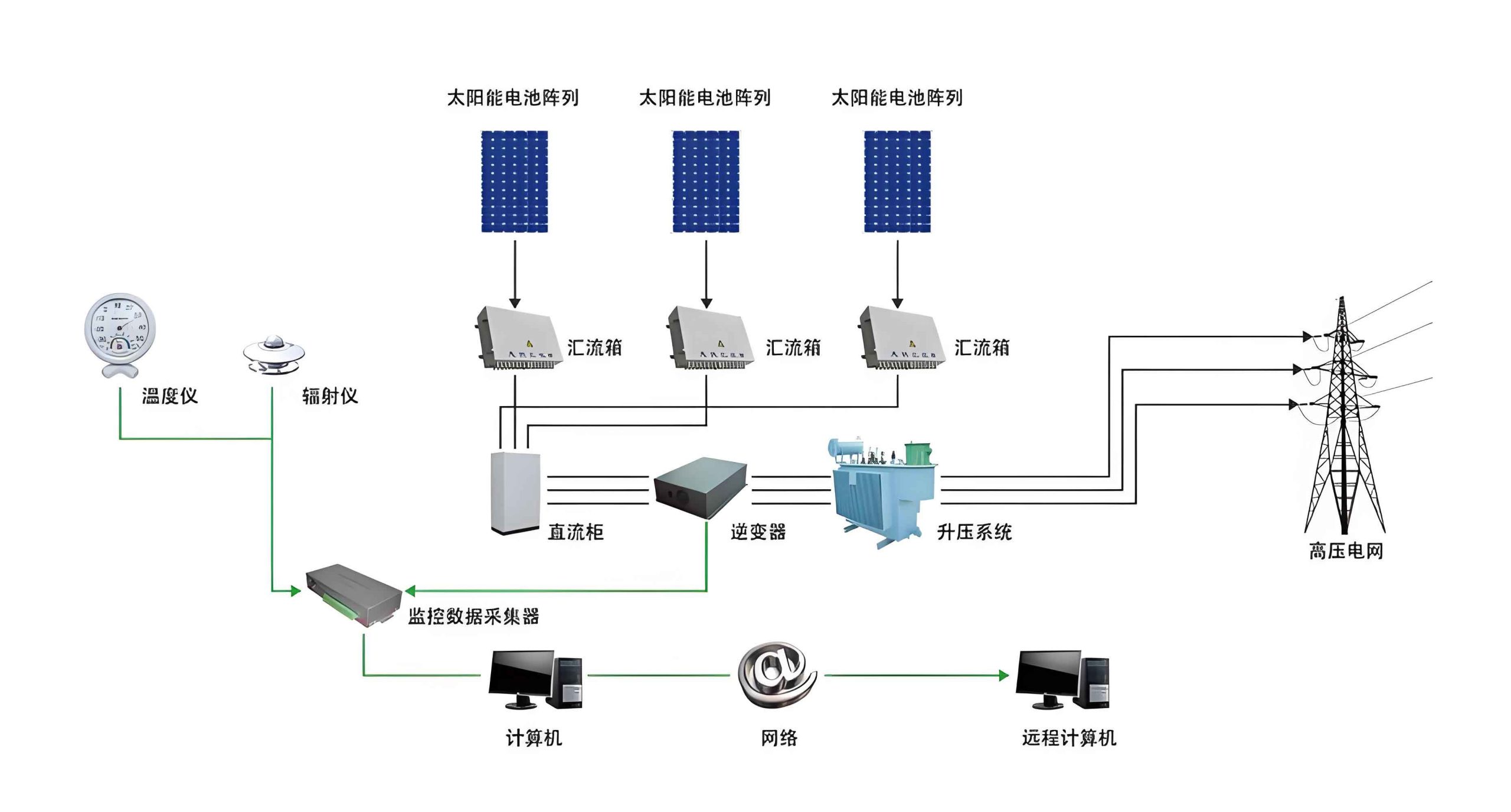
Third, the water storage system includes purification facilities like screens and filters, along with storage tanks or ponds. The storage volume is designed to balance solar system operation times, water output, and irrigation schedules. It acts as a buffer, ensuring water availability during non-sunny periods or peak demand. The design considers factors such as daily pumping hours and irrigation duration to optimize tank size, reducing costs while maintaining reliability. This subsystem complements the solar system by stabilizing water supply and improving overall system resilience.
The applicability of this solar system-based model is defined by specific conditions. In my assessment, I have identified six key criteria for implementation in dry-hot valleys:
| Condition Category | Description |
|---|---|
| Climatic Features | Areas with annual temperatures of 16–21°C, evaporation of 1,900–3,800 mm, hot-month averages of 22–27°C, and annual rainfall of 600–1,000 mm. Solar radiation should be high, with ≥10°C积温 exceeding 6,000 hours. |
| Topography | Valley slopes within 200–1,000 meters elevation from rivers, with gentle gradients and sunny aspects. Avoid landslide-prone zones. |
| Land Availability | Contiguous agricultural lands over 1,000 acres, including unused plots, degraded slopes, or low-efficiency orchards suitable for consolidation. |
| Infrastructure | Proximity to transport, power, and communication networks within 20 km to support logistics and market access. |
| Socioeconomic Base | Regions with GDP above 5 billion CNY, ample labor force, and basic education levels to facilitate adoption and maintenance. |
| Agricultural Industry | Existing or planned large-scale agro-industrial zones, preferably with established enterprises for fruits or other high-value crops. |
To evaluate the model’s impact, I analyzed 13 pilot counties selected from Yunnan’s dry-hot valleys, such as Honghe, Yuanyang, and Binchuan. The projects involve water lifting, storage, and distribution across 320,390 acres of farmland. The total investment is estimated at 14.012 billion CNY, distributed as follows:
| County | Water Lifting (billion CNY) | Storage (billion CNY) | Distribution (billion CNY) | Total (billion CNY) |
|---|---|---|---|---|
| Honghe | 9.40 | 3.60 | 7.31 | 20.31 |
| Yuanyang | 3.85 | 1.09 | 2.12 | 7.06 |
| Jinping | 3.38 | 1.19 | 2.44 | 7.02 |
| Yuanjiang | 6.11 | 2.91 | 5.92 | 14.93 |
| Huaping | 2.86 | 1.70 | 3.42 | 7.98 |
| Yongsheng | 2.61 | 1.77 | 3.55 | 7.94 |
| Yulong | 0.58 | 0.48 | 0.89 | 1.95 |
| Nanjian | 7.72 | 3.12 | 6.38 | 17.23 |
| Binchuan | 8.09 | 6.68 | 13.75 | 28.53 |
| Weishan | 0.16 | 0.20 | 0.38 | 0.74 |
| Longyang | 4.78 | 2.92 | 6.04 | 13.74 |
| Longling | 2.52 | 1.54 | 3.18 | 7.24 |
| Shidian | 2.06 | 1.11 | 2.29 | 5.47 |
| Total | 54.14 | 28.32 | 57.67 | 140.12 |
The benefits of deploying this solar system are multifaceted, encompassing economic, ecological, and social dimensions. In my analysis, I project significant gains from the pilot counties.
Economically, the solar system enables high-value agriculture. Assuming 50% of the irrigated area is dedicated to fruits like mangoes and grapes, with an average yield value of 33,000 CNY per acre, the annual agricultural output could increase by approximately 105.7 billion CNY. Additionally, processing and tertiary industries like tourism could add 422.9 billion CNY and 1,162.7 billion CNY, respectively. Supporting sectors such as seedlings, fertilizers, and labor would contribute around 22.3 billion CNY, leading to a total projected output of 1,713.6 billion CNY. The return on investment is substantial: for the primary sector alone, the return is 6 times the investment, while including all sectors boosts it to 110 times. If government covers 50% of costs, the return rises to 12 times, demonstrating the solar system’s cost-effectiveness. This is calculated using basic ROI formulas, where:
$$ \text{ROI} = \frac{\text{Net Benefit}}{\text{Investment}} \times 100\% $$
For instance, with a net benefit of 1,713.6 billion CNY and investment of 140.12 billion CNY, the overall ROI exceeds 1,100%.
Ecologically, the solar system promotes environmental restoration. Dry-hot valleys often suffer from soil erosion and low vegetation cover due to water scarcity. By providing reliable irrigation, the solar system helps establish green orchards, enhancing soil moisture, reducing runoff, and increasing carbon sequestration. This transforms barren slopes into productive landscapes, mitigating climate impacts and preserving biodiversity. The solar system’s clean energy operation also reduces carbon emissions compared to diesel or grid-powered pumps, aligning with sustainability goals.
Socially, the solar system fosters rural development. It improves livelihoods by creating jobs in agriculture, maintenance, and related services. In the pilot counties, this model can lift communities out of poverty, enhance food security, and support rural revitalization. The solar system’s simplicity and low maintenance make it accessible to local farmers, empowering them to manage resources independently. Moreover, by integrating with market chains, it stimulates local economies and strengthens resilience against climate shocks.
In conclusion, my proposed solar photovoltaic water lifting irrigation model offers a practical and scalable solution for dry-hot valleys. By leveraging the solar system, we can address water scarcity while boosting economic and ecological outcomes. The model’s components—efficient distribution, solar-powered lifting, and storage—work synergistically to optimize resource use. Applicability criteria ensure targeted implementation, and the demonstrated benefits underscore its potential for widespread adoption. As I reflect on this research, the solar system stands out as a key enabler for sustainable development in arid regions, promising a brighter future for these vulnerable areas.