
In recent years, the widespread adoption of lithium-ion batteries across various sectors, including electric vehicles and grid energy storage, has underscored their critical role in the global energy transition. However, safety concerns, particularly thermal runaway (TR) incidents triggered by overcharging, pose significant risks to public safety and infrastructure. Overcharging occurs when a lithium-ion battery is subjected to charging beyond its designed capacity, often due to failures in battery management systems or charging controls. This condition leads to excessive energy accumulation, elevating the risk of thermal runaway—a rapid, self-sustaining increase in temperature that can result in fire or explosion. To mitigate these risks, developing comprehensive models that simulate the coupled heat and gas generation during overcharge-induced thermal runaway is essential. In this work, I present an integrated gas-thermal model for lithium-ion batteries under overcharge conditions, incorporating side reaction-driven gas generation and internal pressure dynamics. This model enables a holistic characterization of thermal and gas evolution, facilitating the analysis of key parameters influencing safety thresholds. Through detailed simulations, I investigate the heat and gas generation characteristics, identify critical factors such as charging rate and electrolyte decomposition potential, and elucidate their impact on safety events like venting and thermal runaway. The insights gained from this study aim to support the design of safer lithium-ion batteries by optimizing material properties and operational protocols.
The foundation of the gas-thermal model lies in integrating multiple sub-models: an electrochemical model, a thermal model, a side reaction model (encompassing both heat and gas generation), and an internal pressure calculation model. These components are coupled to simulate the complex interactions during overcharge. The electrochemical model is based on the Newman P2D framework, which treats the battery cell as a heterogeneous medium with solid and liquid phases. The governing equations include charge conservation in the solid and liquid phases, mass transport of lithium ions, and electrochemical kinetics described by the Butler-Volmer equation. The heat generation from electrochemical reactions comprises ohmic and polarization heats, expressed as:
$$q_{\text{ech}} = q_p + q_{\text{ohm}}$$
$$q_p = a_s j \eta$$
$$q_{\text{ohm}} = -i_e \nabla \phi_e – i_s \nabla \phi_s$$
where \(q_{\text{ech}}\) is the total electrochemical heat generation rate, \(a_s\) is the specific surface area, \(j\) is the current density, \(\eta\) is the overpotential, and \(i_e\) and \(i_s\) are the current densities in the liquid and solid phases, respectively. The lithium-ion diffusion coefficients are temperature-dependent, particularly for the solid phase:
$$D_s = 1.4523 \times 10^{-13} \exp\left[-\frac{68025.7}{R}\left(\frac{1}{T} – \frac{1}{T_{\text{ref}}}\right)\right]$$
with \(T_{\text{ref}} = 298\,\text{K}\). The thermal model employs a three-dimensional geometry representing a commercial prismatic lithium-ion battery with a nominal capacity of 10 Ah. The cell is simplified as a homogeneous solid with anisotropic thermal conductivity, and heat transfer is governed by the energy conservation equation:
$$\rho c_p \frac{\partial T}{\partial t} = \frac{\partial}{\partial x}\left(\lambda_x \frac{\partial T}{\partial x}\right) + \frac{\partial}{\partial y}\left(\lambda_y \frac{\partial T}{\partial y}\right) + \frac{\partial}{\partial z}\left(\lambda_z \frac{\partial T}{\partial z}\right) + q$$
Here, \(\rho\) is density, \(c_p\) is specific heat capacity, \(\lambda_x\), \(\lambda_y\), \(\lambda_z\) are thermal conductivities along Cartesian coordinates, and \(q\) is the total heat generation rate, summing electrochemical and side reaction contributions. The side reaction model captures the heat and gas generation from various parasitic reactions during overcharge. Key reactions include manganese decomposition, lithium plating, electrolyte decomposition, SEI layer decomposition, negative electrode-electrolyte reaction, positive electrode decomposition, binder decomposition, and internal short circuit. Each reaction rate follows an Arrhenius-type expression:
$$R_x = A_x f(c_x) \exp\left(-\frac{E_{a,x}}{RT}\right) g_x$$
where \(A_x\) is the pre-exponential factor, \(E_{a,x}\) is the activation energy, \(c_x\) is the dimensionless reactant concentration, and \(g_x\) is a correction term. For instance, the electrolyte decomposition rate combines oxidative and thermal contributions:
$$R_{\text{ele}} = R_{\text{ele1}} + R_{\text{ele2}}$$
$$R_{\text{ele1}} = A_{\text{ele}} \exp\left(-\frac{E_{a,\text{ele}}}{RT}\right) c_{\text{ele}} \exp\left(\gamma_{\text{ele}} F \frac{V_{\text{ca}} + I r_{\text{ca}} – V_{\text{ele}}}{RT}\right)$$
$$R_{\text{ele2}} = A_{\text{ele}} \exp\left(-\frac{E_{a,\text{ele}}}{RT}\right) c_{\text{ele}}$$
with \(V_{\text{ele}}\) as the electrolyte decomposition potential. The heat generation from side reactions is computed as \(q_x = H_x W_x R_x V\), where \(H_x\) is the reaction enthalpy, \(W_x\) is the reactant density, and \(V\) is the cell volume. The gas generation model focuses on major gas species identified in experimental studies for NCM lithium-ion batteries: CO, CO₂, CH₄, C₂H₄, and C₂H₆. The production rates are derived from stoichiometric relationships tied to specific reactions, such as SEI decomposition and electrolyte reduction. For example, CO₂ generation from SEI decomposition is given by:
$$(\text{CH}_2\text{OCO}_2\text{Li})_2 \rightarrow \text{Li}_2\text{CO}_3 + \text{C}_2\text{H}_4 + \text{CO}_2 + \frac{1}{2}\text{O}_2$$
and the corresponding rate uses similar Arrhenius kinetics. The internal pressure model assumes ideal gas behavior:
$$P = \frac{n R T_{\text{ave}}}{V_{\text{void}}} + P_a$$
where \(n\) is the total mole number of gas species, \(T_{\text{ave}}\) is the average temperature, \(V_{\text{void}}\) is the free volume inside the battery, and \(P_a\) is the initial atmospheric pressure. Venting occurs when the internal pressure exceeds a critical threshold, set at 2 MPa in this work. The model parameters, calibrated from literature and experimental data, are summarized in tables below to enhance clarity and reproducibility.
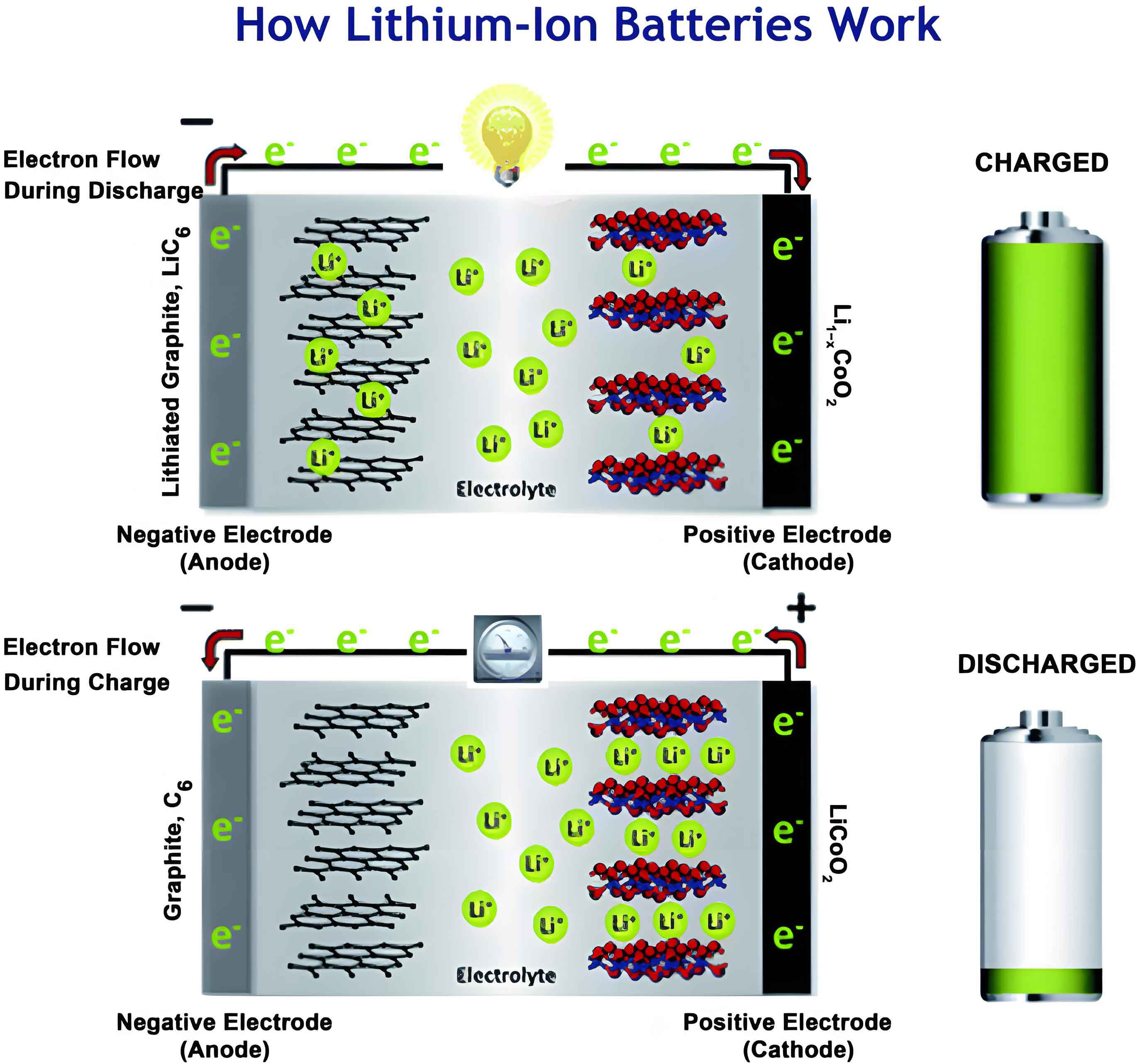
To validate the gas-thermal model, simulations were conducted under overcharge conditions starting from 100% state of charge (SOC) with a 2 C charging rate. The results were compared with experimental data from studies on similar lithium-ion batteries. The model demonstrated good agreement in temperature and voltage responses, with mean relative errors (MRE) of 0.0537 for temperature and 0.0152 for voltage. Additionally, the predicted mole fractions of major gas species aligned with experimental measurements, yielding an MRE of 0.0934. This validation confirms the model’s capability to accurately replicate the coupled thermal and gas evolution during overcharge-induced thermal runaway in lithium-ion batteries.
The analysis of overcharge-induced thermal runaway reveals distinct stages characterized by varying heat and gas generation rates. Initially, for SOC up to approximately 123%, the lithium-ion battery experiences mild temperature rise due to electrochemical heat generation, with power below 10 W. As SOC increases to 128%, manganese decomposition accelerates, producing a secondary heat peak and raising the temperature ramp rate above 0.2 K/s. Beyond 128% SOC, electrolyte decomposition becomes significant, and by 135% SOC, it surpasses electrochemical heat as the primary source. Lithium plating and positive electrode decomposition further elevate the temperature, leading to a thermal runaway trigger at 140% SOC, defined by a critical temperature ramp rate of 3.5 K/s. The cumulative heat contribution analysis shows that electrochemical reactions account for 44.8% of the total heat before thermal runaway, followed by electrolyte decomposition at 24.2% and lithium plating at 18.5%. Gas generation, primarily from electrolyte decomposition, causes internal pressure to rise noticeably from 124% SOC, reaching the venting threshold at 130.4% SOC. This indicates that gas evolution precedes the intense heat release during the late stages of overcharge in lithium-ion batteries.
Key parameters influencing the thermal runaway behavior include the charging rate (C-rate) and the electrolyte decomposition potential. To assess their impact, parametric studies were performed by varying the C-rate from 1 C to 4 C and the electrolyte decomposition potential from 4.5 V to 4.8 V. The results, summarized in Table 1, show that higher charging rates reduce both the venting SOC and thermal runaway SOC, while higher electrolyte decomposition potentials delay these events. For instance, increasing the C-rate from 1 C to 4 C decreases the thermal runaway SOC by 18.5% and the venting SOC by 4.1%. Conversely, elevating the electrolyte decomposition potential from 4.5 V to 4.8 V increases the thermal runaway SOC by 11.0% and the venting SOC by 5.9%. These trends underscore the critical role of operational and material parameters in enhancing the safety of lithium-ion batteries under overcharge conditions.
| Parameter Variation | Venting SOC (%) | Thermal Runaway SOC (%) | Key Observations |
|---|---|---|---|
| Charging Rate: 1 C to 4 C | Decrease by 4.1% | Decrease by 18.5% | Higher rates accelerate temperature rise and side reactions |
| Electrolyte Decomposition Potential: 4.5 V to 4.8 V | Increase by 5.9% | Increase by 11.0% | Higher potentials delay electrolyte oxidation and gas generation |
| Combined Effect at High C-rate (4 C) | Minimal change in venting SOC suppression | Significant reduction in thermal runaway SOC suppression | Charging rate dominates at elevated rates |
The underlying mechanisms of these parameter effects are further elucidated through detailed simulations. The charging rate primarily influences the early overcharge stage (SOC < 110%) by modulating the electrochemical heat generation, which directly affects the battery temperature. This temperature rise, in turn, accelerates side reactions such as lithium plating and electrolyte decomposition, as described by the Arrhenius kinetics. The relationship between charging rate and heat generation can be expressed as:
$$q_{\text{ech}} \propto I^2 R_{\text{int}}$$
where \(I\) is the charging current and \(R_{\text{int}}\) is the internal resistance. Higher currents lead to greater ohmic heating, raising the temperature and advancing the onset of exothermic side reactions. In contrast, the electrolyte decomposition potential governs the later overcharge stage (SOC > 130%) by controlling the initiation of electrolyte oxidative decomposition. A higher \(V_{\text{ele}}\) delays the point at which \(V_{\text{ca}} + I r_{\text{ca}} > V_{\text{ele}}\), thereby postponing gas generation and heat release from this reaction. This is critical because electrolyte decomposition is a major source of both gas and heat in lithium-ion batteries during overcharge.
The interaction between charging rate and electrolyte decomposition potential reveals nuanced behaviors. As shown in Table 2, at low charging rates (e.g., 1 C), increasing \(V_{\text{ele}}\) from 4.5 V to 4.8 V enhances the thermal runaway SOC by approximately 26%. However, at high charging rates (e.g., 4 C), the same increase in \(V_{\text{ele}}\) only improves the thermal runaway SOC by about 4%, indicating a 22% reduction in suppression efficacy. This attenuation occurs because elevated charging rates induce rapid temperature rise, which overwhelms the benefits of a higher decomposition potential by triggering other side reactions earlier. Interestingly, the venting SOC suppression remains relatively stable across charging rates, with only a 3% variation, suggesting that gas generation and venting are more strongly tied to electrolyte stability regardless of the charging regime. These findings highlight the importance of tailoring both charging protocols and electrolyte formulations to optimize safety in lithium-ion batteries.
| Charging Rate (C) | Electrolyte Decomposition Potential (V) | Thermal Runaway SOC (%) | Percentage Increase from Baseline (4.5 V) |
|---|---|---|---|
| 1 C | 4.5 | 140.0 | 0% |
| 4.6 | 145.5 | 3.9% | |
| 4.7 | 150.8 | 7.7% | |
| 4.8 | 156.0 | 11.4% | |
| 2 C | 4.5 | 135.0 | 0% |
| 4.6 | 138.2 | 2.4% | |
| 4.7 | 141.3 | 4.7% | |
| 4.8 | 144.5 | 7.0% | |
| 3 C | 4.5 | 130.5 | 0% |
| 4.6 | 132.0 | 1.1% | |
| 4.7 | 133.5 | 2.3% | |
| 4.8 | 135.0 | 3.4% | |
| 4 C | 4.5 | 126.0 | 0% |
| 4.6 | 127.2 | 1.0% | |
| 4.7 | 128.4 | 1.9% | |
| 4.8 | 129.6 | 2.9% |
To further quantify the reaction kinetics, the side reaction parameters are listed in Table 3. These values, derived from literature and calibrated against experimental data, are essential for simulating the behavior of lithium-ion batteries under abuse conditions. The heat generation from each reaction is calculated using the enthalpy and density values, while gas generation rates are tied to specific chemical equations. For example, the gas species CO is primarily produced through the reduction of CO₂ at the negative electrode, with a rate dependent on the negative electrode-electrolyte reaction kinetics.
| Side Reaction | Enthalpy \(H_x\) (J/kg) | Density \(W_x\) (kg/m³) | Pre-exponential Factor \(A_x\) (s⁻¹) | Activation Energy \(E_{a,x}\) (J/mol) | Primary Gas Species Generated |
|---|---|---|---|---|---|
| Manganese Decomposition | 1.40 × 10⁴ | 8.55 × 10² | 5.15 × 10⁵ | 6.84 × 10⁴ | — |
| Lithium Plating | 5.85 × 10⁵ | 6.10 × 10² | 4.40 × 10¹⁶ | 1.40 × 10⁵ | C₂H₄ |
| Electrolyte Decomposition | 5.20 × 10⁵ | 5.17 × 10² | 1.20 × 10³ | 6.11 × 10⁴ | CO₂, CO, CH₄, C₂H₆ |
| SEI Decomposition | 2.57 × 10⁵ | 5.17 × 10² | 1.69 × 10¹⁵ | 1.37 × 10⁵ | CO₂, C₂H₄ |
| Negative Electrode-Electrolyte Reaction | 1.74 × 10⁶ | 2.23 × 10² | 2.50 × 10¹³ | 1.35 × 10⁵ | CO, CH₄, C₂H₆ |
| Positive Electrode Decomposition | 7.70 × 10⁴ | 8.55 × 10² | 6.90 × 10¹³ | 1.15 × 10⁵ | — |
| Binder Decomposition | 4.52 × 10⁵ (positive), 1.08 × 10⁵ (negative) | 8.55 × 10² (positive), 2.23 × 10² (negative) | 6.54 × 10¹³ (positive), 4.97 × 10¹⁵ (negative) | 1.78 × 10⁵ (positive), 1.95 × 10⁵ (negative) | — |
The gas generation reactions are modeled based on stoichiometric coefficients. For instance, the production rate of CO₂ from electrolyte decomposition can be expressed as:
$$\frac{dn_{\text{CO}_2}}{dt} = k_{\text{ele}} R_{\text{ele}} V$$
where \(k_{\text{ele}}\) is a stoichiometric factor derived from the reaction equations. The total mole number of gases is then used in the ideal gas law to compute internal pressure. This integrated approach allows the model to predict both thermal and gas dynamics simultaneously, providing a comprehensive tool for safety analysis of lithium-ion batteries.
In conclusion, the development of a gas-thermal model for overcharge-induced thermal runaway in lithium-ion batteries offers valuable insights into the coupled heat and gas generation processes. The model successfully integrates electrochemical, thermal, and side reaction dynamics, validated against experimental data. Through parametric studies, I have demonstrated that charging rate and electrolyte decomposition potential are critical factors influencing safety thresholds. Lower charging rates and higher electrolyte decomposition potentials delay venting and thermal runaway, thereby enhancing the safety of lithium-ion batteries. However, the interaction between these parameters reveals that high charging rates diminish the benefits of improved electrolyte stability, particularly for thermal runaway inhibition. These findings underscore the need for coordinated strategies in battery design and operation, such as implementing adaptive charging protocols and developing high-potential electrolyte formulations. Future work could extend this model to other abuse scenarios, like thermal or mechanical abuse, and incorporate multi-scale simulations to further optimize the safety of lithium-ion batteries in real-world applications.