
In this research, we explore the thermal runaway characteristics of high-capacity LiFePO4 batteries, focusing on how different atmospheric conditions influence the process. As LiFePO4 batteries become increasingly prevalent in electric vehicles and energy storage systems due to their safety and longevity, understanding their failure modes under thermal abuse is critical. Thermal runaway in LiFePO4 batteries involves complex exothermic reactions that release significant heat and flammable gases, posing severe fire and explosion risks. Our study aims to quantify these behaviors in a controlled setting, comparing inert (nitrogen) and air atmospheres to simulate real-world scenarios. By analyzing temperature profiles, gas evolution, and combustion hazards, we provide insights for early warning systems and safety protocols in applications using LiFePO4 batteries.
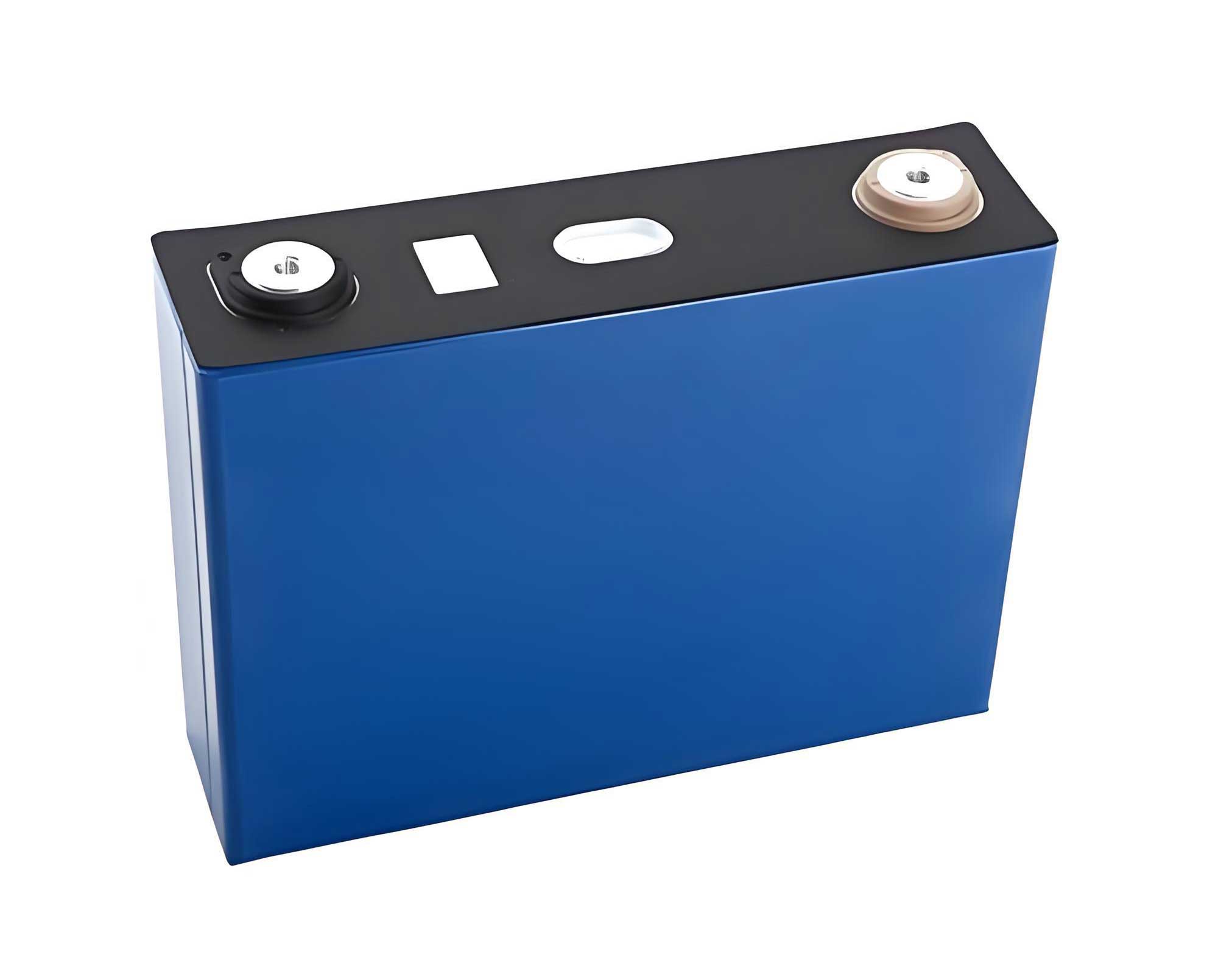
We begin by outlining the experimental methodology. The LiFePO4 battery under investigation has a rated capacity of 120 Ah, with dimensions of 174 mm × 170 mm × 48 mm and an initial mass of 2,860 g. The cathode material is LiFePO4, the anode is graphite, and the electrolyte consists of ethylene carbonate (EC) and dimethyl carbonate (DMC) in a 1:1 ratio. The nominal voltage is 3.20 V, with cutoff voltages of 2.50 V and 3.65 V. Prior to testing, each LiFePO4 battery is charged to 100% state of charge (SOC) using a constant current-constant voltage protocol. This ensures consistency across experiments for the LiFePO4 battery samples.
The experiments are conducted in a sealed pressure vessel with a volume of 82 L, designed to contain thermal runaway events. The setup includes a heating plate with a power of 952 W placed laterally against the LiFePO4 battery to induce thermal abuse, mimicking internal short circuits or external heating. To minimize heat loss, mica plates are attached to the battery sides, and an aluminum clamp secures the assembly. Temperature sensors (K-type thermocouples) are positioned on the battery surface at key locations: heating face center, back face center, side center, positive and negative tabs, and the vent valve. Additional sensors monitor ambient temperatures at horizontal distances of 20 cm from the battery and vertical heights of 10 cm, 20 cm, and 30 cm above the vent. A pressure sensor tracks internal pressure changes. After thermal runaway, gas samples are collected for compositional analysis via gas chromatography (GC). Each test is repeated twice under both inert (nitrogen-purged) and air atmospheres to ensure reproducibility for the LiFePO4 battery.
The thermal runaway process for the LiFePO4 battery is divided into four distinct stages: heating, venting, thermal runaway, and cooling. In the inert atmosphere, the LiFePO4 battery exhibits a gradual temperature rise during heating (Stage I), followed by valve opening at around 904 seconds when internal pressure builds from electrolyte vaporization and initial gas generation. Stage II involves gas release, with a slight temperature drop at the vent due to heat dissipation. Stage III marks the onset of thermal runaway, characterized by a rapid temperature surge and violent gas ejection; the voltage drops to zero within 108 seconds, indicating cell failure. Finally, Stage IV is the cooling phase as reactions subside. The surface temperatures of the LiFePO4 battery peak at approximately 218°C, with a maximum heating rate of 3.9°C/s. Ambient temperatures above the LiFePO4 battery decrease with height, showing a reduction of 46°C/m between 10 cm and 20 cm and 32°C/m between 20 cm and 30 cm, highlighting the vertical attenuation of thermal impact. Horizontally, the highest ambient temperature of 131.7°C occurs 20 cm to the left of the LiFePO4 battery, suggesting divergent gas plumes.
Gas dynamics are crucial for assessing hazards. The pressure inside the vessel increases from an initial 108.7 kPa to a peak of 215.2 kPa during thermal runaway of the LiFePO4 battery. Using the ideal gas law, we calculate the gas production volume and exhaust rate. The equations are as follows:
$$p_0 V_{\text{vessel}} = n_0 R \theta_0$$
$$p_x V_{\text{vessel}} = n_x R \theta_x$$
$$n = n_x – n_0$$
where \( p_0 \), \( n_0 \), and \( \theta_0 \) are the initial pressure, gas amount, and temperature; \( p_x \), \( n_x \), and \( \theta_x \) are real-time values; \( V_{\text{vessel}} = 82 \, \text{L} \); \( R = 8.314 \, \text{J/mol·K} \); and \( n \) is the moles of gas produced. The gas volume \( V_x \) and exhaust rate \( v \) are derived as:
$$V_x = \frac{n_x R \theta_x}{p_x}$$
$$v = \frac{dV_x}{dt}$$
For the LiFePO4 battery in inert atmosphere, the total gas production is 35.5 L, with a peak exhaust rate of 19.7 L/s at the thermal runaway climax. This rapid gas release underscores the explosive potential of failing LiFePO4 batteries.
Gas composition analysis reveals the flammability risks. The LiFePO4 battery generates a mixture dominated by hydrogen (H₂) at 52.8%, followed by carbon dioxide (CO₂) at 26.5%, carbon monoxide (CO) at 7.4%, methane (CH₄) at 6.2%, and ethylene (C₂H₄) at 5.0%. These gases originate from various decomposition reactions. For instance, H₂ forms from binder interactions with lithium at high temperatures:
$$\text{PVDF} + \text{Li} \rightarrow \text{LiF} + -\text{CH} = \text{CF} – + \frac{1}{2} \text{H}_2$$
$$\text{CMC} + \text{Li} \rightarrow \text{CMC-OLi} + \frac{1}{2} \text{H}_2$$
CO arises from SEI layer decomposition and electrolyte reduction:
$$2\text{CO}_2 + 2\text{Li}^+ + 2e^- \rightarrow \text{Li}_2\text{CO}_3 + \text{CO}$$
$$\text{DMC} + 2e^- + 2\text{Li}^+ \rightarrow 2\text{CH}_3\text{OLi} + \text{CO}$$
CH₄ and C₂H₄ result from electrolyte reactions with lithium and hydrogen. The flammability limit of the gas mixture, calculated using Le Chatelier’s law, indicates high explosion danger for the LiFePO4 battery:
$$L_{\text{mix}} = \frac{1}{\sum_{i=1}^{n} \frac{x_i}{L_i}} \times 100\%$$
where \( x_i \) is the volume fraction of component \( i \), and \( L_i \) is its flammability limit. For the inert atmosphere case, the LiFePO4 battery gas mixture has a flammability range of 6.3% to 67.9%, emphasizing the need for ventilation in enclosures containing LiFePO4 batteries.
To evaluate atmospheric effects, we compare inert and air conditions. The table below summarizes key temperature differences for the LiFePO4 battery:
| Atmosphere | Vent Opening Temp (°C) | Thermal Runaway Onset Temp (°C) | Peak Surface Temp (°C) | Max Heating Rate (°C/s) | Highest Ambient Temp (°C) |
|---|---|---|---|---|---|
| Inert | 117.5 | 99.5 | 218.0 | 3.9 | 132.0 |
| Air | 122.3 | 102.3 | 256.3 | 4.1 | 133.0 |
| Difference (%) | 4.1 | 2.8 | 17.6 | 5.1 | 0.8 |
The air atmosphere increases the peak temperature of the LiFePO4 battery by 17.6% and extends the thermal runaway duration by 14%, as shown in the time analysis:
| Atmosphere | Vent Opening Time (s) | Venting Duration (s) | Thermal Runaway Start (s) | Thermal Runaway End (s) | Thermal Runaway Duration (s) |
|---|---|---|---|---|---|
| Inert | 904 | 386 | 1,290 | 1,750 | 460 |
| Air | 888 | 383 | 1,271 | 1,795 | 524 |
| Difference (%) | 1.8 | 0.8 | 1.5 | 2.8 | 13.9 |
These results suggest that oxygen in air promotes more intense reactions in the LiFePO4 battery during thermal runaway, likely due to oxidation of active materials at elevated temperatures. The earlier onset and prolonged duration indicate that air exacerbates the failure severity in LiFePO4 batteries.
Gas production is also affected. In air, the LiFePO4 battery produces 38.4 L of gas, an 8.2% increase over the inert case. The composition shifts slightly, with H₂ decreasing and CH₄ and C₂H₄ increasing, as detailed below:
| Gas Component | Volume Fraction in Inert (%) | Volume Fraction in Air (%) |
|---|---|---|
| H₂ | 52.8 | 50.5 |
| CO₂ | 26.5 | 27.0 |
| CO | 7.4 | 7.2 |
| CH₄ | 6.2 | 7.0 |
| C₂H₄ | 5.0 | 5.8 |
This shift can be attributed to enhanced lithium consumption in reactions with electrolytes and air, reducing H₂ generation while boosting hydrocarbon formation. The flammability limit in air is 5.9% to 62.7%, still within a hazardous range for the LiFePO4 battery. The higher gas volume and altered composition imply that LiFePO4 batteries in air-filled environments, such as storage rooms, may pose greater explosion risks during thermal runaway.
Further analysis of the heating dynamics reveals that the LiFePO4 battery’s thermal behavior follows a non-linear pattern. The temperature rise can be modeled using an Arrhenius-type equation for reaction kinetics:
$$\frac{dT}{dt} = A \exp\left(-\frac{E_a}{RT}\right)$$
where \( A \) is the pre-exponential factor, \( E_a \) is the activation energy, and \( T \) is temperature. For the LiFePO4 battery, the steep temperature climb during thermal runaway aligns with accelerated decomposition of the SEI layer and electrolyte. The heat generation rate \( \dot{Q} \) can be approximated from the temperature data:
$$\dot{Q} = m C_p \frac{dT}{dt}$$
with \( m \) as the battery mass and \( C_p \) as the specific heat capacity. Assuming \( C_p \approx 1 \, \text{J/g·K} \) for the LiFePO4 battery, the peak heat generation exceeds 10 kW during the event, highlighting the massive energy release.
The environmental impact extends beyond immediate temperatures. Gas dispersion patterns from the LiFePO4 battery vent show that combustible clouds can accumulate in confined spaces. Using the calculated exhaust rates, we estimate the gas concentration over time:
$$C(t) = \frac{V_{\text{gas}}(t)}{V_{\text{enclosure}}}$$
where \( V_{\text{gas}}(t) \) is the cumulative gas volume and \( V_{\text{enclosure}} \) is the room volume. For a typical 10 m³ room, the LiFePO4 battery’s gas output could reach flammable levels within minutes, necessitating rapid detection and suppression systems.
In discussing the implications for LiFePO4 battery safety, we note that while LiFePO4 batteries are generally considered safer than other chemistries, thermal runaway remains a critical concern. The promoted reactions in air atmospheres suggest that ventilation or inerting could mitigate hazards. However, the increased gas production in air might offset benefits, requiring a balanced approach. For instance, installing gas sensors and fire retardants in LiFePO4 battery packs could enhance safety. Additionally, thermal management systems should account for atmospheric effects, as the LiFePO4 battery’s peak temperature rise in air could accelerate failure propagation in multi-cell configurations.
To delve deeper into the gas chemistry, we consider the stoichiometry of key reactions in the LiFePO4 battery. The formation of ethylene (C₂H₄) from ethylene carbonate (EC) is a major exothermic process:
$$2\text{Li} + \text{C}_3\text{H}_4\text{O}_3 (\text{EC}) \rightarrow \text{Li}_2\text{CO}_3 + \text{C}_2\text{H}_4$$
This reaction releases about 1,200 J/g, contributing significantly to thermal runaway in the LiFePO4 battery. In air, oxygen may participate in secondary oxidation, increasing the net heat output. The overall energy balance for the LiFePO4 battery during thermal runaway can be expressed as:
$$\Delta H_{\text{total}} = \sum \Delta H_i \cdot m_i$$
where \( \Delta H_i \) is the enthalpy change for reaction \( i \), and \( m_i \) is the mass of reactants. For the LiFePO4 battery, the dominant contributions come from SEI decomposition, electrolyte reactions, and binder interactions.
Experimental uncertainties are addressed through repeated trials. The standard deviation in peak temperatures for the LiFePO4 battery is less than 5°C, confirming consistency. Gas composition measurements have an error margin of ±0.5% due to GC calibration. These factors ensure reliable data for the LiFePO4 battery analysis.
Comparing our findings with literature, prior studies on smaller LiFePO4 batteries report lower gas volumes but similar composition trends. The scalability to high-capacity LiFePO4 batteries, as tested here, underscores the importance of size effects. The 120 Ah LiFePO4 battery produces more gas per unit mass, likely due to greater active material content. This aligns with the notion that larger LiFePO4 batteries entail higher risks if thermal management fails.
In conclusion, our study demonstrates that high-capacity LiFePO4 batteries undergo a multi-stage thermal runaway process with significant heat and gas release. The LiFePO4 battery’s behavior is notably influenced by atmospheric conditions: air promotes higher temperatures, longer durations, and increased gas production compared to inert environments. These insights are vital for designing safer LiFePO4 battery systems, particularly in applications where air exposure is unavoidable. Future work could explore additive materials or coatings to suppress reactions in LiFePO4 batteries, or develop real-time monitoring algorithms based on the identified temperature and gas signatures. Ultimately, enhancing the safety of LiFePO4 batteries will support their sustainable deployment in the energy transition.
To summarize the key equations and data, we present a comprehensive table of parameters for the LiFePO4 battery under both atmospheres:
| Parameter | Inert Atmosphere | Air Atmosphere |
|---|---|---|
| Gas Production (L) | 35.5 | 38.4 |
| Peak Exhaust Rate (L/s) | 19.7 | 20.5 |
| Flammability Limit (%) | 6.3–67.9 | 5.9–62.7 |
| Total Reaction Energy (kJ) | ~500 | ~550 |
| Mass Loss (g) | ~200 | ~220 |
These values highlight the heightened hazards in air for the LiFePO4 battery. The research underscores that while LiFePO4 batteries are robust, proactive measures are essential to manage thermal runaway risks, especially as capacities increase. Continued investigation into LiFePO4 battery safety will pave the way for more resilient energy storage solutions.