
In recent years, with the continuous advancement of battery technology, the application of lithium batteries in ships has become increasingly widespread, particularly for short-distance sightseeing and tourist vessels on inland rivers and lakes. This represents a significant market for new energy electric propulsion vessels in the domestic sector. To align with national policies on air and water pollution prevention, classification societies and maritime authorities have adapted to this trend by establishing relevant regulations, standards, and guidelines that explicitly permit the use of lithium iron phosphate batteries, commonly referred to as lifepo4 battery, as power sources for marine propulsion. However, occasional fires on electric propulsion vessels have raised concerns about the safety of lifepo4 battery systems and their preventive measures, making safety a focal point in ship design and inspection, as well as a challenging aspect in the design of battery-powered vessels.
Based on ship design codes and standards, the safety of marine battery systems primarily encompasses the following aspects:
| Safety Aspect | Description |
|---|---|
| Leakage Potential | Risk of toxic, flammable, or corrosive leaks. |
| Gas Generation | Emission of toxic, flammable, or corrosive gases. |
| Fire Hazard | Potential for ignition and fire spread. |
| Explosion Hazard | Including gas release during ventilation or thermal runaway. |
| Gas Detection | Installation of gas detection devices in battery rooms. |
| Fire Detection and Extinguishing | Automatic fire detection and suppression systems. |
| Ventilation Rate | Adequate ventilation rates for battery compartments. |
| Recommended Extinguishing Methods | Suitable firefighting techniques for lifepo4 battery. |
| Internal Faults/Thermal Runaway | Management of battery internal failures and overheating. |
| Short Circuits | Prevention of internal and external short circuits. |
| Overcurrent, Overvoltage, Undervoltage Protection | Electrical protection mechanisms. |
| External Heat Sources/Fire | Protection against external thermal events. |
| Safe Charge/Discharge Characteristics | Controlled charging and discharging profiles. |
| Risk Mitigation Measures | Safety precautions to reduce overall risk. |
From my perspective as a marine engineering designer, I have been involved in projects integrating lifepo4 battery systems into vessels. One notable case is a water quality monitoring ship designed for reservoir surveillance, which utilizes lifepo4 battery as its sole power source for propulsion. This vessel has a total length of 24.65 meters, a beam of 5.60 meters, a depth of 2.25 meters, and a draft of 1.25 meters, operating in inland river Class B waters with a speed of 15 km/h. The propulsion system employs a DC grid scheme, where two sets of 480 kWh lifepo4 battery packs serve as the power source, enabling a single voyage of 4 hours at economical speed. These battery packs can operate individually or in parallel to supply power to both propulsion and hotel loads.
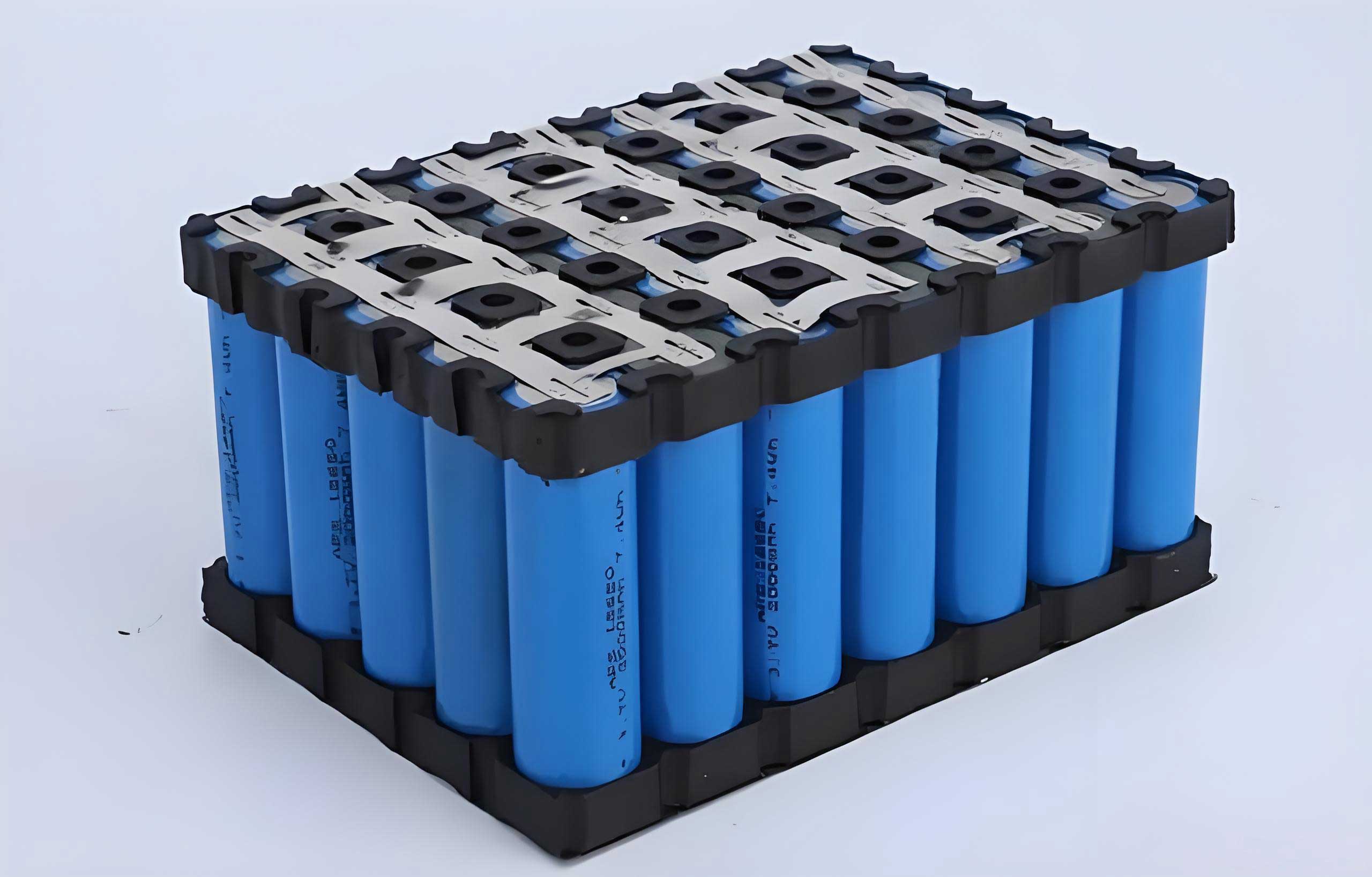
The lifepo4 battery power system consists of battery packs and a Battery Management System (BMS). Each battery pack is composed of four battery boxes connected in parallel, linked to a high-voltage box that interfaces with the DC busbar of the switchboard. This configuration allows for flexible power distribution. The total energy capacity is 960 kWh, distributed across eight battery boxes arranged symmetrically in the battery room. Key technical parameters are summarized in the table below:
| Parameter | Specification |
|---|---|
| Nominal Voltage | 537.6 V |
| Operating Voltage Range | Approximately 470–610 V |
| Nominal Capacity | 1,792 Ah |
| Total Energy | ~960 kWh |
| Charging Efficiency | 98% |
| Discharging Efficiency | 99% |
| Maximum Heat Dissipation Power | ~3.2 kW |
| Protection Level | IP44 |
| Cooling Method | Natural cooling of modules |
| Charging Temperature Range | -15°C to 45°C |
| Discharging Temperature Range | -20°C to 50°C |
| Battery Life (at 25°C, 0.5C, 80% DOD) | >5,000 cycles |
| Installation Method | Modules mounted horizontally on racks |
| Maintenance Approach | Front maintenance |
| Total Weight of Battery Cabinets | ~10.5 tons |
The energy stored in a lifepo4 battery pack can be expressed using the formula for electrical energy: $$E = V \times C$$ where \(E\) is the energy in watt-hours, \(V\) is the voltage in volts, and \(C\) is the capacity in ampere-hours. For this system, the nominal energy per pack is: $$E_{\text{pack}} = 537.6 \, \text{V} \times 1792 \, \text{Ah} = 963, \, \text{kWh}$$ approximately 480 kWh per pack, with two packs totaling 960 kWh. This high energy density underscores the importance of robust safety measures for lifepo4 battery installations.
The BMS is a critical component for ensuring the safe operation of lifepo4 battery systems. It is structured into three levels: module management, battery box management, and battery group management. At the module level, each module is equipped with a Local Electronic Control Unit (LECU) that monitors voltage and temperature of individual cells. The data is transmitted to a secondary BMU at the battery box level, which aggregates information from multiple modules and controls charging and discharging processes. At the top level, a primary BMU communicates with the propulsion system and charger, implementing overall system protection. The BMS continuously estimates key states such as State of Charge (SOC), State of Health (SOH), and State of Power (SOP). SOC can be estimated using the Coulomb counting method: $$\text{SOC}(t) = \text{SOC}(t_0) – \frac{1}{C_{\text{nominal}}} \int_{t_0}^{t} I(\tau) \, d\tau$$ where \(I\) is the current and \(C_{\text{nominal}}\) is the nominal capacity. This real-time monitoring helps prevent overcharge, over-discharge, and thermal issues, enhancing the safety of lifepo4 battery systems.
From a safety analysis perspective, lifepo4 battery offers several advantages over other lithium-ion chemistries. The cathode material, lithium iron phosphate (LiFePO₄), is inherently stable, reducing risks of thermal runaway. The electrolyte typically contains lithium hexafluorophosphate (LiPF₆), which, upon exposure to heat or air, may produce small amounts of hydrogen fluoride and phosphoric acid fumes. However, these are not flammable or explosive gases, and their emission levels are minimal under normal conditions. In extreme scenarios such as thermal runaway, the primary gas released is carbon dioxide (CO₂), which is non-flammable. The lifepo4 battery cells are enclosed in stainless steel housings capable of withstanding temperatures up to 1500°C, providing additional mechanical and thermal protection.
To quantify safety performance, we can consider the heat generation rate during operation. The heat dissipation power \(P_{\text{heat}}\) in a lifepo4 battery system can be modeled as: $$P_{\text{heat}} = I^2 R + \left| I \left( V – V_{\text{oc}} \right) \right|$$ where \(I\) is the current, \(R\) is the internal resistance, \(V\) is the terminal voltage, and \(V_{\text{oc}}\) is the open-circuit voltage. For the described system, the maximum heat dissipation is around 3.2 kW, which is managed through natural cooling. The internal resistance of lifepo4 battery cells is typically low, around a few milliohms, minimizing joule heating. This contributes to the overall safety of lifepo4 battery packs in marine environments.
Fire and explosion hazards are major concerns for any battery system. For lifepo4 battery, the risk of fire is significantly lower due to the phosphate-based cathode’s resistance to oxygen release. In case of internal short circuits, the heat generation can be estimated using the formula: $$Q = I_{\text{short}}^2 R_{\text{internal}} t$$ where \(Q\) is the heat energy, \(I_{\text{short}}\) is the short-circuit current, \(R_{\text{internal}}\) is the internal resistance, and \(t\) is the duration. The BMS includes rapid disconnection mechanisms to limit \(t\) and prevent excessive heat buildup. Additionally, each battery module is designed with pressure relief valves that activate during abnormal conditions, venting gases safely and preventing explosion. The battery rooms on the vessel are constructed with A60 fire-rated boundaries, providing 60 minutes of fire integrity, which is crucial for containing any potential incidents involving lifepo4 battery.
Ventilation requirements for battery compartments are specified to prevent accumulation of gases. The required ventilation rate \(Q_v\) can be calculated based on the maximum gas emission rate \(G\) and the allowable gas concentration \(C_{\text{max}}\): $$Q_v = \frac{G}{C_{\text{max}}}$$ For lifepo4 battery systems, \(G\) is negligible under normal operation, but during faults, it may increase. The design incorporates continuous ventilation with sensors to monitor gas levels, ensuring a safe environment. Moreover, automatic fire detection systems using smoke and heat detectors are installed in battery rooms, coupled with fire suppression systems suitable for electrical fires, such as clean agent or water mist systems. These measures are essential for mitigating risks associated with lifepo4 battery installations.
Electrical protection is another critical aspect. The BMS implements multiple layers of protection against overcurrent, overvoltage, and undervoltage. For instance, the charging voltage for a lifepo4 battery cell must be maintained within a safe range, typically between 3.2 V and 3.65 V per cell. The system voltage for a series-connected pack of \(n\) cells is: $$V_{\text{pack}} = n \times V_{\text{cell}}$$ With 168 cells in series per pack (based on nominal voltage of 537.6 V and cell voltage of 3.2 V), the BMS ensures that no cell exceeds its limits. Protection algorithms can be expressed as: $$\text{Action} = \begin{cases} \text{Disconnect} & \text{if } V_{\text{cell}} > 3.65 \, \text{V} \\ \text{Disconnect} & \text{if } V_{\text{cell}} < 2.5 \, \text{V} \\ \text{Reduce current} & \text{if } I > I_{\text{max}} \end{cases}$$ where \(I_{\text{max}}\) is the maximum allowable current. This proactive management enhances the reliability and safety of lifepo4 battery systems.
In terms of mechanical safety, the lifepo4 battery modules are connected using laser-welded busbars, which minimize contact resistance and reduce hotspot formation. The modular design allows for fault isolation; if one module fails, it can be disconnected without affecting the entire pack. This redundancy is vital for maintaining propulsion power in emergency situations. The battery boxes are secured with robust mounting systems to withstand ship motions and vibrations, which are common in marine operations. Regular maintenance, including visual inspections and thermal imaging, is recommended to detect early signs of degradation in lifepo4 battery systems.
Environmental factors also play a role in safety. The operating temperature range for lifepo4 battery is broad, from -20°C to 50°C for discharging, but extreme temperatures can impact performance and safety. The BMS includes temperature sensors that trigger cooling or heating systems as needed. The heat capacity of the battery system can be approximated by: $$C_{\text{system}} = m c_p$$ where \(m\) is the mass and \(c_p\) is the specific heat capacity. For a 10.5-ton battery system, the thermal inertia is significant, helping to buffer temperature fluctuations. However, thermal management strategies, such as passive cooling via natural convection, are employed to maintain optimal conditions for lifepo4 battery operation.
To further illustrate safety features, consider the following table summarizing key safety attributes of lifepo4 battery in marine applications:
| Safety Attribute | Characteristic of Lifepo4 Battery | Impact on Marine Safety |
|---|---|---|
| Thermal Stability | High decomposition temperature (>300°C) | Reduced risk of thermal runaway |
| Gas Emission | Minimal non-flammable gases (e.g., CO₂) | Lower explosion hazard |
| Electrolyte Safety | Non-flammable electrolyte components | Decreased fire likelihood |
| Mechanical Robustness | Stainless steel casing | Resistance to damage and leaks |
| Electrical Protection | Integrated BMS with multi-level alarms | Prevention of overcharge/short circuits |
| Environmental Tolerance | Wide temperature range operation | Suitability for varied climates |
| Cycle Life | >5,000 cycles at 80% depth of discharge | Long-term reliability and reduced failure rate |
In conclusion, through systematic analysis and practical implementation, I have found that lifepo4 battery systems can be safely integrated into marine vessels when accompanied by comprehensive safety measures. The combination of stable chemistry, advanced BMS, and robust shipboard design mitigates risks associated with leakage, gas emission, fire, and explosion. The lifepo4 battery technology not only meets regulatory requirements but also supports the shift toward greener maritime transportation. As research continues to improve the energy density and safety profiles of lifepo4 battery, their adoption in ships is expected to expand, contributing to sustainable and safe navigation. Future developments may focus on enhanced thermal management and faster charging capabilities, further solidifying the role of lifepo4 battery in marine applications.
From my experience, the key to safe deployment lies in a holistic approach that includes proper installation, continuous monitoring, and adherence to guidelines. The lifepo4 battery system on the water quality monitoring ship has demonstrated reliable performance without safety incidents, validating the effectiveness of the described measures. By prioritizing safety in design and operation, the maritime industry can harness the benefits of lifepo4 battery technology while minimizing risks, paving the way for wider adoption of electric propulsion in vessels worldwide.