
As an industry analyst deeply engaged in the energy storage sector, I have witnessed firsthand the transformative journey of the energy storage cell market over the past two decades. The global push toward carbon neutrality, coupled with the rapid expansion of renewable energy, has elevated the energy storage cell from a niche technology to a cornerstone of modern power systems. In this comprehensive analysis, I will dissect the evolution, present landscape, value chain, and future trajectory of the energy storage cell industry, with a focus on electrochemical storage, particularly lithium-ion energy storage cell technologies. Throughout this article, I will leverage extensive data tables, mathematical formulations, and market insights to provide a holistic view. The central theme revolves around how the energy storage cell is reshaping electricity management, from utility-scale installations to portable emergency power.
Fundamentals of Energy Storage Technologies
Energy storage, by definition, is the process of capturing energy produced at one time for use at a later moment. The broad classification of energy storage technologies can be summarized in the following table, which illustrates how the energy storage cell fits within the larger ecosystem.
| Major Category | Subcategory | Examples | Key Characteristics |
|---|---|---|---|
| Thermal Storage | — | Molten salt, ice storage | High capacity for heating/cooling; lower round-trip efficiency |
| Electrical Storage | Electrochemical | Lithium-ion energy storage cell, lead-acid, flow battery | High energy density, fast response, modular |
| Mechanical | Pumped hydro, compressed air, flywheel | Large scale, long duration; site-dependent | |
| Electromagnetic | Supercapacitor, superconducting magnetic | Ultra-fast response, low energy density | |
| Hydrogen (Ammonia) | — | Electrolysis + fuel cell | Long-duration storage, seasonal; low round-trip efficiency |
Among these, pumped hydro currently dominates global installed capacity. However, the fastest-growing segment is undoubtedly the electrochemical energy storage cell, especially the lithium-ion energy storage cell. According to the China Electricity Council, as of the end of 2022, lithium-ion batteries accounted for 89.5% of cumulative electrochemical storage in China, with lithium iron phosphate (LFP) making up 88.7%. This dominance is driven by the energy storage cell’s superior performance metrics: high energy density, rapid charge/discharge, long cycle life, and decreasing cost.
The energy storage cell technology landscape is diverse, and the following table compares the most prominent non-lithium alternatives with lithium-ion energy storage cell systems.
| Technology | Energy Density (Wh/kg) | Cycle Life (cycles) | Response Time | Capital Cost ($/kWh) | Maturity |
|---|---|---|---|---|---|
| Lithium-ion (LFP) energy storage cell | 120–180 | 3000–8000 | Milliseconds | 100–200 | Mature |
| Sodium-ion energy storage cell | 90–150 | 2000–4000 | Milliseconds | 80–150 | Early commercial |
| Vanadium redox flow battery | 15–30 | 10000+ | Seconds | 300–600 | Demonstrated |
| Lead-acid energy storage cell | 30–50 | 500–1500 | Seconds | 50–100 | Very mature |
| Compressed air (non-electrochemical) | — | — | Minutes | 200–400 | Early commercial |
Historical Development of the Energy Storage Cell Industry
I have organized the evolution of the energy storage cell market into four distinct phases, as shown in the timeline below. Each phase reflects the interplay between technology push and market pull.
| Phase | Period | Key Characteristics | Notable Milestones |
|---|---|---|---|
| 1. Technology Verification | 2000–2010 | Basic R&D small-scale demonstration of energy storage cell prototypes | First lithium-ion energy storage cell pilot projects |
| 2. Demonstration & Application | 2011–2015 | Performance validation; application models became clearer; value recognized | Grid-connected energy storage cell trials in Japan, US, China |
| 3. Early Commercialization | 2016–2020 | Policy support; market mechanisms established; installed capacity grew rapidly | China’s first 100 MW-level energy storage cell station; cost reduction accelerated |
| 4. Large-Scale Commercialization | 2021–2025 | Widespread deployment; technology advances; standards mature; international competitiveness | Energy storage cell becomes a new economic growth point in energy sector |
The compound annual growth rate (CAGR) of global energy storage cell installations from 2017 to 2023 can be expressed mathematically. Let \( P_{2017} \) be the installed capacity in 2017 and \( P_{2023} \) be that in 2023. Then:
$$ CAGR = \left( \frac{P_{2023}}{P_{2017}} \right)^{\frac{1}{6}} – 1 $$
According to the Energy Storage Alliance (EESA), the global new installed capacity of energy storage (in GWh) grew from approximately 2.5 GWh in 2017 to 103.5 GWh in 2023, yielding a CAGR exceeding 85%:
$$ CAGR = \left( \frac{103.5}{2.5} \right)^{\frac{1}{6}} – 1 \approx 0.858 = 85.8\% $$
This staggering growth trajectory underscores the explosive demand for the energy storage cell across all application domains.
Energy Storage Cell Value Chain Analysis
The energy storage cell industrial chain encompasses upstream raw materials and equipment, midstream cell manufacturing and system integration, and downstream applications. I have broken this down into the following detailed table.
| Stage | Sub-components | Key Players (Roles) | Value Drivers |
|---|---|---|---|
| Upstream | Raw materials: cathode, anode, electrolyte, separator | Material suppliers (e.g., chemical companies) | Lithium, cobalt, nickel, graphite prices; quality control |
| Manufacturing equipment | Coating, winding, assembly machine makers | Automation level; precision | |
| Midstream | Energy storage cell production (cell + battery pack) | Cell manufacturers | Energy density, safety, cost |
| Battery Management System (BMS) | BMS providers | Smart balancing, thermal management | |
| Power Conversion System (PCS) & Energy Management System (EMS) | Inverter and software companies | Efficiency, grid integration | |
| Downstream | Power generation side, grid side, user side | Utilities, IPPs, commercial/industrial users | Regulatory support, cost reduction |
The cost structure of a typical lithium-ion energy storage cell system can be approximated by the following breakdown. Let \( C_{total} \) be the total system cost per kWh:
$$ C_{total} = C_{cell} + C_{pack} + C_{BMS} + C_{PCS} + C_{installation} $$
In 2023, the average cell cost for LFP energy storage cell was around $85/kWh, while the complete system cost (including BMS, PCS, and installation) ranged from $150 to $250/kWh, depending on scale and application.
Global and Chinese Energy Storage Market Status
The global energy storage market has undergone a paradigm shift. The following table summarizes the installed capacity trends from 2017 to 2023.
| Year | Global New Installations (GWh) | China Share (%) | US Share (%) | Rest of World (%) |
|---|---|---|---|---|
| 2017 | 2.5 | 22 | 30 | 48 |
| 2018 | 4.8 | 25 | 28 | 47 |
| 2019 | 8.2 | 20 | 35 | 45 |
| 2020 | 15.1 | 18 | 32 | 50 |
| 2021 | 28.5 | 32 | 28 | 40 |
| 2022 | 49.2 | 43 | 24 | 33 |
| 2023 | 103.5 | 49 | 18 | 33 |
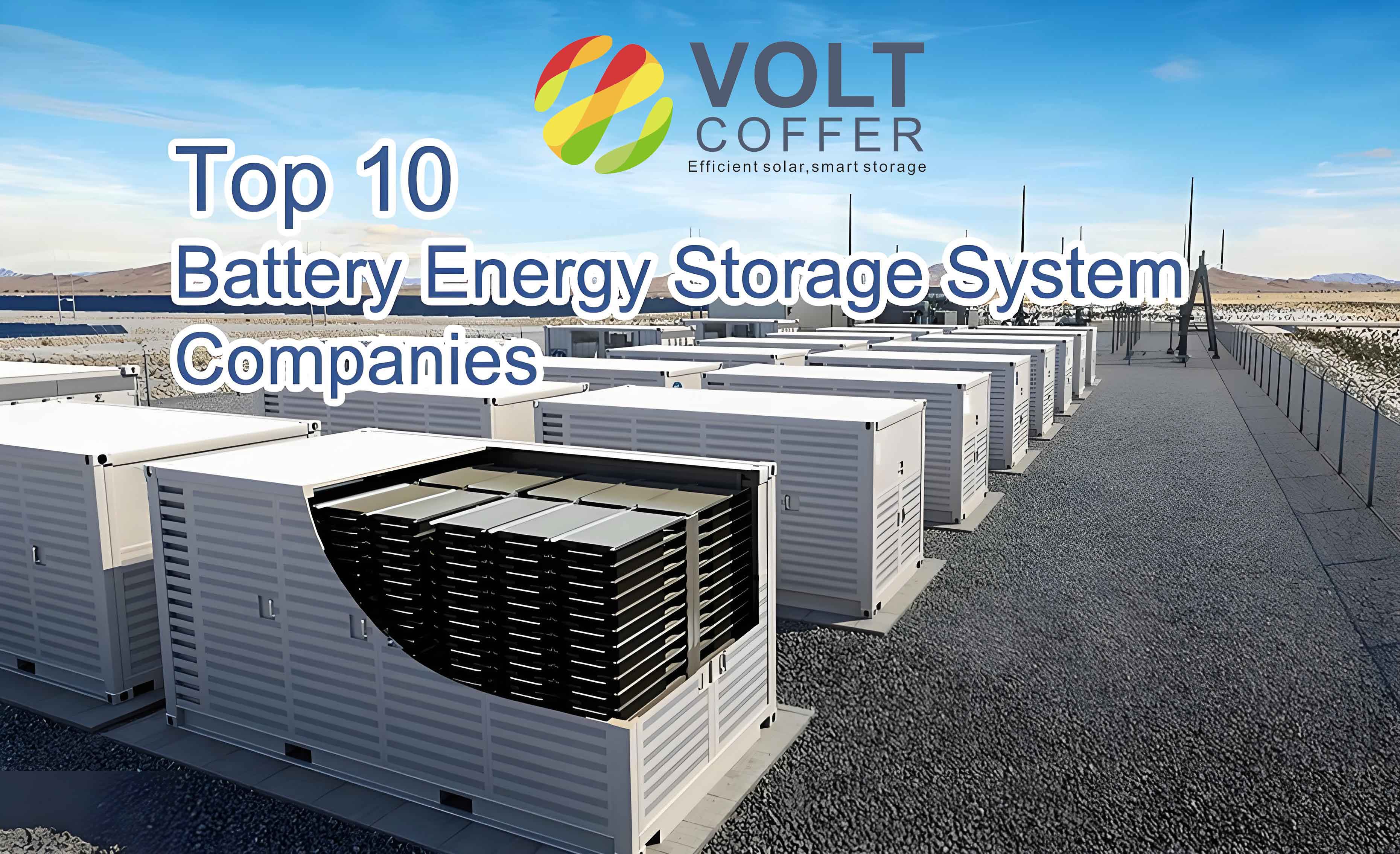
China has been the dominant force since 2022. In 2023, China’s new installed capacity of new-type energy storage (mainly electrochemical energy storage cell) reached 21.5 GW / 46.6 GWh, a year-on-year increase of over 150%. The cumulative capacity hit 34.5 GW / 74.5 GWh. Notably, the newly added capacity of new-type storage surpassed pumped hydro by nearly four times. Lithium-ion energy storage cell technology accounted for 97% of new additions, up from 94% in 2022.
Non-lithium technologies such as compressed air, sodium-ion, flow battery, flywheel, and supercapacitors are also making inroads. The following table highlights their penetration in 2023.
| Technology | Share by Capacity (%) | Notable Project Examples |
|---|---|---|
| Lithium-ion energy storage cell | 97 | 100+ projects over 100 MW |
| Compressed air | 1.5 | 100 MW liquid air storage |
| Sodium-ion energy storage cell | 0.5 | 10 MW demonstration |
| Flow battery (vanadium) | 0.6 | 200 MW/800 MWh project |
| Flywheel/Supercapacitor | 0.4 | Grid frequency regulation |
Emergency and Portable Energy Storage Cell Market
One fast-growing downstream segment is the emergency and portable energy storage cell market, also known as portable power stations. These devices replace traditional small gasoline generators with lithium-ion energy storage cell packs, offering capacities from 100 Wh to 3000 Wh. They are widely used in outdoor recreation, disaster relief, medical rescue, and mining operations. The following table traces the market size in China from 2018 to projected 2025.
| Year | Market Size (Billion RMB) | YoY Growth (%) |
|---|---|---|
| 2018 | 3.7 | — |
| 2019 | 8.2 | 121.6 |
| 2020 | 18.5 | 125.6 |
| 2021 | 45.3 | 144.9 |
| 2022 | 89.6 | 97.8 |
| 2023 | 137.8 | 53.8 |
| 2024 (estimated) | 156.75 | 13.8 |
| 2025 (projected) | 176.34 | 12.5 |
The application breakdown for emergency energy storage cell is as follows:
| Application | Market Share (%) | Typical Use Cases |
|---|---|---|
| Disaster relief & public safety | 55–60 | Power for rescue equipment, temporary shelters |
| Outdoor recreation | 15–20 | Camping, RV, tailgating |
| Medical rescue | 11–16 | Hospitals, mobile clinics, field ambulances |
| Mining operations | 5–8 | Underground lighting, communication devices |
The growth rate can be modeled by an exponential function. Let \( M(t) \) be the market size at year \( t \). Fitting the data from 2018 to 2023 yields:
$$ M(t) = 3.7 \times e^{0.72 (t-2018)} $$
This implies an approximate annual growth rate of 72% during the early period, though recent years show deceleration as the market matures.
Policy Landscape and Future Challenges
The “dual carbon” goals and energy transition have triggered a wave of supportive policies for the energy storage cell industry in China. The following table summarizes key policies issued during the 14th Five-Year Plan period (2021–2025).
| Policy Document | Year | Key Provisions |
|---|---|---|
| “Guiding Opinions on Accelerating the Development of New Energy Storage” | 2021 | Target: 30 GW cumulative capacity by 2025; promote commercialization |
| “14th Five-Year Plan for Renewable Energy” | 2022 | Mandatory renewable + storage; pilot projects for independent storage |
| “Action Plan for Carbon Peak by 2030” | 2022 | Support large-scale energy storage cell deployment; improve market mechanisms |
| “Notice on Promoting the Development of New Energy Storage” | 2023 | Establish cost-sharing mechanisms; encourage multiple technology paths |
| “Guidelines for Energy Storage Cell Safety Standards” | 2024 | Mandatory testing for thermal runaway; fire protection regulations |
Despite the favorable policy environment, the energy storage cell industry faces significant hurdles. The levelized cost of storage (LCOS) is a critical metric. For a lithium-ion energy storage cell system, the LCOS can be expressed as:
$$ LCOS = \frac{C_{inv} + \sum_{t=1}^{T} \frac{O\&M_t}{(1+r)^t} + \frac{C_{replacement}}{(1+r)^{T/2}}}{\sum_{t=1}^{T} \frac{E_{dis,t}}{(1+r)^t}} $$
where \( C_{inv} \) is the initial investment cost, \( O\&M_t \) is annual operation and maintenance cost, \( C_{replacement} \) is the cost of cell replacement at mid-life (if needed), \( E_{dis,t} \) is the annual discharged energy, \( r \) is the discount rate, and \( T \) is the project lifetime. For many projects, LCOS remains above the revenue achievable through arbitrage or ancillary services, limiting commercial viability.
Safety is another paramount concern. Thermal runaway of energy storage cell systems has caused several fires, prompting stricter regulations. The failure rate of energy storage cell can be modeled using an Arrhenius-type equation:
$$ \lambda = A e^{-\frac{E_a}{k_B T}} $$
where \( \lambda \) is the failure rate, \( A \) is a constant, \( E_a \) is activation energy, \( k_B \) is Boltzmann’s constant, and \( T \) is temperature. This highlights the critical importance of thermal management in energy storage cell design.
Competitive Dynamics: Key Success Factors
The energy storage cell market is bifurcated into residential (ToC) and utility/commercial/industrial (ToB) segments. The following table outlines the critical success factors for each.
| Market Segment | Primary Customer | Key Success Factors |
|---|---|---|
| Residential (Home storage & portable energy storage cell) | Consumers (ToC) | Brand recognition; distribution channels; product design; after-sales service; local compliance (e.g., UL, CE) |
| Utility-scale & C&I (Grid-side, Power generation side, Industrial) | Businesses (ToB) | System integration capability; cost control; safety track record; long-term warranty; project financing; relationship with utilities |
For residential markets, particularly in overseas markets like Europe and North America, localization of the energy storage cell product (certification, language, plug types) is essential. For domestic Chinese ToB markets, the ability to secure large-scale orders from state-owned enterprises and competitive pricing are paramount.
Future Outlook: Opportunities and Risks
Looking ahead to 2025 and beyond, I anticipate several transformative trends for the energy storage cell industry:
- Cost Reduction Continuation: The learning curve for lithium-ion energy storage cell suggests a price decline of 10–15% per doubling of cumulative production. Using Wright’s law:
$$ C(Q) = C_0 \left( \frac{Q}{Q_0} \right)^{-\alpha} $$
where \( Q \) is cumulative production, \( C_0 \) is the cost at reference output \( Q_0 \), and \( \alpha \) is the learning rate (typically 0.15–0.25 for energy storage cell). This implies system costs could fall below $100/kWh by 2027.
- Technology Diversification: Sodium-ion energy storage cell, with its abundant raw materials, is poised to capture 10–15% of the stationary storage market by 2030, especially in applications where energy density is less critical. Flow batteries will extend into long-duration (8+ hour) storage.
- Safety Innovation: Solid-state energy storage cell, while still in R&D, could eliminate flammable liquid electrolytes, drastically improving safety. The first generation of semi-solid energy storage cell is expected to enter production by 2026.
- Grid-Scale Integration: Virtual power plants (VPPs) aggregating millions of distributed energy storage cell units will become a reality, enabled by advanced EMS and IoT.
- Circular Economy: Recycling of energy storage cell materials will become mandatory. The recycling rate of critical metals like lithium, cobalt, and nickel will increase from current ~5% to over 90% by 2035, driven by regulation and economic incentives.
However, risks remain. Overcapacity in the Chinese energy storage cell manufacturing sector has led to margin compression. The global trade environment is becoming more protectionist, with tariffs and local content requirements affecting cross-border flows. Furthermore, uncertainties in raw material prices (lithium, graphite) can disrupt cost trajectories. The energy storage cell industry must navigate these headwinds while maintaining the rapid pace of innovation.
Conclusion
In my assessment, the energy storage cell industry is at a pivotal inflection point. The technology has matured enough to enable broad adoption, yet it still faces significant challenges in commercial viability and safety. The next five years will be defined by fierce competition, rapid technological iteration, and evolving regulatory frameworks. The energy storage cell will not only support the renewable energy transition but also create a new trillion-dollar market spanning transportation, grid infrastructure, and consumer electronics. As I continue to monitor this dynamic space, one thing is clear: the energy storage cell is the linchpin of a decarbonized energy future.