
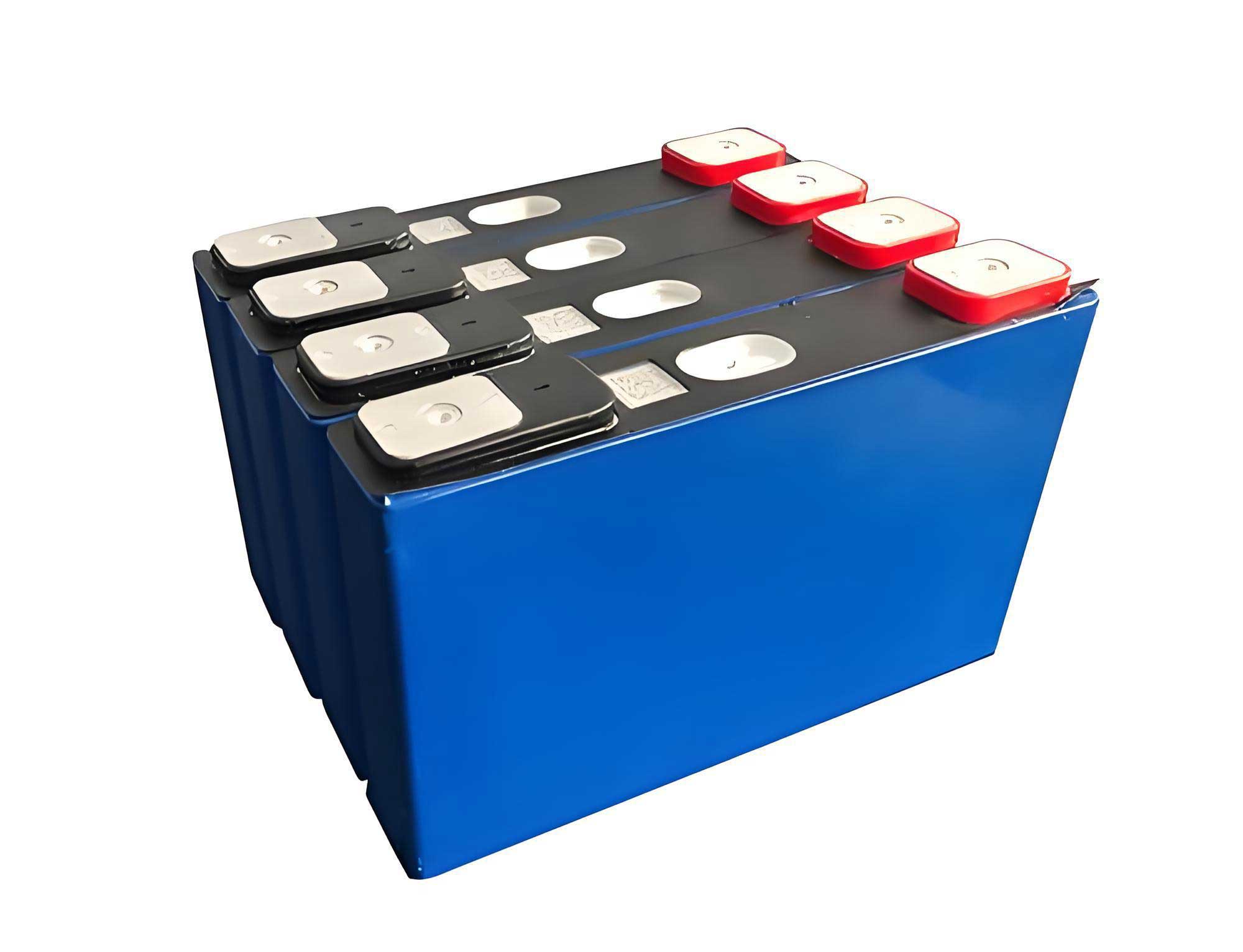
The global push towards carbon neutrality has fundamentally shifted the energy landscape, necessitating the integration of large-scale renewable energy sources like solar and wind into power grids. However, the inherent intermittency and volatility of these sources pose significant challenges to grid stability. Electrochemical energy storage systems, particularly those utilizing lithium-ion batteries, have emerged as a critical solution for load leveling, frequency regulation, and enhancing power quality. Among various chemistries, the lithium iron phosphate (LiFePO4) battery is widely adopted for stationary energy storage due to its inherent safety, long cycle life, and cost-effectiveness. Nevertheless, safety incidents involving thermal runaway—a self-accelerating exothermic reaction leading to fire or explosion—remain a primary concern, potentially triggered by operational faults such as overcharging. Therefore, a profound understanding of the intrinsic mechanisms governing overcharge-induced thermal runaway in LiFePO4 batteries is paramount for developing effective early warning systems and safety management protocols for energy storage power stations.
Thermal runaway in lithium-ion batteries can be initiated by mechanical, electrical, or thermal abuse. In the context of grid-scale energy storage, overcharge represents a prevalent electrical abuse scenario, often stemming from battery management system (BMS) failures or improper charging strategies. While experimental studies provide valuable insights, they can be destructive, costly, and sometimes fail to capture the internal state evolution. Consequently, numerical modeling has become an indispensable tool for probing the complex, coupled electrochemical-thermal processes during thermal runaway. Most existing thermal runaway models for LiFePO4 batteries focus on thermal abuse scenarios, employing preset heat sources to trigger simulated reactions. However, models specifically addressing the overcharge condition, particularly those mechanistically capturing the initial triggering event—lithium plating on the anode—are less common. This study aims to fill this gap by developing a three-dimensional (3D) electrochemical-thermal coupled model that explicitly incorporates the kinetics of anode lithium plating and its subsequent exothermic reaction with the electrolyte, providing a detailed simulation of the early-stage and propagation characteristics of overcharge-induced thermal runaway in a commercial LiFePO4 energy storage battery.
Model Development: A 3D Electrochemical-Thermal Coupled Framework
We established a pseudo-three-dimensional model based on the Doyle-Fuller-Newman framework, coupling lithium-ion transport, electrochemical reactions, and heat generation/transfer. The geometry represents a single-layer pouch-type LiFePO4 battery, sequentially comprising the negative current collector, porous negative electrode (graphite), separator, porous positive electrode (LiFePO4), and positive current collector, with tabs extending from the collectors.
Governing Equations for Electrochemical and Thermal Behavior
The model solves for the conservation of charge and mass. Charge conservation in the solid phase follows Ohm’s law:
$$ \nabla \cdot (\sigma_s^{\text{eff}} \nabla \phi_s) = j_{\text{total}} $$
where $\sigma_s^{\text{eff}}$ is the effective solid-phase conductivity, $\phi_s$ is the solid potential, and $j_{\text{total}}$ is the total local current density (sum of intercalation and plating current densities in the anode).
Charge conservation in the electrolyte phase accounts for ionic migration and diffusion:
$$ -\nabla \cdot (\kappa^{\text{eff}} \nabla \phi_e) + \nabla \cdot \left( \frac{2\kappa^{\text{eff}} RT}{F} (1 – t_+) \nabla (\ln c_e) \right) = j_{\text{total}} $$
where $\kappa^{\text{eff}}$ is the effective electrolyte conductivity, $\phi_e$ is the electrolyte potential, $t_+$ is the Li$^+$ transference number, $R$ is the universal gas constant, $T$ is the absolute temperature, $F$ is Faraday’s constant, and $c_e$ is the electrolyte Li$^+$ concentration.
Lithium diffusion within spherical active material particles is governed by Fick’s second law:
$$ \frac{\partial c_s}{\partial t} = D_s \left( \frac{\partial^2 c_s}{\partial r^2} + \frac{2}{r} \frac{\partial c_s}{\partial r} \right) $$
where $c_s$ is the solid-phase Li concentration and $D_s$ is the solid-phase diffusion coefficient. The boundary condition at the particle surface links the diffusion flux to the local intercalation current density $j_{\text{int}}$:
$$ -D_s \nabla c_s |_{r=R_p} = \frac{j_{\text{int}}}{a_s F} $$
with $R_p$ as the particle radius and $a_s$ as the specific surface area.
The thermal behavior is governed by an energy balance considering heat generation and dissipation:
$$ \rho C_p \frac{\partial T}{\partial t} = \nabla \cdot (\lambda \nabla T) + Q_{\text{gen}} $$
where $\rho$, $C_p$, and $\lambda$ are the density, heat capacity, and thermal conductivity of the cell components, respectively. The total heat generation rate $Q_{\text{gen}}$ comprises reversible (entropic) heat $Q_{\text{rev}}$, irreversible (Joule/Polarization) heat $Q_{\text{irr}}$, and heat from side reactions $Q_s$ that lead to thermal runaway:
$$ Q_{\text{gen}} = Q_{\text{irr}} + Q_{\text{rev}} + Q_s $$
During normal operation, $Q_s=0$. The onset of thermal runaway is marked by $Q_s$ becoming dominant, causing the cell temperature to rise uncontrollably.
Modeling Overcharge-Specific Side Reactions and Heat Generation
The core innovation of this model lies in the explicit description of the overcharge-triggered side reaction cascade. The total side reaction heat $Q_s$ is the sum of heats from five key exothermic processes:
$$ Q_s = Q_{\text{Li}} + Q_{\text{SEI,decomp}} + Q_{\text{ne}} + Q_{\text{pe}} + Q_{\text{e}} $$
where the subscripts denote: Li (plated lithium reacting with electrolyte), SEI,decomp (solid electrolyte interphase decomposition), ne (negative electrode active material reacting with electrolyte), pe (positive electrode active material reacting with electrolyte), and e (electrolyte decomposition).
Each reaction heat is calculated as:
$$ Q_x = H_x \cdot W_x \cdot K_x(T, \alpha) $$
Here, $H_x$ is the reaction enthalpy per unit mass, $W_x$ is the available mass of the reacting substance, and $K_x$ is the temperature-dependent reaction rate described by an Arrhenius-type expression or related kinetic equation, often dependent on the state of advancement $\alpha$.
1. Anode Lithium Plating Kinetics: During overcharge, when the anode potential drops below 0 V vs. Li/Li$^+$, lithium ions are reduced to metallic Li on the graphite surface instead of intercalating. The total local current density at the anode becomes $j_{\text{total}} = j_{\text{int}} + j_{\text{pl}}$. The lithium plating current density $j_{\text{pl}}$ is modeled as:
$$ j_{\text{pl}} = a_s F k_{\text{pl}} c_e^{\alpha_{\text{an,pl}}} \left[ \exp\left(\frac{\alpha_{\text{an,pl}} F \eta_{\text{pl}}}{RT}\right) – \exp\left(-\frac{\alpha_{\text{ca,pl}} F \eta_{\text{pl}}}{RT}\right) \right] $$
with the plating overpotential $\eta_{\text{pl}} = \phi_s – \phi_e – j_{\text{total}} R_{\text{film}} / a_s$, where $k_{\text{pl}}$ is the plating rate constant and $R_{\text{film}}$ is a film resistance. The plated lithium mass per unit volume $W_{\text{Li}}$ is tracked by integrating $j_{\text{pl}}$ over time.
2. Reaction of Plated Lithium with Electrolyte: The deposited metallic lithium reacts exothermically with the electrolyte. This process is analogous to SEI growth. Its rate is modeled using SEI growth kinetics, where the local SEI formation current $j_{\text{SEI,Li}}$ is:
$$ j_{\text{SEI,Li}} = \frac{j_{\text{loc,ref}}}{1 + (f \cdot q_{\text{SEI}})} \exp\left(\frac{\alpha F \eta_{\text{SEI}}}{RT}\right) $$
Here, $q_{\text{SEI}}$ is the accumulated charge from this parasitic reaction, and $f$ is a dimensionless parameter. The associated heat generation is:
$$ Q_{\text{Li}} = H_{\text{Li}} \cdot W_{\text{Li}} \cdot \frac{\partial c_{\text{SEI}}}{\partial t} $$
where $\partial c_{\text{SEI}}/\partial t$ is proportional to $j_{\text{SEI,Li}}$ and represents the consumption rate of plated Li.
3. Cascade of Subsequent Thermal Runaway Reactions:
SEI Decomposition ($Q_{\text{SEI,decomp}}$): Triggered at ~80-120°C.
$$ K_{\text{SEI,decomp}} = A_{\text{SEI}} \exp\left(-\frac{E_{a,\text{SEI}}}{RT}\right) c_{\text{SEI}}^{m_{\text{SEI}}} $$
Anode-EC Reaction ($Q_{\text{ne}}$): Triggered at >120°C after SEI breakdown.
$$ K_{\text{ne}} = A_{\text{ne}} \exp\left(-\frac{E_{a,\text{ne}}}{RT}\right) c_{\text{ne}}^{m_{\text{ne}}} \exp\left(-\frac{t_{\text{SEI}}}{t_{\text{SEI,ref}}}\right) $$
Cathode-EC Reaction ($Q_{\text{pe}}$): Triggered at ~170-200°C. Often modeled with two parallel reactions.
$$ K_{\text{pe1}} = A_{\text{pe1}} \exp\left(-\frac{E_{a,\text{pe1}}}{RT}\right) \alpha^{m_{\text{pe1}}}(1-\alpha) $$
$$ K_{\text{pe2}} = A_{\text{pe2}} \exp\left(-\frac{E_{a,\text{pe2}}}{RT}\right) \alpha^{m_{\text{pe2}}}(1-\alpha) $$
Electrolyte Decomposition ($Q_{\text{e}}$): Triggered at >200°C.
$$ K_{\text{e}} = A_{\text{e}} \exp\left(-\frac{E_{a,\text{e}}}{RT}\right) c_{\text{e}}^{m_{\text{e}}} $$
The parameters for the main electrochemical model and the side reaction kinetics are summarized in the tables below. These parameters are sourced from literature and calibrated for a commercial LiFePO4/graphite system.
| Parameter | Description | Positive Current Collector | Positive Electrode (LiFePO4) | Separator | Negative Electrode (Graphite) | Negative Current Collector |
|---|---|---|---|---|---|---|
| Thickness (µm) | Layer thickness | 5 | 65 | 20 | 35 | 10 |
| $\varepsilon_s$ | Solid phase volume fraction | – | 0.435 | – | 0.679 | – |
| $\varepsilon_e$ | Electrolyte phase volume fraction | – | 0.565 | – | 0.321 | – |
| $R_p$ (µm) | Active particle radius | – | 2 | – | 5 | – |
| $c_{s,\text{max}}$ (mol/m³) | Max. Li concentration in solid | – | 21190 | – | 31507 | – |
| $\lambda$ (W/m·K) | Thermal conductivity | 160 | 1.48 | 1.0 | 1.04 | 400 |
| $\rho$ (kg/m³) | Density | 2700 | 1500 | 492 | 2660 | 8700 |
| $C_p$ (J/kg·K) | Specific heat capacity | 903 | 1260 | 700 | 1437 | 385 |
| Parameter | Symbol | Value |
|---|---|---|
| Plating reaction rate constant | $k_{\text{pl}}$ | $2.5 \times 10^{-7}$ m/s |
| Exchange current density factor for SEI growth | $j_{\text{loc,ref}}$ | Proportional to C-rate |
| Dimensionless SEI property parameter | $f$ | $1.1 \times 10^3$ |
| Reaction enthalpy (Li + Electrolyte) | $H_{\text{Li}}$ | 257 J/g |
| Available mass for reaction | $W_{\text{Li}}$ | Variable (from plating model) |
| Reaction (x) | Pre-exponential Factor $A_x$ (s⁻¹) | Activation Energy $E_{a,x}$ (kJ/mol) | Reaction Order $m_x$ | Reaction Enthalpy $H_x$ (J/g) | Available Mass $W_x$ (g/m³) |
|---|---|---|---|---|---|
| SEI Decomposition | $1.667 \times 10^{15}$ | 135.0 | 0.15 | 1257 | $6.104 \times 10^5$ |
| Anode-EC Reaction | $2.5 \times 10^{13}$ | 135.0 | 0.75 | 1714 | $6.104 \times 10^5$ |
| Cathode-EC Reaction 1 | $1.75 \times 10^{9}$ | 114.95 | 1.0 | 77 | $1.221 \times 10^6$ |
| Cathode-EC Reaction 2 | $1.077 \times 10^{12}$ | 158.88 | 1.0 | 84 | $1.221 \times 10^6$ |
| Electrolyte Decomposition | $5.14 \times 10^{25}$ | 274.0 | 1.0 | 155 | $4.069 \times 10^5$ |
Simulation Results and Discussion
We simulated the overcharge process from an initial state of charge (SOC) of 0.2 until the onset of full thermal runaway under various conditions to investigate the influence of charging rate and ambient temperature on the safety behavior of the LiFePO4 battery.
Impact of Charging Rate (C-rate)
The model was simulated at ambient temperature 20°C with constant current (CC) charging rates of 1C, 2C, and 3C. The evolution of heat generation rates from each side reaction and the volume-average cell temperature are analyzed.
The simulation results reveal a critical trend: increasing the C-rate significantly accelerates the onset and intensifies the severity of thermal runaway in the LiFePO4 battery. As shown in the heat generation plots, the initial exothermic peak corresponding to the reaction of plated lithium with the electrolyte ($Q_{\text{Li}}$) occurs much earlier at higher C-rates. For the 1C case, this reaction initiates at approximately 2900 seconds after the start of charge. For 2C and 3C charging, this onset advances to 1420 seconds and 953 seconds, respectively. This is a direct consequence of faster lithium-ion flux from the cathode, leading to earlier saturation of the graphite anode’s intercalation sites and a more rapid drop in anode potential below 0 V vs. Li/Li⁺, triggering plating.
Furthermore, the peak heat generation rate from all combined side reactions increases substantially with C-rate. The maximum total side reaction heat $Q_s^{\text{max}}$ was approximately $2.32 \times 10^6$ W/m³ for 1C, $2.90 \times 10^6$ W/m³ for 2C, and $3.47 \times 10^6$ W/m³ for 3C. This escalation occurs because higher currents induce greater overpotential, leading to more intense lithium plating ($W_{\text{Li}}$ reaches a higher value faster) and subsequently more vigorous exothermic reactions. The sequence of reaction activation remains consistent: $Q_{\text{Li}}$ begins first, causing a temperature rise that triggers SEI decomposition ($Q_{\text{SEI,decomp}}$), followed by the anode-EC reaction ($Q_{\text{ne}}$), the cathode-EC reaction ($Q_{\text{pe}}$), and finally the violent electrolyte decomposition ($Q_{\text{e}}$). The reactions $Q_{\text{ne}}$ and $Q_{\text{e}}$ contribute the most significant heat quantities, with $Q_{\text{ne}}$ being prolonged and $Q_{\text{e}}$ being extremely intense but brief.
The temperature profiles correlate directly with the heat generation. The time to reach the point of most rapid temperature rise (the “thermal runaway knee”) drastically shortens with increasing C-rate. For the LiFePO4 battery under study, this critical point occurred at about 5356 s for 1C, 3138 s for 2C, and only 2182 s for 3C. This underscores the extreme danger of high-rate overcharging for LiFePO4 energy storage systems, as it leaves a very short window for safety intervention.
Impact of Ambient Temperature
Simulations were also conducted at different ambient temperatures (20°C, 30°C, 40°C) under a 1C overcharge protocol to evaluate the thermal stability of the LiFePO4 battery under varying operational environments.
The results indicate that elevated ambient temperature facilitates an earlier onset of thermal runaway. The starting time for the plating-related reaction $Q_{\text{Li}}$ advanced slightly from 2899 s at 20°C to 2874 s at 40°C. This is because the kinetics of both the main intercalation reaction and the competing plating reaction are thermally activated. A warmer battery inherently has higher ionic conductivity and reaction rates, allowing it to reach the anode plating potential slightly faster during overcharge.
More importantly, the elevated initial temperature brings the cell closer to the trigger points of subsequent decomposition reactions. Consequently, the entire cascade of exothermic reactions is initiated earlier. The peak heat generation rate also increased marginally with ambient temperature, from $2.32 \times 10^6$ W/m³ at 20°C to $2.35 \times 10^6$ W/m³ at 40°C, due to the accelerated reaction rates described by the Arrhenius equations. The time to the thermal runaway knee was reduced from 5356 s at 20°C to 4906 s at 40°C. This demonstrates that even moderately high ambient temperatures, which might be encountered in poorly ventilated battery containers or in hot climates, can significantly compromise the overcharge tolerance of a LiFePO4 battery system.
Analysis of the Early-Stage Overcharge Thermal Runaway Mechanism
A detailed analysis of the early-stage process at 1C, 20°C provides clear insight into the triggering mechanism unique to overcharge. The simulation tracks the mass of plated lithium $W_{\text{Li}}$ on the anode surface alongside the anode temperature.
Initially, the cell temperature rises slowly due to irreversible Joule heating and reversible entropic heat. At t = 2900 s, corresponding to the cell reaching near 100% SOC, lithium plating commences ($W_{\text{Li}} > 0$). The plated lithium mass increases linearly until the available cyclable lithium from the cathode is exhausted, reaching a maximum of ~2.03 kg/m³. Crucially, as soon as plating begins, the exothermic reaction $Q_{\text{Li}}$ between this fresh lithium metal and the electrolyte starts, introducing an additional, abnormal heat source.
To isolate this effect, a control simulation was run where the side reaction $Q_{\text{Li}}$ was deliberately deactivated. The temperature difference between the case with plating reaction and the control case grew continuously during the plating phase. By the end of the plating process, the anode in the main simulation was already 28.2°C hotter than in the control case. This localized heating from the plating reaction is the seminal event that raises the internal temperature of the LiFePO4 battery to the threshold where the metastable SEI layer begins to decompose. Thus, the model confirms that anode lithium plating and its immediate exothermic reaction with the electrolyte serve as the primary trigger for overcharge-induced thermal runaway in LiFePO4 batteries, rather than bulk joule heating or SEI decomposition being the first source of abnormal heat.
The temperature distribution within the single-layer LiFePO4 pouch cell at the moment of peak heat generation (5356 s for 1C) shows the core of the cell is hottest, with the tabs being cooler due to heat dissipation. The positive tab (current inlet) is slightly warmer than the negative tab, but the overall gradient is within 12°C, indicating relatively uniform heating in this thin format during the runaway.
Based on the simulation results, the stages of overcharge-induced thermal runaway in a LiFePO4 battery can be summarized as follows:
- Lithium Plating Initiation: Upon overcharge beyond full SOC, the anode potential drops below 0 V vs. Li/Li⁺. Excess Li⁺ ions are reduced to metallic Li, forming deposits on the graphite particle surfaces.
- Triggering Exothermic Reaction: The freshly plated, highly reactive lithium metal reacts exothermically with the surrounding electrolyte. This reaction generates significant localized heat, initiating the abnormal temperature rise.
- SEI Decomposition and Anode Runaway: The heat from stage 2 elevates the cell temperature to ~80-120°C, triggering the decomposition of the original SEI layer ($Q_{\text{SEI,decomp}}$). With the protective layer compromised, the intercalated lithium in the graphite reacts directly with the electrolyte ($Q_{\text{ne}}$), producing massive, sustained heat and rapidly increasing the temperature further.
- Cathode and Electrolyte Decomposition: As temperatures exceed 170°C, the LiFePO4 cathode material becomes thermally unstable and reacts with the electrolyte ($Q_{\text{pe}}$). Around 200°C, the organic electrolyte itself undergoes violent exothermic decomposition ($Q_{\text{e}}$), leading to a final, sharp temperature spike and gas generation, marking the complete thermal runaway.
Conclusion
In this study, a comprehensive three-dimensional electrochemical-thermal coupled model was developed to simulate the overcharge-induced thermal runaway process in a LiFePO4 energy storage battery. The model’s key advancement is the explicit incorporation of anode lithium plating kinetics and the subsequent exothermic reaction between the plated lithium and the electrolyte, accurately capturing the initial trigger mechanism specific to overcharge conditions.
The main findings are:
- The reaction of plated lithium with the electrolyte ($Q_{\text{Li}}$) is the first and critical exothermic side reaction during overcharge. It provides the initial heat pulse that elevates the internal temperature of the LiFePO4 battery, thereby catalyzing the onset of the subsequent, more severe decomposition reactions (SEI, anode, cathode, electrolyte).
- Increasing the charging C-rate dramatically accelerates the entire thermal runaway timeline and intensifies the peak reaction heat. High-rate overcharging poses a severe and rapid threat to LiFePO4 battery safety.
- Elevated ambient temperatures lower the thermal stability threshold, leading to an earlier onset of both lithium plating and the cascade of decomposition reactions, thereby reducing the safety margin of the LiFePO4 battery system during overcharge events.
- The staged mechanism of overcharge thermal runaway for LiFePO4 batteries is clearly delineated: Lithium Plating → Plated Li-Electrolyte Reaction → SEI Decomposition → Anode-Electrolyte Reaction → Cathode-Electrolyte Reaction → Electrolyte Decomposition.
These insights emphasize that safety monitoring for LiFePO4 energy storage systems should focus not only on terminal voltage and temperature but also on developing diagnostic algorithms capable of detecting the early signatures of anode lithium plating, such as specific voltage plateau features or coulombic efficiency drops. Furthermore, stringent operational controls, including absolute prevention of overcharge, careful management of charging rates—especially at high states of charge—and rigorous thermal management to maintain moderate operating temperatures, are essential to mitigate the risk of thermal runaway in large-scale LiFePO4 battery energy storage installations. The developed model serves as a valuable theoretical tool for designing safer LiFePO4 battery systems and optimizing their operation and management strategies.