
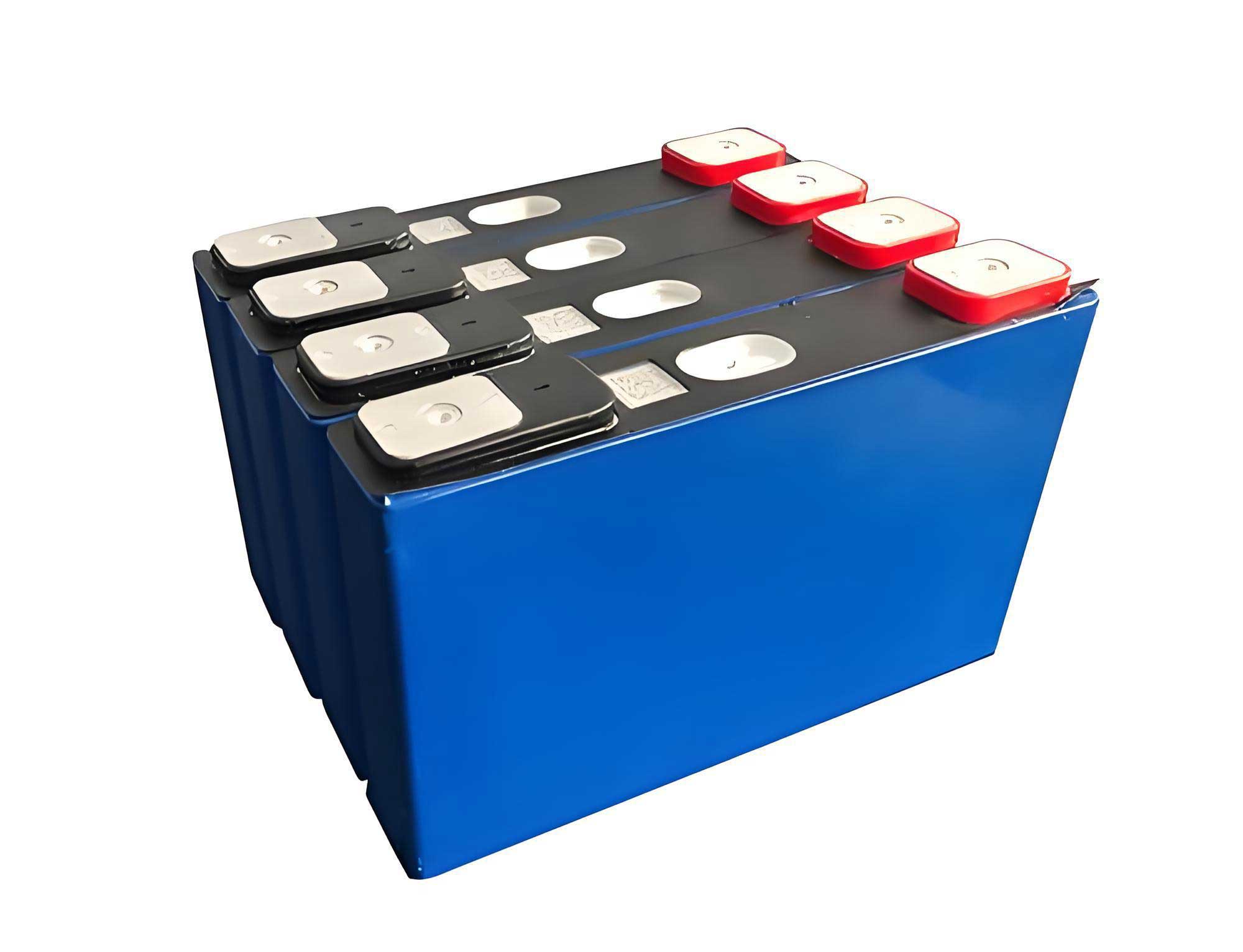
The widespread adoption of lithium-ion batteries, particularly the LiFePO4 battery, in electric vehicles and energy storage systems (ESS) brings forth critical safety challenges. Despite their renowned stability and long cycle life, LiFePO4 batteries remain susceptible to thermal runaway—a catastrophic failure mode characterized by uncontrolled temperature rise, gas venting, fire, and potential explosion—under conditions of abuse such as overcharging, external heating, or internal short circuits. The combustion of a LiFePO4 battery is often persistent, with a high propensity for re-ignition even after initial fire suppression, posing a significant threat to life and property. This study aims to address this challenge by experimentally evaluating and optimizing fire suppression strategies for a 20 Ah prismatic LiFePO4 battery.
We constructed a comprehensive test platform to systematically induce and monitor thermal runaway. A 1000W heating plate was used to apply directional heat to the largest surface of a 100% State-of-Charge (SOC) LiFePO4 battery, reliably triggering the failure sequence. Upon safety valve rupture, the ejected combustible gases were immediately ignited to simulate a real fire scenario. The entire process, including battery surface temperatures (measured at multiple points, T1-T8) and flame dynamics, was recorded. Following the characterization of the uncontrolled thermal runaway, we proceeded to evaluate the efficacy of individual and combined fire-extinguishing agents.
Three agents were selected for their relevance in modern fire protection: water, 2-Bromo-3,3,3-trifluoropropene (2-BTP), and Perfluoro-2-methyl-3-pentanone (FK 5-1-12). A custom suppression system with dual independent fluid circuits was employed, allowing for precise control over agent release timing and sequence. The agents were delivered via a nozzle positioned 80 cm above the battery, driven by nitrogen at 0.4 MPa. The performance was assessed based on key metrics: extinguishing time, agent consumption, cooling capability, and, most critically, the ability to prevent re-ignition.
Thermal Runaway Behavior of the LiFePO4 Battery
The evolution of thermal runaway in the standalone LiFePO4 battery test (no suppression) revealed a distinct four-stage process, crucial for understanding the intervention windows.
Stage I: Stable Heating and Internal Reaction. This phase begins with heater activation. The initial temperature rise leads to the decomposition of the Solid Electrolyte Interphase (SEI) layer (~80 °C) and vaporization of the organic electrolyte. A notable inflection point occurs around 130-170 °C as the polyolefin separator melts, absorbing latent heat and momentarily slowing the external temperature rise. Subsequent internal short circuits trigger exothermic reactions involving the cathode, electrolyte, and anode binder. This stage is marked by heat accumulation, slight bulging, and odor release, but no open flame.
Stage II: Violent Jet Fire. The rupture of the safety valve marks the onset of this stage. The sudden release of high-pressure gas and aerosolized electrolyte creates an intense, turbulent jet flame. Temperatures measured 15 cm from the vent soared by over 44.5 °C within one second, with the vent temperature peaking at approximately 626 °C within 8 seconds. The flame, initially reaching ~45 cm, stabilizes at a lower height as the initial violent venting subsides.
Stage III: Sustained Reignition and Secondary Jet Fire. Following the initial jet, internal chemical reactions continue to accelerate. This leads to periods of renewed, vigorous gas ejection, creating a strong, sustained secondary jet flame that lasts significantly longer than the first. This stage demonstrates the deep-seated nature of the thermal runaway within the LiFePO4 battery, where internal heat generation continues to produce flammable gases long after the first venting event.
Stage IV: Natural Cooling. Once the internal active materials and electrolyte are depleted, exothermic reactions cease. The battery enters a slow, natural cooling phase, with temperatures gradually decaying to ambient levels.
This progression underscores the primary challenge in suppressing LiFePO4 battery fires: the need not only to extinguish the visible flame but also to rapidly and deeply cool the cell to quench the internal electrochemical reactions that fuel subsequent gas generation and reignition.
Performance of Single Extinguishing Agents on the LiFePO4 Battery
The comparative tests of the three single agents revealed significant differences in their mechanisms and effectiveness against the LiFePO4 battery fire, as summarized in the table below.
| Extinguishing Agent | Extinguishing Time (s) | Agent Consumption (kg) | Reignition Delay (s) | Reignition Duration (s) | Key Mechanism & Limitation |
|---|---|---|---|---|---|
| 2-BTP | 22 | 0.25 | 97 | 200 | Strength: Fastest flame knockdown via radical scavenging. Weakness: Poor sustained cooling; internal reactions continue, leading to intense, prolonged reignition. |
| FK 5-1-12 | 76* | 1.82 | N/A | 120* | Strength: Moderate physical cooling. Weakness: Incomplete flame suppression; weakest chemical inhibition; flame persists as a “pilot light,” leading to continuous heating. |
| Water | 44 | 0.29 | 182 | 73 | Strength: Excellent sustained cooling via high heat capacity and latent heat. Weakness: Slower initial flame suppression; cannot penetrate casing to stop core reactions, leading to eventual reignition. |
*Note: For FK 5-1-12, the flame was never fully extinguished but was reduced to a small, stable flame; the “extinguishing time” noted is when the flame was at a minimum before regrowing. Reignition delay is not applicable (N/A).
2-BTP demonstrated superior initial firefighting performance. Its low boiling point and high vapor density allow it to rapidly form a homogeneous atmosphere that interferes with the combustion chain reaction. The surface temperature of the LiFePO4 battery dropped at a maximum rate of $$|\frac{dT}{dt}|_{max} = 3.5 \, ^\circ\text{C s}^{-1}$$, the highest among all single agents. However, its physical cooling effect is transient. Once the agent is consumed, the unaddressed internal heat of the LiFePO4 battery quickly raises the surface temperature again, leading to the release of fresh pyrolyzed gases and a severe, long-lasting reignition after only 97 seconds.
Water performed in a complementary manner. Its extinguishing time was longer, but its maximum cooling rate $$|\frac{dT}{dt}|_{max} = 1.4 \, ^\circ\text{C s}^{-1}$$ was more sustained. The large heat of vaporization ($\Delta H_{vap} \approx 2260 \, \text{kJ kg}^{-1}$) provides profound cooling, significantly delaying the point at which internal temperatures cause renewed gas venting. Consequently, the reignition delay was the longest (182 s), and the subsequent reignition fire was shorter (73 s). This highlights water’s unmatched ability to manage the thermal mass of the failing LiFePO4 battery but confirms its inability to stop the root cause internally.
FK 5-1-12 proved to be the least effective under our test conditions. It required a large quantity, failed to achieve complete flame extinction, and provided minimal cooling ($|\frac{dT}{dt}|_{max} = 0.3 \, ^\circ\text{C s}^{-1}$). The persistent small flame acted as a continuous ignition source, heating the battery and leading to an uncontrolled secondary fire.
The fundamental issue common to all single agents is their inability to simultaneously achieve rapid flame suppression and deep, sustained cooling of the LiFePO4 battery’s core. This led to the exploration of synergistic strategies.
Synergistic Suppression Strategy for the LiFePO4 Battery
Based on the complementary strengths of 2-BTP (fast chemical knock-down) and water (superior sustained cooling), three synergistic application sequences were designed and tested on the LiFePO4 battery:
- Strategy A: Simultaneous release of 2-BTP and water.
- Strategy B: Sequential release: 2-BTP first, followed by water.
- Strategy C: Sequential release: Water first, followed by 2-BTP.
The results were striking and clearly demonstrated the importance of application timing when dealing with a LiFePO4 battery fire.
| Synergistic Strategy | Extinguishing Time (s) | Reignition Event? | Key Thermal Behavior Post-Suppression |
|---|---|---|---|
| Strategy A (Simultaneous) | 18 | No | Rapid initial temperature drop, followed by a steady temperature plateau or slow rise. Internal reactions continued but did not reach ignition threshold. |
| Strategy B (2-BTP → Water) | 13 | No | Fast extinguishing. Temperature decreased steadily and monotonically after suppression, indicating effective quenching of internal reactions. |
| Strategy C (Water → 2-BTP) | 13 | Yes (at 898 s) | Initial flame out, but temperature rebounded quickly. Reignition occurred after a long delay but was brief (67 s). |
Strategy B (2-BTP first, then Water) emerged as the unequivocally optimal approach for the LiFePO4 battery. It achieved the fastest flame extinction (13 s, 59% of the time for single 2-BTP) and, most importantly, completely prevented reignition throughout the monitoring period. The temperature profile tells the success story: after the fast flame knockdown by 2-BTP, the subsequent application of water provided the necessary deep cooling. The combined effect can be conceptually modeled by considering the net heat balance of the LiFePO4 battery:
$$ \dot{Q}_{gen}(t) – [\dot{Q}_{cool, 2BTP}(t) + \dot{Q}_{cool, H2O}(t)] < 0 $$
where $\dot{Q}_{gen}(t)$ is the internal heat generation rate from ongoing chemical reactions within the LiFePO4 battery, and the cooling terms represent the heat removal rates by the respective agents. Strategy B ensures that $\dot{Q}_{cool, H2O}(t)$ remains significant even after $\dot{Q}_{cool, 2BTP}(t)$ has diminished, thereby continuously suppressing $\dot{Q}_{gen}(t)$ until it is permanently terminated.
Strategy A (Simultaneous), while preventing reignition, was less thermally efficient. The concurrent release likely led to interference—the water spray may have diluted the local concentration of 2-BTP vapor, slightly impairing its chemical efficiency, while the evaporating 2-BTP may have disrupted the formation of a continuous water film on the LiFePO4 battery surface, reducing cooling effectiveness. This resulted in a less aggressive temperature decline post-extinction.
Strategy C (Water first, then 2-BTP) failed to prevent reignition, highlighting the criticality of sequence. The initial water spray reduced the flame but could not achieve complete extinction, allowing the LiFePO4 battery to be heated continuously. By the time 2-BTP was applied to finally snuff out the flame, the internal temperature of the LiFePO4 battery was already critically high. The residual heat, insufficiently managed after the 2-BTP release ceased, eventually drove a new venting and ignition event nearly 900 seconds later.
Conclusion
This experimental investigation into suppressing thermal runaway fires in a 20 Ah LiFePO4 battery leads to several key conclusions. First, the fire dynamics are complex and multi-stage, featuring intense jet flames and a high inherent risk of sustained reignition due to persistent internal heat generation. Second, no single commercial extinguishing agent tested (2-BTP, FK 5-1-12, Water) could reliably achieve both rapid flame extinction and permanent reignition suppression for the LiFePO4 battery. Each agent has a dominant mechanism—chemical inhibition or physical cooling—that addresses only one facet of the problem.
Third, and most significantly, a synergistic application strategy that sequentially combines the rapid chemical suppression of 2-BTP with the sustained cooling of water proves highly effective. The “2-BTP first, followed by water” protocol was optimal, extinguishing the LiFePO4 battery fire in 13 seconds and successfully preventing any reignition by ensuring a continuous, negative heat balance that quenched the core electrochemical reactions. This study provides a practical, experimentally-validated framework for designing fire suppression systems tailored to the specific hazards of LiFePO4 battery energy storage, emphasizing that timing and agent sequence are as critical as the choice of agents themselves.