
Since the commercialization of lithium-ion batteries over three decades ago, their application has expanded exponentially across diverse sectors such as electric transportation, grid-scale energy storage, and portable electronics. However, the inherent fire risks associated with thermal runaway events remain a critical bottleneck, particularly for large-scale lithium battery energy storage systems (ESS). The safety and reliability of these systems are paramount, and effective fire suppression and post-thermal runaway cooling strategies are essential to mitigate cascading failures and catastrophic events. This study focuses specifically on lithium iron phosphate (LiFePO4) battery packs, a prevalent chemistry in stationary storage due to its superior thermal stability compared to other lithium-ion chemistries. The primary objective is to evaluate and compare the cooling efficacy of different fire suppression agents—namely nitrogen, heptafluoropropane, perfluorohexanone, and water mist—following a single-cell thermal runaway event within a simulated LiFePO4 battery module. The cooling performance is quantified by analyzing the temperature decay rates of the triggered cell and adjacent cells, providing critical insights for designing effective safety protocols in LiFePO4 battery energy storage installations.
Fire suppression agents operate primarily through two mechanisms: oxygen dilution (inerting) and heat absorption. Gaseous agents like nitrogen and carbon dioxide function by reducing the oxygen concentration below the level required to sustain combustion. Chemical agents such as heptafluoropropane (HFC-227ea) and perfluorohexanone (FK-5-1-12) act via a combination of vaporization heat absorption and radical interception in the gas phase to break the combustion chain reaction. Water-based systems, including fine water mist, leverage the high latent heat of vaporization of water to extract significant amounts of energy from the fire plume and the hot surfaces, while also forming a steam blanket that displaces oxygen. While previous studies have examined the fire suppression capabilities of these agents on lithium battery fires, a detailed comparative analysis of their post-suppression cooling performance specifically for LiFePO4 battery packs is lacking. Effective cooling is crucial to prevent reignition and inhibit thermal propagation to neighboring cells in a densely packed LiFePO4 battery module. This research fills that gap by systematically investigating the temperature evolution of a LiFePO4 battery pack after agent application following a controlled thermal runaway initiation.
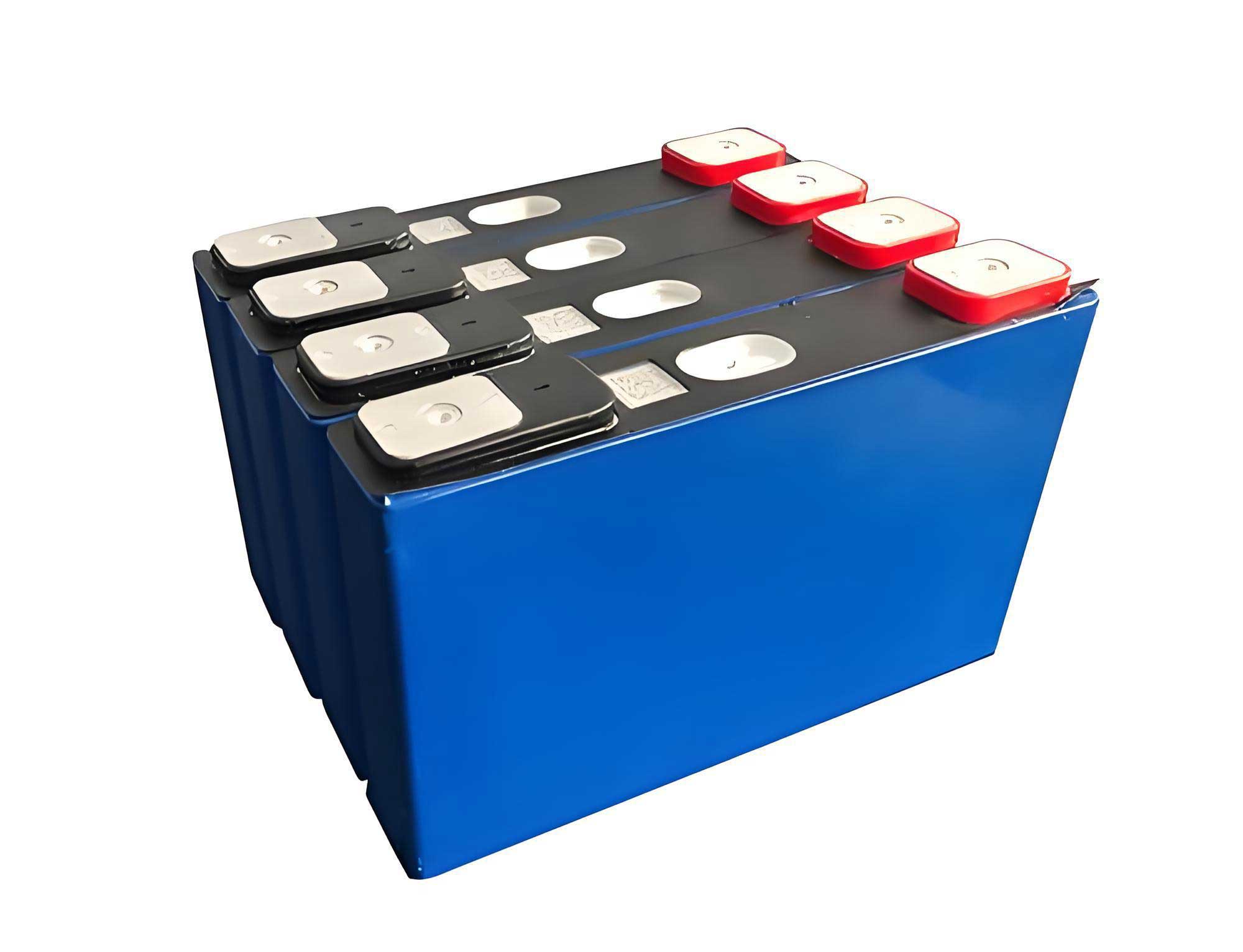
The experimental platform was designed to replicate a section of a commercial LiFePO4 battery pack. A custom-built stainless-steel enclosure served as the test chamber, representing a single module. Within this chamber, three commercial 100 Ah LiFePO4 prismatic cells were arranged in a simplified configuration. One cell, designated as the “trigger cell,” was instrumented with an embedded flexible heating pad to induce thermal runaway externally. The other two cells acted as adjacent “neighbor cells” to study thermal propagation. All cells were clamped together with a fixture to ensure consistent thermal contact, simulating the pack’s internal mechanical structure. The remaining volume inside the chamber was filled with inert blocks to mimic the spatial arrangement and thermal mass of a full-scale LiFePO4 battery pack. The enclosure was equipped with a pressure relief vent (D60 burst disk) on the top, an oxygen sensor, and an inlet port connected to a manifold for deploying the extinguishing agents. The temperature was monitored at multiple locations on each LiFePO4 battery using K-type thermocouples: two on the large face of the trigger cell (θ₂, θ₃), and one on the large face of each adjacent cell facing the trigger cell (θ₁, θ₄). The voltage of each LiFePO4 battery was also monitored continuously. All data was recorded by a high-speed data acquisition system.
Five distinct experimental scenarios were conducted: a Control Test (no agent), a Nitrogen Inerting Test, a Heptafluoropropane Discharge Test, a Perfluorohexanone Discharge Test, and a Water Mist Discharge Test. For all tests except the nitrogen inerting test, the procedure began by initiating heating in the trigger LiFePO4 battery. Upon detection of thermal runaway (typically characterized by a voltage collapse to near zero and a rapid temperature spike), the designated extinguishing agent was deployed after the trigger cell’s temperature peaked. For the nitrogen test, the chamber was pre-inerted to 0% oxygen before heating initiation. The specific agent deployment parameters were as follows: Nitrogen was injected until the oxygen concentration reached 0% vol. Heptafluoropropane and perfluorohexanone were discharged as single shots of 10 kg each over approximately 10 seconds, achieving a design concentration within the chamber. Water mist was applied via a single nozzle with a flow rate of 0.282 L/s for a duration of 180 seconds. Data logging continued for 120 minutes post-thermal runaway initiation.
The thermal runaway behavior was consistent across all tests for the trigger LiFePO4 battery. Approximately 200 seconds after heating initiation, the trigger cell underwent thermal runaway, marked by a sudden voltage drop from approximately 3.3 V to 0 V and a rapid temperature increase from ambient to over 250°C. This indicates a severe internal short circuit within the LiFePO4 battery. The adjacent LiFePO4 battery cells showed no voltage deviation, confirming they did not experience internal failure. However, they did exhibit temperature rises due to heat transfer from the trigger cell, with maximum temperatures below 100°C in all cases, underscoring the relative safety of the LiFePO4 chemistry against thermal propagation under these conditions.
The core analysis focuses on the cooling phase after agent deployment. The temperature data from the trigger cell’s large face (θ₂) and the adjacent cell’s large face (θ₁) were selected for detailed analysis. The cooling performance is best characterized by the instantaneous cooling rate, which is the negative derivative of the temperature-time curve. The average cooling rate over a specific period post-discharge is a key metric. The temperature decay can be modeled using a simplified Newton’s law of cooling approach, though the process is complex due to phase changes and ongoing chemical reactions within the failed LiFePO4 battery. The rate of temperature change can be expressed as:
$$ \frac{dT}{dt} = -k (T – T_{ambient}) + \dot{q}_{internal} – \dot{q}_{extinguisher}$$
Where \( \frac{dT}{dt} \) is the cooling rate (℃/min), \( k \) is a heat transfer coefficient, \( T \) is the cell temperature, \( T_{ambient} \) is the ambient temperature, \( \dot{q}_{internal} \) represents any ongoing exothermic reactions from the damaged LiFePO4 battery, and \( \dot{q}_{extinguisher} \) is the heat extraction rate provided by the extinguishing agent. A more negative \( \frac{dT}{dt} \) indicates faster cooling.
The following table summarizes the critical temperature metrics for the trigger LiFePO4 battery across the five tests, focusing on the 20-minute window immediately following agent discharge (or the equivalent time in the control test).
| Test Scenario | Temperature at Discharge, θ₀ (°C) | Temperature after 20 min, θ₂₀ (°C) | Temperature Drop, Δθ = |θ₂₀ – θ₀| (°C) | Average Cooling Rate (℃/min) |
|---|---|---|---|---|
| Control (No Agent) | 256.8 | 190.0 | 66.8 | -3.34 |
| Nitrogen Inerting | 256.0 | 190.1 | 65.9 | -3.30 |
| Heptafluoropropane | 257.2 | 181.3 | 75.9 | -3.80 |
| Perfluorohexanone | 259.4 | 165.3 | 94.1 | -4.71 |
| Water Mist | 262.8 | 144.6 | 118.2 | -5.91 |
The data clearly demonstrates a hierarchy in cooling efficacy for the LiFePO4 battery pack. Water mist provided the most significant cooling, extracting 118.2°C from the trigger cell in 20 minutes, corresponding to an average cooling rate of approximately -5.91 °C/min. Perfluorohexanone was the next most effective, with a Δθ of 94.1°C and a rate of -4.71 °C/min. Heptafluoropropane showed a moderate effect (Δθ=75.9°C, rate=-3.80 °C/min). Notably, the nitrogen inerting test resulted in a temperature drop (65.9°C) virtually identical to the natural cooling observed in the control test (66.8°C), with average cooling rates of -3.30 and -3.34 °C/min respectively. This conclusively indicates that creating a nitrogen atmosphere has no meaningful active cooling effect on a hot, thermally runaway LiFePO4 battery; it merely prevents sustained flaming combustion.
A more nuanced view is obtained by examining the instantaneous cooling rate, \( \frac{dT}{dt} \), derived from the temperature data. The plot of this derivative reveals that the cooling effect of the agents is not sustained. For water mist and perfluorohexanone, a sharp initial peak in the negative cooling rate (i.e., rapid cooling) is observed immediately after discharge. However, within approximately 20 minutes, the cooling rates for all agent scenarios converge towards the baseline rate of the control test. This transient effect can be modeled with an exponential decay function:
$$ \dot{q}_{extinguisher}(t) = \dot{q}_{0} \cdot e^{-\lambda t} $$
Where \( \dot{q}_{0} \) is the initial heat extraction rate and \( \lambda \) is a decay constant specific to the agent and the LiFePO4 battery system. This implies that the active cooling benefit of a single discharge of any of these agents on a LiFePO4 battery is temporally limited. To maintain a cooling rate significantly above the natural convection baseline, multiple or sustained agent applications would be necessary. This finding has direct implications for the design of fire protection systems for LiFePO4 battery energy storage containers, suggesting the need for extended discharge capabilities or secondary cooling loops.
The performance of the agents in suppressing temperature rise in the adjacent, non-failed LiFePO4 battery cells is equally critical for preventing thermal runaway propagation. The following table details the temperature increase observed in the adjacent cell over the same 20-minute period post-trigger.
| Test Scenario | Adjacent Cell Temp. at Trigger, θₐ₀ (°C) | Adjacent Cell Temp. after 20 min, θₐ₂₀ (°C) | Temperature Rise, Δθₐ = |θₐ₂₀ – θₐ₀| (°C) |
|---|---|---|---|
| Control (No Agent) | 20.9 | 73.2 | 52.3 |
| Nitrogen Inerting | 24.0 | 78.7 | 54.7 |
| Heptafluoropropane | 21.5 | 60.9 | 39.4 |
| Perfluorohexanone | 30.2 | 70.3 | 40.1 |
| Water Mist | 23.1 | 50.3 | 27.2 |
Water mist was again the most effective agent, limiting the adjacent LiFePO4 battery’s temperature rise to only 27.2°C, significantly lower than the control. Both heptafluoropropane and perfluorohexanone also provided substantial mitigation compared to the control, reducing the temperature rise by about 12-13°C. The nitrogen test again showed no benefit, with a temperature rise even slightly higher than the control. The superior performance of water mist in protecting adjacent LiFePO4 battery cells can be attributed to its ability to directly cool the surfaces of all cells in the enclosure and its superior thermal capacity.
The differential cooling performance stems from the fundamental physicochemical mechanisms of each agent when interacting with a high-temperature LiFePO4 battery. Water mist boasts a very high specific heat capacity (\(c_p \approx 4.18 \, \text{kJ/kg·K}\)) and an exceptionally high latent heat of vaporization (\(L_v \approx 2260 \, \text{kJ/kg}\) at 100°C). When fine water droplets impinge on the hot surfaces of the LiFePO4 battery, they undergo film boiling, transition boiling, and finally nucleate boiling, extracting enormous amounts of energy during phase change. The generated steam also contributes to oxygen dilution. The total heat absorbed, \(Q\), can be approximated by:
$$ Q = m_w \cdot c_p \cdot \Delta T_{water} + m_{vap} \cdot L_v $$
where \(m_w\) is the mass of water, \(c_p\) is its specific heat, \(\Delta T_{water}\) is its temperature increase, and \(m_{vap}\) is the mass of water vaporized. For a LiFePO4 battery pack, this direct, high-capacity heat extraction is unparalleled.
Perfluorohexanone (FK-5-1-12) has a boiling point of 49.2°C. When discharged, it is a liquid that rapidly vaporizes upon contact with the hot LiFePO4 battery and the surrounding hot gases. This phase change absorbs heat according to its latent heat of vaporization (approximately 88 kJ/kg). The primary灭火 mechanism, however, is its potent ability to interfere with free radical combustion reactions in the gas phase. The cooling contribution comes from this vaporization and the subsequent heating of its vapor. Its chemical stability and non-conductivity make it suitable for use on energized LiFePO4 battery systems.
Heptafluoropropane (HFC-227ea) has a much lower boiling point of -16.4°C. It is typically stored as a superpressurized liquid and discharges as a gas/vapor mixture. Consequently, its potential for heat absorption via liquid-phase vaporization upon contact with the LiFePO4 battery is minimal compared to perfluorohexanone. Its effectiveness relies more heavily on its gas-phase radical scavenging and slight thermal cooling from gas expansion. This explains its intermediate cooling performance on the LiFePO4 battery.
Nitrogen, an inert gas, provides cooling only through convective heat transfer and slight volumetric expansion. Its heat capacity (\(c_p \approx 1.04 \, \text{kJ/kg·K}\)) is low. Its primary and almost sole function is oxygen dilution to break the fire triangle. It does not engage in any endothermic chemical reactions or significant phase changes that would extract substantial energy from the hot LiFePO4 battery mass. Therefore, its cooling curve mirrors that of natural cooling in a free-burning scenario once flaming is suppressed.
The transient nature of the cooling effect, lasting roughly 20 minutes, is a critical finding. It suggests that the initial application of the agent primarily affects the surface and immediate gas phase. The internal thermal mass of the LiFePO4 battery, which continues to undergo slower exothermic decomposition reactions, eventually re-establishes the heat flux to the surface. The cooling rate then returns to the natural convection-limited baseline. This has profound implications for safety in LiFePO4 battery energy storage systems. A single discharge may be sufficient to extinguish open flames but may not provide adequate long-term cooling to prevent a later re-ignition or thermal runaway of adjacent cells if the pack’s thermal management is compromised. Therefore, for a LiFePO4 battery installation, the fire protection strategy must incorporate sustained cooling, possibly through prolonged water mist application, integration with pack-level liquid cooling systems, or multiple pulses of clean agent discharge.
Further mathematical modeling can help optimize agent deployment for LiFePO4 battery packs. The cooling process could be framed as a heat transfer problem with a time-dependent boundary condition representing the agent’s effect. The temperature field within a LiFePO4 battery cell, \(T(x,y,z,t)\), could be described by the heat diffusion equation with a source term:
$$ \rho c_p \frac{\partial T}{\partial t} = \nabla \cdot (k \nabla T) + \dot{q}_{gen}(t) $$
Where \( \rho \) is density, \( c_p \) is specific heat, \( k \) is thermal conductivity of the LiFePO4 battery materials, and \( \dot{q}_{gen}(t) \) is the volumetric heat generation rate from internal reactions. The extinguishing agent’s effect enters through the boundary conditions, modifying the convective heat transfer coefficient \(h\) and the effective ambient temperature \(T_{\infty}\) at the LiFePO4 battery surface for a finite duration. Calibrating such models with experimental data from tests on LiFePO4 batteries can aid in simulating various fire scenarios and suppression system designs.
In conclusion, this comprehensive study on a LiFePO4 battery energy storage module delineates a clear hierarchy in the post-thermal runaway cooling efficacy of common fire suppression agents. Fine water mist emerges as the superior agent for active cooling of a LiFePO4 battery pack, followed by perfluorohexanone, then heptafluoropropane. Nitrogen inerting, while crucial for flame suppression, offers no additional cooling benefit compared to natural convection for a LiFePO4 battery. Importantly, the active cooling effect from a single application of any agent is transient, dissipating within about 20 minutes for this LiFePO4 battery configuration. Consequently, effective safety engineering for LiFePO4 battery energy storage systems must account for this temporal limitation. Designs should consider extended or multiple-discharge capabilities, particularly for water mist systems, or hybrid approaches combining rapid flame knockdown with agents like perfluorohexanone followed by sustained cooling via water-based systems to fully manage the thermal hazards of a LiFePO4 battery pack. These insights provide a valuable foundation for developing robust safety standards and engineering practices tailored for the growing fleet of grid-scale LiFePO4 battery energy storage installations.