
The global push towards carbon peaking and carbon neutrality has fundamentally reshaped the energy landscape. Renewable energy sources like wind and solar are poised to become the dominant contributors to our power grids. However, their inherent intermittency and instability necessitate robust energy storage solutions to ensure grid reliability and efficiency. Among the various storage technologies, lithium iron phosphate (LiFePO4) battery energy storage systems, often housed in standardized prefabricated cabinets or containers, have seen explosive market growth due to their favorable balance of energy density, cycle life, and cost. Despite these advantages, the widespread deployment of these lifepoe4 battery systems brings to the forefront a critical safety challenge: fire risk. The lifepoe4 battery, while thermally more stable than some other lithium-ion chemistries, is still susceptible to thermal runaway—a dangerous, self-perpetuating condition that can lead to intense fires and even explosions. Historical incidents, some with tragic consequences, underscore the inadequacy of existing fire protection standards, which often classify the fire hazard of lifepoe4 battery systems too low. This article, based on extensive research and testing, delves into the unique fire hazards of LiFePO4-based energy storage, evaluates suitable extinguishing agents, and proposes a comprehensive, water-based fire protection strategy for prefabricated cabinets, complete with detailed design parameters.
The fire hazard associated with a lifepoe4 battery energy storage cabinet is significant and multifaceted. These cabinets are essentially densely packed energy units. A single container may house hundreds of battery modules, each comprising dozens of individual lifepoe4 battery cells. This compact configuration leads to a very high energy density within a confined space. The primary risk stems from thermal runaway, which can be initiated by conditions such as overcharging, internal short circuits, or mechanical damage. During thermal runaway in a lifepoe4 battery, exothermic reactions within the cell cause a rapid temperature increase. Once a critical temperature (typically around 140°C for LiFePO4) is exceeded, the process becomes self-sustaining.
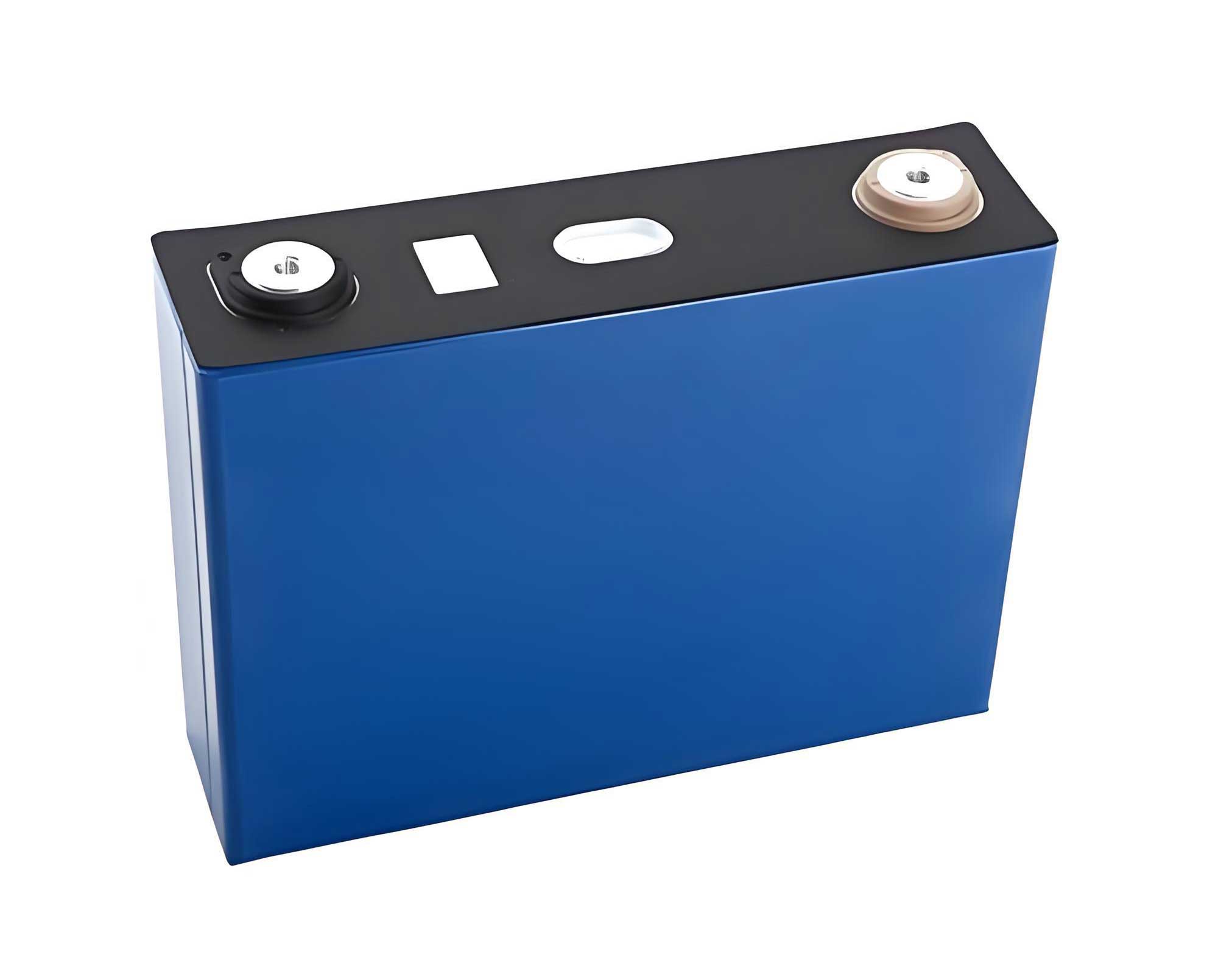
The consequences are severe: 1) High combustion temperatures, with module fires reaching over 1000°C. 2) Generation of large volumes of flammable gas (e.g., hydrogen, carbon monoxide, hydrocarbons), creating a high risk of explosion in a sealed cabinet. 3) The potential for cascading failure, where one failing lifepoe4 battery cell/module heats its neighbors, propagating the thermal runaway throughout the entire cabinet. The traditional classification of this hazard as a low-risk “Class E” or similar is clearly mismatched with the reality of a fully involved lifepoe4 battery cabinet fire, necessitating a reassessment of protection strategies.
The selection of an effective extinguishing medium is the cornerstone of any fire protection system. For lifepoe4 battery fires, the key requirement is not just rapid flame knockdown but, more critically, effective and sustained cooling to halt the internal chemical reactions of thermal runaway. Research comparing various agents leads to clear conclusions:
| Extinguishing Agent | Effect on LiFePO4 Battery Fire | Key Limitation |
|---|---|---|
| Halon/Replacements (e.g., HFC-227ea, FK-5-1-12) | Can suppress open flame at sufficient concentration. | Poor cooling capacity; high risk of re-ignition as cells continue thermal runaway. |
| Dry Chemical Powder | Fast flame knockdown. | No sustained cooling; very high re-ignition rate; cleanup can cause secondary damage. |
| Water-based Agents (Water Mist, Spray) | Effective flame suppression combined with superior cooling. | Requires specific application methods to penetrate battery packs; involves water damage. |
The superior performance of water-based agents stems from water’s high latent heat of vaporization. When water evaporates, it absorbs a tremendous amount of heat from the burning lifepoe4 battery cells, directly attacking the root cause of thermal runaway. Therefore, water is established as the most effective medium for controlling and extinguishing lifepoe4 battery fires. The challenge lies in its application within the tightly packed confines of a battery cabinet.
A two-tiered water-based protection strategy is essential: an internal suppression system for direct attack on the battery modules, and an external cooling system to protect the cabinet structure and prevent fire spread.
Internal Protection: High-Pressure Water Mist System
Traditional sprinklers or deluge systems cannot effectively deliver water into the heart of a densely packed lifepoe4 battery module. The solution lies in high-pressure water mist. Fine water mist, with its small droplet size, creates a large surface area for heat absorption and, if applied correctly, can penetrate the gaps between cells within a module. Full-scale fire tests on actual lifepoe4 battery modules have been instrumental in defining system parameters.
In these tests, a water mist nozzle was placed to discharge directly into the casing of a standard lifepoe4 battery module. The results were clear: low-pressure mist (e.g., 1.2 MPa) failed to suppress thermal runaway. However, medium to high-pressure systems proved highly effective. The relationship between nozzle pressure and performance can be summarized as follows:
| Nozzle Pressure (MPa) | Time to Extinguish Open Flame | Critical Sustained Spray Time to Prevent Re-ignition | Observation | ||||
|---|---|---|---|---|---|---|---|
| 1.2 | Failed to suppress | N/A | Insufficient penetration and cooling. | ||||
| 2.0 | ~90 seconds | >10 minutes | Effective but requires longer application. | ||||
| 6.0 | ~30 seconds | >10 minutes | Optimal balance of speed and performance. | 10.0 | ~15 seconds | >10 minutes | Marginal improvement over 6.0 MPa. |
Based on this, a nozzle pressure of 6.0 MPa is recommended as a robust design point. The flow rate of a nozzle is given by the standard equation:
$$ q = K \sqrt{10P} $$
where \( q \) is the flow rate (L/min), \( K \) is the nozzle discharge coefficient, and \( P \) is the pressure (MPa). A higher \( P \) not only increases \( q \) but also improves droplet atomization and the spray envelope, ensuring better coverage inside the lifepoe4 battery module. Specialized flat-fan nozzles, designed to produce a horizontal sheet of mist, are required to fit within the narrow space above the cells and ensure the mist washes over the cell terminals and surfaces.
The system design adopts a local application approach. Each cabinet is a single protection zone. Crucially, one dedicated water mist nozzle is installed inside each and every lifepoe4 battery module. Upon fire detection, the system activates, discharging mist into all modules simultaneously. This floods the entire cabinet, extinguishing the fire at its source in the affected module and pre-cooling adjacent modules to prevent cascading thermal runaway.
Determining the required duration of mist discharge is critical. While tests on a single module showed 10 minutes of sustained cooling was needed after flameout, a full cabinet presents a much greater thermal mass and risk. Therefore, the system’s water supply and pumping capacity should be designed for a significantly longer duration, ideally aligned with the external cooling requirements discussed next, to provide a substantial safety margin. A design duration of 30-60 minutes is a prudent starting point, subject to further full-cabinet testing.
External Protection: Cabinet Cooling Water System
While the internal mist system attacks the core fire, external cooling is vital for compartmentalization and structural integrity. The intense heat from a burning lifepoe4 battery cabinet (exceeding 1000°C) can radiate to and ignite nearby cabinets or cause their batteries to preheat, initiating secondary thermal runaway. External cooling serves to keep the steel walls of the fire-involved cabinet and its immediate neighbors at a safe temperature.
The cooling scope must include the fire-involved cabinet and all adjacent cabinets within a critical distance where radiant heat flux is dangerous. Based on flame projection and radiant heat studies, all non-fire-rated cabinets within a 10-meter radius should receive cooling. The cooling intensity can be derived by analogizing the lifepoe4 battery cabinet to a horizontal tank containing a Class A flammable liquid. The required cooling water flow rate is calculated based on the cabinet’s external surface area.
For a standard 40-foot container (Dimensions: L=12.2m, W=2.4m, H=2.8m), the total external surface area \( A_{total} \) is:
$$ A_{total} = 2 \times (L \times W + L \times H + W \times H) $$
$$ A_{total} \approx 2 \times (12.2 \times 2.4 + 12.2 \times 2.8 + 2.4 \times 2.8) \approx 135.9 \, m^2 $$
The cooling water demand is then determined by applying a cooling intensity factor. For a cabinet involved in fire, the entire surface area needs cooling. For an adjacent cabinet, typically only the half facing the fire is cooled. Using an intensity of 0.1 L/s per square meter (a standard for flammable liquid tank cooling), we can calculate the demands.
| Cabinet Status | Cooling Surface Area | Calculated Flow | Practical Design Flow (including hose streams) |
|---|---|---|---|
| On Fire | \( A_{total} \approx 135.9 \, m^2 \) | \( 135.9 \times 0.1 = 13.6 \, L/s \) | 15 L/s (approx. 3 hose streams) |
| Adjacent (within 10m) | \( A_{total} / 2 \approx 68.0 \, m^2 \) | \( 68.0 \times 0.1 = 6.8 \, L/s \) | 10 L/s (approx. 2 hose streams) |
Given the potential for a prolonged, deep-seated fire in a lifepoe4 battery system, the fire-fighting duration for cooling should be substantial. A minimum duration of 4 hours is recommended for the water supply. This cooling is typically provided by manual firefighting operations using the site’s outdoor hydrant/standpipe system. Hydrants must be strategically placed so that hoselines can be deployed from a safe distance (at least 10-15 meters away due to explosion risk and electrical hazards), and firefighters should use water spray nozzles to minimize the risk of electrical shock from potentially energized components.
Integrated Design Example & System Synergy
Consider a large-scale energy storage plant with 88 lifepoe4 battery cabinets. The integrated fire protection water supply design would encompass:
1. Internal Water Mist Systems: Multiple pump units, each serving a group of cabinets. Each cabinet’s internal system has a dedicated water supply tank. The system is designed for a discharge duration matching the 4-hour external cooling requirement to ensure deep-seated cooling of all lifepoe4 battery modules is possible. The total water volume for one cabinet’s mist system can be estimated as:
$$ V_{mist} = (N_{nozzles} \times q_{nozzle} \times t_{duration}) / 1000 $$
Where \( N_{nozzles} = 300 \), \( q_{nozzle} \approx 3 \, L/min \) at 6 MPa, \( t_{duration} = 240 \, min \).
$$ V_{mist} \approx (300 \times 3 \times 240) / 1000 \approx 216 \, m^3 $$
This substantial volume underscores the need for a dedicated, reliable water source.
2. External Cooling Water Supply: The site’s main fire water ring main and pumps are sized to deliver the simultaneous cooling demand for the worst-case scenario: one cabinet on fire plus, say, two adjacent cabinets requiring cooling. The total external demand would be \( 15 + 2 \times 10 = 35 \, L/s \). For a 4-hour duration:
$$ V_{cooling} = 35 \, L/s \times 3600 \, s/h \times 4 \, h / 1000 = 504 \, m^3 $$
3. Total Water Supply & Detection: The plant’s fire water storage must accommodate the larger of the plant’s needs (e.g., transformer protection) or the combined lifepoe4 battery cabinet demand. Detection within the cabinet should be multi-layered: temperature sensors, smoke detectors, and combustible gas detectors to provide early warning of off-gassing during the initial stages of lifepoe4 battery thermal runaway, potentially allowing for system activation before open fire breaks out.
Conclusion and Recommendations
The safe deployment of LiFePO4 battery energy storage systems hinges on recognizing their true fire hazard and implementing appropriately rigorous, water-based protection measures. The proposed two-tiered strategy—combining an internal, module-penetrating high-pressure water mist system with an external cabinet cooling system—provides a robust defense-in-depth approach.
Key design parameters derived from empirical testing and engineering analysis include:
1. Internal mist systems should operate at nozzle pressures of 6 MPa or higher, using specialized flat-fan nozzles installed directly in each lifepoe4 battery module.
2. The water supply for the internal system should support an extended discharge duration (30-60 minutes minimum, with 4 hours being ideal where water supply permits).
3. External cooling must be provided to the fire-involved cabinet and all non-fire-separated cabinets within a 10-meter radius, at an application rate of 0.1 L/s per m² of cooled surface.
4. The fire-fighting water supply for external cooling must be sufficient for at least 4 hours of continuous operation.
5. Manual firefighting operations must account for electrical hazards by maintaining distance and using spray nozzles.
6. Fire detection should incorporate gas sensing for the earliest possible warning of lifepoe4 battery failure.
As the energy storage industry evolves, fire protection standards must be updated to reflect the severe hazard potential of multi-megawatt-hour lifepoe4 battery installations. The design framework outlined here, centered on the superior cooling capability of water applied through targeted mist and spray systems, provides a vital pathway to mitigating risk and enabling the safe and sustainable growth of this critical technology.