
In the context of global energy transition, lithium-iron phosphate (LiFePO4) batteries have emerged as a dominant technology in electric vehicles and energy storage systems due to their high safety, long cycle life, and cost-effectiveness. However, the increasing frequency of thermal runaway incidents poses significant fire and explosion hazards, primarily driven by the release of combustible gases such as hydrogen and carbon monoxide. Quantitative understanding of combustion behavior, heat release, smoke production, and gas emission dynamics during thermal runaway is crucial for developing effective safety protocols, early warning systems, and mitigation strategies. This study focuses on a systematic investigation of the fire and gas generation characteristics of large-format 280 Ah LiFePO4 batteries in open-space environments, leveraging advanced calorimetry and gas analysis techniques. The findings aim to provide foundational data for risk assessment and fire protection engineering in LiFePO4 battery applications.
The experimental platform utilized in this research integrates calorimetric analysis, Fourier-transform infrared (FTIR) spectroscopy, and smoke measurement systems, compliant with standards such as ISO 24473:2008 and ANSI/CAN/UL 9540A:2019. The setup includes a hood calorimeter for heat release rate (HRR) measurement, oxygen and carbon dioxide sensors for combustion product analysis, and an FTIR instrument for real-time gas composition identification. The FTIR operates on the principle of Michelson interferometry, where infrared light is modulated into an interference pattern, absorbed by gas samples, and transformed into spectra via Fourier analysis to quantify components and concentrations with high accuracy. This platform enables the measurement of key parameters including HRR, total heat release (THR), smoke production rate (SPR), total smoke production (TSP), and dynamic gas concentration profiles during thermal runaway events.
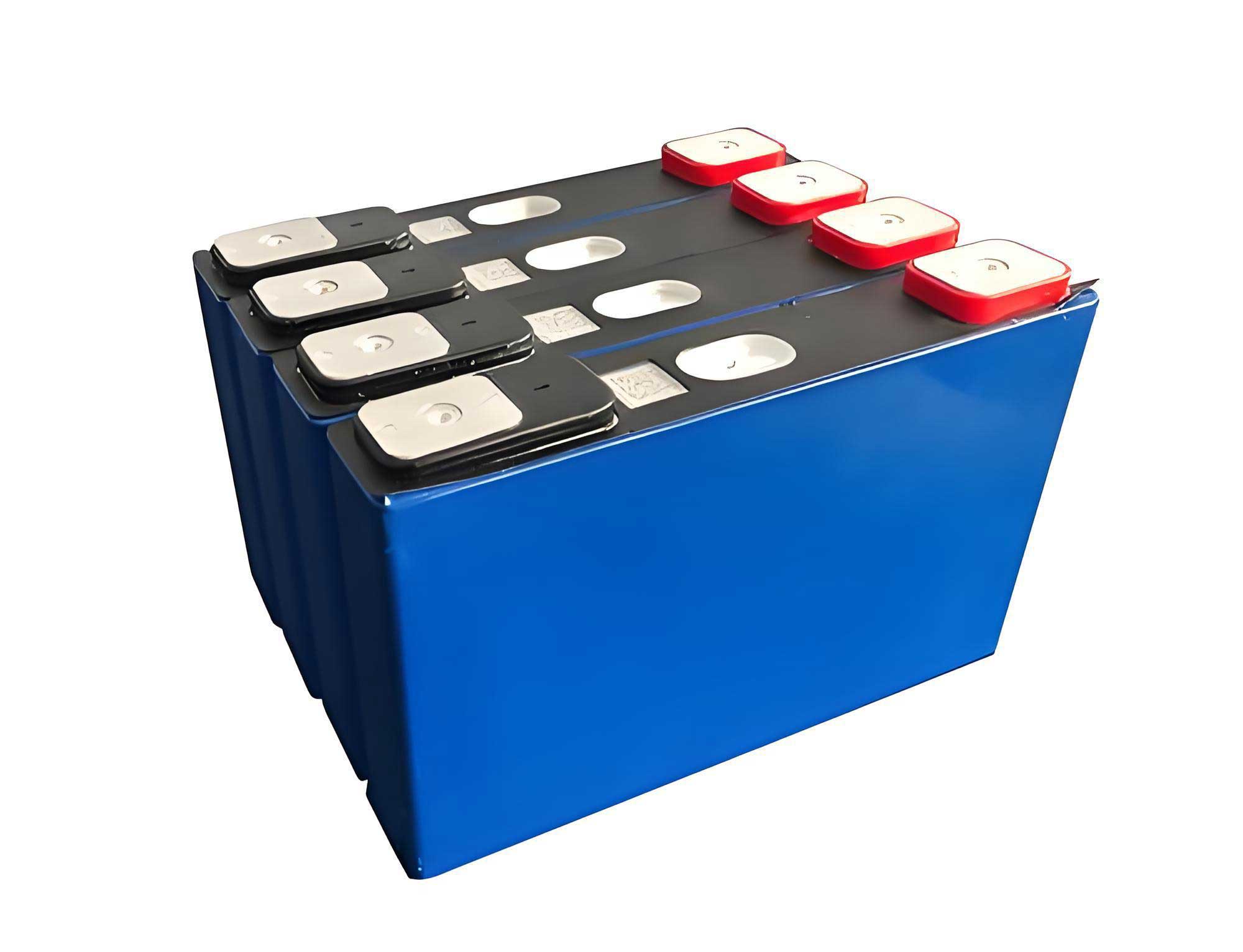
The LiFePO4 battery specimens used in this study are prismatic aluminum-shell cells with a nominal capacity of 280 Ah and 100% state of charge (SOC). Two primary experimental scenarios were conducted: (1) thermal runaway triggered by external heating followed by ignition and combustion, and (2) thermal runaway induced by heating without ignition, focusing solely on gas emission. For the combustion tests, three LiFePO4 batteries were arranged under the hood, each subjected to heating via 800 W pads on their large surfaces, with ignition initiated using an electric spark. Temperature profiles were monitored using thermocouples positioned at various heights and distances, while heat flux gauges recorded radiative intensities. In the gas emission tests, a single LiFePO4 battery was heated with 1000 W pads, and gas samples were continuously analyzed via FTIR without ignition. Environmental conditions were maintained at approximately 5°C to simulate realistic operational settings.
The calorimetric data for the LiFePO4 battery under combustion conditions revealed significant heat release dynamics. The maximum HRR was observed to be 133.0 kW for one battery, with a total heat release of 14.26 MJ per cell. The total smoke production measured 52.5 m² per battery, indicating substantial particulate generation. The heat release equivalence was calculated relative to n-heptane, a standard reference fuel with a combustion heat value of 46.4 MJ/kg and an assumed combustion efficiency of 0.8. The equivalent mass of n-heptane for the LiFePO4 battery is given by:
$$ m_{\text{eq}} = \frac{\text{THR}}{\Delta H_c \cdot \eta} $$
where \( \Delta H_c = 46.4 \, \text{MJ/kg} \) for n-heptane and \( \eta = 0.8 \). Substituting the THR value:
$$ m_{\text{eq}} = \frac{14.26 \, \text{MJ}}{46.4 \, \text{MJ/kg} \times 0.8} \approx 0.38 \, \text{kg} $$
This equivalence highlights the energy potential of a single LiFePO4 battery during fire scenarios. The temporal evolution of HRR showed multiple peaks, particularly in batteries where venting occurred solely through safety valves, leading to pressurized jet fires. The table below summarizes key combustion parameters for the LiFePO4 battery:
| Parameter | Value per LiFePO4 Battery |
|---|---|
| Maximum HRR | 133.0 kW |
| Total Heat Release (THR) | 14.26 MJ |
| Total Smoke Production (TSP) | 52.5 m² |
| Heat Release Equivalent (n-heptane) | 0.38 kg |
| Duration of HRR > 50 kW | 108 s |
Temperature measurements during combustion indicated surface temperature rises exceeding 600°C, with vertical thermal plumes showing exponential decay with height. The temperature rise \( \Delta T \) at height \( h \) above the battery surface can be modeled as:
$$ \Delta T(h) = \Delta T_0 \cdot e^{-kh} $$
where \( \Delta T_0 \) is the temperature rise at the surface (approximately 619°C) and \( k \) is a decay constant derived from experimental data. For instance, at \( h = 0.2 \, \text{m} \), \( \Delta T = 259^\circ \text{C} \), while at \( h = 0.5 \, \text{m} \), it dropped to 17°C, underscoring the localized nature of thermal hazards. Heat radiation intensities peaked at 5.61 kW/m² at 0.5 m distance, diminishing rapidly to below 1.0 kW/m² at 2.0 m, which informs safe distancing guidelines in fire safety designs for LiFePO4 battery installations.
In the gas emission scenario without combustion, the LiFePO4 battery exhibited a complex gas release profile during thermal runaway. The FTIR analysis identified 15 distinct gas species, with total emission volume reaching 294.17 L per battery. The gas composition was dominated by ester compounds from electrolyte vaporization, accounting for 164.68 L, followed by carbon dioxide and hydrocarbons. The dynamic concentration profiles revealed instantaneous volume fractions exceeding 40 ppm for key components such as ethyl methyl carbonate (EMC), dimethyl carbonate (DMC), CO₂, diethyl carbonate (DEC), CO, and CH₄. The total hydrocarbon emission, including methane, ethane, propane, acetylene, and octane, summed to 27.73 L, indicating significant flammability risk. The table below details the gas species and their production volumes for the LiFePO4 battery:
| Gas Species | Production Volume (L) | Percentage of Total |
|---|---|---|
| Ethyl Methyl Carbonate (EMC) | 98.000 | 33.3% |
| Carbon Dioxide (CO₂) | 76.238 | 25.9% |
| Dimethyl Carbonate (DMC) | 51.629 | 17.6% |
| Methane (CH₄) | 20.976 | 7.1% |
| Carbon Monoxide (CO) | 17.565 | 6.0% |
| Diethyl Carbonate (DEC) | 15.052 | 5.1% |
| Hydrogen Fluoride (HF) | 6.219 | 2.1% |
| Ethane (C₂H₆) | 2.941 | 1.0% |
| Octane (C₈H₁₈) | 2.371 | 0.8% |
| Acetylene (C₂H₂) | 1.438 | 0.5% |
| Formaldehyde | 0.811 | 0.3% |
| Hydrogen Chloride (HCl) | 0.697 | 0.2% |
| Hydrogen Cyanide (HCN) | 0.228 | 0.1% |
| Propane (C₃H₈) | 0.002 | <0.1% |
| Ethylene Oxide | 0.002 | <0.1% |
| Total Esters | 164.68 L | 55.98% |
| Total Hydrocarbons | 27.73 L | 9.43% |
The gas emission process was characterized by a rapid temperature rise, with the LiFePO4 battery surface reaching a maximum heating rate of 4.5°C/s and a peak temperature of 294°C at the positive terminal. The onset of thermal runaway occurred at approximately 132°C, consistent with typical decomposition thresholds for LiFePO4 chemistry. The smoke production during gas emission was notably high, with a maximum SPR of 5.07 m²/s and TSP of 510.38 m², significantly exceeding values from combustion scenarios due to the absence of oxidative consumption of particulates. However, HRR remained below 5 kW, confirming that the energy release was primarily chemical rather than thermal. The evolution of gas concentrations over time can be described by kinetic models, where the production rate \( \dot{V}_i \) for species \( i \) is a function of temperature \( T \):
$$ \dot{V}_i = A_i \exp\left(-\frac{E_{a,i}}{RT}\right) $$
where \( A_i \) is the pre-exponential factor, \( E_{a,i} \) is the activation energy, \( R \) is the gas constant, and \( T \) is the absolute temperature. Integrating this over the thermal runaway event yields the total volume for each gas, aligning with the experimental data for the LiFePO4 battery.
The comparative analysis between combustion and gas-only scenarios underscores the dual hazards of LiFePO4 battery thermal runaway: intense fire dynamics when ignition occurs, and substantial toxic/flammable gas accumulation when unignited. For instance, the lower explosive limit (LEL) of the gas mixture can be approximated using Le Chatelier’s principle:
$$ \text{LEL}_{\text{mix}} = \frac{1}{\sum \frac{y_i}{\text{LEL}_i}} $$
where \( y_i \) is the volume fraction of component \( i \) and \( \text{LEL}_i \) is its individual LEL. Given the high ester and hydrocarbon content, the mixture from the LiFePO4 battery poses a significant explosion risk, necessitating ventilation and gas detection in storage systems. Moreover, the heat release parameters provide inputs for computational fluid dynamics (CFD) simulations of fire propagation in battery packs, enabling predictive modeling of thermal runaway cascades. The energy balance during combustion of the LiFePO4 battery can be expressed as:
$$ \dot{Q}_{\text{net}} = \dot{Q}_{\text{chemical}} – \dot{Q}_{\text{losses}} $$
where \( \dot{Q}_{\text{chemical}} \) is the rate of heat generation from electrochemical reactions and electrolyte combustion, and \( \dot{Q}_{\text{losses}} \) accounts for convective and radiative losses. The measured HRR curve reflects this balance, with peaks corresponding to venting events.
In terms of safety implications, the data suggest that fire suppression systems for LiFePO4 battery installations must address both flame extinction and gas dilution. The high ester emissions indicate that electrolyte management is critical, possibly through encapsulation or advanced separator materials. Additionally, the temperature decay models inform the placement of thermal sensors for early detection, as localized heating precedes gas release. For large-scale energy storage systems using LiFePO4 batteries, the total hazard can be scaled linearly for multiple cells, but synergistic effects in module configurations may alter profiles, warranting further study.
This research contributes to the growing body of knowledge on LiFePO4 battery safety by quantifying key fire and gas parameters in open environments. Future work should explore the effects of state of charge, aging, and packaging on these characteristics, as well as develop integrated safety frameworks combining real-time monitoring with active suppression. The experimental platform described here can be extended to other battery chemistries, facilitating comparative risk assessments. Ultimately, enhancing the safety of LiFePO4 batteries through such empirical studies supports their sustainable deployment in renewable energy infrastructure.
In conclusion, the LiFePO4 battery demonstrates substantial heat release and gas emission potentials during thermal runaway, with combustion yielding up to 133.0 kW HRR and 14.26 MJ THR per cell, while gas emission produces 294.17 L of mixed species dominated by esters. These findings underscore the importance of comprehensive safety measures, including heat and gas monitoring, ventilation design, and fire-resistant enclosures for LiFePO4 battery systems. The quantitative data presented here serve as a foundation for advancing fire safety engineering and risk mitigation strategies in the rapidly expanding domain of lithium-ion energy storage.