
The widespread adoption of electric vehicles is a cornerstone of the global transition towards sustainable transportation. Among various battery chemistries, the LiFePO4 battery has gained significant prominence due to its excellent safety profile, long cycle life, and stable thermal characteristics. However, a critical challenge hindering the reliable operation of electric vehicles in cold climates is the severe performance degradation of LiFePO4 batteries at low temperatures. The inherent electrochemical properties of the LiFePO4 battery lead to increased electrolyte viscosity and slowed lithium-ion diffusion kinetics under sub-zero conditions. This results in a substantial increase in internal resistance, a dramatic reduction in available capacity, and a lowered discharge voltage plateau. More critically, charging a LiFePO4 battery at low temperatures risks lithium plating on the anode surface, which can lead to lithium dendrite growth, internal short circuits, and potential thermal runaway, compromising the very safety advantage that defines this battery type.
To mitigate these issues, effective preheating strategies are indispensable. Heating methods are broadly categorized into internal and external techniques. Internal heating, such as self-heating from internal resistance or alternating current, offers rapid and uniform temperature rise but involves complex control, risks battery degradation, and raises safety concerns due to the direct manipulation of the battery’s electrical state. External heating methods, including air or liquid convection, provide good uniformity but suffer from long thermal paths, high energy consumption, and added system complexity. Direct contact heating using electric heating elements presents a more straightforward and efficient approach. Traditional solutions predominantly utilize metal wire or Positive Temperature Coefficient (PTC) ceramic heaters. While functional, these conventional heaters add considerable weight, exhibit relatively slow thermal response, and possess limited damage tolerance. A broken wire or a damaged PTC element typically leads to complete heater failure.
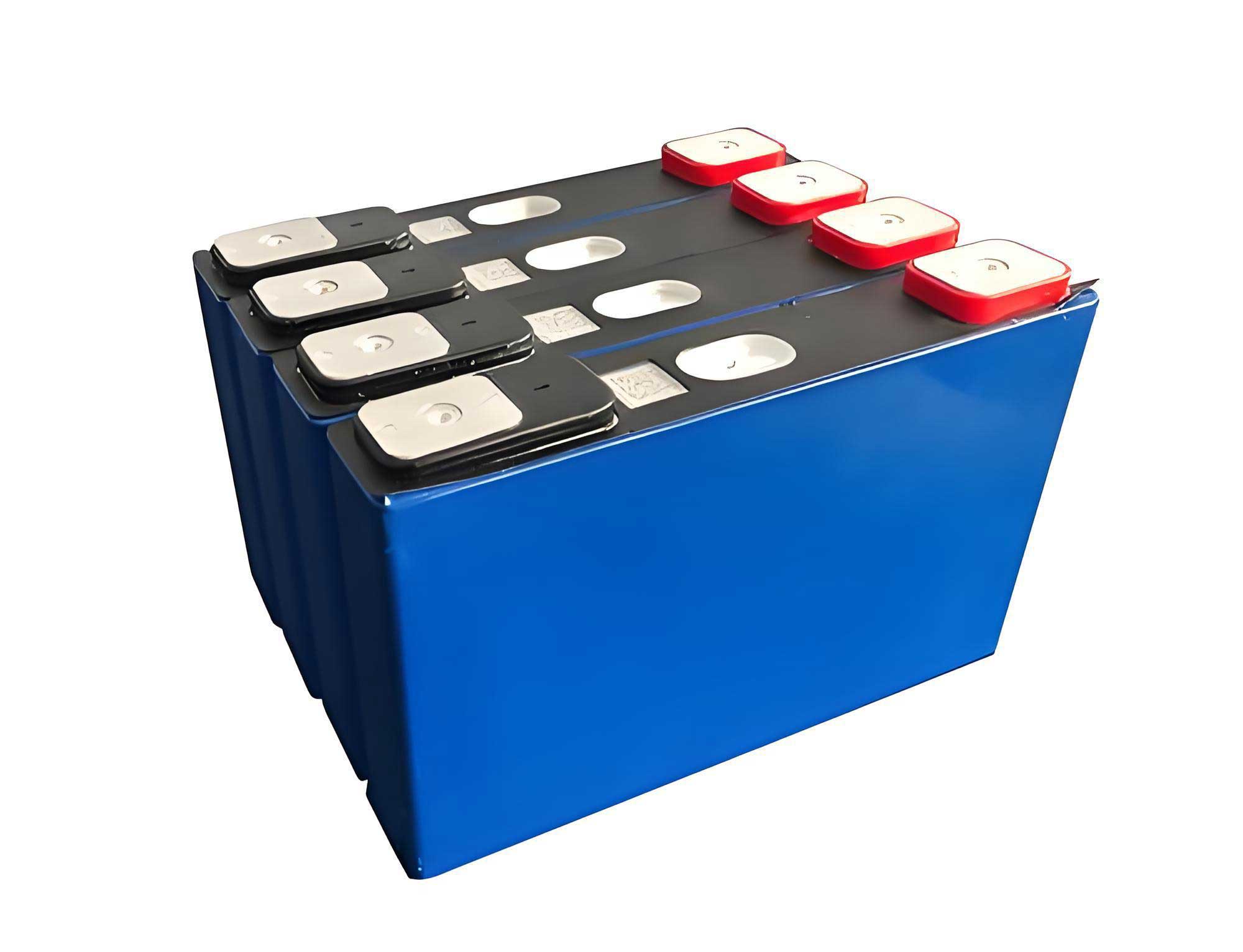
In this work, we designed, fabricated, and validated a novel, integrated heating functional structure specifically for the low-temperature performance enhancement of the LiFePO4 battery. Our approach centers on utilizing a carbon nanotube (CNT) film as the core heating element. Carbon nanotube films are nanomaterials renowned for their exceptional electrical conductivity, high thermal conductivity, mechanical strength, and flexibility. When used as a Joule heating element, they offer rapid thermal response, excellent temperature uniformity, and high electro-thermal conversion efficiency. By integrating this advanced nanomaterial into a fiber-reinforced composite laminate, we developed a Fiber Carbon-nanotube film Laminated composite (FCL) heater. This design aims to provide a lightweight, low-voltage, safe, energy-efficient, and structurally robust heating solution tailored for the thermal management needs of the LiFePO4 battery in cold environments.
Structural Design and Integration of the FCL Heater
The design of the FCL heater was driven by specific performance targets derived from the limitations of existing PTC heaters for LiFePO4 battery packs. The primary objectives were: (1) to achieve a heating power output equal to or greater than 140W, and (2) to enable a LiFePO4 battery module (comprising 10 cells) to be heated from -15°C to 0°C within one hour under a -20°C ambient environment. Furthermore, key advantages over traditional heaters were targeted, including significant weight reduction, improved heating efficiency, and enhanced damage tolerance.
The layered architecture of the FCL heater was meticulously engineered to meet functional and structural requirements. The cross-sectional schematic reveals a multifunctional stack:
- Heating Layer: The core functional layer is a thin carbon nanotube film responsible for Joule heating. Its dimensions (500 mm x 72 mm) and electrical properties are precisely tailored to achieve the desired power output at a low operating voltage, enhancing system safety.
- Insulation Layers: Glass fiber fabric/epoxy prepreg layers are placed immediately above and below the CNT film. These layers provide essential electrical insulation, protecting the battery and circuitry from potential short circuits, while also serving as a matrix for structural integration.
- Heat Spreading Layer: A separate carbon nanotube film with high thermal conductivity is incorporated adjacent to the heating layer. This layer functions as a thermal plane, rapidly distributing the generated heat laterally to eliminate local hot spots and ensure exceptional temperature uniformity across the entire heater surface, which is crucial for the health of the LiFePO4 battery.
- Support/Stiffness Layer: Multiple plies of glass fiber/epoxy prepreg form the bulk of the laminate’s thickness. This layer provides the necessary mechanical strength, stiffness, and durability to the heater, allowing it to withstand handling and operational loads without compromising the delicate CNT films.
- Protective Layer: An outer layer of the same composite material offers environmental protection and electrical isolation for the entire assembly.
The materials selected for each layer are detailed in the table below:
| Layer Function | Material | Key Parameters |
|---|---|---|
| Protection, Insulation | Glass Fiber/Epoxy Prepreg | Tensile Strength: 480 MPa; Thickness: 0.20 mm |
| Heating Element | Carbon Nanotube Heating Film | Operating Range: 0-200°C; Thickness: 0.10 mm |
| Heat Spreading | Carbon Nanotube Thermal Film | Thermal Conductivity: ≥750 W/(m·K); Thickness: 0.15 mm |
| Structural Support | Glass Fiber/Epoxy Prepreg (5 plies) | Flexural Strength: 480 MPa; Provides bulk stiffness |
The electrical design of the heating layer is fundamental. The power P of the CNT film heater is governed by:
$$P = \frac{U^2}{R_l}$$
where U is the applied voltage and R_l is the total resistance of the film. The resistance is related to the film’s sheet resistance (R_s), a key property measured using a four-point probe method, and its geometry:
$$R_l = R_s \cdot \frac{L}{W}$$
Here, L and W are the effective length and width of the current path in the heating film. Therefore, the power can be expressed as:
$$P = \frac{U^2}{R_s} \cdot \frac{W}{L}$$
This equation indicates that the heating power for the LiFePO4 battery can be precisely controlled by tuning the sheet resistance of the CNT film, the applied voltage (chosen to be a safe 32V, compatible with vehicle low-voltage systems), and the film’s geometric design (L/W ratio). Prior to integration, the stability of the CNT film’s resistivity was confirmed through a preliminary test, showing minimal variation with temperature change, which is a desirable trait for a consistent heater performance.
Manufacturing Process: Thermo-compression Integration
A critical advancement of this work is the integrated manufacturing of the heater. Instead of attaching a pre-made heater to a substrate, the FCL heater is co-cured as a single unit using a thermo-compression molding process. The process involves the sequential lay-up of the precisely cut glass fiber/epoxy prepreg plies, CNT heating film, and CNT thermal film according to the designed stack sequence. This assembly is then placed in a mold, sealed within a vacuum bag, and subjected to a controlled temperature and pressure cycle (curing at 120°C for 90 minutes). The epoxy resin in the prepreg flows and cures, bonding all layers—the structural composite, the insulating layers, and the functional CNT films—into a monolithic, lightweight panel. The resulting FCL heater has a thickness of 1.4 mm and a mass of only 93.2 grams. This represents a 59% mass reduction compared to a traditional PTC heater of comparable footprint (226.9 g), directly addressing the weight penalty associated with auxiliary thermal management systems for the LiFePO4 battery.
Performance Characterization of the FCL Heater
Comprehensive experiments were conducted to evaluate the key performance metrics of the FCL heater: temperature uniformity, stability under different ambient conditions, and long-term durability (thermal fatigue resistance).
Temperature Uniformity
Under a constant 32V input at room temperature, the surface temperature distribution was monitored using thermocouples and an infrared thermal camera. The heater surface reached a steady-state temperature of approximately 95°C. The thermal images revealed a highly uniform temperature field. Quantitative data from three thermocouples showed that the maximum temperature difference across the active heating area was less than 5°C throughout the heating process. This exceptional uniformity is attributed to the combined effect of the CNT heating film’s inherent property and the integrated high-conductivity thermal spreading layer. Uniform heating is vital to prevent localized stress and accelerated aging in the adjacent LiFePO4 battery cells.
Thermal Stability and Response
The heater’s performance was tested in both room temperature (25°C) and low-temperature (-17°C) environments under no external load (free convection). The temperature rise curves were analyzed to calculate the heating rate. The results demonstrated consistent and rapid thermal response. The average heating rate was approximately 1.5°C/s at room temperature and 1.6°C/s in the cold environment. The close similarity in these rates confirms that the heating performance of the FCL heater is highly stable and minimally affected by the ambient temperature, a crucial feature for reliable operation in the variable thermal environment of an electric vehicle battery pack housing the LiFePO4 battery.
Thermal Fatigue Resistance
To simulate long-term operational life, the FCL heater underwent an accelerated thermal cycling test. The heater was subjected to 1,800 cycles between -10°C and 50°C in a -20°C ambient chamber. The heater’s electrical resistance was measured at periodic intervals. The initial resistance was 4.95 Ω. After 1,000 cycles, the resistance increased to 5.94 Ω (a 20% increase, corresponding to a 16.7% decrease in power for a fixed voltage). Importantly, the rate of resistance increase slowed significantly thereafter, reaching only 6.08 Ω after 1,800 cycles. This indicates that most of the initial change occurred early in the cycling, after which the heater stabilized. Furthermore, no visual damage such as delamination, cracking, or bubbling was observed. This test validates the robust interfacial bonding achieved through the integrated manufacturing process and demonstrates excellent thermal fatigue resistance for the demanding duty cycle of a LiFePO4 battery heater.
Experimental Validation with LiFePO4 Battery Module
The ultimate validation of the FCL heater’s efficacy was conducted through a realistic heating experiment on a commercial LiFePO4 battery module. The test setup consisted of a -20°C environmental chamber, a 93V, 150Ah LiFePO4 battery module (10 cells in series), the FCL heater placed underneath the module, a programmable DC power supply, a power meter, and a multi-channel temperature logger with 18 thermocouples attached to the heater and various locations on the battery (left, right, top, bottom, internal). A 70°C thermal switch was integrated with the heater to enable pulsed heating for safety and energy efficiency.
Starting from a stabilized module temperature of approximately -15°C, the FCL heater was powered at 32V. The heater’s average power was recorded at 170.6 W (with an instantaneous peak of 206 W). The thermal switch effectively cycled the heater, maintaining its surface temperature between 55°C and 70°C. The temperature profiles of the battery are the most critical results. The internal temperature of the LiFePO4 battery module rose from -15°C to 0°C in 45 minutes. The total energy consumed during this period was 128.2 Watt-hours.
To put this into perspective, the energy required to heat this specific LiFePO4 battery module represents only about 2.67% of its total storage capacity. The heating process was also uniform, as indicated by nearly identical heating rates (0.23°C/min) measured on the left and right sides of the battery pack. This experiment successfully verified that the FCL heater meets and exceeds the initial design targets for heating a LiFePO4 battery module under extreme low-temperature conditions.
Comparative Analysis with Traditional PTC Heater
A direct comparison was made with a commercially available PTC heater designed for a similar LiFePO4 battery application. Under identical test conditions (-20°C ambient, heating the same battery module from -15°C to 0°C), the PTC heater, operating at its rated 93V, achieved an average power of 140.5 W. It required 58 minutes to complete the heating task, consuming 134.5 Watt-hours of energy.
The performance comparison is summarized comprehensively in the table below:
| Performance Metric | Traditional PTC Heater | FCL Heater | Improvement |
|---|---|---|---|
| Operating Voltage | 93 V | 32 V | -65.6% (Safer, LV compatible) |
| Average Heating Power | 140.5 W | 170.6 W | +21.4% |
| Energy Consumed (-15°C to 0°C) | 134.5 Wh | 128.2 Wh | -3.5% |
| Heating Time (-15°C to 0°C) | 58 min | 45 min | -22.4% |
| Heating Rate (Efficiency) | ~15.5°C/h | ~20.0°C/h | +26.0% |
| Mass | 226.9 g | 93.2 g | -59.0% |
| Power-to-Mass Ratio | 0.62 W/g | 1.83 W/g | +195.0% |
| Damage Tolerance | Low (Failure on break) | High (Localized effect) | Significantly Improved |
An additional qualitative advantage is damage tolerance. A localized physical damage (e.g., a puncture) to the FCL heater’s CNT film does not create an open circuit. Current can find alternative paths through the conductive nanotube network. While the local temperature may be slightly affected, the heater remains largely functional. In contrast, a break in a metal wire or PTC element typically renders the entire traditional heater inoperative. This feature enhances the reliability and survivability of the thermal management system for the LiFePO4 battery.
Conclusion and Future Perspective
In this work, we successfully designed, fabricated, and validated a novel Fiber Carbon-nanotube film Laminated composite (FCL) heater for low-temperature heating of LiFePO4 batteries. The integrated thermo-compression manufacturing process resulted in a lightweight (93.2 g), thin (1.4 mm), and robust monolithic structure. The FCL heater demonstrated exceptional performance: excellent surface temperature uniformity (<5°C variation), stable and rapid heating rates (~1.6°C/s) largely independent of ambient conditions, and robust resistance to thermal fatigue over 1,800 cycles.
Most importantly, in a practical validation test, the FCL heater efficiently raised the internal temperature of a commercial LiFePO4 battery module from -15°C to 0°C in 45 minutes under a -20°C environment, consuming only 128.2 Wh of energy. When compared directly to a conventional PTC heater, the FCL heater showed superior performance across all key metrics: it operates at a safer low voltage (32V vs. 93V), provides higher heating power (170.6W vs. 140.5W), heats faster (26% higher rate), consumes slightly less energy, and is 59% lighter, leading to a 195% higher power-to-mass ratio. Its inherent damage tolerance further adds to system reliability.
The FCL heater presents a compelling next-generation solution to the critical low-temperature challenge of LiFePO4 batteries. By rapidly and uniformly elevating the battery’s operating temperature, it can effectively restore discharge capacity, improve charge acceptance, and crucially, inhibit lithium plating during charging, thereby preserving the safety and longevity of the LiFePO4 battery in cold climates. Future work will focus on optimizing the CNT film patterning for even better efficiency, scaling the manufacturing process, and integrating the heater with battery management systems for closed-loop thermal control. Furthermore, investigating the long-term electrochemical impact of this heating method on the cycle life of the LiFePO4 battery will be essential for commercial deployment. This technology holds significant promise for enhancing the year-round reliability and expanding the geographical applicability of electric vehicles and energy storage systems utilizing LiFePO4 batteries.