
The global transition towards renewable energy sources, driven by carbon neutrality goals, has accelerated the deployment of electrochemical energy storage systems. Among these, lithium-ion batteries, particularly LiFePO4 batteries, are widely adopted due to their high energy density, long cycle life, and enhanced safety profile. However, thermal runaway remains a critical safety concern in LiFePO4 battery-based energy storage stations, often leading to fires or explosions. Overcharge conditions, resulting from improper battery management or abnormal charging protocols, are a primary trigger for thermal runaway in LiFePO4 batteries. Understanding the intrinsic characteristics and development mechanisms of overcharge-induced thermal runaway is essential for implementing effective safety monitoring and early warning systems. This study focuses on simulating the overcharge thermal runaway process in LiFePO4 batteries using a three-dimensional electrochemical-thermal coupled model, with emphasis on lithium plating reactions at the negative electrode and subsequent exothermic side reactions.
Thermal runaway in LiFePO4 batteries can be initiated by various abuse conditions, including mechanical, electrical, and thermal stresses. Overcharge, as an electrical abuse scenario, involves excessive lithium-ion extraction from the cathode beyond the anode’s intercalation capacity, leading to lithium metal deposition (plating) on the anode surface. This plated lithium reacts vigorously with the electrolyte, generating heat and potentially triggering a cascade of exothermic side reactions. While prior studies have modeled thermal runaway under thermal abuse, simulations specifically addressing overcharge conditions for LiFePO4 batteries are limited. This work aims to bridge that gap by incorporating lithium plating kinetics and associated reactions into a comprehensive model to analyze the early stages and progression of thermal runaway in LiFePO4 batteries under overcharge.
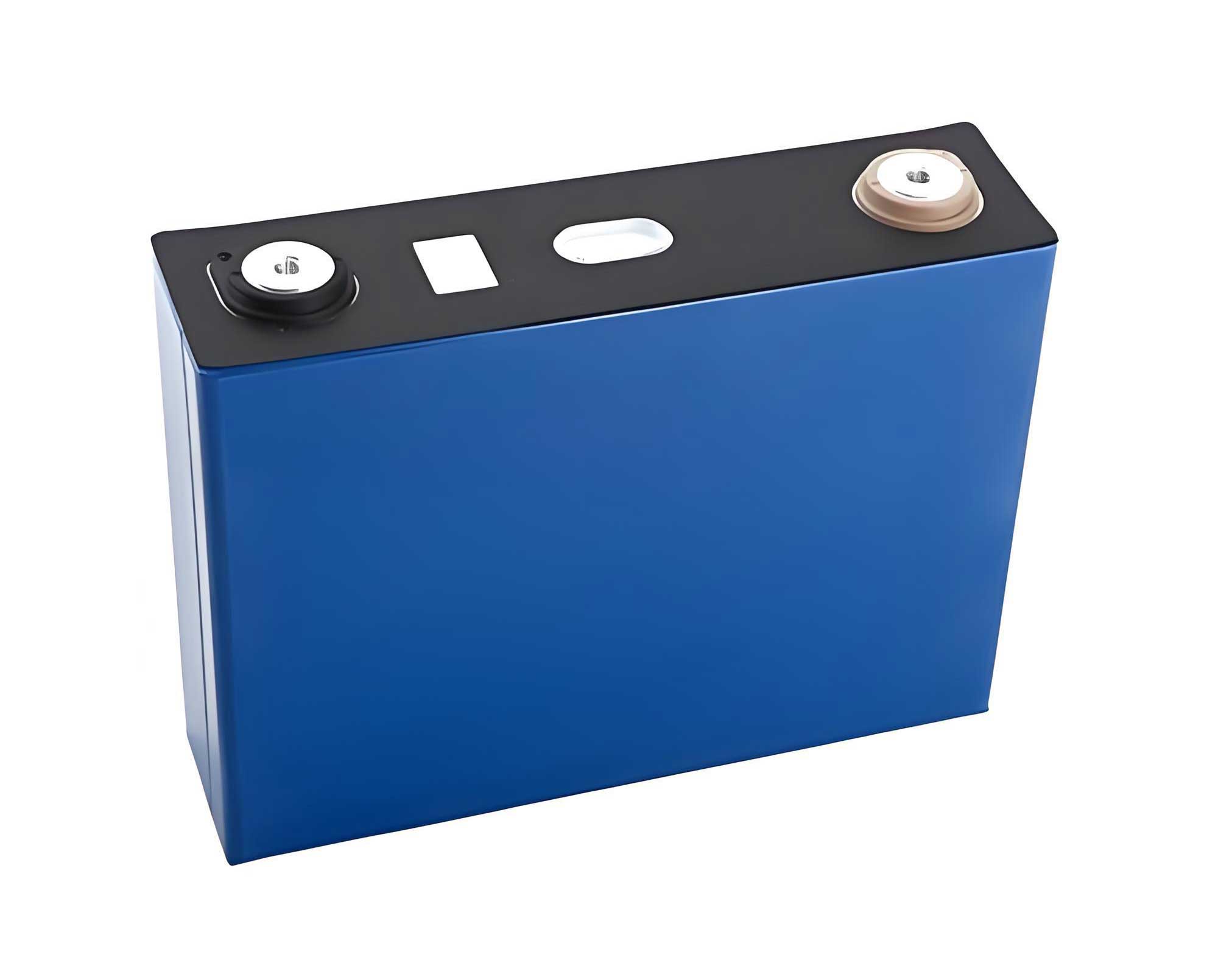
The electrochemical-thermal coupled model developed here is based on the Doyle-Newman homogenized porous electrode theory. The LiFePO4 battery structure comprises five layers: negative current collector, negative electrode (graphite), separator, positive electrode (LiFePO4), and positive current collector, with tabs extending from the collectors. The model accounts for charge conservation, mass transport, and heat generation, including irreversible heat, reversible heat, and heat from side reactions. The key innovation lies in integrating lithium plating dynamics and its reaction with the electrolyte, quantified through SEI film growth kinetics, to accurately capture the onset of thermal runaway in LiFePO4 batteries.
The governing equations for the electrochemical model include Ohm’s law for solid-phase potential, equation for liquid-phase potential, and Fick’s second law for lithium-ion diffusion in spherical electrode particles. The heat generation model considers five exothermic side reactions: lithium plating-electrolyte reaction, SEI decomposition, negative electrode-electrolyte reaction, positive electrode-electrolyte reaction, and electrolyte decomposition. The total heat generation rate $Q_S$ is given by:
$$Q_S = Q_{Li} + Q_{SEI} + Q_{ne} + Q_{pe} + Q_e$$
where each $Q_x$ represents heat from side reaction $x$, calculated as:
$$Q_x = H_x W_x K_x$$
Here, $H_x$ is the heat generated per unit mass, $W_x$ is the active material content, and $K_x$ is the reaction rate following Arrhenius-type equations.
Lithium plating is modeled as a side reaction on the negative electrode surface. When the graphite anode potential drops below the lithium metal reference potential during overcharge, plating occurs. The total local current density $j_{total}$ is the sum of intercalation current density $j_{int}$ and plating current density $j_{pl}$:
$$j_{total} = j_{int} + j_{pl}$$
The intercalation current density is expressed as:
$$j_{int} = a i_{0,int} \left[ \exp\left(\frac{\alpha_{an,int} F \eta_{int}}{RT}\right) – \exp\left(-\frac{\alpha_{ca,int} F \eta_{int}}{RT}\right) \right]$$
where $i_{0,int} = F k_{int} (c_{s,max} – c_{s,surf})^{\alpha_{an,int}} c_{s,surf}^{\alpha_{ca,int}}$, $\eta_{int} = \phi_s – \phi_l – E_{eq}$, with $\phi_s$ and $\phi_l$ being solid and liquid potentials, and $E_{eq}$ the equilibrium potential. The plating current density is:
$$j_{pl} = a i_{0,pl} \left[ \exp\left(\frac{\alpha_{an,pl} F \eta_{pl}}{RT}\right) – \exp\left(-\frac{\alpha_{ca,pl} F \eta_{pl}}{RT}\right) \right]$$
with $i_{0,pl} = F k_{pl} c_l^{\alpha_{an,pl}}$ and $\eta_{pl} = \phi_s – \phi_l – \frac{j_{total}}{a} R_{film}$. The plated lithium mass concentration $W_{Li}$ evolves over time, and its reaction with the electrolyte is modeled using SEI growth kinetics. The reaction rate $\frac{\partial c_{SEI}}{\partial t}$ is derived from:
$$\frac{\partial c_{SEI}}{\partial t} = -\frac{v_{SEI} j_{loc,SEI}}{nF}$$
where $j_{loc,SEI}$ is the local current density for SEI formation. The heat from lithium plating-electrolyte reaction $Q_{Li}$ is:
$$Q_{Li} = H_{Li} W_{Li} \frac{\partial c_{SEI}}{\partial t}$$
Other side reactions are activated at specific temperature thresholds. SEI decomposition begins at $T > T_{onset,SEI} \approx 80^\circ \text{C}$, with rate:
$$R_{SEI}(T) = A_{SEI} \exp\left(-\frac{E_{a,SEI}}{RT}\right) c_{SEI}^{m_{SEI}}$$
Negative electrode-electrolyte reaction starts at $T > T_{onset,ne} \approx 120^\circ \text{C}$:
$$R_{ne}(T) = A_{ne} \exp\left(-\frac{E_{a,ne}}{RT}\right) c_{ne}^{m_{ne}} \exp\left(-\frac{t_{SEI}}{t_{SEI,ref}}\right)$$
Positive electrode-electrolyte reaction initiates at $T > T_{onset,pe} \approx 170^\circ \text{C}$:
$$R_{pe1}(T) = A_{pe1} \exp\left(-\frac{E_{a,pe1}}{RT}\right) \alpha^{m_{pe1}} (1-\alpha)$$
$$R_{pe2}(T) = A_{pe2} \exp\left(-\frac{E_{a,pe2}}{RT}\right) \alpha^{m_{pe2}} (1-\alpha)$$
Electrolyte decomposition occurs at $T > T_{onset,e} \approx 200^\circ \text{C}$:
$$R_e(T) = A_e \exp\left(-\frac{E_{a,e}}{RT}\right) c_e^{m_e}$$
The thermal model solves the energy balance equation considering heat generation and dissipation. Boundary conditions include convective cooling at the tabs with a heat transfer coefficient of 0.15 W/(m²·K), while other surfaces are thermally insulated.
Simulations were conducted for a single-layer LiFePO4 battery with parameters summarized in Table 1. The LiFePO4 battery was charged from an initial state of charge (SOC) of 0.2 to overcharge under varying conditions. The model parameters for side reactions are listed in Table 2.
| Parameter | Description | Positive Current Collector | Positive Electrode | Separator | Negative Electrode | Negative Current Collector |
|---|---|---|---|---|---|---|
| Thickness (µm) | Layer thickness | 5 | 65 | 20 | 35 | 10 |
| $\epsilon_s$ | Solid phase volume fraction | — | 0.435 | — | 0.679 | — |
| $\epsilon_l$ | Electrolyte phase volume fraction | — | 0.565 | — | 0.321 | — |
| $R_s$ (µm) | Electrode particle radius | — | 2 | — | 5 | — |
| $c_{s,max}$ (mol/m³) | Max active material concentration | — | 21190 | — | 31507 | — |
| $c_l$ (mol/m³) | Initial electrolyte concentration | — | 1200 | 1200 | 1200 | — |
| $k$ (W/(m·K)) | Thermal conductivity | 160 | 1.48 | 1 | 1.04 | 400 |
| $\rho$ (kg/m³) | Density | 2700 | 1500 | 492 | 2660 | 8700 |
| $C_p$ (J/(kg·K)) | Specific heat capacity | 903 | 1260 | 700 | 1437.4 | 385 |
| Reaction $x$ | Pre-exponential Factor $A_x$ (s⁻¹) | Activation Energy $E_{a,x}$ (×10⁵ J/mol) | Initial Normalized Concentration $c_{x,0}$ | Reaction Order $m_x$ | Heat per Unit Mass $H_x$ (J/g) | Active Material Content $W_x$ (g/m³) |
|---|---|---|---|---|---|---|
| SEI decomposition | 1.667×10¹⁵ | 1.3508 | 0.15 | 1 | 1257 | 6.104×10⁵ |
| Negative electrode-electrolyte | 2.5×10¹³ | 1.3508 | 0.75 | 1 | 1714 | 6.104×10⁵ |
| Positive electrode-electrolyte (1) | 1.75×10⁹ | 1.1495 | 0.04 | 1 | 77 | 1.221×10⁶ |
| Positive electrode-electrolyte (2) | 1.077×10¹² | 1.5888 | 0.04 | 1 | 84 | 1.221×10⁶ |
| Electrolyte decomposition | 5.14×10²⁵ | 2.74 | 1 | 1 | 155 | 4.069×10⁵ |
The lithium plating model parameters include: lithium molar mass $M_{Li} = 6.941$ g/mol, density $\rho_{Li} = 534$ kg/m³, plating rate constant $k_{pl} = 2.5 \times 10^{-7}$ m/s, and SEI-related parameters such as dimensionless exchange current density $J = 8.4 \times 10^{-4}$ and dimensionless parameter $f = 1.1 \times 10^3$.
Simulations were performed to investigate the effects of charging rate and ambient temperature on the thermal runaway behavior of the LiFePO4 battery. The LiFePO4 battery was overcharged at rates of 1C, 2C, and 3C from SOC 0.2 under an ambient temperature of 20°C. Additionally, the impact of ambient temperature was studied at 20°C, 30°C, and 40°C with a 1C charging rate. Results focus on lithium plating mass concentration, temperature evolution, and heat generation from side reactions.
Under 1C charging at 20°C, lithium plating on the negative electrode begins at approximately 2899 s when SOC reaches 0.9. The plated lithium mass concentration increases until peaking at 2.03 kg/m³ at 3209 s, after which plating ceases as all movable lithium ions from the cathode are depleted. The heat generation from the lithium plating-electrolyte reaction initiates at 2899 s, causing a noticeable temperature rise in the LiFePO4 battery. Compared to a control case without plating, the negative electrode temperature increases by 28.2°C due to this reaction. This early heat triggers SEI decomposition at around 80°C, followed by negative electrode-electrolyte reaction at 120°C, positive electrode-electrolyte reaction at 170°C, and electrolyte decomposition at 200°C. The peak heat generation rate for all side reactions combined reaches $2.32 \times 10^6$ W/m³ at 5356 s, corresponding to the maximum temperature ramp rate.
At higher charging rates, the onset of lithium plating and subsequent reactions occurs earlier. For 2C charging, plating starts at 1420 s, and for 3C, at 953 s. The peak heat generation rates increase to $2.9 \times 10^6$ W/m³ for 2C and $3.47 \times 10^6$ W/m³ for 3C. The time to reach peak temperature ramp rate shortens to 3138 s for 2C and 2182 s for 3C. This acceleration is attributed to faster lithium-ion flux and earlier saturation of the anode, promoting plating. The LiFePO4 battery thus exhibits higher thermal runaway risk under fast charging conditions.
Increasing ambient temperature also advances the thermal runaway timeline. At 30°C, lithium plating begins at 2888 s, and at 40°C, at 2874 s under 1C charging. The peak heat generation rates slightly rise to $2.34 \times 10^6$ W/m³ and $2.35 \times 10^6$ W/m³, respectively. The time to peak temperature ramp rate decreases to 5126 s at 30°C and 4906 s at 40°C. Higher ambient temperatures provide additional thermal energy, lowering the activation barriers for side reactions and accelerating the overall process in the LiFePO4 battery.
The temperature distribution within the LiFePO4 battery during thermal runaway is non-uniform. At 5356 s (peak heat generation), the cell body temperature is significantly higher than the tab temperatures, with a maximum difference of about 12°C. The positive tab (current inlet) is slightly warmer than the negative tab due to current flow and heat generation patterns. This inhomogeneity underscores the need for distributed temperature monitoring in practical LiFePO4 battery systems.
The overcharge thermal runaway process in LiFePO4 batteries can be summarized in four stages. First, during overcharge, lithium ions exceeding the anode’s intercalation capacity deposit as metallic lithium on the graphite surface. Second, the plated lithium reacts with the electrolyte, generating heat and raising the battery temperature. Third, as temperature exceeds 80°C, SEI film decomposes, exposing the anode to electrolyte and initiating negative electrode-electrolyte reaction at 120°C. Fourth, at higher temperatures (170°C and 200°C), positive electrode-electrolyte and electrolyte decomposition reactions occur, releasing substantial heat and culminating in thermal runaway. Throughout these stages, the lithium plating-electrolyte reaction serves as the initial trigger, highlighting its critical role in the safety of LiFePO4 batteries.
In conclusion, this study presents a comprehensive three-dimensional electrochemical-thermal coupled model for simulating overcharge-induced thermal runaway in LiFePO4 batteries. By incorporating lithium plating kinetics and its exothermic reaction with the electrolyte, the model accurately captures the early onset and progression of thermal runaway. Simulations reveal that higher charging rates and elevated ambient temperatures accelerate thermal runaway, increasing the risk for LiFePO4 battery energy storage systems. The lithium plating reaction is identified as the primary initiator, emphasizing the importance of monitoring and controlling overcharge conditions. These findings provide valuable insights for developing safety strategies, such as optimized charging protocols and thermal management, to mitigate thermal runaway risks in LiFePO4 battery applications. Future work could extend the model to multi-cell configurations and experimental validation for enhanced predictive accuracy.