
The global transition towards sustainable transportation has been significantly accelerated by the rapid development and adoption of Electric Vehicles (EVs). At the heart of this revolution lies the lithium-ion battery, with Lithium Iron Phosphate (LiFePO₄ or LFP) chemistry emerging as a dominant choice for commercial applications due to its intrinsic safety advantages, long cycle life, and cost-effectiveness. However, despite the superior thermal stability of the LiFePO₄ cathode material compared to high-nickel counterparts, the risk of thermal runaway (TR)—an uncontrolled, self-heating exothermic reaction—persists under extreme abuse conditions such as internal short circuits, overcharging, or mechanical damage. Once initiated in a single cell within a densely packed battery module, thermal runaway can propagate to neighboring cells, leading to catastrophic failure characterized by fire, explosion, and the release of toxic fumes. Therefore, developing effective, reliable, and economically viable strategies to inhibit thermal runaway and its propagation within battery packs is paramount for ensuring the overall safety of electric mobility.
This study proposes and experimentally validates a novel, active safety intervention technique for large-capacity LiFePO₄ battery packs: the maintenance of a continuous micro-positive pressure nitrogen (N₂) environment within the sealed battery enclosure. The fundamental principle is based on the classic “fire triangle,” which posits that fire requires fuel, heat, and an oxidizer (typically oxygen). By displacing the ambient air (containing ~21% oxygen) with inert nitrogen and maintaining a slight positive pressure, the oxidizer component is effectively eliminated from the pack’s internal atmosphere. This creates an inert blanket that can suppress flaming combustion of ejected flammable electrolytes and vent gases if a cell begins to fail. Furthermore, this approach addresses a critical secondary issue: the “breathing effect.” Standard battery packs use pressure-equalization vents to prevent structural damage from pressure differentials caused by temperature and altitude changes. However, these vents allow moist ambient air to enter the pack during cooling cycles. When this humid air contacts cooler internal surfaces like cooling plates, condensation (dew formation) occurs, potentially leading to insulation degradation, creepage current, and eventual short circuits—a hidden initiator for thermal runaway. A maintained micro-positive pressure of nitrogen acts as a one-way barrier, preventing the ingress of moist air and thereby mitigating condensation-related risks.
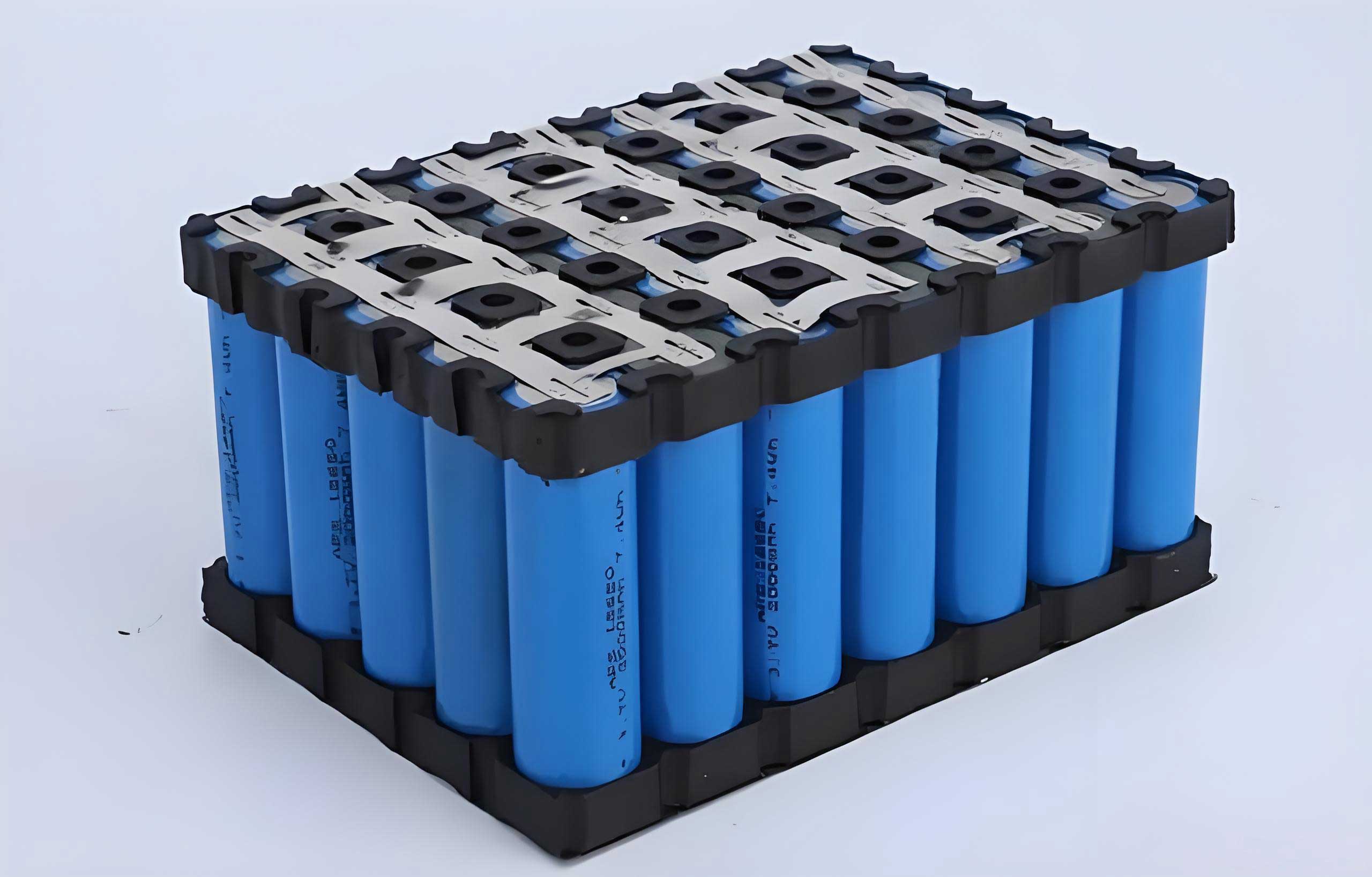
To comprehensively evaluate the efficacy of this micro-positive pressure nitrogen suppression technology, a comparative experimental investigation was conducted using a commercially representative high-capacity LiFePO₄ battery pack. The study was structured around two core experimental campaigns: (1) a thermal runaway triggering test on a module inside the pack with and without the nitrogen environment, and (2) a long-duration condensation test under cyclic environmental conditions to assess the pack’s internal humidity control. The primary objectives were to quantify the suppression of fire severity, delay in failure events, reduction in maximum temperatures, and prevention of internal condensation. The findings provide critical data and a new engineering paradigm for enhancing the intrinsic safety of LiFePO₄ battery systems in real-world applications.
Experimental Methodology and Battery System Description
The experimental platform was based on a production-grade LiFePO₄ battery pack designed for commercial electric vehicles. The key specifications of the individual LFP cell and the overall pack are summarized below.
| Parameter | Value / Description |
|---|---|
| Cell Chemistry | Lithium Iron Phosphate (LiFePO₄) / Natural Graphite |
| Nominal Capacity | 302 Ah |
| Nominal Voltage | 3.22 V |
| Dimensions (Cell) | 205 mm × 72 mm × 174 mm |
| Pack Configuration | 36 cells in series-parallel |
| Pack Enclosure | Sealed metal casing with pressure relief valve (0.2 kPa cracking pressure) |
The large format of the LiFePO₄ cell (302 Ah) is representative of the trend in commercial vehicles seeking higher energy density per cell, which also concentrates more chemical energy, making thermal management and runaway suppression even more critical.
Thermal Runaway Triggering Experiment
To safely and controllably study thermal runaway behavior within the pack, a 1×3 cell module (three 302 Ah LiFePO₄ cells at 100% State of Charge) was installed inside the pack enclosure. Thermal runaway was induced in one cell via external heating, a widely accepted method for simulating internal heat generation from a short circuit. An 800 W heating plate was inserted between cell #1 and cell #2 to ensure a heating rate exceeding 6 °C/min, sufficient to trigger the exothermic decomposition reactions. To simulate a potential ignition source from electrical arcing—a common occurrence during pack failure—a continuous 1500 V arc generator was positioned near the venting paths of the cells. Type-K thermocouples were attached to multiple surfaces of each cell (large face, side, top) to record temperature evolution. Voltage of each cell was also monitored. Two distinct test conditions were executed:
Condition A (Baseline, No Suppression): The pack was sealed with its standard vent, allowing air to be present inside. The heater and arc generator were activated.
Condition B (Micro-Positive Pressure N₂ Suppression): Before activation, the pack’s internal atmosphere was purged and continuously maintained with nitrogen gas. A pressure control system was used to keep the internal pressure between 0.1 kPa and 0.2 kPa by injecting N₂ at 5 L/min when pressure dropped below the lower limit. This created a stable, slightly positive, oxygen-depleted environment. The same heating and arcing triggers were then applied.
The criteria for declaring thermal runaway followed the Chinese national standard GB 38031-2020: the cell surface temperature must reach its maximum operating temperature and simultaneously exhibit a temperature rise rate ≥ 1 °C/s for more than 3 consecutive seconds. Heating was terminated once thermal runaway was confirmed or if no runaway occurred within a prolonged period.
Condensation and Environmental Cycling Experiment
This experiment assessed the pack’s ability to resist internal moisture ingress and condensation under cyclic thermal loads, mimicking real-world charge-discharge cycles in humid climates. The pack was placed inside an environmental chamber set to (45 ± 2)°C and (95 ± 2)% Relative Humidity (RH) until thermal equilibrium. It was then subjected to a continuous charge-discharge cycle (250 A current, 20%-100% SOC) with liquid cooling active for 168 hours (7 days). The cooling plate temperature was set lower than the chamber’s dew point to create a strong driving force for condensation.
Condition A (Baseline): The pack relied on its standard vent for pressure equalization.
Condition B (N₂ Environment): The micro-positive pressure nitrogen system was active throughout the 168-hour test.
Internal temperature, relative humidity, and pressure were logged continuously. After the test, the pack was inspected for visible condensation, and its insulation resistance was measured using a megohmmeter (1000 V test voltage) to quantify any degradation caused by moisture.
Results and Analysis: Thermal Runaway Suppression
Baseline Scenario (Air Environment)
In the absence of any suppression measure, the module underwent a violent and complete thermal runaway sequence. The heating plate triggered the failure of cell #2 first, whose safety vent opened at t = 1008 s. The jet of hot flammable volatiles (electrolyte solvents, hydrogen, hydrocarbons) immediately ignited upon contact with the sustained electrical arc, resulting in an intense internal fireball. The flames, fed by continuous venting, propagated to the exterior of the pack. Subsequently, cell #1 vented at t = 1081 s and cell #3 at t = 1148 s, each event contributing more fuel and intensifying the fire. The entire module was fully involved in fire, which persisted for approximately 413 seconds until all combustible material was consumed. The temperature profiles, shown conceptually below, exhibited characteristic thermal runaway spikes.
Let the temperature at a specific point on cell \(i\) be denoted as \(T_i(t)\). The maximum surface temperature for a cell, excluding points in direct contact with heating elements or fixtures, is defined as:
$$ T_{i,\text{max}} = \max( T_{i,\text{top}}, T_{i,\text{side}}, T_{i,\text{face}} ) $$
For the baseline test, these maximum temperatures were catastrophic:
$$ T_{2,\text{max}} \approx 500.1^\circ\text{C}, \quad T_{1,\text{max}} \approx 485.3^\circ\text{C}, \quad T_{3,\text{max}} \approx 626.6^\circ\text{C} $$
The peak temperature rate exceeded \(24^\circ\text{C/s}\), far above the 1°C/s threshold. Post-test inspection revealed the module was completely charred and destroyed.
Micro-Positive Pressure Nitrogen Scenario
The outcome under the nitrogen environment was dramatically different. The first notable event was the venting of cell #1’s safety valve at t = 1534 s. Crucially, this was 526 seconds later than the first venting event in the baseline test. The delayed venting suggests a moderating effect of the inert atmosphere on the internal reaction kinetics or heat transfer. Most importantly, the vented gases, consisting primarily of electrolyte vapor and decomposition products, did not ignite. No flame was observed inside or outside the pack. Only a white mist (likely condensed electrolyte vapor) was released, which quickly dissipated. The heating was stopped after venting, and the cells cooled down passively without any further exothermic events.
The temperature data confirmed the absence of thermal runaway. The maximum recorded surface temperature on any cell was only:
$$ T_{\text{max, N2}} = 148^\circ\text{C} $$
This represents a reduction of over 75% compared to the baseline failure temperatures. Furthermore, the temperature traces showed no sustained rise rate exceeding 1°C/s. Visually, only the first cell showed venting activity; the other two cells remained physically intact with no swelling or rupture. The comparative results are starkly summarized in the table below.
| Parameter | Baseline (Air) | Micro-Positive Pressure N₂ | Change / Effect |
|---|---|---|---|
| First Venting Time | 1008 s | 1534 s | Delayed by +526 s (+52%) |
| Number of Cells Undergoing TR | 3 | 0 | Complete Suppression |
| Maximum Cell Surface Temp. | ~627 °C | 148 °C | Reduced by ~479 °C |
| Fire Duration | 413 s | 0 s | Fire Eliminated |
| Post-Test Module State | Fully charred, destroyed | Vented cell intact, others undamaged | Damage Localized/Prevented |
The mechanism of suppression is clear: by removing oxygen, the nitrogen environment breaks the fire triangle. Even if a single LiFePO₄ cell experiences internal failure and vents flammable gases, the lack of an oxidizer prevents these gases from igniting. This prevents the secondary heating from a sustained pool or jet fire, which is a primary driver for thermal runaway propagation to adjacent cells in a module. Thus, the failure is contained as a non-fire, single-cell event.
Results and Analysis: Condensation and Humidity Control
The long-term environmental cycling test yielded equally significant results regarding pack integrity and secondary failure prevention. The internal relative humidity (RH) trends were fundamentally different between the two conditions.
In the baseline pack, the RH began to rise steadily soon after the test began. As the pack underwent charge-discharge cycles, its temperature fluctuated, causing the internal air to expand and contract. During contraction (cooling), moist air from the 95% RH chamber was drawn in through the pressure-equalization vent. Over time, this process saturated the internal atmosphere. The internal RH reached levels exceeding 80% after about 80 hours and remained high. When this humid air contacted the cold surface of the active cooling plate (set to 15-20°C), the temperature fell below the dew point, leading to copious condensation and water droplet formation on the cooling system components and nearby surfaces.
In contrast, the pack with continuous micro-positive pressure nitrogen maintained a consistently low internal humidity level throughout the 168-hour test. The RH stayed within a band of approximately 27% to 35%. The positive pressure acted as a seal, preventing any inflow of external moist air. The only gas entering the pack was dry nitrogen, which has a negligible moisture content. Consequently, even though the cooling plate surface was cold, the dew point of the internal nitrogen atmosphere was extremely low, and no condensation whatsoever was observed upon opening the pack.
The practical consequence of this was measured in the pack’s electrical insulation resistance. Moisture and water films on surfaces drastically reduce insulation resistance (IR), creating leakage paths and increasing the risk of short circuits. The post-test measurements were definitive:
- Baseline Pack IR: 43.7 MΩ (a significant drop from its initial dry-state value, indicating moisture absorption).
- N₂ Pack IR: 847 MΩ (remaining near its initial high value).
The pack protected by nitrogen exhibited an insulation resistance roughly 19 times higher than the baseline pack after humidity cycling. This dramatically lowers the probability of insulation failure, creepage current, and resulting latent short circuits that could initiate thermal runaway in a LiFePO₄ battery during its operational life.
Comprehensive Risk Assessment and Discussion
Safety risk is conventionally defined as a combination of the likelihood of a hazardous event and the severity of its consequences. The proposed micro-positive pressure nitrogen technology positively impacts both dimensions for LiFePO₄ battery pack safety.
1. Reduction in Severity of Thermal Runaway Events: As experimentally demonstrated, the technology transforms a severe, multi-cell fire event into a non-fire, single-cell venting incident. Parameters quantifying severity—such as maximum temperature, fire duration, and number of failed cells—are drastically reduced, as quantified in Table 2.
2. Reduction in Likelihood of Thermal Runaway Initiation and Propagation:
- Prevention of Condensation-Triggered Failures: By maintaining a dry internal environment, the technique mitigates a key root cause of internal short circuits, thereby reducing the likelihood of an initial thermal runaway event.
- Breaking Propagation Pathways: By preventing the ignition of vent gases, it removes the primary mechanism (fire impingement) for heat transfer that drives thermal runaway propagation between cells. This reduces the likelihood of a single-cell failure escalating to a module- or pack-level event.
A qualitative risk matrix comparison can be constructed based on the experimental parameters. The following table assigns relative risk levels (High, Medium, Low) for key failure modes under both scenarios.
| Failure Mode / Risk Parameter | Baseline (Air) Pack | Micro-Positive Pressure N₂ Pack |
|---|---|---|
| Severity of Cell Thermal Runaway | High (Fire, >600°C, propagation) | Low (Venting only, <150°C, no propagation) |
| Likelihood of Propagation from a Single Cell | High | Low |
| Risk of Internal Condensation | High (RH >80%, visible water) | Low/Negligible (RH ~30%, no water) |
| Risk of Insulation Degradation from Moisture | High (IR = 43.7 MΩ) | Low (IR = 847 MΩ) |
| Overall Pack-Level Fire Hazard | HIGH | LOW |
The underlying physics of the LiFePO₄ cathode material supports the feasibility of this approach. Unlike some nickel-based cathodes that release oxygen at high temperatures, the olivine structure of LiFePO₄ is stable, with strong P-O bonds that do not readily release oxygen even during decomposition at temperatures above 500°C. This means the fuel for a fire within a failing LFP cell comes mainly from the organic electrolyte and its decomposition products, not from the cathode. Therefore, removing the external oxidizer (oxygen from air) is a supremely effective strategy for suppressing fires specific to LiFePO₄ battery systems.
The engineering implementation is relatively straightforward and low-cost. Nitrogen is abundant, inert, and inexpensive. The required pressure (0.1-0.2 kPa) is minimal, posing no structural challenge to the pack enclosure. A simple system comprising a small nitrogen reservoir (or an extractor from an onboard air system), a pressure sensor, and a solenoid valve can maintain the micro-positive pressure environment autonomously. This represents a favorable trade-off between added system complexity and a profound increase in safety.
Conclusion
This experimental investigation has successfully demonstrated that maintaining a continuous micro-positive pressure nitrogen environment within a sealed LiFePO₄ battery pack is a highly effective, practical, and low-cost strategy for enhancing safety on two critical fronts.
First, it actively suppresses the severity and likelihood of thermal runaway events. In direct comparative tests, the nitrogen environment prevented fire entirely, delayed initial cell venting by over 500 seconds, limited maximum cell temperatures to below 150°C, and contained the failure to a single cell—all in stark contrast to the violent, propagating fire observed in an air environment.
Second, it passively eliminates the risk of internal condensation and the associated degradation of electrical insulation. By preventing the ingress of humid ambient air, the pack interior remains dry, preserving high insulation resistance and removing a common initiator for latent internal short circuits.
This dual-function approach addresses both the catastrophic failure mode (thermal runaway fire) and a pervasive, slow-acting degradation mode (moisture ingress). For large-capacity LiFePO₄ battery packs destined for demanding commercial vehicle applications, where reliability and safety over long service lives are non-negotiable, the integration of a micro-positive pressure nitrogen system offers a robust engineering solution. It provides an inherent safety layer that works on the fundamental principle of oxidizer exclusion, making the pack intrinsically safer against fire risks while simultaneously improving its long-term resilience against environmental stressors. This study thus provides a compelling new pathway for the design and safety fortification of next-generation energy storage systems for electric transportation.