
In the era of rapid technological advancement and environmental consciousness, I find that the transportation sector is increasingly reliant on the power and convenience offered by lithium-ion batteries. These batteries are pivotal for electric vehicles (EVs), renewable energy storage, and portable electronics, driving the transition toward a low-carbon economy. However, as the first wave of EVs reaches end-of-life, the disposal and recycling of lithium-ion batteries present significant environmental and economic challenges. If not managed properly, spent lithium-ion batteries can release toxic substances, posing risks to ecosystems and human health. Conversely, efficient recycling can conserve scarce resources like lithium, cobalt, and nickel, reduce greenhouse gas emissions, and support circular economy goals. In this article, I explore the legal frameworks necessary to standardize lithium-ion battery recycling, drawing from international experiences and proposing a tailored approach for China’s context. My aim is to outline how法治化 (legalization) can enhance recycling rates, ensure sustainability, and align with global trends like the “dual-carbon” targets.
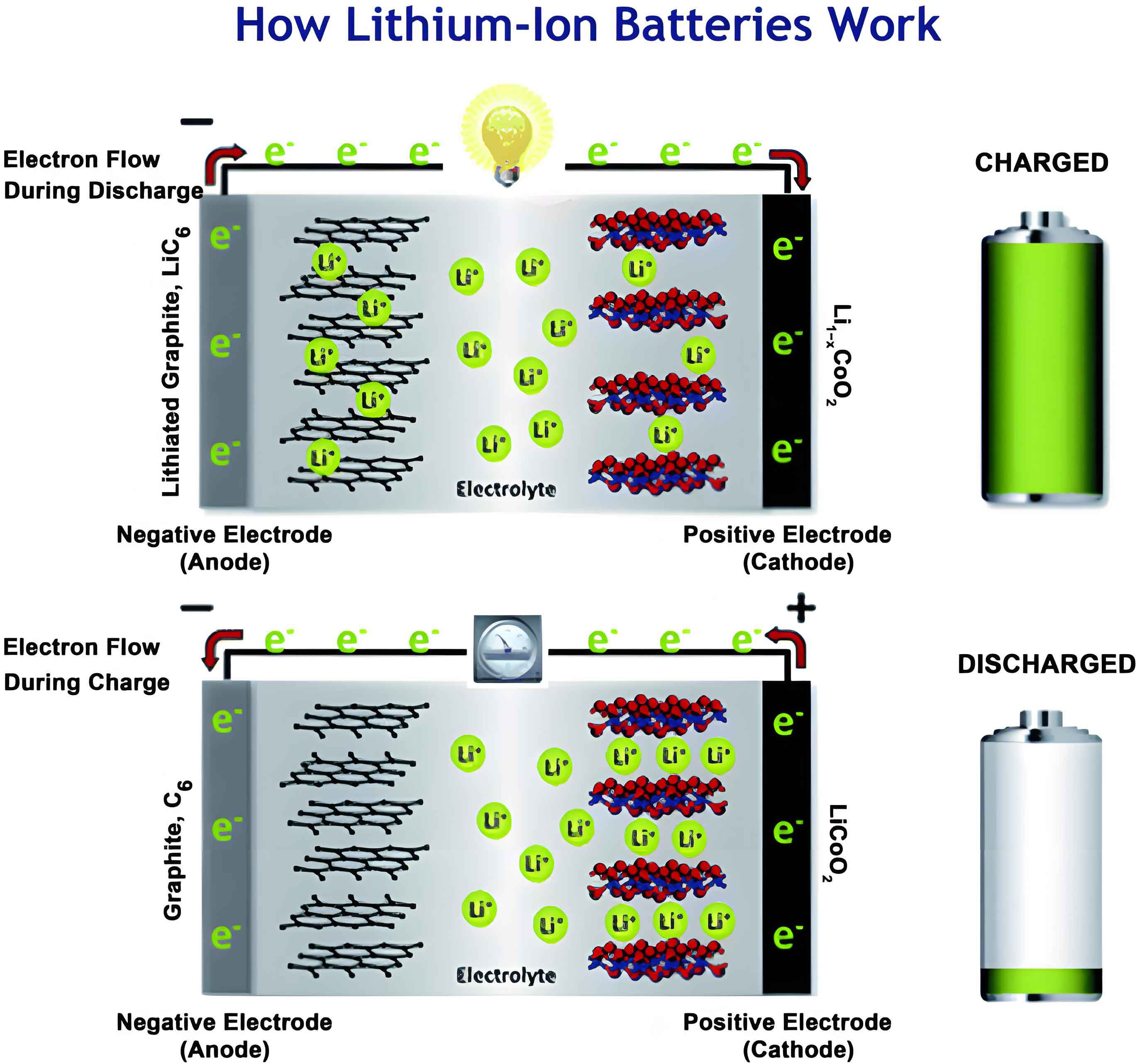
The recycling of lithium-ion batteries involves multiple methods, each with distinct economic and environmental implications. I categorize these into three primary techniques: direct recycling, pyrometallurgy, and hydrometallurgy. Direct recycling focuses on disassembling batteries to physically separate components, preserving cathode materials for reuse in new lithium-ion batteries. This method minimizes material and energy consumption but requires intensive labor. Pyrometallurgy uses high-temperature processes to reduce battery components into separable metals and slag, often relying on combustion, which increases energy costs and air pollution. Hydrometallurgy employs aqueous solutions to extract metal compounds, followed by selective precipitation for recovery; it demands fewer energy inputs but more reagents and water. The cost-effectiveness of these methods depends on scale, with hydrometallurgy often being the most economical at large capacities. To quantify recycling efficiency, I propose a simple formula: $$ \text{Material Recovery Rate} = \frac{M_{\text{recovered}}}{M_{\text{input}}} \times 100\% $$ where \( M_{\text{recovered}} \) is the mass of recovered materials and \( M_{\text{input}} \) is the mass of input lithium-ion batteries. This metric is crucial for setting regulatory targets and evaluating performance across regions.
From a global perspective, I observe that developed regions have established early regulatory frameworks for lithium-ion battery recycling. These can be broadly classified into two models: specialized legislation and decentralized regulation. The European Union exemplifies the specialized立法 model with its proposed Battery Regulation, which aims to create a闭环管理 framework covering the entire lifecycle of lithium-ion batteries. This includes design, production, use, and recycling, with requirements for battery passports to enhance transparency. In contrast, the United States follows a decentralized approach, relying on existing laws like the Resource Conservation and Recovery Act (RCRA) to manage lithium-ion batteries as hazardous or universal waste. Japan, through its Act on Promotion of Resource Recycling, adopts a hybrid model that emphasizes extended producer responsibility (EPR) for specific battery types. To summarize these international experiences, I present Table 1, which compares key aspects of regulatory models.
| Region | Regulatory Model | Key Legislation | Focus Areas |
|---|---|---|---|
| European Union | Specialized Legislation | Battery Regulation (Proposed) | Full lifecycle, battery passports, recycling targets |
| United States | Decentralized Regulation | RCRA, Mercury-Containing Battery Act | Hazardous waste management, universal waste rules |
| Japan | Extended Producer Responsibility | Act on Promotion of Resource Recycling | Collection and recycling by producers, 3R principles |
Analyzing these models, I note that they share common elements: clear definition of stakeholders and objects, explicit allocation of responsibilities, and mechanisms for sustainable oversight. For instance, in the EU, producers are held accountable for recycling, while in Japan, manufacturers must collect and recycle small rechargeable batteries. These approaches highlight the importance of法治化 in ensuring that lithium-ion battery recycling is systematic and enforceable. However, I also recognize that regulatory effectiveness depends on local economic and technological conditions. The EU’s emphasis on digital battery passports, for example, leverages advanced traceability, whereas the U.S. relies on existing waste management infrastructure. This diversity offers valuable lessons for crafting context-specific laws.
Turning to China, I trace the evolution of lithium-ion battery recycling policies from a point-to-line-to-surface progression. Initially, the “point” was the 2006 policy that identified responsible entities for battery回收. Then, the “line” emerged with the 2008 introduction of extended producer responsibility (EPR) for electronic products, later extended to lithium-ion batteries. Finally, the “surface” was formed through the 2016 establishment of a comprehensive recycling system under the EPR scheme. Key policies include the “Management Measures for the Recycling and Utilization of New Energy Vehicle Power Batteries” (2018) and the “Guidelines for the Construction and Operation of Recycling Service Networks” (2019), which mandate traceability and网点建设. Despite these efforts, I identify several shortcomings in China’s regulatory framework. First, the lack of specialized legislation leads to fragmented enforcement, with policies often being administrative guidelines rather than binding laws. Second, recycling targets are vague, and the industry struggles with inconsistent standards due to diverse lithium-ion battery designs. Third, there is a gap between policy文本 and implementation, as non-compliant actors exploit loopholes, undermining正规 enterprises. To illustrate the policy timeline, I provide Table 2.
| Year | Policy Document | Key Provisions | Impact on Lithium-ion Battery Recycling |
|---|---|---|---|
| 2006 | Automotive Product Recycling Technology Policy | Assigned responsibility to new energy vehicle producers | Initial step in defining stakeholders for lithium-ion batteries |
| 2008 | Regulation on Recycling and Disposal of Waste Electrical and Electronic Products | Introduced EPR for electronic products | Laid groundwork for extending EPR to lithium-ion batteries |
| 2016 | Implementation Plan for Extended Producer Responsibility System | Promoted EPR for EV power batteries | Established a systemic approach to lithium-ion battery recycling |
| 2018 | Management Measures for Recycling and Utilization of New Energy Vehicle Power Batteries | Encouraged collaboration between battery producers and recyclers | Enhanced technical and operational standards for lithium-ion batteries |
| 2019 | Guidelines for Recycling Service Network Construction and Operation | Required备案 for recycling网点 | Improved traceability and collection infrastructure for lithium-ion batteries |
Delving deeper into the regulatory content, I pinpoint three core deficiencies. First, the EPR制度 remains underdeveloped, often lacking economic incentives to motivate producers. In theory, EPR internalizes lifecycle costs, but in practice, it faces resistance due to high回收 expenses and technological barriers. For lithium-ion batteries, the variability in chemistry and design complicates reuse and recycling, making EPR challenging to implement. Second, the circular value chain is inadequately constructed. Current practices lean toward a linear model where lithium-ion batteries are discarded after use, rather than being reintegrated into production. The high costs of collection, transportation, and processing deter investment, as shown by the formula: $$ C_{\text{total}} = C_{\text{collect}} + C_{\text{transport}} + C_{\text{process}} $$ where \( C_{\text{total}} \) represents the total recycling cost for lithium-ion batteries. Without subsidies or market mechanisms, these costs hinder circularity. Third, stakeholder responsibilities are模糊. While policies designate vehicle manufacturers as primary responsible entities, the involvement of battery producers, recyclers, and consumers is not clearly delineated, leading to accountability gaps in the lithium-ion battery lifecycle.
To address these issues, I propose a法治化进路 that encompasses both regulatory models and content. For the regulatory model, I recommend integrating lithium-ion battery management into China’s existing legal framework, specifically the Law on the Prevention of Environmental Pollution by Solid Waste. This law already covers solid waste like lithium-ion batteries and includes provisions for EPR. By amending it to include detailed clauses on lithium-ion battery recycling, China can avoid the lengthy process of drafting specialized legislation while ensuring legal enforceability. Additionally,配套 policies should set concrete targets, such as achieving a 90% collection rate for end-of-life lithium-ion batteries by 2030. These targets can be phased, with near-term goals (2025) focusing on design for recyclability and mid-term goals (2030) emphasizing material recovery rates. I express this through a target-setting equation: $$ T_{\text{recycle}} = \frac{N_{\text{collected}}}{N_{\text{end-of-life}}} \times 100\% $$ where \( T_{\text{recycle}} \) is the recycling target percentage, \( N_{\text{collected}} \) is the number of collected lithium-ion batteries, and \( N_{\text{end-of-life}} \) is the total number of end-of-life lithium-ion batteries.
Regarding regulatory content, I advocate for revitalizing the EPR制度 with new legal内涵. This involves shifting from a principle-based to a strict liability approach, where producers are legally accountable for the entire lifecycle of lithium-ion batteries, from raw material sourcing to end-of-life management. Producers should be mandated to design lithium-ion batteries for easy disassembly and recycling, incorporating “battery passports” to track成分 and history. Moreover, I emphasize building a circular value chain through incentives and transparency. Financial incentives, such as tax breaks or subsidies for recycling lithium-ion batteries, can offset costs and encourage participation. Digital tools like blockchain can enhance traceability, ensuring that materials from recycled lithium-ion batteries re-enter production. To quantify circularity, I introduce a circularity index: $$ CI = \frac{M_{\text{recycled inputs}}}{M_{\text{total inputs}}} \times 100\% $$ where \( CI \) is the circularity index, \( M_{\text{recycled inputs}} \) is the mass of recycled materials used in new lithium-ion batteries, and \( M_{\text{total inputs}} \) is the total mass of materials used. This metric can guide policy evaluations and industry benchmarks.
Furthermore, I stress the need to clarify stakeholder responsibilities. A multi-actor framework should be established, assigning specific duties to producers, sellers, consumers, and recyclers. For instance, producers of lithium-ion batteries must label toxic components and facilitate collection; sellers should inform consumers about recycling options; consumers are obligated to return spent lithium-ion batteries to certified points; and recyclers must adhere to environmental standards. This can be summarized in Table 3, which outlines a责任分配 matrix.
| Stakeholder | Primary Responsibilities | Related to Lithium-ion Battery Recycling |
|---|---|---|
| Producers | Design for recyclability, manage collection and recycling, provide battery passports | Ensure lithium-ion batteries are easy to disassemble and track |
| Sellers | Inform consumers, facilitate take-back programs, cooperate with producers | Act as collection points for end-of-life lithium-ion batteries |
| Consumers | Return spent batteries, follow disposal guidelines, participate in awareness campaigns | Properly handle and recycle used lithium-ion batteries |
| Recyclers | Process batteries safely, meet recovery rate targets, report data | Extract valuable materials from lithium-ion batteries efficiently |
| Government | Enforce regulations, set targets, monitor compliance, promote R&D | Create a supportive legal environment for lithium-ion battery recycling |
In implementing these measures, I acknowledge that challenges such as technological bottlenecks and market volatility persist. For example, the recycling efficiency of lithium-ion batteries can vary based on chemistry, affecting economic viability. To model this, I use a cost-benefit analysis: $$ \text{Net Benefit} = R_{\text{material}} + R_{\text{environmental}} – C_{\text{recycling}} $$ where \( R_{\text{material}} \) is the revenue from recovered materials like lithium and cobalt, \( R_{\text{environmental}} \) is the environmental benefit from reduced pollution, and \( C_{\text{recycling}} \) is the total recycling cost. Policies must balance these factors to foster a sustainable lithium-ion battery ecosystem.
Looking ahead, I believe that法治化 is not a standalone solution but part of a broader strategy involving innovation, international cooperation, and public engagement. As lithium-ion battery demand grows, driven by EVs and renewable energy, recycling must become integral to supply chain security. China’s “dual-carbon” goals provide impetus to refine regulations, drawing from global best practices while adapting to local realities. By embedding lithium-ion battery recycling into a robust legal framework, we can mitigate environmental risks, conserve resources, and support a circular economy. This journey requires continuous iteration, with laws evolving alongside technological advancements in lithium-ion battery design and recycling methods.
In conclusion, standardizing lithium-ion battery recycling through法治化 is a complex but essential endeavor. From analyzing international models to critiquing China’s approach, I have highlighted the need for integrated regulations, clear responsibilities, and circular economy principles. The proposed进路—centered on legal amendments, EPR enhancement, and stakeholder collaboration—offers a pathway to overcome current limitations. As we navigate the能源转型, let us prioritize the sustainable management of lithium-ion batteries, ensuring that they power our future without compromising the planet. Through concerted efforts, we can transform lithium-ion battery recycling from a challenge into an opportunity for green development and climate resilience.