
In the realm of electric vehicles, lithium-ion batteries serve as the primary power source, with LiFePO4 batteries gaining prominence due to their high safety, cost-effectiveness, and long cycle life. Accurate state estimation of these batteries is crucial for efficient battery management systems, and this relies heavily on precise modeling. Among various modeling approaches, equivalent circuit models are widely used for their balance between complexity and accuracy. However, model parameters are highly dependent on operating conditions, particularly temperature, which significantly affects battery performance. In this study, I investigate the temperature-dependent characteristics of LiFePO4 batteries and perform a comprehensive sensitivity analysis of model parameters to identify key factors influencing model output. This work aims to enhance state estimation accuracy while minimizing computational cost by focusing on sensitive parameters.
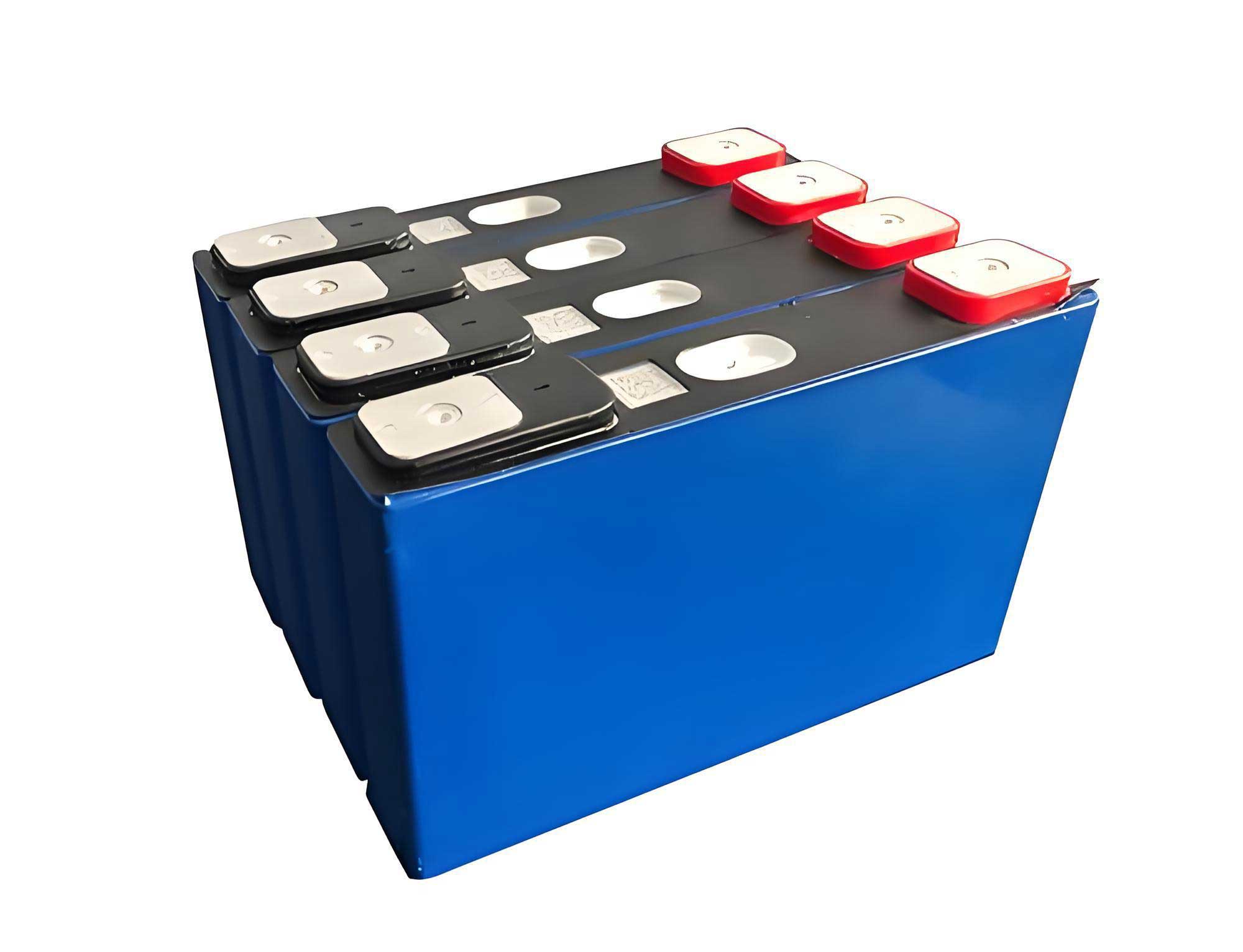
To achieve high-precision state estimation for LiFePO4 batteries, I conducted a series of experiments under different temperature conditions. The experimental setup involved a LiFePO4 battery cell placed in a temperature-controlled chamber, with tests performed using a battery testing system. The basic specifications of the LiFePO4 battery are summarized in Table 1.
| Parameter | Value |
|---|---|
| Nominal Capacity | 20 Ah |
| Nominal Voltage | 3.2 V |
| Charge Cut-off Voltage | 3.65 ± 0.5 V |
| Discharge Cut-off Voltage | 2.0 V |
| Standard Charge/Discharge Current | 1/3 C |
| Operating Temperature Range | -20°C to 60°C |
The experimental design included capacity tests, hybrid pulse power characterization tests, and variable-temperature open-circuit voltage tests. Capacity tests were performed at four temperatures: 45°C, 25°C, 5°C, and -15°C, with sufficient rest times to ensure thermal equilibrium. The results revealed that the LiFePO4 battery’s capacity decreases significantly at lower temperatures, as shown in Figure 1. For instance, at -15°C, the charge and discharge capacities were reduced by approximately 40% compared to those at 25°C. This highlights the importance of considering temperature effects in battery modeling.
To obtain open-circuit voltage across the full state-of-charge range under variable temperatures, I designed a novel experimental method. The procedure involved charging the LiFePO4 battery to full capacity at 25°C, then discharging it incrementally at 25°C to adjust SOC, followed by resting at different temperatures (45°C, 25°C, 5°C, -15°C) for extended periods to measure OCV. The rest times were set as 3 hours at 45°C, 3 hours at 25°C, 4 hours at 5°C, and 5 hours at -15°C to account for slower polarization recovery at lower temperatures. This approach ensured accurate OCV measurements across temperatures, which are essential for modeling.
For modeling the LiFePO4 battery, I adopted a second-order RC equivalent circuit model that incorporates temperature effects. The model structure is depicted in Figure 2, where the circuit includes an open-circuit voltage source, ohmic resistance, and two RC pairs representing electrochemical and concentration polarizations. The model equations are given by:
$$ U_t = U_o – I R_0 – U_1 – U_2 $$
$$ \frac{dU_1}{dt} = -\frac{U_1}{R_1 C_1} + \frac{I}{C_1} $$
$$ \frac{dU_2}{dt} = -\frac{U_2}{R_2 C_2} + \frac{I}{C_2} $$
Here, \( U_t \) is the terminal voltage, \( U_o \) is the open-circuit voltage, \( I \) is the current, \( R_0 \) is the ohmic resistance, \( R_1 \) and \( C_1 \) are the electrochemical polarization resistance and capacitance, and \( R_2 \) and \( C_2 \) are the concentration polarization resistance and capacitance. All parameters are functions of SOC and temperature \( T \), i.e., \( R_0 = R_0(SOC, T) \), \( R_1 = R_1(SOC, T) \), etc. This model effectively captures the dynamic behavior of the LiFePO4 battery under varying conditions.
Parameter identification was carried out using the particle swarm optimization algorithm. The parameter vector to be identified is:
$$ \theta = [R_c, R_d, R_1, \tau_1, R_2, \tau_2] $$
where \( R_c \) and \( R_d \) are charging and discharging ohmic resistances, respectively, and \( \tau_1 = R_1 C_1 \) and \( \tau_2 = R_2 C_2 \) are time constants. The fitness function for PSO is the rooted mean squared error between measured and model-estimated terminal voltages:
$$ F(\theta) = \sqrt{\frac{1}{N} \sum_{k=1}^{N} (U_{k} – \hat{U}_{k}(\theta))^2 } $$
where \( N \) is the number of data points, \( U_{k} \) is the measured voltage, and \( \hat{U}_{k} \) is the model-estimated voltage at time step \( k \). The PSO algorithm iteratively updates parameters to minimize this error, as illustrated in the identification process flowchart.
The identified parameters for the LiFePO4 battery at different temperatures are summarized in Table 2. These results show that ohmic resistances increase significantly at lower temperatures, while polarization parameters also exhibit temperature dependence.
| Parameter | 45°C | 25°C | 5°C | -15°C |
|---|---|---|---|---|
| \( R_c \) (Ω) | 0.008 | 0.012 | 0.025 | 0.045 |
| \( R_d \) (Ω) | 0.009 | 0.013 | 0.028 | 0.050 |
| \( R_1 \) (Ω) | 0.015 | 0.020 | 0.035 | 0.060 |
| \( \tau_1 \) (s) | 1200 | 1500 | 2000 | 3000 |
| \( R_2 \) (Ω) | 0.010 | 0.015 | 0.025 | 0.040 |
| \( \tau_2 \) (s) | 2500 | 3000 | 4000 | 5000 |
To validate the model, I compared simulated terminal voltages with experimental data under new European driving cycle discharge profiles at various temperatures. The results demonstrated high accuracy, with average errors below 0.005 V and relative errors under 0.2% for most cases. For example, at 45°C, the root mean squared error was 0.018 V, confirming the model’s reliability for the LiFePO4 battery.
Sensitivity analysis was performed using the one-factor-at-a-time method. Each parameter was varied from 0.5 to 1.5 times its nominal value while keeping others constant, and the resulting change in RMSE was computed. The sensitivity metric \( S \) is defined as the ratio of RMSE deviation:
$$ S = \frac{RMSE_{perturbed} – RMSE_{nominal}}{RMSE_{nominal}} $$
A higher \( S \) indicates greater sensitivity. The analysis covered the entire SOC range and different temperatures. Key findings are summarized in Table 3.
| Parameter | Sensitivity Rank (High to Low) | Remarks |
|---|---|---|
| \( R_d \) | 1 | Most sensitive, especially at low temperatures |
| \( R_c \) | 2 | Highly sensitive, similar to \( R_d \) |
| \( R_1 \) | 3 | Moderate sensitivity, increases with decreasing temperature |
| \( R_2 \) | 4 | Moderate sensitivity, less than \( R_1 \) |
| \( \tau_1 \) | 5 | Low sensitivity, relatively constant across temperatures |
| \( \tau_2 \) | 6 | Lowest sensitivity, negligible impact on model output |
The sensitivity analysis reveals that ohmic resistances are the most critical parameters for the LiFePO4 battery model, with discharge ohmic resistance being slightly more sensitive than charge ohmic resistance. Polarization resistances show moderate sensitivity, while time constants have minimal effect. This pattern holds across temperatures, but sensitivity magnitudes increase as temperature decreases. For instance, at -15°C, a 50% increase in \( R_d \) leads to an RMSE change of about 0.07 V, compared to 0.01 V at 45°C. This underscores the need for precise identification of resistive parameters in cold conditions.
To further quantify sensitivity, I derived analytical expressions for parameter influence. The terminal voltage error \( \Delta U_t \) due to a parameter variation \( \Delta \theta_i \) can be approximated using first-order Taylor expansion:
$$ \Delta U_t \approx \sum_{i} \frac{\partial U_t}{\partial \theta_i} \Delta \theta_i $$
where \( \theta_i \) represents each model parameter. Partial derivatives were computed numerically from the model. For example, the sensitivity to ohmic resistance is:
$$ \frac{\partial U_t}{\partial R_0} = -I $$
indicating that error scales linearly with current. For RC parameters, sensitivities are more complex but generally smaller. These insights help prioritize parameters during online estimation for LiFePO4 batteries.
In practical applications, such as electric vehicle battery management systems, the sensitivity results suggest that adaptive algorithms should focus on frequently updating ohmic and polarization resistances, while time constants can be estimated less often or assumed constant. This reduces computational burden without sacrificing accuracy. For example, in a typical SOC estimation framework using Kalman filtering, parameter adaptation can be weighted based on sensitivity indices.
Additionally, I explored the impact of temperature on parameter sensitivity through regression models. The sensitivity \( S \) for each parameter was fitted as a function of temperature \( T \) (in °C) using polynomial regression. For \( R_d \), the relationship is:
$$ S_{R_d}(T) = 0.05 + 0.002T – 0.0001T^2 $$
This equation shows that sensitivity decreases slightly with increasing temperature, but remains significant across the range. Similar fits were obtained for other parameters, providing a quantitative basis for temperature-dependent tuning.
The experimental data also allowed for analysis of internal resistance trends. The total internal resistance \( R_{total} \) of the LiFePO4 battery as a function of SOC and temperature can be expressed empirically:
$$ R_{total}(SOC, T) = a_0 + a_1 SOC + a_2 T + a_3 SOC^2 + a_4 T^2 $$
where coefficients \( a_i \) were determined from HPPC tests. This formula aids in quick resistance estimation for real-time control.
Regarding open-circuit voltage, the variable-temperature experiments confirmed that OCV variation with temperature is minimal for LiFePO4 batteries. The average difference from 25°C reference was less than 0.03 V across all SOC points, allowing OCV to be treated as primarily SOC-dependent in many applications. However, for high-precision work, a temperature-compensated OCV model is recommended.
To enhance model robustness, I incorporated uncertainty analysis into the sensitivity study. Using Monte Carlo simulations, parameter distributions were sampled based on identification variances, and output uncertainties were assessed. The results indicated that parameter uncertainties propagate linearly for resistive parameters but nonlinearly for time constants, reinforcing the sensitivity rankings.
In conclusion, this comprehensive study on LiFePO4 battery model parameter sensitivity provides valuable insights for battery management. The key takeaways are: (1) Ohmic resistances are the most sensitive parameters and require accurate temperature-dependent identification; (2) Polarization resistances are moderately sensitive, with increasing importance at low temperatures; (3) Time constants have low sensitivity and can be simplified in modeling; (4) The proposed experimental methods enable reliable parameter acquisition across temperatures. These findings can guide the development of efficient state estimation algorithms for LiFePO4 batteries in electric vehicles, ultimately improving performance and longevity.
Future work could extend this analysis to aging effects, where parameter sensitivity may shift over the battery’s lifetime. Additionally, real-time implementation of sensitivity-aware adaptation algorithms would be a practical advancement. The methodologies presented here form a solid foundation for further research on LiFePO4 battery modeling and management.