
In the realm of energy storage systems, lithium-ion batteries have emerged as a cornerstone technology, powering everything from portable electronics to electric vehicles and grid-scale storage solutions. Among these, the lifepo4 battery, or lithium iron phosphate battery, stands out due to its inherent safety, long cycle life, and cost-effectiveness. The formation process, a critical step in battery manufacturing, involves the initial charge-discharge cycles that establish the solid electrolyte interphase (SEI) layer on the graphite anode. This layer is pivotal for battery performance, as it passivates the anode surface, prevents further electrolyte decomposition, and governs lithium-ion transport. However, the formation efficiency is highly sensitive to various process parameters, with temperature being a key factor. In commercial production, ambient temperature fluctuations across seasons can inadvertently affect formation outcomes, leading to inconsistencies in battery quality. This study delves into the effects of temperature on the formation of lifepo4 batteries, comparing standard conditions at 25°C with a lower temperature of 20°C. We explore multiple facets, including electrolyte properties, electrochemical signatures, electrode morphology, and thermal stability, to elucidate the underlying mechanisms. Our findings aim to provide actionable insights for optimizing formation protocols in industrial settings, ensuring robust and reliable lifepo4 battery performance.
The formation process in a lifepo4 battery is not merely a procedural step; it is a complex electrochemical orchestration where lithium ions intercalate into the graphite anode, reducing electrolyte components to form a stable SEI. This layer’s composition and structure dictate key battery attributes, such as Coulombic efficiency, rate capability, and long-term cyclability. Temperature influences this process through its impact on ionic conductivity, viscosity, and reaction kinetics. Lower temperatures typically increase electrolyte viscosity, reducing ion mobility and slowing down charge transfer reactions. This can lead to incomplete SEI formation or undesirable side reactions, such as solvent co-intercalation into graphite, which compromises anode integrity. In this work, we systematically investigate how a modest temperature drop from 25°C to 20°C during formation alters the electrochemical and physical characteristics of lifepo4 battery components. By employing a suite of analytical techniques, we correlate macroscopic changes with microscopic phenomena, offering a comprehensive view of temperature-induced effects. Furthermore, we propose and validate a practical mitigation strategy involving mechanical pressure application to counteract negative impacts, highlighting the interplay between thermal and mechanical factors in battery manufacturing.
Our experimental approach centers on a commercially relevant 20 Ah prismatic aluminum-shell lifepo4 battery. The cathode comprises LiFePO4 active material, polyvinylidene fluoride (PVDF) binder, and a conductive carbon blend (spherical carbon black, graphene, and carbon nanotubes). The anode consists of artificial graphite (AG), carbon black, sodium carboxymethyl cellulose (CMC-Na), and styrene-butadiene rubber (SBR) binder. The electrodes and polyethylene (PE) separator are wound into a jelly roll, assembled into a dry cell, and subjected to drying, electrolyte filling, formation, and capacity grading. The electrolyte is a standard solution of 1.0 mol/L LiPF6 in carbonate-based solvents. We prepared two sets of batteries: one formed at 25°C (control) and the other at 20°C (test), keeping all other formation parameters constant (e.g., current, voltage limits, time). Post-formation, we dissected cells for material analysis and performed various measurements to assess formation quality.
To quantify temperature-dependent electrolyte properties, we measured viscosity and conductivity using a rheometer and conductivity meter, respectively. The data, summarized in Table 1, reveal a significant increase in viscosity and decrease in conductivity at lower temperatures. Specifically, at 20°C, viscosity rises by approximately 35.2% compared to 25°C, while conductivity drops by about 7.1%. These changes can be modeled using the Arrhenius equation, which relates temperature to transport properties:
$$ \eta = \eta_0 \exp\left(\frac{E_a}{RT}\right) $$
where $\eta$ is viscosity, $\eta_0$ is a pre-exponential factor, $E_a$ is activation energy for viscous flow, $R$ is the gas constant, and $T$ is absolute temperature. Similarly, for conductivity $\sigma$:
$$ \sigma = \sigma_0 \exp\left(-\frac{E_a’}{RT}\right) $$
Here, $E_a’$ is activation energy for ionic conduction. The inverse relationship between viscosity and conductivity is evident, as higher viscosity impedes ion movement, reducing overall conductivity. This has direct implications for formation: reduced ion mobility slows lithium-ion desolvation at the anode interface, increasing polarization and potentially altering SEI formation pathways.
| Temperature (°C) | Viscosity (mPa·s) | Conductivity (mS/cm) | Change in Viscosity (%) | Change in Conductivity (%) |
|---|---|---|---|---|
| 25 | 12.5 | 10.5 | 0 | 0 |
| 20 | 16.9 | 9.75 | +35.2 | -7.1 |
Electrochemical analysis via capacity-voltage differential (dQ/dV) curves provides insight into SEI formation dynamics. During formation, specific voltage regions correspond to reduction reactions of electrolyte components. Figure 2 in the reference shows two peaks: Peak 1 around 2.4 V and Peak 2 around 2.78 V (vs. full cell voltage). These peaks represent distinct stages of SEI formation, likely involving decomposition of additives and solvents. At 25°C, Peak 1 is prominent, indicating efficient additive reduction. At 20°C, Peak 1 diminishes while Peak 2 intensifies, suggesting a shift in reaction pathways. This can be interpreted as follows: lower temperature hampers desolvation, causing lithium ions to remain coordinated with solvent molecules. As a result, additive reduction is delayed or suppressed, and solvent co-reduction occurs at higher overpotentials (manifested as Peak 2). The dQ/dV curve can be derived from charge data:
$$ \frac{dQ}{dV} = \frac{I}{\frac{dV}{dt}} $$
where $I$ is current and $dV/dt$ is voltage sweep rate. The peak areas correspond to charge consumed in respective reactions. Integrating these peaks allows quantification of reaction extents. For instance, let $Q_1$ and $Q_2$ be charges under Peaks 1 and 2. The ratio $Q_2/Q_1$ increases at lower temperatures, indicating a larger fraction of charge involved in solvent-related reactions. This aligns with the hypothesis of desolvation difficulty, which promotes solvent co-intercalation or decomposition.
Physical changes in electrodes were assessed through thickness measurements. Using a micrometer, we measured electrode and jelly roll thicknesses post-formation. Results are compiled in Table 2. The cathode thickness remained unchanged at 135 μm, whereas the anode thickness increased from 116 μm at 25°C to 131 μm at 20°C, a 12.9% rise. Consequently, the jelly roll thickness expanded by 3.4%, from 27.24 mm to 28.17 mm. This swelling is attributed to structural distortions in the graphite anode. At lower temperatures, incomplete desolvation may lead to solvent molecules co-inserting into graphite layers, causing lattice expansion and particle dislodgement. The swelling can be modeled as a function of intercalation strain:
$$ \epsilon = \beta \cdot \Delta c $$
where $\epsilon$ is strain, $\beta$ is a expansion coefficient, and $\Delta c$ is change in lithium concentration. When solvent co-intercalates, the effective $\Delta c$ increases, amplifying strain. Additionally, gas evolution from side reactions could contribute to thickness increases, though our focus is on solid-phase changes.
| Formation Temperature (°C) | Anode Thickness (μm) | Cathode Thickness (μm) | Jelly Roll Thickness (mm) |
|---|---|---|---|
| 25 | 116 | 135 | 27.24 |
| 20 | 131 | 135 | 28.17 |
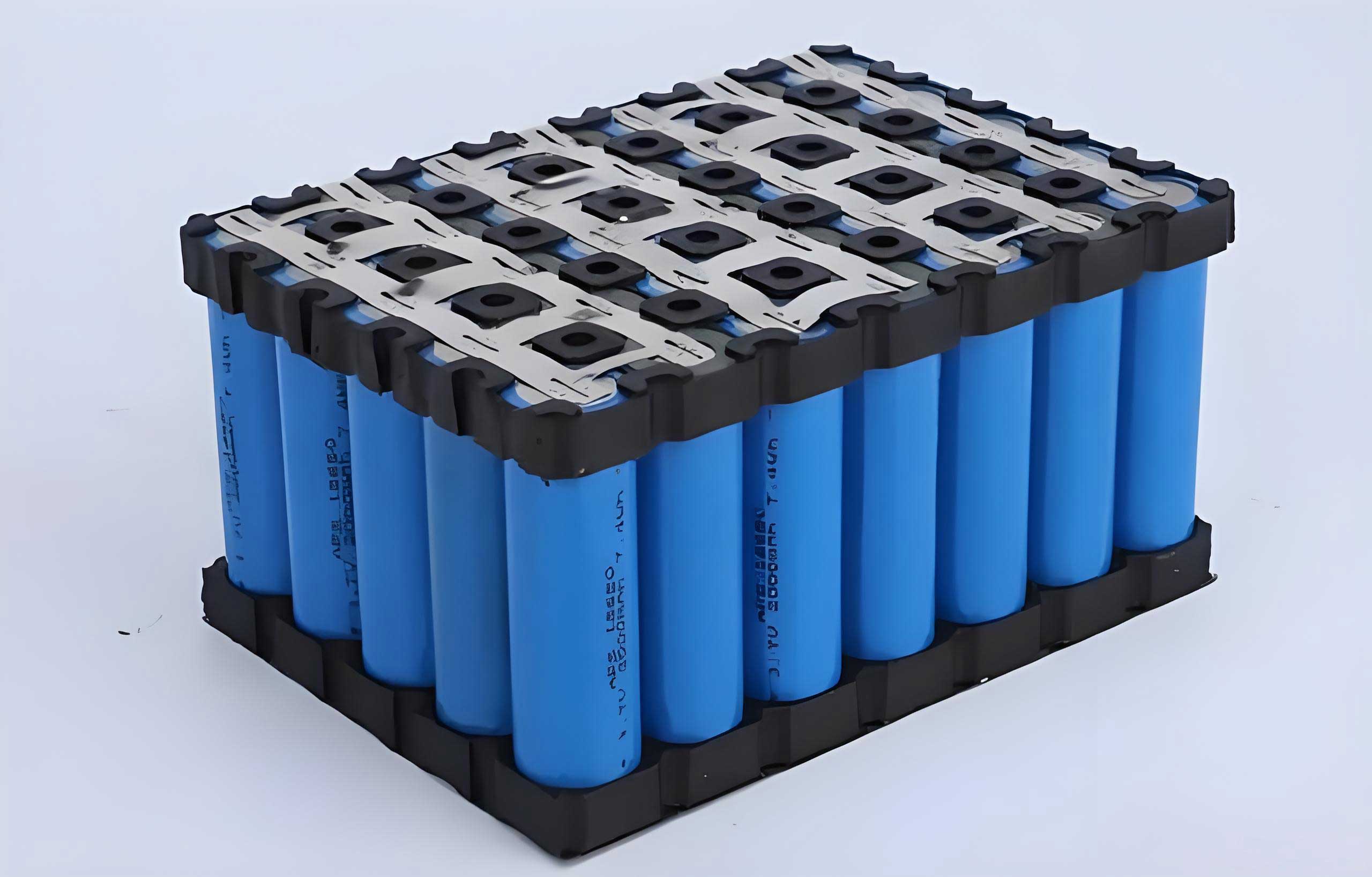
Morphological examination of anode surfaces via scanning electron microscopy (SEM) revealed stark differences. At 25°C, the anode exhibited a relatively smooth, uniform surface with well-packed graphite particles. In contrast, at 20°C, the surface became rough and uneven, with pronounced particle protrusions and isolated “island-like” structures. This corroborates the thickness data, indicating particle-level expansion and loss of cohesion. The image below illustrates a typical lifepo4 battery structure, highlighting the anode-separator-cathode assembly where such morphological changes occur.
Cross-sectional analysis of anodes provided further insight. We used focused ion beam (FIB) milling to prepare cross-sections and performed energy-dispersive X-ray spectroscopy (EDS) to map elemental distributions. At 25°C, the cross-section showed dense graphite packing with only carbon detected throughout. At 20°C, oxygen appeared in significant amounts, increasing from the foil side to the separator side. Quantitative EDS data is summarized in Table 3. The gradient in oxygen content suggests that solvent-derived species accumulate near the surface, where electrolyte contact is highest. This oxygen likely originates from carbonate solvents (e.g., ethylene carbonate, dimethyl carbonate) that decompose or co-intercalate. The presence of oxygen underscores the involvement of solvent molecules in side reactions, consistent with the dQ/dV observations.
| Location in Anode | Temperature (°C) | C (%) | O (%) |
|---|---|---|---|
| Separator Side | 25 | 100.0 | 0.0 |
| Separator Side | 20 | 78.3 | 21.8 |
| Mid-Layer | 25 | 100.0 | 0.0 |
| Mid-Layer | 20 | 89.1 | 10.9 |
| Foil Side | 25 | 100.0 | 0.0 |
| Foil Side | 20 | 99.0 | 9.1 |
Thermal stability of anode materials was evaluated using differential scanning calorimetry (DSC). We scraped active material from formed anodes and heated samples from room temperature to 300°C at 10°C/min. DSC curves for 25°C and 20°C samples are shown in Figure 5 of the reference. Both exhibited an endothermic peak around 120-130°C, corresponding to SEI decomposition. However, the peak for the 20°C sample was weaker and shifted slightly, indicating differences in SEI composition or quantity. More notably, the 20°C sample displayed an exothermic peak at 273°C, absent in the 25°C sample. This exotherm likely arises from reactions between intercalated solvent residues and graphite or lithium species. The heat flow $\dot{Q}$ in DSC relates to reaction enthalpy $\Delta H$ and rate:
$$ \dot{Q} = m \cdot \frac{d\alpha}{dt} \cdot \Delta H $$
where $m$ is mass and $\alpha$ is extent of reaction. The appearance of an exotherm at higher temperature suggests thermally activated decomposition of unstable compounds formed during low-temperature formation. This poses safety concerns, as such reactions could trigger thermal runaway in abused lifepo4 batteries.
To mitigate the adverse effects of low formation temperature, we explored a mechanical intervention. Since poor electrode-separator contact exacerbates polarization and desolvation issues, applying pressure during formation might improve interface intimacy. We extracted jelly rolls from prismatic cells and reassembled them into pouch cells, applying a constant force of 200 N during formation at 20°C. The force was applied locally (top, bottom) or uniformly across the jelly roll. Post-formation anode inspection revealed that pressurized regions showed smoother surfaces with fewer defects, while unpressurized areas retained the earlier observed roughness. This demonstrates that mechanical pressure enhances electrode-separator contact, reducing interfacial resistance and facilitating more homogeneous lithium-ion flux. The effectiveness of pressure can be described by a simple model of contact area increase:
$$ A_c = A_0 + k \cdot P $$
where $A_c$ is effective contact area, $A_0$ is initial area, $k$ is a constant, and $P$ is pressure. Increased $A_c$ lowers local current density, reducing overpotential and promoting orderly SEI growth. This approach offers a practical solution for production lines where temperature control is challenging.
In summary, our investigation underscores the sensitivity of lifepo4 battery formation to temperature. A decrease from 25°C to 20°C leads to increased electrolyte viscosity, decreased conductivity, altered SEI formation pathways, anode swelling, morphological degradation, oxygen incorporation, and reduced thermal stability. These phenomena are interconnected, rooted in the difficulty of lithium-ion desolvation at lower temperatures. The desolvation energy barrier $\Delta G_{desolv}$ can be expressed as:
$$ \Delta G_{desolv} = \Delta H_{desolv} – T \Delta S_{desolv} $$
At lower $T$, $\Delta G_{desolv}$ increases, making it harder for lithium ions to shed solvent shells before intercalation. This promotes solvent co-intercalation, which disrupts graphite structure and leads to observed defects. Our proposed pressure application method mitigates these issues by improving interfacial contact, thereby compensating for temperature-induced drawbacks. For lifepo4 battery manufacturers, we recommend tight temperature control during formation, ideally maintaining 25°C or higher, coupled with mechanical pressing of jelly rolls to ensure consistent formation quality. Future work could explore temperature effects across wider ranges, incorporate multi-physics modeling, and investigate additive formulations tailored for low-temperature formation. The lifepo4 battery, with its proven track record, continues to benefit from such nuanced process optimizations, enhancing its viability for demanding applications.
Expanding on the electrochemical implications, the shift in dQ/dV peaks at lower temperature reflects changes in SEI composition. The SEI is a mosaic of inorganic and organic compounds, such as LiF, Li2CO3, and polycarbonates. Its formation involves multi-step reactions, each with distinct activation energies. At 20°C, the reduction of additives (e.g., vinylene carbonate) may be kinetically limited, allowing solvents to react preferentially. This alters SEI properties, potentially increasing ionic resistance and reducing stability. We can model SEI growth using a nucleation and growth framework:
$$ \frac{d\delta}{dt} = k \cdot \exp\left(-\frac{E_a}{RT}\right) \cdot f(C) $$
where $\delta$ is SEI thickness, $k$ is rate constant, $E_a$ is activation energy, and $f(C)$ is a function of electrolyte concentration. Lower $T$ reduces growth rate, leading to thinner or patchier SEI. Moreover, solvent co-intercalation introduces organic species into graphite, which can exfoliate layers and increase irreversible capacity. The capacity loss $\Delta Q_{irr}$ due to such side reactions can be estimated from the difference between theoretical and practical capacity:
$$ \Delta Q_{irr} = Q_{th} – Q_{act} $$
where $Q_{th}$ is theoretical capacity based on active material mass, and $Q_{act}$ is actual measured capacity. For our lifepo4 batteries, low-temperature formation likely increases $\Delta Q_{irr}$, though we did not measure it directly here. This underscores the importance of temperature management for maximizing energy density.
From a materials perspective, the anode graphite’s crystallinity plays a role. Graphite has a layered structure with an interlayer spacing of about 0.335 nm. Solvent co-intercalation can expand this spacing, causing mechanical stress. The stress $\sigma_s$ generated can be approximated by:
$$ \sigma_s = E \cdot \epsilon $$
where $E$ is Young’s modulus of graphite. Excessive stress leads to particle cracking and loss of electrical contact, degrading cycle life. In lifepo4 batteries, where anode expansion is generally lower than in high-nickel systems, even modest swelling can be detrimental due to tight cell design. Our thickness measurements confirm this risk at 20°C.
The oxygen gradient detected via EDS is intriguing. It suggests that solvent decomposition products deposit preferentially near the anode surface. This could create a resistive layer that hinders lithium-ion diffusion. The diffusion coefficient $D_{Li}$ in the anode may be affected, as per the Stokes-Einstein relation:
$$ D_{Li} = \frac{k_B T}{6\pi \eta r} $$
where $k_B$ is Boltzmann constant, $\eta$ is viscosity, and $r$ is ion radius. Lower $T$ and higher $\eta$ reduce $D_{Li}$, exacerbating concentration polarization. The oxygen-rich layer adds an extra barrier, further slowing ion transport. This manifests as higher internal resistance in cells formed at low temperature, which we inferred from the dQ/dV peak shifts.
Regarding thermal stability, the exothermic peak at 273°C for the 20°C sample indicates the presence of metastable compounds. These could be organic polymers from solvent decomposition or lithium alkoxides. Their decomposition energy $\Delta H_{dec}$ contributes to overall heat release in abuse scenarios. For lifepo4 batteries, known for safety, such exotherms are undesirable. The total heat release $Q_{total}$ can be integrated from DSC curves:
$$ Q_{total} = \int \dot{Q} \, dt $$
Comparing $Q_{total}$ for 25°C and 20°C samples would quantify the additional risk, though we lack precise values here. Nonetheless, the presence of an extra peak highlights that formation temperature affects not only initial performance but also safety characteristics.
Our pressure application experiment demonstrates that mechanical factors can partially offset thermal drawbacks. Pressure improves electrode alignment and reduces porosity, shortening lithium-ion pathways. The effective ionic conductivity $\sigma_{eff}$ in porous electrodes is given by:
$$ \sigma_{eff} = \sigma \cdot \phi^{m} $$
where $\phi$ is porosity and $m$ is tortuosity factor. Pressure decreases $\phi$, increasing $\sigma_{eff}$. This helps maintain reaction homogeneity even at lower temperatures. In production, calibrated rollers or fixtures could apply uniform pressure during formation, a concept worth exploring for lifepo4 battery assembly lines.
In conclusion, temperature is a critical lever in lifepo4 battery formation. Our study shows that even a 5°C drop from 25°C to 20°C induces a cascade of negative effects, from electrolyte properties to electrode morphology and thermal behavior. These findings emphasize the need for precise climate control in manufacturing facilities. Additionally, mechanical pressure emerges as a viable compensatory measure, enhancing interface quality and mitigating low-temperature pitfalls. As the demand for reliable and high-performance lifepo4 batteries grows, optimizing formation parameters becomes ever more important. We hope this work aids engineers and researchers in refining production processes, ultimately contributing to the advancement of energy storage technology.
To further contextualize, the lifepo4 battery market is expanding rapidly, driven by electric vehicles and stationary storage. Formation constitutes a significant portion of production time and cost. Inefficient formation leads to yield loss and performance variability. By understanding temperature effects, manufacturers can implement real-time monitoring and adjustment systems, perhaps using feedback from in-situ sensors. For instance, impedance spectroscopy during formation could detect anomalies linked to temperature drift, enabling corrective actions. Moreover, additive engineering could yield electrolytes with lower desolvation energies, making formation less temperature-sensitive. Research into novel solvents or lithium salts (e.g., LiFSI) might offer pathways to robust low-temperature formation for lifepo4 batteries.
Finally, we acknowledge that our study focused on two temperatures; a broader range would yield more comprehensive insights. Also, long-term cycling tests on cells formed at different temperatures would reveal durability implications. Such work could be part of future endeavors. For now, we stress that maintaining formation temperature at or above 25°C, coupled with mechanical pressure, is a prudent strategy for ensuring high-quality lifepo4 batteries. This holistic approach, blending thermal and mechanical control, exemplifies the nuanced engineering required to master battery manufacturing.