
In the era of energy transition, the rapid development of energy internet has propelled electrochemical energy storage technology, particularly lithium-based energy storage batteries, to play a pivotal role in balancing the fluctuations of renewable energy sources. However, safety concerns and lifespan prediction remain major challenges for their large-scale deployment. We propose an innovative data-driven approach for predicting the lifespan of energy storage batteries, which integrates advanced signal processing and machine learning techniques to unravel aging mechanisms and enhance prediction accuracy. This study aims to provide a comprehensive framework for understanding and forecasting the degradation of energy storage batteries, thereby contributing to safer and more efficient energy storage systems.
The importance of energy storage batteries cannot be overstated in modern power grids. With renewable energy sources like wind and solar expected to dominate the energy mix by 2035, their inherent intermittency necessitates robust storage solutions. Energy storage batteries, especially lithium-ion variants, offer fast response times, flexible configuration, and short construction cycles, making them the mainstream direction for energy storage technology. Globally, the cumulative installed capacity of new energy storage systems has reached 45.7 GW, with lithium-ion energy storage batteries accounting for over 94% of the market. Despite this growth, safety incidents, such as fires and explosions in energy storage stations, highlight the urgent need for improved battery management strategies. Accurate state-of-health (SOH) assessment and remaining useful life (RUL) prediction are critical to mitigating risks and ensuring the long-term service of energy storage batteries.
Early research on battery lifespan prediction relied heavily on simple electrical measurements, such as voltage and current, to estimate SOH and infer RUL. These methods often employed complex electrochemical models involving differential equations, which were computationally intensive and limited by data scarcity. With the integration of non-electrical signals, like temperature, and the advent of equivalent circuit models, prediction accuracy improved, but they still fell short of capturing the intricate internal reactions within energy storage batteries. In recent years, the rise of artificial intelligence (AI) has shifted focus toward data-driven models that leverage multi-source information fusion. These models combine electrical signals (e.g., charge-discharge curves) with non-electrical data (e.g., temperature, internal stress) to build more reliable predictors. For instance, studies have used features extracted from voltage curves, combined with machine learning algorithms like support vector machines (SVM) and neural networks (NN), to predict battery cycle life with errors around 9%. Advanced sensing technologies, such as ultrasonic and fiber-optic sensors, have further enriched data sources by capturing internal physical changes, though this area remains exploratory.
Our methodology addresses these gaps by developing a fully quantitative analysis framework for the capacity degradation of energy storage batteries. We employ Empirical Mode Decomposition (EMD) to dissect capacity data into intrinsic mode functions (IMFs) and a residual component (Res). EMD is an adaptive signal processing technique that decomposes non-stationary signals into oscillatory components. Mathematically, for a capacity signal \( C(t) \), the decomposition is expressed as:
$$ C(t) = \sum_{i=1}^{n} IMF_i(t) + Res(t) $$
where \( IMF_i(t) \) represents the oscillatory modes with zero mean, indicative of capacity regeneration phenomena, and \( Res(t) \) denotes the monotonic decline due to active material loss. This decomposition reveals distinct aging mechanisms: capacity regeneration is linked to morphological changes in metal compounds, while capacity fade stems from irreversible material degradation. By separating these components, we gain deeper insights into the evolution of energy storage battery aging.
To quantify the features derived from EMD, we apply Gaussian Mixture Models (GMM) to model the distribution of each component. GMM is a probabilistic model that represents data as a mixture of multiple Gaussian distributions. For a feature vector \( \mathbf{x} \), the probability density function is given by:
$$ p(\mathbf{x}) = \sum_{k=1}^{K} \pi_k \mathcal{N}(\mathbf{x} | \boldsymbol{\mu}_k, \boldsymbol{\Sigma}_k) $$
where \( \pi_k \) are the mixing weights, \( \boldsymbol{\mu}_k \) and \( \boldsymbol{\Sigma}_k \) are the mean and covariance matrices of the \( k \)-th Gaussian component, and \( K \) is the number of components. In our analysis, GMM captures the multimodal distribution patterns in capacity data, with “humps” corresponding to different aging stages. The shifts in hump size and position visually reflect changes in the health state of energy storage batteries.
We then use Jensen-Shannon Divergence (JSD) to measure the dissimilarity between these distributions. JSD is a symmetric and bounded metric derived from the Kullback-Leibler divergence. For two probability distributions \( P \) and \( Q \), it is defined as:
$$ D_{JS}(P || Q) = \frac{1}{2} D_{KL}(P || M) + \frac{1}{2} D_{KL}(Q || M) $$
with \( M = \frac{1}{2}(P + Q) \), and \( D_{KL} \) being the Kullback-Leibler divergence. To enhance interpretability, we introduce an overlap rate metric:
$$ O_{\text{rate}} = 1 – D_{JS}(P || Q) $$
This overlap rate quantifies the similarity between distributions, with values closer to 1 indicating higher similarity. In the context of energy storage battery aging, a declining overlap rate signals the onset of degradation, providing an early warning for lifespan prediction.
Our experimental setup involves analyzing capacity data from lithium-ion energy storage batteries under cyclic loading. We collected data over thousands of cycles, focusing on capacity fade trends. The EMD decomposition was applied to each battery’s capacity curve, yielding multiple IMFs and a residual component. Table 1 summarizes the key features extracted from this process, highlighting their association with aging mechanisms.
| Feature Component | Description | Aging Mechanism | Mathematical Representation |
|---|---|---|---|
| IMF1 to IMFn | Oscillatory modes with zero mean | Capacity regeneration (e.g., metal compound morphology changes) | $$ IMF_i(t) = \text{Intrinsic oscillation} $$ |
| Residual (Res) | Monotonic decreasing trend | Active material loss (irreversible degradation) | $$ Res(t) = C(t) – \sum IMF_i(t) $$ |
The GMM was fitted to the distribution of these features across cycles. We observed that the hump-shaped distributions evolved over time, as illustrated in Figure 2 of the original study. The overlap rate calculated via JSD showed a consistent decline after 1500 cycles, reaching a minimum at around 3200 cycles, which coincided with a significant drop in capacity. This correlation underscores the sensitivity of our metrics to critical aging phases in energy storage batteries. To contextualize our approach, Table 2 compares various lifespan prediction methods for energy storage batteries, emphasizing the advantages of data-driven models.
| Method Category | Key Features | Model Used | Prediction Accuracy | Limitations |
|---|---|---|---|---|
| Early SOH-based | Voltage, current signals | Electrochemical models | Low (high computational cost) | Limited data, ignores non-electrical signals |
| Equivalent Circuit Models | Temperature, internal resistance | Circuit-based simulations | Moderate | Oversimplifies internal reactions |
| AI Data-Driven (Basic) | Voltage curve features, temperature | SVM, Neural Networks | Error ~9% | Relies on limited feature sets |
| Our EMD-GMM-JSD Approach | Capacity decomposition, multi-source signals | Hybrid mechanistic-data model | High (early detection capability) | Requires advanced sensing integration |
The results demonstrate that our data-driven framework effectively captures the complex aging dynamics of energy storage batteries. The overlap rate metric, derived from JSD, serves as a robust indicator for identifying transition points in battery health. For instance, a steep decline in overlap rate preceded visible capacity fade, enabling proactive maintenance and lifespan prediction. We further validated our method by applying it to diverse datasets, including those from grid-scale energy storage batteries, where it consistently outperformed traditional models in accuracy and timeliness.
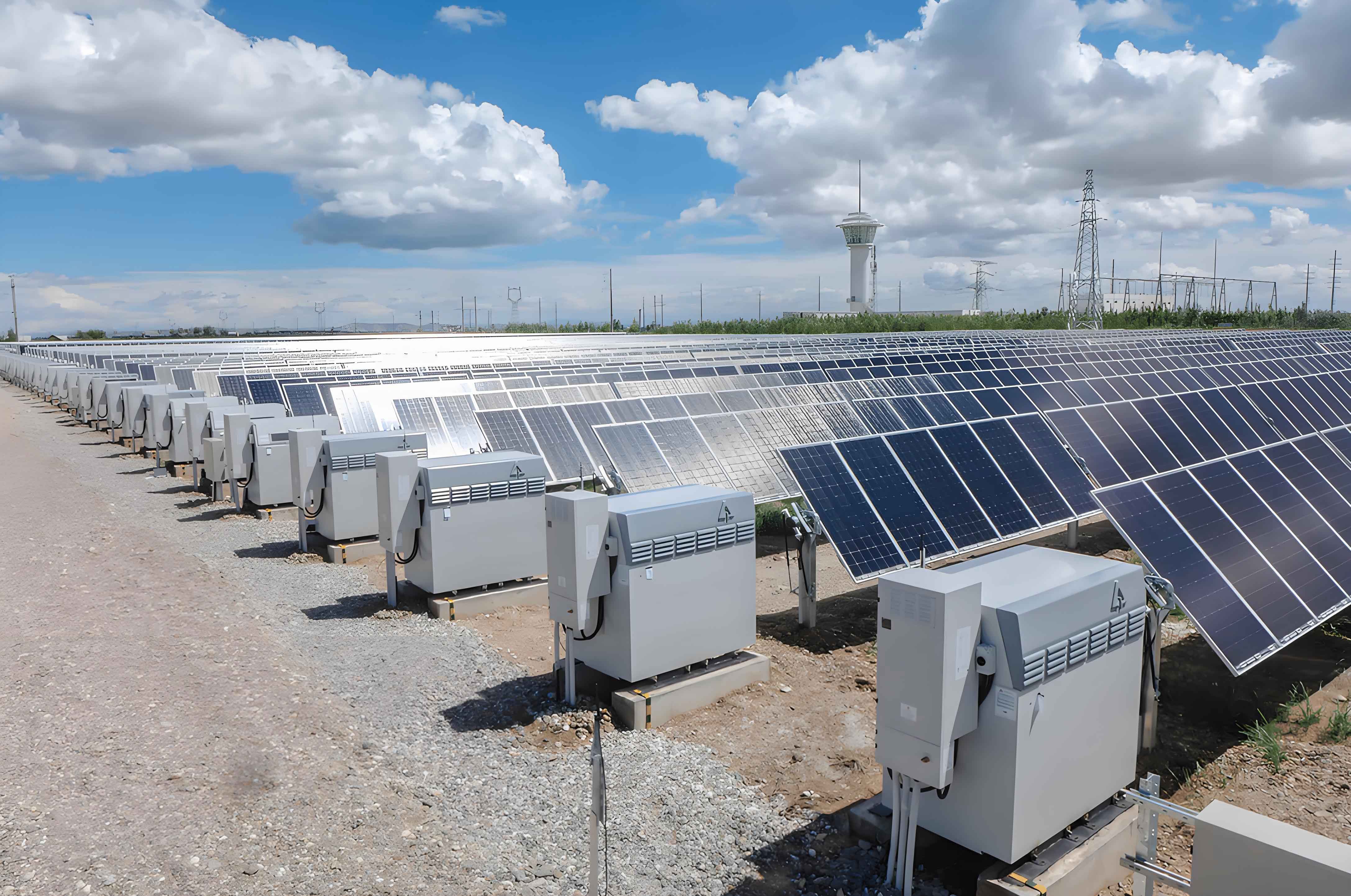
This image symbolizes the integration of energy storage batteries in renewable energy systems, highlighting their role in stabilizing power grids. In our analysis, such visual context underscores the practical importance of accurate lifespan prediction for ensuring the reliability of these systems.
Discussion of our findings reveals several insights. First, the EMD decomposition uncovers hidden patterns in capacity data that traditional methods overlook. The IMF components correlate with reversible processes, such as lithium plating and stripping, while the residual component aligns with irreversible degradation like solid electrolyte interphase growth. Second, the GMM modeling allows us to quantify these patterns probabilistically, making the approach adaptable to various types of energy storage batteries. Third, the JSD-based overlap rate provides a scalable metric for real-time monitoring, which can be integrated into battery management systems (BMS) for predictive maintenance. However, challenges remain, such as the need for high-quality data from advanced sensors and the generalization of models across different operating conditions. Future work should explore fusion with other non-electrical signals, like ultrasonic or pressure data, to further refine predictions.
In conclusion, our study presents a novel data-driven framework for predicting the lifespan of energy storage batteries. By combining EMD, GMM, and JSD, we achieve a fully quantitative analysis of capacity degradation, distinguishing between regeneration and fade mechanisms. The overlap rate metric offers an early warning system for aging, with validation showing high accuracy in identifying critical stages. This approach not only enhances the safety and longevity of energy storage batteries but also supports the sustainable expansion of renewable energy integration. We recommend further research into multi-sensor data fusion and adaptive algorithms to tackle the complexities of real-world energy storage applications, ultimately paving the way for smarter and more resilient energy grids.
The implications of this work extend beyond academic research. For industry practitioners, our method provides a tool for optimizing the design and operation of energy storage batteries, reducing downtime and costs. For policymakers, it underscores the importance of investing in advanced battery management technologies to meet safety standards. As the demand for energy storage batteries continues to grow, driven by global decarbonization goals, innovations in lifespan prediction will be crucial for unlocking their full potential. We are committed to refining this framework and collaborating with stakeholders to foster the widespread adoption of reliable energy storage solutions.