
As a key enabler for achieving global carbon peaking and neutrality goals, the lithium-ion energy storage industry represents not only a critical pillar for domestic energy transformation but also a strategic frontier in international technological competition. The industry, currently dominated by lithium-ion technology, exhibits deep roots in local manufacturing ecosystems while supplying robust global markets. This burgeoning trade necessitates the safe and compliant transport of high-mass, high-energy-density systems across complex international supply chains. The inherent risk of thermal runaway, fire, or explosion during transit, stemming from the reactive lithium content within these energy storage cells, mandates adherence to a stringent, multi-layered regulatory framework. This article synthesizes research into relevant international conventions, national regulations, and test methodologies. My aim is to provide clear, actionable guidance to manufacturers, logistics providers, and all stakeholders involved in the lifecycle of lithium-ion energy storage systems, facilitating compliance with diverse regional and modal regulations to ensure ultimate transport safety.
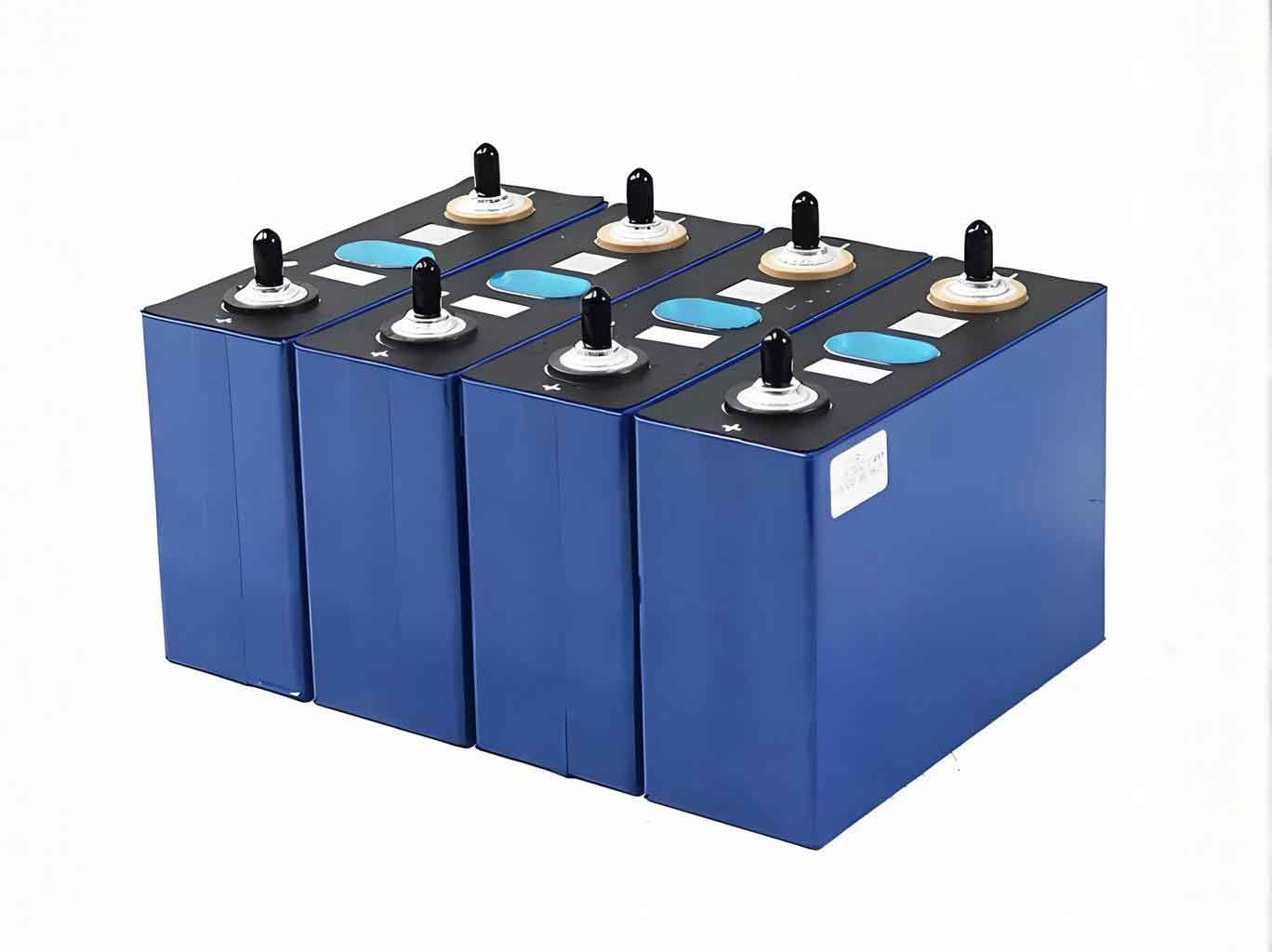
The foundational international regulations governing the transport of dangerous goods, including lithium-ion energy storage cells, are the United Nations Model Regulations on the Transport of Dangerous Goods (UN Model Regulations or TDG) and its complementary Manual of Tests and Criteria. Compliance extends beyond these to encompass the export country’s laws, as well as the regulations of transit and destination countries. The applicable rules bifurcate based on transport mode and geography. For international multimodal transport, the primary modal regulations are:
| Transport Mode | Governing Regulation | Acronym |
|---|---|---|
| Air Transport | International Civil Aviation Organization Technical Instructions / International Air Transport Association Dangerous Goods Regulations | ICAO TI / IATA DGR |
| Maritime Transport | International Maritime Dangerous Goods Code | IMDG Code |
| Road Transport (International) | European Agreement concerning the International Carriage of Dangerous Goods by Road | ADR |
| Rail Transport (International) | Regulation concerning the International Carriage of Dangerous Goods by Rail | RID |
Regionally, specific adaptations exist. For instance, in China, road transport aligns with JT/T 617, maritime transport with JT/T 1543, and rail transport with TB/T 30006. In Europe, inland waterway transport is governed by the ADN. Crucially, these modal and regional regulations are largely harmonized with the UN Model Regulations, often adding specific operational prescriptions. Transport risks for an energy storage cell are multifaceted, ranging from vibration-induced internal shorts and impact damage to mishandling during loading. Non-compliant packaging, insufficient packing to prevent movement, unclear hazard communication, and inadequate emergency response information are significant contributors to incidents. Therefore, my analysis uses the UN Model Regulations as the primary reference to dissect requirements for safety testing, hazard communication, packaging, and product design, aiming to mitigate these prevalent risks.
Fundamental Safety Testing Prerequisites for Transport
The non-negotiable precondition for authorizing the transport of any lithium-ion energy storage cell is successful completion of the test series outlined in Section 38.3 of the UN Manual of Tests and Criteria. These tests simulate severe conditions encountered during transport to prove the intrinsic safety and robustness of the product. The requirements differ based on the level of assembly: cell, module/block, or large system.
For Cells (Shipped Individually): A single energy storage cell must pass a sequence of tests designed to evaluate its mechanical, thermal, and electrical integrity under abuse. The core test sequence, often called the “UN 38.3” test summary, includes:
$$T1: \text{Altitude Simulation (Low Pressure at 11.6 kPa, equivalent to 15,000 m)}$$
$$T2: \text{Thermal Test (Rapid and extreme temperature cycling from -40°C to +72°C)}$$
$$T3: \text{Vibration Test (Simulating transport vibration profiles)}$$
$$T4: \text{Shock Test (Simulating impacts during handling)}$$
$$T5: \text{External Short Circuit Test at 55°C}$$
$$T6: \text{Crush/Impact Test (for cells over a certain size)}$$
$$T8: \text{Forced Discharge Test (for cells)}$$
Each test is followed by an observation period. The energy storage cell must not disassemble, rupture, leak, vent, fire, or explode during the tests or within specified post-test observation periods.
For Battery Modules or Blocks: A module, which is an assembly of interconnected energy storage cells, must undergo a similar but extended suite. The module itself is subjected to T1, T2, T3, T4, T5, and T7 (Overcharge test, if applicable). However, tests T6 (Crush) and T8 (Forced Discharge) are performed on representative individual energy storage cells contained within the module to assess their vulnerability without destroying the entire module.
For Large Battery Packs or Systems: The requirements become more nuanced for larger assemblies. A battery pack with an energy capacity exceeding 6200 Wh is subject to specific construction and functional safety requirements (UN Manual 38.3.3.1(g)). The focus shifts towards validating the effectiveness of integrated safety systems like short-circuit protection, overcharge protection, and over-discharge protection through suitable engineering tests. For packs not exceeding 6200 Wh, the pack itself must pass T3 (Vibration), T4 (Shock), T5 (External Short Circuit), and T7 (Overcharge), while its constituent modules must comply with the full module testing requirements listed above. This layered approach ensures safety is evaluated at every topological level of the energy storage cell assembly.
| Test Designation | Test Description | Applicability (Cell) | Applicability (Module) | Applicability (Pack ≤6200 Wh) |
|---|---|---|---|---|
| T1 | Altitude Simulation | Required | Required | – |
| T2 | Thermal Cycling | Required | Required | – |
| T3 | Vibration | Required | Required | Required |
| T4 | Shock | Required | Required | Required |
| T5 | External Short Circuit @ 55°C | Required | Required | Required |
| T6 | Crush / Impact | Required* | Performed on constituent cells | – |
| T7 | Overcharge | – | Required (if applicable) | Required |
| T8 | Forced Discharge | Required* | Performed on constituent cells | – |
*Note: Applicability of T6 and T8 for cells depends on cell size and type.
Hazard Classification, UN Numbers, and Marking & Labeling
Accurate hazard communication is paramount for safe handling, stowage, segregation, and emergency response. The classification of a lithium-ion energy storage cell for transport primarily depends on its watt-hour (Wh) rating and lithium content, but for assembled systems, the physical configuration dictates the proper UN Number. For most commercial energy storage products, two UN Numbers are relevant: UN 3480 and UN 3536.
The watt-hour rating for a single energy storage cell is calculated as:
$$ \text{Nominal Energy (Wh)} = \text{Nominal Voltage (V)} \times \text{Nominal Capacity (Ah)} $$
For modules or packs, it is the sum of the Wh ratings of the constituent cells, or the product of the pack’s nominal voltage and capacity. This value must be clearly marked on the external casing of the energy storage cell assembly.
UN 3480 – Lithium Ion Batteries: This is the most common classification for energy storage cells, modules, and many containerized systems like household or outdoor storage units. It applies to batteries and battery packs containing lithium-ion cells. A key subclassification is for large systems (often cabinet-style) with a volume typically exceeding 3 m³, which cannot feasibly be placed inside a traditional UN-certified packaging. These are shipped as themselves, provided they have a sturdy, impact-resistant enclosure.
The primary hazard label for UN 3480 is the Class 9 miscellaneous dangerous goods label. For transport by road or sea, the label must conform to the specifications in the UN Model Regulations. The label is a diamond with a minimum dimension of 100 mm x 100 mm, with a black seven vertical stripes symbol on the upper half and a bold “9” inscribed in the bottom corner.
For air transport, additional stringent labeling applies. Lithium-ion energy storage cells and batteries classified under UN 3480 are generally forbidden aboard passenger aircraft and are restricted to cargo aircraft only. Therefore, the “Cargo Aircraft Only” label, also a 100 mm x 100 mm diamond, must be displayed in addition to the Class 9 label. In specific regional rail contexts, such as in China, an additional Class 4.2 (Flammable Solid) label may be required alongside the Class 9 label due to national regulatory provisions.
| Transport Mode | Primary Hazard Label | Additional Required Label(s) | Minimum Label Size |
|---|---|---|---|
| Road & Sea | Class 9 Miscellaneous Dangerous Goods (Label 9A) | None (for standard transport) | 100 mm x 100 mm |
| Air (Cargo Aircraft) | Class 9 Miscellaneous Dangerous Goods | Cargo Aircraft Only Label | 100 mm x 100 mm each |
| Rail (e.g., in China) | Class 9 Miscellaneous Dangerous Goods | Class 4.2 Flammable Solid Label* | 100 mm x 100 mm each |
*As per specific national rail regulations.
UN 3536 – Lithium Ion Batteries Installed in Cargo Transport Units: This unique classification is reserved for large-scale, fixed energy storage systems where the battery system is permanently integrated into a freight container, making the container its functional enclosure and not merely a transport vessel. The system, often called a containerized energy storage system (ESS), includes the energy storage cells, battery management, power conversion, climate control, and fire suppression, all rigidly mounted within the container’s frame.
The marking for UN 3536 is more substantial. Two methods are prescribed. Method 1: A large Class 9 hazard label (minimum 250 mm x 250 mm) is used, with the UN number “3536” printed in black digits at least 65 mm high, placed between the symbol and the class number. Method 2: A standard large Class 9 label is used alongside a distinct orange rectangle (at least 120 mm x 300 mm) with a 10 mm black border, displaying “UN 3536”. These markings must be affixed on at least two opposite sides of the cargo transport unit to ensure visibility.
In all cases, the proper shipping name (“LITHIUM ION BATTERIES” or “LITHIUM ION BATTERIES INSTALLED IN CARGO TRANSPORT UNIT”), UN number, and the consignee/consignor information must be durably marked on the package or unit. The letters “UN” and the number must be at least 12 mm high.
Packaging and Outer Packaging Requirements
Packaging serves as the first and most critical line of defense against physical damage during the rigors of logistics. The UN Model Regulations specify detailed performance standards for packaging based on the degree of danger (Packing Group). Lithium-ion batteries are generally assigned to Packing Group II. The requirements vary significantly depending on the size, weight, and UN classification of the energy storage cell system.
Packaging for UN 3480 (Standard Batteries & Smaller Systems):
For energy storage cells, modules, or packs with a gross mass not exceeding 400 kg and a volume under 3 m³, they must be packed in UN-certified packaging that meets Packing Group II performance standards. This includes drums (1A2, 1B2), jerricans (3A2, 3B2), boxes (4A, 4B, 4C1, 4C2, 4D, 4F, 4G, 4H1, 4H2), and others. The key engineering requirement is that the packaging must be designed and filled to prevent any dangerous movement of the contents, short-circuiting, and inadvertent activation. For systems over 12 kg not in a UN box, they must be secured to prevent movement, have a robust outer casing that protects terminals from bearing weight, and be equipped with pallets or handling devices.
Large Packaging for UN 3480 (Heavier Systems):
For systems over 400 kg but still under 3 m³, UN-certified “Large Packaging” must be used. These are typically constructed from materials like natural wood (50C), plywood (50D), or reconstituted wood (50F), designed to handle heavy loads while providing structural integrity and containment.
Sturdy Outer Packaging for UN 3480 (Large Cabinet Systems >3 m³):
When the energy storage system itself (e.g., a cabinet) is the shipping unit, its outer enclosure must function as a “sturdy, impact-resistant outer casing.” This is not a traditional UN-certified package but must prove its durability. Compliance is demonstrated by passing mechanical tests simulating transport hazards, such as a 1.2-meter drop test on the most vulnerable corner or edge (as per standards like JT/T 1543). The casing must not rupture or deform in a way that compromises safety. It must also include features for secure handling, like forklift pockets or lifting lugs.
Requirements for UN 3536 (Containerized Systems):
Here, the entire freight container is the “package.” The regulatory focus shifts to the internal installation. The core requirement is that the entire assembly of energy storage cells, modules, racks, and ancillary equipment is rigidly and permanently fixed to the load-bearing structure of the container (e.g., the floor and frame). The fixing method (bolts, welded brackets) must withstand foreseeable forces from acceleration, vibration, and impact without loosening, which could lead to short circuits or structural failure. Non-essential dangerous goods (e.g., spare electrolyte, large quantities of flammable coolant) are prohibited inside. The container must also possess a valid certification from a recognized classification society, confirming its structural suitability for the weight and dynamic loads of the installed energy storage system.
| UN Number & Description | Typical Gross Mass / Volume | Packaging / Protection Requirement | Key Performance Criterion |
|---|---|---|---|
| UN 3480 (Standard Battery Packs, Modules) |
< 400 kg & < 3 m³ | UN-certified Packaging (PG II) e.g., 4G fiberboard boxes, 4H2 plastic boxes. |
Prevent movement & short-circuit; Pass drop, stacking, leakproofness tests. |
| UN 3480 (Large Battery Systems in Custom Enclosure) |
> 400 kg & < 3 m³ | UN-certified Large Packaging e.g., 50C wooden crates, 50D plywood boxes. |
Designed for heavy loads; Secure internal fixing; Structural integrity under transport stresses. |
| UN 3480 (Cabinet-style Systems) |
Typically > 3 m³ | Sturdy, Impact-Resistant Outer Casing (the product itself). | Casing must pass a 1.2m drop test or equivalent without breach; Provides handling features. |
| UN 3536 (Containerized ESS) |
Full container load (e.g., 20-40 ft) | Freight Container as integrated unit; Internal rigid fixation. | Entire battery system rigidly fixed to container structure; Container has valid classification certificate. |
Product Design and Structural Requirements
Transport safety is not only a function of external packaging but is intrinsically linked to the design of the energy storage cell and its assemblies. The UN Model Regulations incorporate specific design mandates to mitigate inherent risks.
Firstly, each energy storage cell must be equipped with a pressure relief mechanism, such as a vent or a current interrupt device (CID). This critical safety feature is designed to safely release internal gas buildup during an abusive condition, thereby preventing catastrophic rupture. The cell and battery design must incorporate robust measures to prevent external short circuits. This is typically achieved through insulated terminals, protective covers, and the design of the battery enclosure.
Secondly, for battery systems involving parallel connections of energy storage cells or modules, the design must include protection against dangerous reverse current flow. This can be implemented using diodes or other equivalent electronic means within the battery management system (BMS). The BMS itself is a vital component, required to actively monitor and control the state of the energy storage cell assembly to prevent overcharge, over-discharge, and excessive temperature rise.
Thirdly, as previously noted, the watt-hour rating must be permanently marked on the external surface of the battery. For large systems (UN 3480 cabinets and UN 3536 containers), the requirement for a sturdy outer casing is paramount. This casing must be engineered to protect the internal energy storage cells from mechanical damage, environmental ingress, and to contain any potential fire or thermal event for a specified period.
Finally, for UN 3536 systems, the integration philosophy is key. The installation is no longer a “packaged good” but a “transport unit with an installed function.” Therefore, every component, from the racks holding the energy storage modules to the cable trays and fire suppression tanks, must be seismically rated and fastened to the container’s primary structure to withstand the dynamic G-forces of ocean transport, which can be severe during storm conditions. The design must ensure that no hazardous movement occurs that could compromise electrical isolation or mechanical integrity.
Quality Management System for Production Consistency
Regulatory compliance cannot be assured by testing a single prototype. To guarantee that every energy storage cell and battery system shipped is as safe as the tested samples, the UN Model Regulations explicitly require manufacturers to implement a quality management program. This program, detailed in provision 2.9.4(e), must cover the entire production process to ensure product consistency and traceability.
The required elements of the program include: controlled design specifications, documented component inspection procedures, in-process quality control checks, final product audit testing, management of non-conforming products, internal process audits, clear roles and responsibilities, personnel training records, and robust control of design and process change management. The objective is to create a closed-loop system where any deviation from the tested and approved design is detected, controlled, and corrected.
While holding a certificate for an internationally recognized standard like ISO 9001 is widely accepted as evidence of a compliant system, it is not explicitly mandatory. A manufacturer’s internal quality management scheme that adequately addresses all nine stipulated areas and maintains proper records is acceptable. However, this scheme and its records must be available for review by the relevant competent authority upon request. This requirement underscores that safety is a continuous manufacturing discipline, not a one-time test report.
Synthesis and Concluding Perspective
The safe transport of lithium-ion energy storage cells hinges on a holistic, multi-barrier approach. This framework integrates validated product safety through standardized abuse testing, unambiguous hazard communication via proper classification and labeling, robust physical containment using performance-based packaging or enclosures, inherently safe product design, and a manufacturing quality system that ensures consistent production. Navigating the matrix of international modal regulations (ICAO/IATA, IMDG, ADR/RID) and regional national variants requires a fundamental understanding of the common baseline: the UN Model Regulations and its associated Manual of Tests and Criteria.
For stakeholders, from the energy storage cell manufacturer to the freight forwarder, adherence to this framework is not merely a legal obligation but a critical risk mitigation strategy. The exponential growth of the global energy storage market will inevitably increase the volume and frequency of shipments. Proactive engagement with these requirements—integrating transport safety considerations early in the product design phase, selecting certified packaging partners, ensuring accurate documentation and marking, and maintaining rigorous production controls—is essential. By doing so, the industry can safeguard its supply chains, protect personnel and assets, and maintain the social license to operate, thereby supporting the secure and sustainable deployment of this pivotal technology in the global energy transition. The complexity is managed by decomposing it into discrete, manageable components: test the energy storage cell, classify it, mark it, pack it, design it well, and build it consistently.